作者: admin

  • Slovakia PM’s national security adviser resigns over Epstein links

    Slovakia PM’s national security adviser resigns over Epstein links

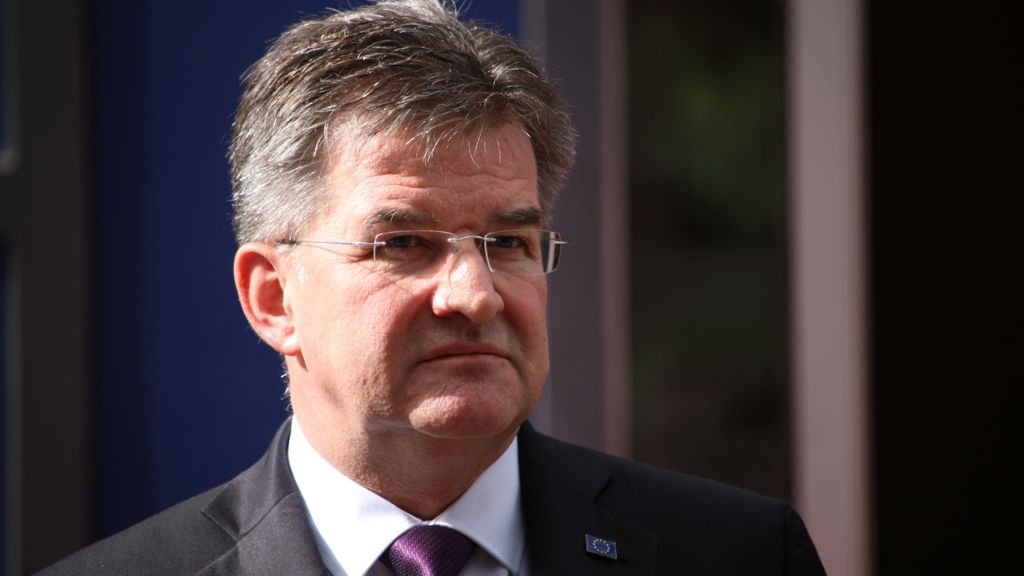
    Slovakia’s National Security Adviser Miroslav Lajčák has tendered his resignation after newly released court documents revealed his communications with convicted sex offender Jeffrey Epstein. The documents, part of a three-million-page release by the U.S. Department of Justice, show exchanges between Lajčák and Epstein that included discussions about women and diplomatic favors.

    Prime Minister Robert Fico confirmed accepting the resignation in a Saturday video address, praising Lajčák as ‘an incredible source of experience in diplomacy and foreign policy.’ The resignation comes amid growing political pressure in Slovakia regarding Lajčák’s association with Epstein, who died in custody in 2019 while awaiting trial on sex trafficking charges.

    The released correspondence includes a October 2018 text exchange where Epstein and Lajčák engaged in banter about women prior to a scheduled meeting with Russian Foreign Minister Sergei Lavrov. Epstein suggested Lajčák could ‘have them both’ regarding unidentified women, while Lajčák jokingly requested an invitation to ‘these games’ and claimed he would ‘take the MI girl.’ The conversation later shifted to Epstein requesting a t-shirt featuring Lavrov and deceased Russian UN ambassador Vitaly Churkin.

    In a separate November 2017 email, Lajčák asked Epstein to assist a female film producer with Oscar consideration for her movie. While the documents don’t indicate illegal activity by Lajčák, they have raised ethical questions about his judgment while serving as Slovakia’s foreign minister.

    Lajčák initially denied discussing women with Epstein when the files surfaced Friday but subsequently opted to resign to prevent political damage to Prime Minister Fico’s government. Fico characterized the criticism as ‘an attack against me’ and denounced what he called widespread hypocrisy in the response.

    The veteran diplomat had served in four Slovak governments, including three under Fico’s leadership, and most recently acted as EU special representative for the western Balkans. His resignation highlights the continuing ripple effects of the Epstein case, which has implicated numerous high-profile figures globally, including business leaders, politicians, and royalty.

  • Pegasus fondant artwork ushers in Year of the Horse in Shanghai

    Pegasus fondant artwork ushers in Year of the Horse in Shanghai

    Shanghai has unveiled a spectacular culinary masterpiece to welcome the upcoming Lunar New Year—a monumental 4-meter-tall Pegasus sculpture crafted entirely from fondant. The breathtaking artwork made its debut on January 30, 2026, representing an extraordinary fusion of traditional Chinese cultural elements, heritage craftsmanship techniques, and contemporary artistic expression.

    The magnificent white winged horse, requiring over one ton of fondant material, stands as a symbolic tribute to the Year of the Horse in the Chinese zodiac cycle. Master sugar artist Zhou Yi, nationally celebrated as China’s ‘Sugar King,’ led the ambitious project utilizing intangible cultural heritage techniques passed down through generations.

    Zhou and his dedicated five-member team invested nearly four months of meticulous work to create the masterpiece from initial concept to final execution. The Pegasus installation forms part of Shanghai’s broader initiative to establish itself as a global cultural metropolis, seamlessly blending commercial appeal with artistic innovation while honoring traditional Chinese cultural motifs.

    The fondant sculpture represents more than seasonal celebration—it demonstrates how ancient craftsmanship can find renewed relevance through modern artistic interpretation, creating cultural dialogue between past and present while captivating public imagination through edible art on a monumental scale.

  • Carlos Alcaraz beats Novak Djokovic to become the youngest man to complete a career Grand Slam

    Carlos Alcaraz beats Novak Djokovic to become the youngest man to complete a career Grand Slam

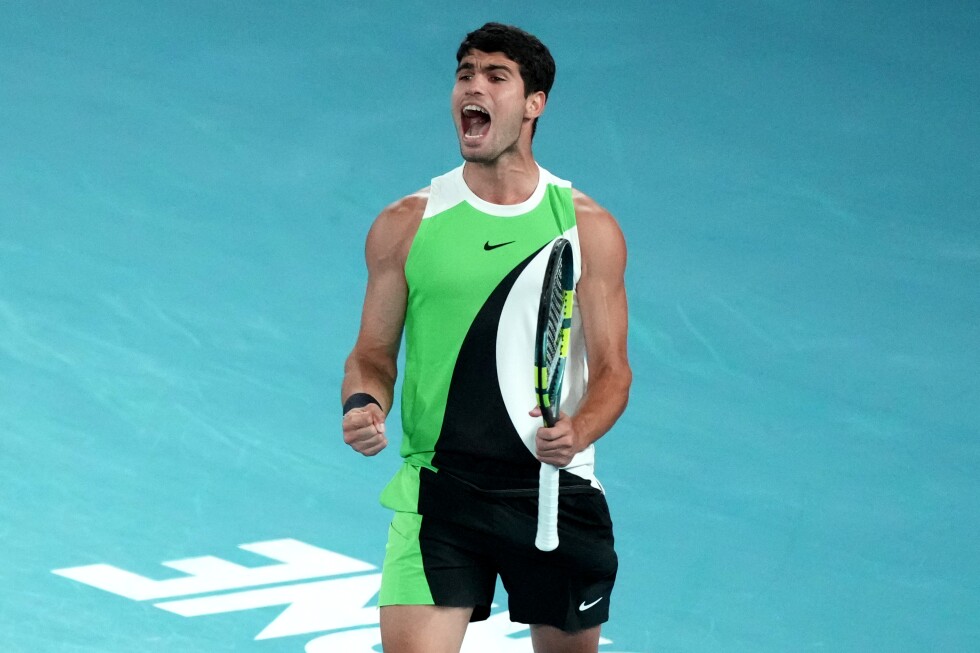
    MELBOURNE, Australia — In a stunning display of resilience and skill, 22-year-old Spanish phenom Carlos Alcaraz has etched his name into tennis history by becoming the youngest male player ever to complete the career Grand Slam. The world’s top-ranked player achieved this monumental feat at the Australian Open on Sunday, overcoming tennis legend Novak Djokovic in a thrilling four-set final that showcased the dramatic changing of the guard in men’s tennis.

    The championship match began with Djokovic, pursuing an unprecedented 25th major title, dominating the first set 6-2 in just 33 minutes. The 38-year-old Serbian had previously won all 10 of his finals at Melbourne Park, but Alcaraz mounted an extraordinary comeback, winning the subsequent sets 6-2, 6-3, 7-5 in a match that lasted just over three hours.

    “This means the world to me—it’s a dream come true,” an emotional Alcaraz stated during the trophy ceremony. He acknowledged the pivotal moment when the match turned in his favor: “Tennis can change on just one point. One feeling, one shot can completely transform the entire match.”

    The victory was particularly significant as both players entered the final after grueling five-set semifinals. Alcaraz had defeated No. 3 Alexander Zverev, while Djokovic’s win over two-time defending champion Jannik Sinner ended after 1:30 a.m. on Saturday.

    The match reached a critical juncture in the fourth set when Djokovic, despite trailing two sets to one, nearly engineered another of his characteristic comebacks. After fending off six break points and whipping the crowd into chants of “Nole, Nole, Nole!” the Serbian earned his first breakpoint chance since the second set. However, a forehand error proved costly, and Alcaraz seized the opportunity to close out the match.

    Alcaraz paid tribute to his support team, noting recent coaching changes that saw Samuel Lopez step up after his parting with longtime coach Juan Carlos Ferrero. “Nobody knows how hard I’ve worked for this trophy,” Alcaraz revealed. “The preseason was an emotional rollercoaster, but my team pushed me every day to do all the right things.”

    Djokovic graciously acknowledged his opponent’s historic achievement, describing Alcaraz’s performance as “legendary” while joking about their potential rivalry over the next decade. The match carried additional significance with Spanish legend Rafael Nadal, whom both players acknowledged as an inspiration, watching from the stands.

    At 22 years and 272 days, Alcaraz broke the previous record held by Don Budge since 1938 (22 years, 363 days) and became only the ninth man in tennis history to achieve the career Grand Slam. His trophy collection now includes seven major titles: two each at Wimbledon, the French Open, and the U.S. Open, plus his newly acquired Australian Open championship.

  • Mass evictions in Lagos displace thousands including baby twins now living in a canoe

    Mass evictions in Lagos displace thousands including baby twins now living in a canoe

    LAGOS, Nigeria — In the early hours of January 11, Victor Ahansu and his family received their only warning as bulldozers descended upon their Makoko home—the grinding sound of heavy machinery that would leave them homeless. The Ahansu family, including 5-month-old twins, now reside in a wooden canoe shielded from the elements by nothing more than a woven plastic sack, joining thousands displaced in Lagos’ ongoing mass evictions.

    Makoko, one of Africa’s oldest and largest waterfront settlements established in the 19th century, represents a historic community where generations have lived in stilt houses above the lagoon. Known colloquially as the ‘Venice of Africa,’ this distinctive neighborhood has long captured the imagination of urban planners and nonprofit organizations while simultaneously drawing the attention of developers eyeing its valuable waterfront real estate.

    According to local advocacy coalitions, the current demolition wave that began in late December has resulted in the destruction of over 3,000 homes and displacement of approximately 10,000 residents. While authorities cite safety concerns regarding proximity to electrical infrastructure, residents allege the demolitions extended far beyond the mandated 100-meter clearance zone without adequate warning or compensation.

    The Lagos state government, through Governor Babajide Sanwo-Olu, has defended the actions as necessary for urban development and risk mitigation in a rapidly growing megacity of approximately 20 million people. However, critics argue these evictions disproportionately target impoverished communities without providing resettlement alternatives as required by law.

    The human impact is devastating. Basirat Kpetosi, a mother of five, described waking to bulldozers destroying the home she built just last year. ‘We sleep in the open,’ she recounted. ‘When it rained, it rained on my children and me.’

    The situation highlights Lagos’ severe housing affordability crisis, where annual rents for a single room in shared accommodation can reach 700,000 naira ($500)—nearly ten times the city’s minimum wage of 77,000 naira ($55). This economic reality leaves displaced residents with virtually no viable alternatives.

    Recent protests against the evictions were met with tear gas from police, underscoring the growing tensions around urban development strategies in one of Africa’s fastest-growing metropolises. The demolitions continue a pattern observed since 2023, with advocacy groups estimating hundreds of thousands have lost homes under the current administration.

    Legal precedent exists for protecting residents’ rights. A 2017 Lagos High Court ruling viewed by AP specifically found that mass evictions without resettlement arrangements violate constitutional protections against cruel and degrading treatment, raising questions about the current operation’s legality.

  • NATO’s ability to deter Russia has taken a hit with trans-Atlantic infighting

    NATO’s ability to deter Russia has taken a hit with trans-Atlantic infighting

    BRUSSELS — While European allies and Canada have committed substantial financial resources to support Ukraine and pledged significant defense budget increases, NATO’s fundamental credibility as a unified military alliance faces unprecedented challenges. Over the past year, trust within the 32-nation organization has deteriorated markedly, creating vulnerabilities that adversaries could potentially exploit.

    The most visible fracture emerged from former U.S. President Donald Trump’s repeated threats to acquire Greenland, a semi-autonomous territory under Danish sovereignty and NATO membership. This was compounded by his derogatory comments regarding allied troops who served alongside American forces in Afghanistan. Although tensions surrounding Greenland have temporarily eased, security analysts warn these internal conflicts have substantially weakened the alliance’s deterrent capabilities.

    Sophia Besch of Carnegie Europe think tank noted in an assessment: “This episode represents a fundamental breach that cannot be reversed. Even without implemented force or sanctions, this weakening of alliance cohesion has lasting consequences.”

    Russia, identified as NATO’s primary security threat, has observed these transatlantic tensions with evident satisfaction. Russian Foreign Minister Sergey Lavrov commented last week: “It’s a major upheaval for Europe, and we are watching it,” while state media gleefully proclaimed the end of trans-Atlantic unity.

    The core deterrence strategy against Russia relies on convincing President Vladimir Putin that NATO would respond unanimously if he expanded the conflict beyond Ukraine. Current internal divisions make such unified response increasingly uncertain.

    In response to longstanding criticism about inadequate defense spending—particularly intense during the Trump administration—European allies and Canada agreed in July to invest 5% of GDP toward defense. This commitment includes 3.5% for core defense (matching current U.S. expenditure levels) and 1.5% for security infrastructure projects by 2035.

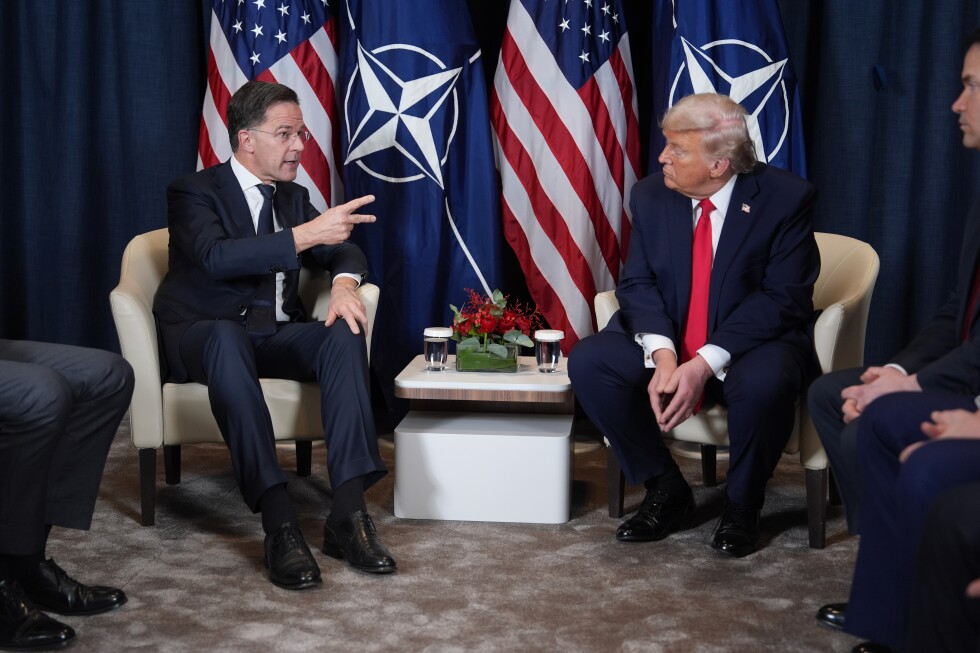
    NATO Secretary-General Mark Rutte has praised these commitments as demonstrating the alliance’s strength, even crediting Trump with reinforcing NATO’s military capabilities. However, Rutte’s diplomatic approach toward the American leadership, including his avoidance of addressing the Greenland controversy, has raised concerns among observers.

    The very foundation of NATO—established in 1949 to counter Soviet threats—rests on Article 5’s collective security guarantee that an attack on one member constitutes an attack on all. Trump’s territorial ambitions toward Greenland fundamentally challenged the principle of inviolable member territories, despite Article 5 not applying to internal disputes.

    U.S. Senators Jeanne Shaheen (D) and Lisa Murkowski (R) warned in a joint statement: “Suggestions that the United States would seize or coerce allies to sell territory do not project strength. They signal unpredictability, weaken deterrence and hand our adversaries exactly what they want.”

    Beyond territorial disputes, Trump’s expressed skepticism about mutual defense commitments has created profound uncertainty among European allies regarding American protection. This doubt extends to potential troop reductions in Europe, with upcoming NATO meetings expected to address Arctic security and possible U.S. troop drawdowns that could further undermine alliance cohesion.

    A recent European Union Institute for Security Studies report cautioned that diminishing certainty about U.S. commitment to European security means “the deterrence edifice becomes shakier,” potentially encouraging adversaries to test NATO’s resolve through sabotage, cyberattacks, and escalation without fearing unified retaliation.

  • Epstein said UAE ruler ‘set up’ Saudi crown prince over Khashoggi killing

    Epstein said UAE ruler ‘set up’ Saudi crown prince over Khashoggi killing

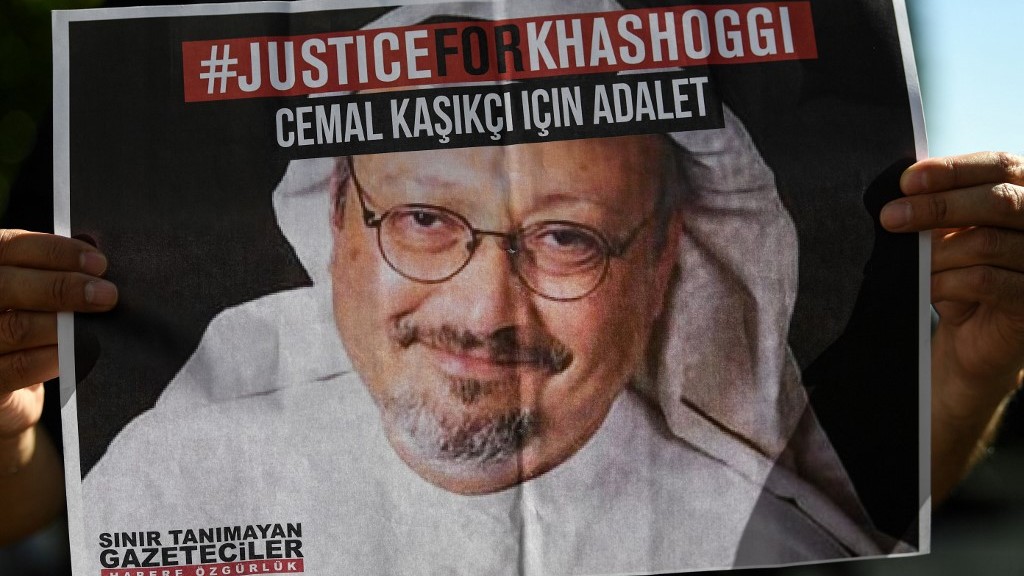
    Recently unsealed court documents from the Jeffrey Epstein case have revealed startling communications between the convicted sex offender and Middle Eastern contacts regarding the assassination of Saudi journalist Jamal Khashoggi. The correspondence, dated October 2018, shows Epstein actively speculating about the geopolitical implications of Khashoggi’s brutal killing inside the Saudi consulate in Istanbul.

    In exchanges with Anas Al Rashid, Epstein immediately suggested the operation might have been orchestrated by Mohammed bin Zayed (MBZ), the ruler of the United Arab Emirates, rather than Saudi Crown Prince Mohammed bin Salman. “Smells like something bigger to me. I wouldn’t be surprised if MBZ set him up,” Epstein wrote on October 12, 2018, just ten days after the murder.

    Al Rashid characterized the killing as “ugly .. very ugly” and described the subsequent information leaks as being executed “in a very smart way and .. fast.. very fast.” He warned Epstein that the situation had evolved into a “media war” and expressed concern that Saudi Arabia was “losing Trump” without an adequate defense strategy.

    The documents further reveal Epstein’s continued fascination with the case, including his theory that Khashoggi could be posthumously branded a “terrorist” and speculation about a “failed covert operation” or “entrapment trap.” Notably, the files indicate Epstein received a message about an “urgent” meeting request from Mohammed bin Zayed on the night of October 13, 2018.

    Separately, an FBI memo included in the document release alleges Epstein’s intelligence connections, stating he “worked with US and Israeli intelligence” and was “close to the former Prime Minister of Israel, Ehud Barak, and trained as a spy under him.” These revelations add another layer of complexity to Epstein’s mysterious international network and raise new questions about his involvement in global affairs beyond his criminal activities.

  • Chaka Khan, Cher, Whitney Houston, Fela Kuti get Grammys Life Achievement Awards

    Chaka Khan, Cher, Whitney Houston, Fela Kuti get Grammys Life Achievement Awards

    LOS ANGELES — The Recording Academy bestowed its prestigious Lifetime Achievement Awards upon an illustrious group of music icons during Saturday’s Special Merit Awards ceremony. Chaka Khan, Cher, Carlos Santana, Paul Simon, Fela Kuti, and the late Whitney Houston were recognized for their extraordinary contributions to the music industry at the Wilshire Ebell Theatre event, held preceding Sunday’s main Grammy Awards.

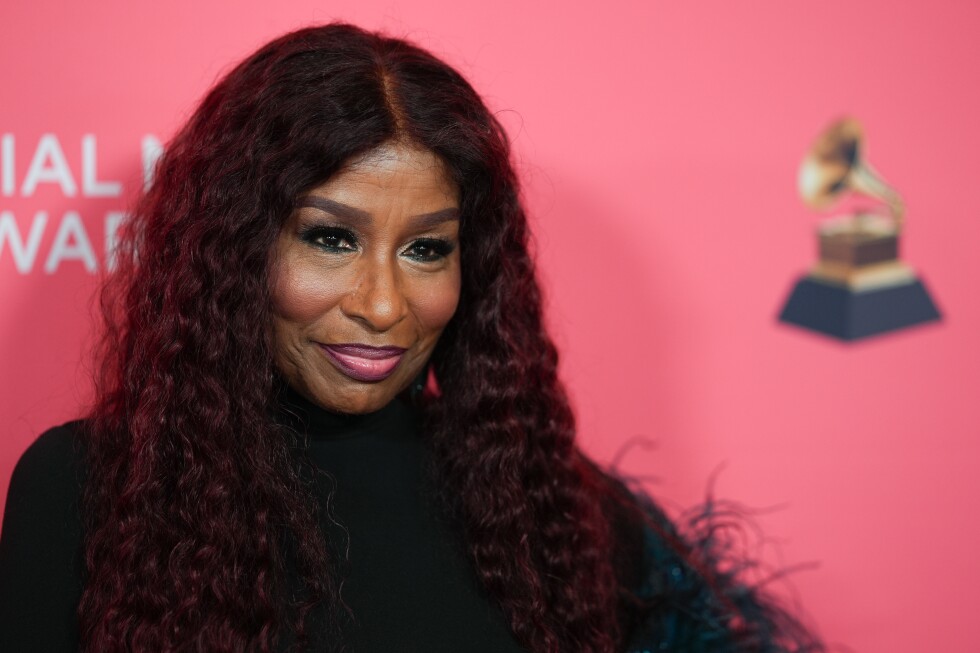
    Chaka Khan emerged as the sole honoree to personally accept her award during the emotional ceremony. Dressed in a radiant sea green gown, the legendary vocalist reflected on her five-decade career with profound gratitude. “Music has been my prayer, my healing, my joy, my truth,” Khan expressed. “Through it, I saved my life.” Her acceptance speech acknowledged both the brilliant collaborators and occasional “cuckoos” she encountered throughout her journey.

    The ceremony featured poignant tributes to posthumous recipients. Family members accepted honors for Nigerian Afrobeat pioneer Fela Kuti, who passed in 1997, and vocal phenomenon Whitney Houston, who died in 2012. Pat Houston, Whitney’s sister-in-law and former manager, movingly declared: “Her voice — that voice! — remains eternal. Her legacy will live forever.”

    Kuti’s children received his award, recognizing him as a “producer, arranger, political radical, outlaw and the father of Afrobeat” — marking the first time an African musician has received this honor. Femi Kuti emphasized the significance: “It’s so important for us, it’s so important for Africa, it’s so important for world peace and the struggle.”

    Absent recipients contributed through video messages. Cher humorously recalled her childhood aspirations: “The only thing I ever wanted to be was a singer. When I was 4 years old I used to run around the house naked, singing into a hair brush. Things haven’t changed all that much.” Carlos Santana, represented by his son Salvador, delivered an inspirational message: “The world is so infected with fear that we need the music and message of Santana to bring hope, courage and joy to heal the world.”

    The Trustees Award recognized non-performers including Bernie Taupin, Elton John’s longtime lyricist, who humorously noted waiting “57 years for one of these” despite co-writing numerous hits. Taupin shared his songwriting principles: “avoid cliches,” “never write songs in cubicles” and “don’t say you’re going to die if she leaves you — because you’re not.”

    Additional honorees included Latin jazz innovator Eddie Palmieri (posthumously), Sylvia Rhone (the first Black woman to lead a major label), and technical pioneer John Chowning. The ceremony also celebrated educational excellence with Jennifer Jimenez receiving the Music Educator Award and Raye’s “Ice Cream Man” earning the Harry Belafonte Song for Social Change Award.

  • Iran says it now considers EU militaries to be terrorist groups

    Iran says it now considers EU militaries to be terrorist groups

    DUBAI, United Arab Emirates — In a significant escalation of diplomatic tensions, Iran’s parliamentary speaker Mohammad Bagher Qalibaf declared on Sunday that the Islamic Republic now formally considers all European Union military forces to be terrorist organizations. This provocative announcement comes as direct retaliation for the EU’s recent designation of Iran’s Revolutionary Guard as a terrorist entity following the paramilitary force’s brutal suppression of nationwide protests.

    Qalibaf, himself a former Revolutionary Guard commander, delivered the statement while he and fellow legislators wore military uniforms in a show of solidarity with the controversial force. The reciprocal terrorist designation, while largely symbolic under Iran’s 2019 legal framework previously used against U.S. forces, signals deteriorating relations between Tehran and Western powers.

    The rhetorical exchange occurs against a backdrop of heightened military alertness in the Persian Gulf region. Iran has scheduled live-fire military exercises for Sunday and Monday in the strategically vital Strait of Hormuz—the critical maritime passage through which approximately 20% of globally traded oil transits. Meanwhile, U.S. President Donald Trump continues to evaluate potential military options against Iran, establishing clear red lines regarding the treatment of protesters and nuclear development activities.

    Qalibaf condemned the European decision as strategically misguided, asserting that ‘By seeking to strike at the Revolutionary Guard, which itself has been the greatest barrier to the spread of terrorism to Europe, Europeans have in fact shot themselves in the foot.’ The parliamentary session concluded with lawmakers chanting ‘Death to America!’ and ‘Death to Israel!’—reflective of the hardline position dominating Iranian policy.

    The geopolitical standoff extends to Iran’s nuclear program, with Trump emphasizing the need for a ‘satisfactory’ agreement to prevent nuclear weapons development. While Iranian security official Ali Larijani indicated progress in ‘structural arrangements for negotiations’ via social media, Supreme Leader Ayatollah Ali Khamenei maintains his prohibition on direct talks with the United States, leaving diplomatic channels strained despite Trump’s assertion that ‘they are talking to us. Seriously talking to us.’

  • Ms. Lauryn Hill returns to the Grammys to pay tribute to D’Angelo, Roberta Flack

    Ms. Lauryn Hill returns to the Grammys to pay tribute to D’Angelo, Roberta Flack

    The 68th Annual Grammy Awards, held in Los Angeles, evolved into a potent fusion of artistic celebration and political advocacy, with immigration policy emerging as a central theme. The ceremony honored musical legacies while witnessing historic victories and pointed criticism of U.S. Immigration and Customs Enforcement (ICE).

    Kendrick Lamar cemented his status in hip-hop history by securing his 26th Grammy for the rap album ‘GNX,’ surpassing Jay-Z’s longstanding record. ‘Hip-hop is always going to be right here… We’re gonna be having the culture with us,’ Lamar stated in his acceptance speech.

    The night’s most resonant moments, however, were politically charged. Upon winning Song of the Year for ‘Wildflower,’ Billie Eilish declared from the stage, ‘No one is illegal on stolen land,’ before adding, ‘(Expletive) ICE.’ This sentiment was powerfully echoed by Bad Bunny after his win for best música urbana album for ‘Debí Tirar Más Fotos.’ He began his speech in English, proclaiming ‘ICE out’ to massive applause, and asserted, ‘We’re not savage, we’re not animals, we’re not aliens. We are humans and we are Americans.’

    The anti-ICE messaging extended beyond the main awards. Songwriter of the Year Amy Allen and first-time winner Kehlani, who took home trophies for R&B performance and song, wore ‘ICE Out’ pins. Backstage, music icon Gloria Estefan expressed fear over the current political climate, noting, ‘There are hundreds of children in detention centers… I don’t recognize my country.’

    Artistic tributes formed a core part of the evening. A powerful in memoriam segment celebrated the late D’Angelo and Roberta Flack. In a highly anticipated return, Ms. Lauryn Hill performed on the Grammy stage for the first time since 1999, joining Wyclef Jean for a Fugees medley honoring Flack. Other notable performances included Post Malone and rock legends paying homage to Ozzy Osbourne with Black Sabbath’s ‘War Pigs.’

    The 2026 ceremony was also marked by a record number of first-time winners. Olivia Dean, named Best New Artist, emotionally dedicated her win to her immigrant grandmother, stating she was ‘a product of bravery.’ The award for best contemporary country album went to Jelly Roll for ‘Beautifully Broken,’ while Lady Gaga won pop vocal album for ‘Mayhem.’

    In a surprising pre-show development, the Dalai Lama won his first Grammy for an audiobook narration, and director Steven Spielberg achieved EGOT status by winning for the music film ‘Music for John Williams.’ The show was broadcast live on CBS and available via major streaming platforms.

  • Trump says US is ‘starting to talk to Cuba’ as he moves to cut its oil supplies

    Trump says US is ‘starting to talk to Cuba’ as he moves to cut its oil supplies

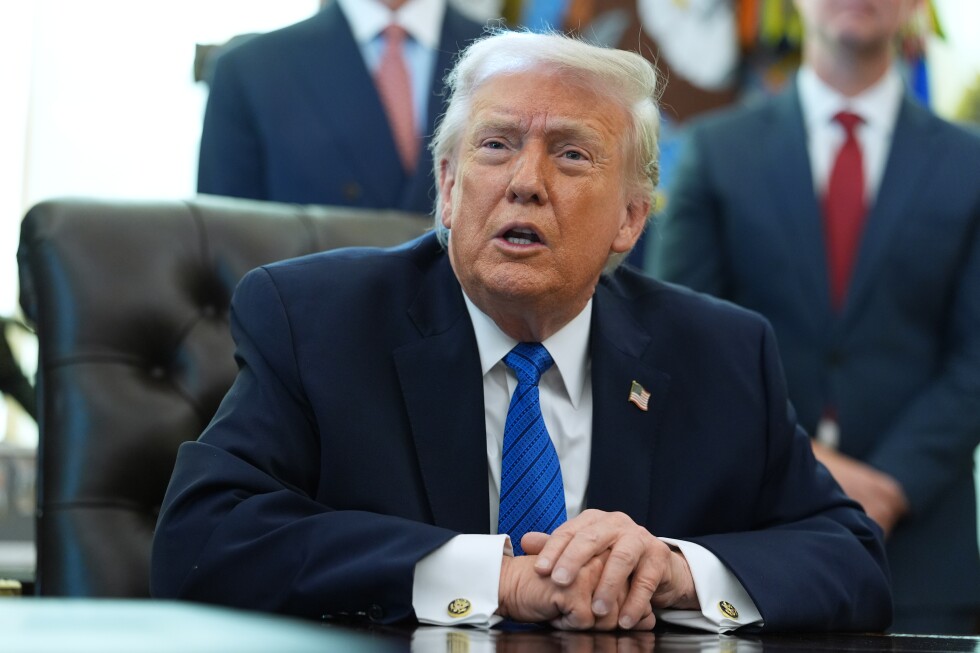
    ABOARD AIR FORCE ONE — President Donald Trump revealed Saturday evening that the United States has initiated preliminary communications with Cuban leadership, marking a significant development in his administration’s escalating pressure campaign against the communist government. The announcement came during the President’s flight to Florida, where he elaborated on his strategic approach to forcing diplomatic engagement through economic constraints.

    The Trump administration has systematically disrupted Cuba’s primary oil supply channels in recent weeks, implementing measures to halt shipments from both Venezuela and Mexico. This calculated energy blockade represents a cornerstone of Trump’s strategy to compel Cuban officials to negotiate from a position of vulnerability.

    While specific details regarding the level and timing of these diplomatic contacts remain undisclosed, Trump confirmed the preliminary nature of discussions, stating simply, “We’re starting to talk to Cuba.” This diplomatic overture follows the administration’s January actions against Venezuelan President Nicolás Maduro, which signaled a more aggressive posture toward nations perceived as adversarial to U.S. interests.

    The President’s objectives toward Cuba, though not fully articulated, appear aligned with his prediction of the government’s impending collapse. In a notable executive action last week, Trump authorized tariffs against any nation providing petroleum products to Cuba, directly targeting Mexico’s energy exports to the island nation.

    Mexican President Claudia Sheinbaum has warned that these sanctions could precipitate a humanitarian crisis, pledging to explore alternative methods of supporting Cuba. Trump countered these concerns during his remarks, expressing confidence that economic pressure would ultimately lead to a favorable agreement and Cuba’s liberation without humanitarian consequences, adding that the U.S. would approach negotiations with a measured demeanor.