作者: admin

  • ‘Disgraceful’: Treasurer Jim Chalmers lashes Israel minister after prisoners taunted

    ‘Disgraceful’: Treasurer Jim Chalmers lashes Israel minister after prisoners taunted

    A viral social media video shared by Israeli far-right National Security Minister Itamar Ben-Gvir has sparked international outrage, including condemnation from top Australian officials and even members of Israel’s own cabinet, over his humiliating mistreatment of detained activists from an international Gaza-bound aid flotilla that includes multiple Australian citizens. The confrontation took place this week when Israeli security forces intercepted the Global Sumud Flotilla, a 430-person international campaign organized to break Israel’s years-long naval blockade of Gaza and deliver critical humanitarian aid to the besieged enclave. Among the detained activists are up to 11 Australian nationals, alongside participants from dozens of other countries including New Zealand and Canada.

    In the video posted to Ben-Gvir’s social media channels Wednesday, titled mockingly “Welcome to Israel”, the hardline politician – who has long advocated for expanding illegal Israeli settlements in the West Bank and has previously been sanctioned by Australia for inciting anti-Palestinian violence – can be seen taunting the handcuffed activists. Footage shows masked Israeli officers forcing one female activist to the ground after she chanted pro-Palestinian slogans, before Ben-Gvir waves an Israeli flag in front of a group of detainees forced to kneel face-down inside a detention tent.

    Australia’s top political leaders were quick to issue a scathing rebuke of the incident. Foreign Affairs Minister Penny Wong called the published footage “shocking and unacceptable”, confirming that Australia’s ambassador to Israel had already formally raised the issue with Israeli authorities. “We condemn his actions and the degrading actions of Israeli authorities towards those detained,” Wong stated. The minister added that she had directed the Department of Foreign Affairs and Trade (DFAT) to summon Israel’s ambassador to Australia to reinforce Canberra’s demands: for the immediate release of all detained Australian citizens, guarantee that no detainees face mistreatment, and that Israel upholds its obligations under international law.

    Treasurer Jim Chalmers echoed Wong’s condemnation during a press appearance in Perth, describing the video as “disgraceful” and “deeply disappointing”. While Chalmers noted that Australian government departments had previously discouraged Australian citizens from joining the flotilla voyage, he emphasized that even after they chose to proceed, humane treatment remained a non-negotiable requirement. “There’s absolutely no need or no place for it,” Chalmers said. “I can only imagine what it’s like to be a parent or a loved one of one of the people involved in that trip, and to see them treated that way.”

    The condemnation extended beyond Australian political circles, even reaching within Israel’s own governing coalition. Israel’s Foreign Minister Gideon Sa’ar publicly distanced his government from Ben-Gvir’s actions, stating that the national security minister “knowingly caused harm to our State in this disgraceful display – and not for the first time. You have undone tremendous, professional, and successful efforts made by so many people, from IDF soldiers to Foreign Ministry staff and many others. No, you are not the face of Israel.” Even the Executive Council of Australian Jewry joined in criticizing Ben-Gvir’s conduct. Council President Daniel Aghion said “Nothing can excuse the appalling behaviour displayed by Minister Ben Gvir against a group of people who were being held in custody in Israel.” While the council acknowledged the activists had undertaken an unlawful and provocative action that it argued would benefit Hamas, Aghion stressed that “it does not in any way justify their mistreatment while they were being held. There is simply no excuse.”

    Other Western nations have also added their voices to the widespread international outcry. New Zealand’s Foreign Minister Winston Peters announced that New Zealand – which already imposed a travel ban on Ben-Gvir last year for undermining prospects for a two-state solution – condemned the minister’s actions, and had instructed its foreign ministry to summon the Israeli ambassador to relay New Zealand’s grave concerns. “His latest conduct with respect to the Gaza flotilla, which has been seriously criticised by his own Prime Minister, is further vindication of that position,” Peters said. “We expect Israel to adhere to its international legal obligations, including in its treatment of New Zealanders participating in the flotilla.”

    Canadian Prime Minister Mark Carney also joined the condemnation, calling the documented abuse “abominable” and “unacceptable”. Carney confirmed that Canada’s foreign ministry had already summoned the Israeli ambassador to demand formal assurances for the safety of Canadian detainees, noting that Canada had previously imposed strict sanctions on Ben-Gvir, including an asset freeze and travel ban, over repeated incitement to violence. “The protection of civilians and respect for human dignity must be upheld everywhere, at all times,” Carney said.

  • Luke Beveridge calls on AFL to overhaul list rules amid injury crisis

    Luke Beveridge calls on AFL to overhaul list rules amid injury crisis

    With the AFL mid-season draft just around the corner, Western Bulldogs head coach Luke Beveridge has put forward a bold proposal aimed at easing the growing pressure of mounting injury lists across the league while opening up more opportunities for fringe players to earn their spot at the top level.

    The long-serving coach has publicly called on league officials to revise current list rules, pushing for expanded squad sizes and more flexible promotion pathways that would allow clubs to address sudden and severe injury outbreaks that have derailed multiple teams’ 2024 campaigns. At the core of Beveridge’s idea is the creation of a formal extended supplementary list, a reserve pool of players that clubs hit hard by injury – such as this season’s crisis-hit Richmond Tigers – can draw from at any point when their senior list is depleted.

    Beveridge argues that the current standard list size of 42 players, excluding category B development spots, is no longer sufficient to withstand the demands of a lengthening AFL season. With the introduction of the new Tasmania Devils expansion side, the league is set to add an additional round to the already packed 23-round regular season, plus retaining the existing pre-season fixture, putting even more physical strain on playing groups across the competition.

    Beyond solving the immediate problem of crippling injury tolls, Beveridge says the expanded supplementary list system would also create greater incentive for undrafted players to continue developing their careers in state leagues, rather than walking away from the sport after being overlooked in the annual national draft.

    “I understand we need key dates for drafts to allow clubs to prepare, plan and strategise in a sophisticated way to build their lists, but I also believe we need far more fluidity when it comes to bringing players onto an AFL list to get them on the field when injuries hit,” Beveridge said in comments this week. “Richmond is the perfect example right now of a club that would benefit from having a supplementary list to draw from as their injury crisis worsens. With 23 regular rounds, pre-season games still on the calendar, and an extra round coming when Tasmania joins the league, 42 players just isn’t enough, in my view.”

    Beveridge expanded on his proposal, suggesting that the supplementary list should be structured to match the 48-player squad size approved for the new Tasmanian Devils franchise, with a dedicated 4 to 6 additional supplementary spots available for all clubs. He added that clubs facing extreme injury strain, like Richmond this year, should even be allowed to expand that supplementary pool further if needed. While he acknowledges that key details – including rules around player retention at the end of the season and which players qualify to move off the primary list – still need to be thrashed out with league bosses, Beveridge stressed the change is a necessary adaptation for the modern game.

    “This is something we need to implement for the future, looking at the list structure that’s already been approved for Tasmania. Every AFL club should have the same flexibility to access a similar system when they’re dealing with a devastating injury toll,” he added.

    The Western Bulldogs themselves have been forced to navigate their own significant injury crisis earlier this season, losing a string of key senior players in quick succession, with young star Sam Darcy headlining the club’s injury list. The good news for Beveridge and Bulldogs fans, however, is that the club is finally starting to get key players back fit and available for selection.

    James O’Donnell is set to be available for selection this weekend, while key trio Tim English, Cody Weightman are on track to return to the line-up in the coming weeks. “We’re expecting James O’Donnell to be available this week. Tim is still probably another week away – we’re just being conservative with him, so he’s unlikely to play this round,” Beveridge confirmed. “Cody is a good chance to return next week. We’re expecting a handful of changes, but James is the main inclusion this week. We’ve always been a very cautious group when it comes to head injuries, so we’re just making absolutely sure Tim is fully fit and ready to go before we bring him back.”

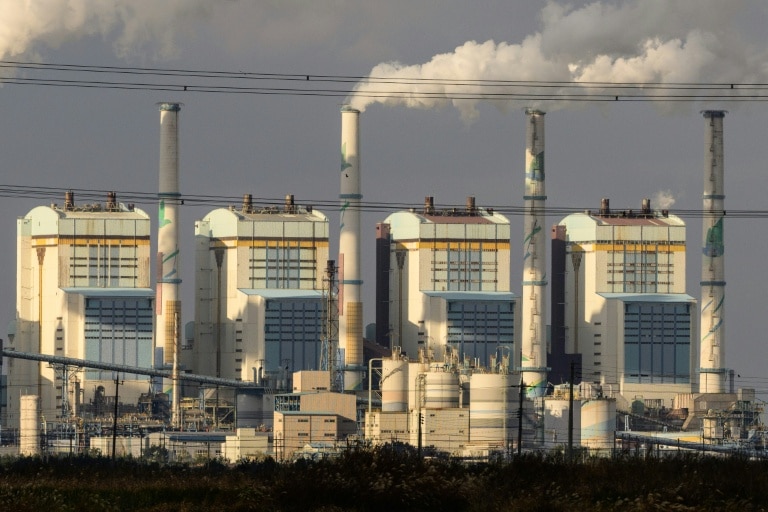
  • The world built more coal power in 2025, but used less

    The world built more coal power in 2025, but used less

    A new analysis released Thursday reveals a striking global contradiction in coal power development for 2025: while nations continued to build and bring online new coal-fired generating capacity at a 3.5% annual growth rate, total global electricity generated from the polluting fossil fuel actually declined over the same period. Only one major world economy bucked this trend, recording a substantial increase in coal generation, according to data from Global Energy Monitor (GEM), an organization that has tracked global coal infrastructure development for more than a decade.

    As the single largest source of anthropogenic planet-warming greenhouse gas emissions, phasing out coal power is widely recognized as a core priority for limiting global temperature rise and mitigating the worst impacts of climate change. In recent years, plummeting costs and widespread deployment of wind and solar power have allowed these clean energy sources to meet nearly all new global electricity demand, a shift that pushed total 2025 global coal generation down 0.6% from 2024 levels.

    Nearly all of the new coal capacity added in 2025 – 95% of total new construction – was concentrated in just two nations: China and India. Even in these two major coal markets, the disconnect between growing capacity and falling generation held: China’s total coal capacity expanded 6% over the year, but coal-generated electricity fell 1.2% thanks largely to the country’s explosive growth in renewable energy capacity. India followed a nearly identical pattern, with coal capacity growing almost 4% while generation fell nearly 3% year-over-year.

    Christine Shearer, project manager of GEM’s Global Coal Plant Tracker and lead author of the report, explained that regional economic incentives drive continued coal construction in both nations. “Many of the provinces and states leading coal development are major coal-producing regions,” Shearer told AFP, noting these areas hold “strong industrial incentives to keep building coal.”

    Broader systemic factors also sustain coal growth in the two countries. For China, coal is viewed as a reliable backup to offset the intermittency of wind and solar power, a policy shaped by widespread power shortages experienced several years ago. For India, the world’s most populous nation, coal has long been relied on to meet rapidly rising electricity demand, even as non-fossil sources now make up 50% of the country’s installed capacity. Persistent transmission and grid infrastructure gaps mean India still generates roughly three-quarters of its total electricity from coal.

    Beyond new construction, the report also found that the global pace of retiring old, uneconomical coal plants slowed sharply in 2025, with nearly 70% of coal units originally scheduled for decommissioning instead remaining operational. In Europe, most delayed retirements trace back to policy decisions made during the 2022–2023 global energy crisis triggered by Russia’s invasion of Ukraine, when nations scrambled to secure alternative energy supplies. In the United States, by contrast, delayed retirements and rising coal use stem directly from intentional government policy, Shearer said.

    “US coal-fired generation rose by more than 80 terawatt hours year-on-year, a figure so large that no other country came close,” Shearer noted. This surge “was not simply a function of demand growth, it reflected a policy environment that actively encouraged it,” she added.

    More recent geopolitical instability has also pushed some nations to reverse course on coal phase-outs: the global energy market volatility sparked by the US-Iran conflict linked to the Israel-Gaza war has led some countries to reactivate idled coal units and extend the lifespan of operating plants.

    In China, coal generation saw an early-year spike in 2025 driven in part by lower-than-expected output from wind and nuclear power, but Lauri Myllyvirta, co-founder of the Centre for Research on Energy and Clean Air and a report contributor, said systemic bias toward coal played an outsize role. “The oversupply and favouritism of coal power is an important factor,” he told AFP. While data from May 2025 indicates China’s coal generation has since returned to a downward trajectory, “the problem of excess coal capacity and entrenched favouritism of coal in the grid remain,” he added.

    As of mid-2025, global coal-fired generation is up just 0.3% year-to-date, while combined wind and solar generation has jumped 10% over the same period. Shearer emphasized that this split makes clear a key global trend: clean energy is absorbing almost all new global electricity demand, leaving coal with almost no growth in actual use.

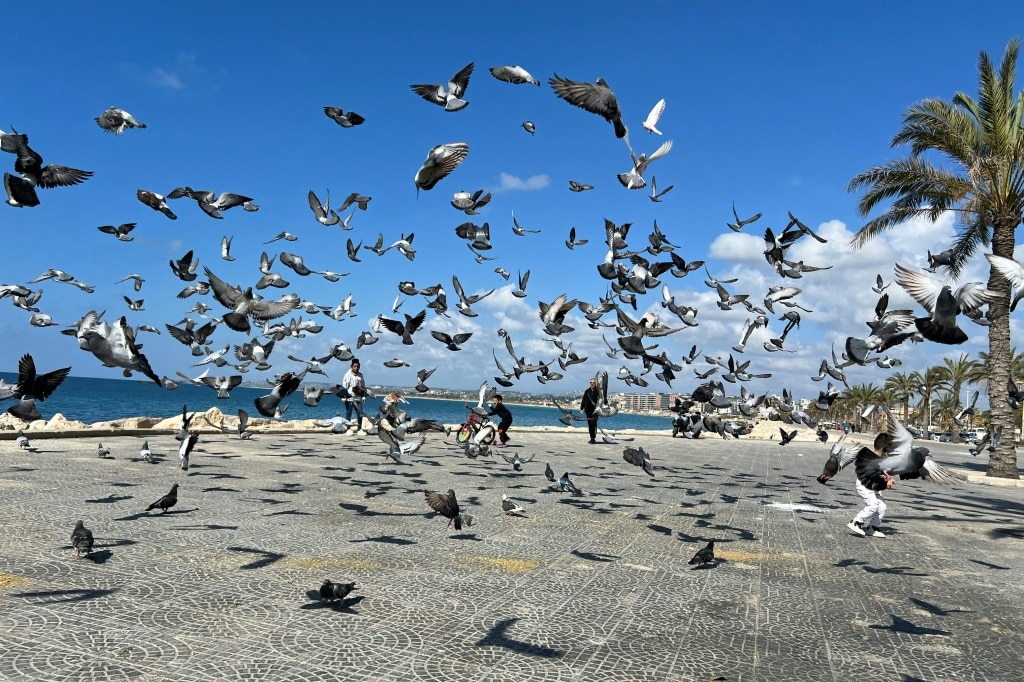
  • ‘Their story is our story’: Pigeons and humans, 3,500 years together

    ‘Their story is our story’: Pigeons and humans, 3,500 years together

    For most modern urban residents, feral pigeons are little more than uninvited pests: filthy birds that leave droppings on building facades, spread disease, and are repelled by ubiquitous anti-perching spikes across city skylines. But this dismissive reputation hides a thousands-year-long partnership between humans and rock doves that shaped both species, and new archaeological research is rewriting the timeline of that shared history.

    Published Thursday in the journal *Antiquity*, the study led by a team of Dutch researchers confirms that domestic pigeons were integrated into human societies as early as 3,500 years ago – nearly 1,000 years earlier than the previous scholarly consensus.

    Lead author Anderson Carter, a bioarchaeologist at the University of Groningen, told AFP that humans’ widespread rejection of pigeons is a remarkably recent development in the long arc of human-animal coexistence. For millennia, pigeons were far more than urban strays: they served as a reliable food source, delivered messages across impossible distances, produced fertilizer for crops, and held deep meaning as religious symbols across multiple cultures. Even into the 19th and 20th centuries, pigeons remained critical to human society, most notably carrying vital military messages during times of war.

    That centuries-long utility ended abruptly with the explosion of communications technology. “When the telegraph and then the telephone were invented, pigeons were out of a job,” Carter explained. But thousands of years of selective breeding and conditioning had left the birds adapted to live alongside humans, so they did not leave human settlements. It was not until the Industrial Revolution created large, dense modern cities that the narrative around pigeons shifted, framing them as dirty, unwanted pests that spread illness.

    To unpack the origins of this relationship, the research team traveled to the Hala Sultan Tekke archaeological site on the shores of Larnaca Salt Lake in southeast Cyprus. There, they analyzed 159 ancient pigeon bones recovered from Bronze Age excavation layers, using biometric, isotopic and collagen analysis to trace the birds’ diet and identify signs of human influence.

    Dating placed the remains between the 13th and 14th centuries BC, or roughly 3,500 years before the present. When researchers compared the nitrogen and carbon isotope ratios from the pigeon collagen to isotope data from contemporary human remains found at other Bronze Age Cypriot sites, they discovered a near-perfect overlap, indicating the pigeons shared a very similar diet to humans living in the same region. This overlap is strong evidence the birds were already domesticated, or well on their way to domestication, by that time.

    Prior to this finding, the earliest confirmed evidence of pigeon domestication dated back to around 300 BC, from large purpose-built stone nesting structures discovered in Greece. The new finding pushes the timeline of domestication back by almost a millennium.

    Genomic analysis also confirms that modern feral city pigeons are genetically closely linked to wild rock doves from the Mediterranean and Middle East, matching the archaeological evidence from Cyprus. For the research team, the broader goal of the work is to reframe public perception of the most common urban bird. Carter notes that pigeons’ evolutionary story is inextricably woven into human history: “Their story is also our story.”

  • How activists pushed the UK’s largest pension megafund to divest from Israel

    How activists pushed the UK’s largest pension megafund to divest from Israel

    A years-long campaign for pro-Palestine divestment has scored a quiet, consequential victory: the United Kingdom’s largest public sector pension pool, Border to Coast Pensions Partnership, secretly sold off all its Israeli government bond holdings in 2025 following months of escalating grassroots pressure, an investigation by Middle East Eye can exclusively reveal.

    Headquartered in Leeds, Border to Coast manages close to £120 billion ($160 billion) in retirement assets on behalf of roughly two million local government public sector workers across 18 regional UK pension funds. What has not been reported publicly until now is that between September 2024 and March 2025, the fund acquired $29.2 million in Israeli government bonds through its third-party asset manager, PIMCO—the world’s largest active bond manager, based in Newport Beach, California and owned by German financial giant Allianz. The purchases came months after the International Court of Justice issued a landmark ruling finding it plausible that Israel was committing genocide in Gaza, at a time when grassroots divestment pressure was already building across multiple UK local government pension schemes.

    This purchase made Border to Coast the largest buyer of Israeli government bonds among UK public institutions tracked in an exclusive dataset compiled by Amsterdam-based research firm Profundo, which documents Israeli bond acquisitions between 2024 and 2026. It ranked third among all UK investors, behind only British corporate giants Aviva and HSBC.

    When pro-Palestine campaigners in South Yorkshire, one of the regions whose pension assets are managed by Border to Coast, uncovered the bond purchases through freedom of information-style requests, they launched a sustained public pressure campaign. In June 2025, the South Yorkshire Pensions Divest for Palestine Campaign delivered a 7,500-signature petition to the South Yorkshire Pensions Authority (SYPA), calling for an immediate sale of the holdings. Protesters gathered outside a key SYPA meeting, with chants so loud attendees inside struggled to conduct business. The campaign won further backing when Sheffield City Council passed a unanimous “Not In Our Name” motion calling for action on divestment that September.

    Sue Owens, a spokesperson for the South Yorkshire campaign, told Middle East Eye that the discovery of the bond purchases was deeply alarming for local pension holders. “When we found that Border to Coast held Israeli bonds we were appalled to think that pensioners’ money was directly helping to fund genocide, apartheid, occupation, incarceration and torture,” Owens said. “We were even more shocked when we realised the bonds had been bought while the genocide was ongoing.”

    The layered structure of the UK’s public pension system created unique barriers to action. SYPA, which represents South Yorkshire’s local government workers, could not directly order Border to Coast to sell the bonds. Border to Coast, which delegated day-to-day bond management to PIMCO, could pressure the asset manager but could not unilaterally override PIMCO’s investment decisions. For months, SYPA pushed Border to Coast for answers, which in turn pressed PIMCO, which initially defended the purchases as based on Israel’s strong credit rating and macroeconomic fundamentals.

    At a public meeting in early September 2025, Border to Coast CEO Rachel Elwell acknowledged shared frustration with PIMCO’s lack of transparency, but framed divestment from Israeli bonds as far more complex than divestment from Russian assets following the invasion of Ukraine. Unlike Russia, she noted, there was no clear international consensus or UK government sanctions on Israel, creating regulatory uncertainty for institutional investors. Andrew Strone, SYPA’s assistant director of investment strategy, echoed that point, saying the UK government’s refusal to impose sanctions on Israel, as it did on Russia, left institutions without clear policy guidance to justify a sale.

    Weeks after that meeting, in late September 2025, PIMCO sold off all of Border to Coast’s Israeli bond holdings. No public announcement was made, and no official explanation for the sale has been issued. Behind closed doors ahead of the sale, campaigners who met Border to Coast leadership at the fund’s annual general meeting reported that executives privately admitted concerns over reputational damage and did not reject the ethical arguments for divestment, but declined to publicly endorse the campaign’s position.

    When contacted by MEE, a Border to Coast spokesperson confirmed the sale, but would not confirm whether activist pressure had driven the decision. The spokesperson alluded to environmental, social and governance (ESG) risk considerations, saying: “We continue to monitor the impact of the Israel-Gaza conflict on investment portfolios in line with our consideration of ESG issues and our responsible investment policies.” The fund also confirmed it has hired Dutch asset manager Robeco, a pioneer in ESG due diligence for Israeli-Palestinian investments, to conduct human rights reviews of its holdings.

    Border to Coast’s quiet divestment is a significant milestone: only a small number of major UK institutional investors have sold Israeli assets in recent years, despite mounting allegations of Israeli war crimes in Gaza. The Universities Superannuation Scheme, the UK’s largest private pension fund, previously divested following pressure from academic unions, while London’s local government pension vehicle sold £6.7 million in Israeli bonds in 2024 but remains under pressure over other Israel-linked holdings. In all of these cases, institutions have declined to explain their decisions publicly, often only citing vague “financial risk management” when pressed.

    This pattern suggests that pro-Palestine activist pressure, paired with growing ESG scrutiny of human rights risks, is shifting institutional investment decisions even as institutions avoid public debate to escape political and regulatory backlash. The case of Border to Coast also lays bare the contradictory legal and political landscape that has forced UK institutions into silence on Palestinian human rights, even as they have spoken out publicly and acted quickly on divestment from Russian assets following the invasion of Ukraine.

    The UK’s Local Government Pension Scheme (LGPS), of which Border to Coast is the largest constituent pool, has 6.9 million members nationwide. The Scheme Advisory Board (SAB), which oversees the LGPS, wrote to UK Local Government Minister Alison McGovern last October asking for explicit guidance on whether holding Israeli conflict-linked investments creates legal liability for pension funds, pointing out that the UK government had issued clear guidance on Russian investments following the invasion of Ukraine.

    McGovern only responded seven months later, and her answer offered little clarity for campaigners. She wrote that divestment and boycott decisions fall under central government foreign policy, and that it “is not appropriate for local authorities to adopt investment policies that go beyond or differ from UK Government sanctions or foreign policy positions.” Since the UK has not imposed sanctions on Israel, this guidance effectively discourages divestment—though McGovern added that institutions can adjust strategies for financial reasons related to fiduciary duty, leaving a narrow legal opening for divestment framed around risk rather than politics. The response did, however, mark a rare acknowledgement at the ministerial level that pro-Palestine activist pressure has become a consequential force shaping institutional investment decisions.

    The divestment by Border to Coast comes as pressure on European financial institutions to cut ties with Israeli investments is accelerating. In August 2025, Norway’s sovereign wealth fund divested from 11 Israeli companies and excluded Caterpillar and five major Israeli banks over their links to illegal Israeli settlements in the occupied West Bank. In September 2025, the Central Bank of Ireland paused its approval of Israeli bond prospectuses, while a Danish academic pension fund formally excluded Israel and Israeli state-controlled companies from its portfolio.

    Despite the sale of its Israeli government bonds, Border to Coast still holds investments in three companies listed on the UN database of businesses operating in illegal Israeli settlements: Airbnb, Booking.com and Bank Leumi. The fund told MEE it has been engaging with these companies to address ESG concerns since 2025, and the South Yorkshire divestment campaign says it will continue to press for full divestment from all Israel-linked assets tied to human rights abuses.

  • The fight against foreign developers buying Caribbean beaches

    The fight against foreign developers buying Caribbean beaches

    Against the backdrop of post-hurricane recovery and a booming global luxury tourism market, grassroots activists across multiple Caribbean islands are waging a growing battle to protect local communities’ long-held access to public coastlines, as wealthy foreign developers push to transform prime beachfront into exclusive, high-end resorts.

    One of the most high-profile cases centers on the tiny Caribbean island of Barbuda, where for more than two decades, Pink Sands Beach Bar served as the beating heart of local social life. Owned by Miranda Beazer, the open-air spot — named for its iconic rose-hued shoreline — drew generations of locals for Sunday post-church relaxation, domino tournaments, and casual community gatherings. That all changed in 2017, when Category 5 Hurricane Irma swept across the island, destroying every structure in its path, including Beazer’s bar and family home. All 2,000 Barbudans were evacuated to neighboring Antigua, and Beazer later lost her husband before she could begin rebuilding. When she returned to reclaim her plot, foreign developers quickly offered massive sums to buy out her claim, offers she rejected outright. “It’s not the money that I’m after,” Beazer explains. “I actually want to retain my land.”

    Barbuda’s unique land tenure system, rooted in post-emancipation justice, adds layers of complexity to Beazer’s fight. When slavery was abolished on the island in 1834, collective land ownership was established to guarantee all Barbudans access to territory. This system was formally enshrined in national law with the 2007 Barbuda Land Act, which states that all land on the island is communally owned; individual citizens can secure long-term leases to occupy plots, but the community retains collective oversight and final say over major development projects. Beazer holds a valid lease for 30 acres of southern Barbuda coastline, but today she can only access 8 of those acres. The Global Legal Action Network (GLAN), the international legal advocacy group supporting her case, alleges that the remaining 22 acres are being illegally occupied by two foreign developers: Murbee Resorts and Peace Love and Happiness (PLH). Both developers have denied any wrongdoing, with Murbee stating it only operates on land for which it holds valid legal leases, and PLH asserting it has never occupied Beazer’s plot and has strictly followed all local regulations since securing its own Barbuda lease in 2017. Beazer alleges that developers even bulldozed what was left of her damaged bar after the hurricane, leaving her locked in a protracted court battle to reclaim access to her leased land.

    Just a few miles up the coast from Beazer’s plot, one of the Caribbean’s most high-profile luxury resort projects is nearing completion. The Beach Club Barbuda, a 400-acre development from Paradise Found, a venture backed by Oscar-winning actor Robert De Niro and Australian billionaire James Packer, will include a 17-villa Nobu Beach Inn and 25 private luxury beachfront homes, with plot prices starting at $7 million. Locals report that a new bypass road built to ringfence the resort has already blocked public access to the beach the project sits on. The development’s approval highlighted how national governments have changed local land laws to clear the way for foreign investment: in 2015, the Antigua and Barbuda government passed the Paradise Found Act, which explicitly exempts the resort complex from the protections of the 2007 Barbuda Land Act. Local campaigners challenged the law all the way to the Judicial Committee of the Privy Council (JCPC) in London, Antigua and Barbuda’s highest court post-independence. In 2022, the JCPC ruled in favor of the government, stating that collective rights held by Barbudans do not constitute a formal property interest that can block development. Paradise Found has said it complied with all national laws, and that public access to Princess Diana Beach, now part of the resort, “remains unchanged.” John Mussington, chair of the Barbuda Council, the island’s local governing body, argues that the development only moved forward by violating the 2007 Land Act that protects community land rights. Beazer’s stretch of coastline is now the last remaining section of southern Barbuda’s shoreline still open to local access, making her fight all the more critical. “If you were to ever come here and experience it yourself, you would really understand why we’re so committed to this little piece of rock that we have,” she says.

    Barbuda’s battle is not an isolated case. It reflects a growing crisis across the Caribbean, where outdated colonial-era land laws and surging demand for luxury Caribbean getaways have combined to erode local access to public beaches. Some 1,600 kilometers west of Barbuda, Jamaica has been grappling with its own long-running dispute over beach access. Devon Taylor, president of the Jamaica Beach Birthright Environmental Movement (Jabbem), says current Jamaican land law explicitly denies locals any formal rights to the country’s foreshore, effectively handing control of most coastlines to private developers. The Jamaican government recently proposed a new bill meant to expand local beach access, but Taylor argues the legislation actually tightens restrictions by framing access as a paid benefit, requiring locals to purchase beach passes from large hotels. “You’re selling back the access to the people,” Taylor says, arguing that this echoes the exclusionary “colonial logic” of the past. According to Jabbem, less than 1% of Jamaica’s entire coastline remains freely open to local residents, and the group is currently involved in five separate legal challenges against the government and private developers to defend public access. The Jamaican government has not yet responded to requests for comment on the proposed legislation.

    Even smaller, less developed Caribbean islands such as Grenada are already facing similar tensions as international tourists seek out lesser-known, off-the-beaten-path destinations. Kriss Davies, chair of local advocacy group Grenada Land Actors, warns that unchecked large-scale resort development risks stripping the island of the cultural and natural charm that draws visitors in the first place, while displacing local communities from their traditional coastlines.

    According to the United Nations Development Programme, the Caribbean is the most tourism-dependent region in the world, with nearly half of all visitors arriving from the United States. For cash-strapped regional governments, foreign investment in luxury tourism offers an undeniably appealing path to economic growth and job creation. But local activists argue that this growth comes at a steep, irreversible cost to the communities that have shaped the Caribbean’s cultural identity. “Travel is never neutral — it carries both an economic and moral weight,” Taylor says. “These developments often displace residents from ancestral coastlines, restrict public access to beaches, and channel wealth away from the very people whose culture sustains the tourism experience.” As global demand for exclusive Caribbean paradise continues to rise, local land defenders warn that unregulated tourism could permanently alter the home they have stewarded for generations, erasing public access to the natural treasures that make the region unique.

  • Musk eyes Wall Street record with SpaceX IPO

    Musk eyes Wall Street record with SpaceX IPO

    Elon Musk’s aerospace and technology conglomerate SpaceX has taken the first formal step toward a public listing, filing an initial public offering (IPO) prospectus with U.S. regulators this Wednesday that is poised to shatter all previous Wall Street records if brought to fruition.

    The confidential filing, already under review by the U.S. Securities and Exchange Commission (SEC), outlines plans to raise up to $75 billion in public capital, which would value the company at as much as $1.75 trillion. Trading on the Nasdaq exchange under the ticker symbol SPCX could launch as early as June 2026, according to industry media reports. If completed, the listing would surpass every IPO in U.S. history in terms of capital raised, cementing Musk’s reputation as one of the most transformative entrepreneurs of the 21st century.

    This IPO marks a watershed moment for SpaceX, which was founded 24 years ago and has never publicly disclosed its detailed financial performance until now. The S-1 prospectus— the regulatory document required for all public listings that lays out financials, risk factors and strategic plans—revealed that SpaceX generated $18.7 billion in total revenue in 2025, but recorded an operating loss of $2.6 billion driven by massive investments in next-generation rocket technology and artificial intelligence development.

    Starlink, the company’s satellite internet division, stands out as its core revenue driver, pulling in $11.4 billion in 2025 revenue, a nearly 50% increase year over year. By contrast, the company’s combined AI segment— which includes Musk’s xAI and the social platform X, formerly Twitter—posted $3.2 billion in 2025 revenue but a staggering $6.4 billion operating loss, as the company pours capital into building AI training data centers to compete with industry giants Google, Meta and Amazon. Capital expenditure for the AI segment hit $12.7 billion in 2025 alone, and grew to $7.7 billion in just the first quarter of 2026, reflecting the enormous cost of staying competitive in the global AI arms race.

    In a surprising business deal disclosed in the filing, SpaceX has agreed to lease excess capacity at its COLOSSUS and COLOSSUS II data centers to leading rival AI firm Anthropic for $1.25 billion per month through May 2029. The IPO filing comes just days after Musk suffered a major legal defeat in his long-running public feud with OpenAI, another top AI competitor that is also preparing for its own public listing. With Anthropic also targeting an IPO in 2026, this year is on track to become one of the most high-profile years for tech public offerings in recent Wall Street history.

    A key detail of the listing plans confirms that Musk will retain near-total control of SpaceX after it goes public via a dual-class share structure, a setup designed to avoid the kind of corporate governance battles that have repeatedly disrupted his leadership at electric car maker Tesla, where shareholders have repeatedly challenged his massive compensation packages and the independence of Tesla’s board. Under the proposed structure, Musk will hold roughly 42% of the company’s total equity but control approximately 79% of all shareholder voting power. SpaceX explicitly warned outside investors in the filing that this arrangement creates inherent risks, noting Musk “will have the power to control the outcome of matters requiring shareholder approval, including election of all our directors.”

    The prospectus also laid out SpaceX’s extraordinarily ambitious long-term strategic roadmap: building AI data centers in orbit, arguing that solar power captured directly from space is “the only truly scalable solution” to meet the exponentially growing energy demand of global AI computing. The company plans to begin launching purpose-built AI computer satellites as early as 2028, with a long-term goal of deploying 100 gigawatts of orbital compute capacity annually. Achieving that goal will require thousands of rocket launches per year and moving roughly one million metric tons of payload into orbit annually— a challenge SpaceX says no other company on Earth is positioned to tackle at commercial scale.

    In a projection that underscores the company’s massive growth ambitions, SpaceX calculated its total addressable market—the maximum potential revenue opportunity across all its business lines, excluding the Chinese and Russian markets—at a staggering $28.5 trillion.

  • Tennessee man jailed over Charlie Kirk post settles lawsuit for more than $800K

    Tennessee man jailed over Charlie Kirk post settles lawsuit for more than $800K

    A retired law enforcement officer from Tennessee who spent more than five weeks in jail following his arrest over a social media post connected to the killing of conservative activist Charlie Kirk has reached an $835,000 settlement in his wrongful incarceration lawsuit against local authorities. Larry Bushart, 64, spent 37 days in pre-trial detention before prosecutors ultimately dropped all felony charges against him — a period of incarceration that cost him his part-time post-retirement job and forced him to miss the birth of his first grandchild.

    Bushart’s arrest dates back to September 2024, when deputies from the Perry County Sheriff’s Office took him into custody hours after he shared a satirical meme in a public Facebook discussion thread about a community vigil honoring Kirk, who was fatally shot during an outdoor speaking engagement in Utah 10 days prior. The meme paired the partial line “We have to get over it” — a quote taken from former President Donald Trump’s 2024 message of condolence following a deadly school shooting in Perry, Iowa — with the caption “Seems relevant today.”

    Local authorities claimed that area residents grew alarmed by the post because Tennessee’s Perry County is home to a public school that shares the same name as the Iowa school where the 2024 shooting occurred. Then-sheriff Nick Weems argued publicly after the arrest that investigators believed Bushart had intentionally posted the meme to stoke widespread fear and hysteria within the local community, charging him with threatening mass violence at a school. Unable to pay the exorbitant $2 million bail set by the court, Bushart remained behind bars for more than a month even as he maintained his post was protected free speech and never intended to incite harm.

    After all charges were dismissed, Bushart filed a federal civil lawsuit against Perry County, Weems, and lead county investigator Jason Morrow, alleging the defendants had violated his First Amendment right to free expression and his Fourth Amendment protection against unreasonable search, seizure, and unlawful detention. A jury trial was scheduled to begin in Memphis this coming July, before the two sides reached a settlement agreement that was announced publicly this week.

    In a formal statement announcing the resolution of his case, Bushart said he was pleased that his First Amendment rights had ultimately been vindicated. “The people’s freedom to participate in civil discourse is crucial to a healthy democracy,” the statement read. “I am looking forward to moving on and spending time with my family.” The BBC has reached out to Perry County officials for additional comment on the settlement, but has not yet received a response.

    Bushart is one of more than 30 Americans who faced some form of professional or public repercussion — ranging from widespread online harassment to termination from employment — for controversial social media comments made in the wake of Kirk’s killing. To date, he remains the only individual known to have been incarcerated for a social media post related to the high-profile killing, a fact that has drawn increased national attention to his case and broader debates over the balance between public safety and free speech rights in the digital age.

  • India has food safety laws. So why can’t it guarantee safe food?

    India has food safety laws. So why can’t it guarantee safe food?

    In the sun-dappled kitchen of 55-year-old Nirmal Rao in New Delhi, India, a quiet shift in daily routine is unfolding that mirrors a growing trend across the country’s urban centers. As she lays boiled turmeric out to dry in the afternoon light, then grinds yesterday’s cured batch into a fine golden powder in her countertop mixer, Rao acknowledges this labor-intensive work is not what she envisioned for her retirement years. “We shouldn’t have to do this,” she says, tucking the finished bright yellow spice into a glass jar, “But you cannot trust what’s being sold in the markets anymore.”

    Rao is far from alone in this choice. Across India’s cities, a growing number of middle-class households are converting their domestic kitchens into small-scale food processing hubs: hand-grinding whole spices, crafting homemade paneer (Indian cottage cheese), and sourcing unprocessed grain directly from regional farms. What began as a niche hobby for food enthusiasts has evolved into a mass consumer response driven not by nostalgia for traditional cooking, but by deep-seated distrust of the country’s commercial food supply.

    Official government data underscores the foundation of this anxiety: between 2022 and 2025, roughly one in six food samples collected by regulators failed to meet India’s national food safety standards. Over that same period, authorities revoked more than 1,100 operating licenses from food businesses for violations. Failed tests cover a spectrum of issues, ranging from inadequate hygiene and incorrect labeling to dangerous contamination and intentional adulteration, a practice where unethical producers cut high-quality ingredients with cheap, often harmful substitutes to boost profits.

    Just last month, for example, food safety officials in Hyderabad seized over 3,000 kilograms of adulterated tea powder, according to local outlet The Indian Express. The seized product had been laced with synthetic coloring, low-cost jaggery juice, and expired tea leaves to mimic the appearance and weight of premium product before being sold to unsuspecting consumers.

    While food adulteration is not a new challenge in India, a perfect storm of systemic gaps has amplified the current crisis of trust. The country’s massive informal food sector, which employs millions and supplies most of the food consumed by low- and middle-income households, operates far outside consistent regulatory oversight. At the same time, social media platforms spread warnings of food safety scandals at a speed that outpaces official responses, amplifying public anxiety faster than regulators can issue clarifications or corrections. Where adulteration once meant small-time offenses like diluting milk or adding pebbles to bulk grain, modern raids regularly uncover far more dangerous tampering: milk spiked with detergent, and spices colored with toxic synthetic dyes.

    India has put in place a modern legal framework to address food safety: the Food Safety and Standards Authority of India (FSSAI), established by a 2006 law, replaced a fragmented patchwork of outdated local regulations to create unified rules for food production, storage, transportation, and sale. Every operation from large multinational food brands to neighborhood street vendors is required to hold an FSSAI license, and trained food safety officers are tasked with conducting inspections, collecting test samples, and investigating consumer complaints.

    Pawan Agarwal, former chief executive of FSSAI, notes that India’s regulatory framework is “among the most modern food safety laws in the world” with clear, rigorous standards for legal food sales. But in practice, the system only acts after harm has already occurred. “Bigger companies are expected to test products before they go to market – but most of the food economy does not work that way,” Agarwal explains. “Food products are often tested only after complaints emerge or suspicions are raised. By then, adulterated goods may already have moved across cities or states.”

    Another major challenge comes from the widespread sale of unpackaged, loose food items – including cooking oil, flour, and spices – sold without formal branding or standardized packaging across millions of small neighborhood outlets. These unlabeled products leave almost no paper trail, making it nearly impossible for regulators to trace unsafe goods back to their source or track where they have been distributed, according to industry experts.

    The food testing system itself carries structural flaws, adds Saurabh Arora, managing director of Auriga Research, one of India’s leading independent food testing laboratories. Current rules require food businesses to submit product samples for safety testing only once every six to 12 months, a system that is widely manipulated by unethical operators. “They often make sure the tested batch meets standards – even if other batches produced at the same facility may not,” Arora explains.

    Compounding these gaps is a crippling shortage of enforcement personnel. In Maharashtra, one of India’s largest and most economically developed states, fewer than 500 food safety officers are responsible for overseeing thousands of registered food businesses and millions of informal vendors, says Sanjay Indani, a food safety expert who has previously consulted for FSSAI. “It is nearly impossible to oversee everything,” Indani notes. “How can such few numbers [of officers] hold people accountable?”

    Unlike developed economies such as Italy and the United Kingdom, which rely on tightly documented, digitized supply chains to trace and recall contaminated products in days, tracking a single bad batch in India can take weeks – and in many cases, never happens at all. The severity of the crisis has even reached the country’s top official bodies: last month, India’s National Human Rights Commission held a special high-level meeting on food safety, where participating officials warned that contaminated products can spread across entire regions before regulators can even identify the threat, much less remove it from store shelves.

    For consumers, the systemic failure has led to two overlapping grassroots responses. For households with higher disposable incomes, many are opting to pay steep premiums for food they see as more trustworthy. Tiash De, a 29-year-old Mumbai resident, says fear of adulteration has pushed her to prioritize higher-cost branded products even when they strain her monthly budget. “I tend to go for bigger brands, even though they are costly and strain my budget, but in my head I am sure they are not adulterated,” she says. She also pays a 50% premium for a farm-to-home milk delivery service, a cost she says is worth the peace of mind it brings.

    This growing demand for trusted, transparent food is driving rapid industry growth: Dr. Meenakshi Singh, chief scientist at the Council of Scientific and Industrial Research (CSIR), projects that India’s organic food market will reach $10.81 billion by 2033, as more consumers prioritize safety over low prices.

    Medical experts warn that the hidden harm of regular exposure to adulterated food extends far beyond acute food poisoning. Unlike sudden bouts of foodborne illness that trigger immediate medical attention, repeated consumption of contaminated or substandard ingredients can cause chronic, long-term health damage that takes years to emerge. “In the short term, people may experience digestive issues, headaches or fatigue,” explains Rinkesh Kumar Bansal, chief of gastroenterology at a Fortis Hospital near New Delhi. “Over time, it can contribute to liver and kidney damage, hormonal problems and a higher risk of chronic disease.”

    Industry experts point out that the current wave of public panic is not driven by a sudden spike in actual adulteration cases, but by the rapid spread of information online. “Food adulteration has not suddenly increased, but information about it now spreads rapidly because of social media,” former FSSAI chief Agarwal explains. “We are sensitive about the food we eat and it is very personal to us, so any such news immediately has our attention.”

    Despite the systemic challenges, many experts see reason for long-term improvement, arguing that growing consumer awareness will ultimately force industry and regulatory change. “As awareness grows and people start demanding safer food, businesses will have no choice but to deliver,” Agarwal says. He points to one emerging positive shift: FSSAI now regularly publishes public guidance on how consumers can test for common adulterants at home, a transparency practice he says is rare among food regulators around the world.

    Arora, the testing lab director, adds that lasting change will require a shift in cultural mindset as much as regulatory reform. “There has to be a sense of ownership from the manufacturer all the way to the consumer,” he says. “In India, the mindset often becomes – as long as I am not consuming it myself, it is someone else’s problem. Regulation alone cannot solve that.”

    Back in her New Delhi kitchen, where shelves once lined with store-bought spice packets now hold jars of her homemade blends, Nirmal Rao sums up the frustration of ordinary consumers caught in the gaps of the system. She admits that hand-processing spices is time-consuming and impractical, especially for younger households where both adults work full-time. But for millions of Indians, it is the only choice they feel they have: “If even basic food cannot be trusted, what are ordinary people supposed to do?”

  • Why Russian jets intercepting an RAF spy plane is ‘serious incident’

    Why Russian jets intercepting an RAF spy plane is ‘serious incident’

    A recent encounter between Russian fighter jets and a British Royal Air Force surveillance plane has escalated into what analysts are calling a serious diplomatic and security incident, shining a harsh new spotlight on the already frayed relations between Moscow and the Western military alliance NATO. BBC security correspondent Frank Gardner, a veteran reporter with deep expertise in Middle Eastern and European security affairs, has broken down how this intercept underscores the growing volatility between Russia and the transatlantic bloc.

    While routine interceptions of military aircraft are not uncommon in international airspace near NATO and Russian borders, the parameters of this specific encounter have elevated it beyond standard protocol to an event that raises alarms about miscalculation and accidental escalation. Gardner’s analysis emphasizes that the incident is not an isolated event, but rather the latest in a steady pattern of increased military posturing and close encounters between Russian and NATO forces that have built up over recent years.

    Tensions between Russia and NATO have remained at post-Cold War highs since 2014, when Russia annexed Crimea from Ukraine, and surged to unprecedented levels following Moscow’s full-scale invasion of Ukraine in 2022. Since that invasion, NATO has bolstered its eastern flank with additional troops, increased air patrols and maritime surveillance operations in regions bordering Russia, leading to a corresponding uptick in Russian interceptions of NATO aircraft. Each close encounter carries inherent risk: a misread maneuver, a miscommunication, or an accidental weapons discharge could quickly spiral into a full-blown conflict between the world’s largest nuclear powers, making even minor incidents a cause for grave international concern.

    Gardner’s reporting frames this latest intercept as a clear indicator that neither side is backing down from its military posture, and that the risk of unintended conflict remains higher than it has been in decades. For Western security officials, the incident serves as a reminder of the need for maintained communication channels to de-escalate tense encounters, even as diplomatic relations between Russia and NATO remain all but frozen.