作者: admin

  • Pakistan prepares for US-Iran talks amid heightened security

    Pakistan prepares for US-Iran talks amid heightened security

    As a fragile two-week ceasefire halts weeks of escalating tensions between the United States and Iran, Pakistan has entered the final stretch of rigorous security and logistical preparations to host landmark direct talks between the two rival powers in its capital city of Islamabad, aiming to broker a long-lasting de-escalation of Middle East tensions.

    The negotiations, set to open their first round this Saturday, will bring high-level delegations from both sides to the negotiating table. According to Iran’s Students’ News Agency, Tehran’s delegation will be headed by Parliament Speaker Mohammad Baqer Qalibaf, set to meet with U.S. Vice President JD Vance. The White House has confirmed that the American delegation will include senior envoys Steve Witkoff and Jared Kushner, marking one of the most high-profile direct diplomatic engagements between the two nations in recent years.

    To guarantee complete safety for all visiting foreign delegates, Pakistani Interior Minister Mohsin Naqvi announced Thursday that a comprehensive, layered security plan has been finalized. Islamabad authorities have rolled out sweeping security arrangements ahead of the talks: a public holiday has been declared for the twin cities of Islamabad and Rawalpindi to streamline logistics, heavily trained police, paramilitary troops, and specialized security agencies have been deployed in line with strict Blue Book VVIP protocol, and dedicated, restricted routes have been mapped out for the delegations’ movement.

    Islamabad Police has issued a formal traffic advisory alerting commuters to route diversions along the major Express Highway, while emergency rescue services and city hospitals have been placed on maximum high alert. The Serena Hotel, a five-star luxury property located in Islamabad’s secure Red Zone diplomatic district, has been reserved exclusively for the visiting delegations, and multiple entry points to the capital will remain closed for the duration of the delegates’ stay.

    Pakistan’s months of behind-the-scenes diplomatic work made the talks possible. Prime Minister Shehbaz Sharif and Deputy Prime Minister and Foreign Minister Mohammad Ishaq Dar have held extensive consultations with regional leaders and maintained continuous, open diplomatic channels with both Tehran and Washington to bring the two sides to the negotiating table. Analysts note that Pakistan’s longstanding policy of neutrality, paired with its deep, established ties with both Washington and Tehran, gives the country a unique, unmatched ability to facilitate dialogue between the distrustful powers.

    Retired brigadier and regional security analyst Tughral Yamin called Pakistan’s success in convening the talks a “remarkable achievement”, noting that just months earlier, bringing two powers with decades of deep mutual mistrust to the same table was widely seen as an improbable goal. “It demonstrates ambition and a willingness to take risks in pursuit of regional peace,” Yamin explained.

    While the recently announced ceasefire has created a window for diplomacy, major sticking points remain that will test the negotiators. The future status of the Strait of Hormuz, the critical global maritime chokepoint that carries a large share of the world’s total oil and liquefied natural gas supplies, is one of the most contentious topics on the agenda. Sanctions relief is another core demand for Iran, which has seen its economy and international financial activity severely constrained by long-running U.S. and international sanctions. Disagreements also persist over Iran’s uranium enrichment program: Tehran maintains it has the right to maintain the program for peaceful civilian nuclear energy purposes, while Washington continues to insist on strict enforceable limits on the activity.

    Most analysts and diplomatic observers frame the talks with cautious optimism. Both sides have sustained heavy military, political, and economic losses from recent escalating tensions, creating strong mutual pressure to reach a negotiated settlement. Even so, experts warn that the real challenge will be forging a mutually acceptable final agreement, a outcome that will require pragmatism, flexibility, and carefully calibrated concessions from both delegations. Across diplomatic circles, there is widespread hope that these talks will mark a critical turning point toward lasting stability in one of the world’s most volatile regions.

  • Mosquitoes could be breeding on ‘sponge city’ assets

    Mosquitoes could be breeding on ‘sponge city’ assets

    China’s ambitious sponge city initiative, designed to build climate-resilient urban flood control systems, is facing an unforeseen public health challenge: many of its core assets may be acting as unintended breeding grounds for disease-carrying mosquitoes, according to a recent perspective piece published in *China CDC Weekly*. The analysis identifies a critical gap in the national standards governing sponge city design, which currently omit public health requirements for standing water management targeted at vector-borne disease control.

    Industry experts broadly agree that the underlying concept of sponge city infrastructure is hydrologically sound. The initiative, which integrates permeable pavements, bioretention basins, rain gardens, constructed wetlands, and sunken green spaces into urban landscapes, has delivered proven results in reducing urban flood risk by absorbing and filtering stormwater. China’s existing national evaluation framework for these projects is highly sophisticated when it comes to hydrological performance, tracking key metrics such as runoff volume control ratios, pollutant removal efficiency, and overall water quality improvement. However, the framework completely overlooks critical biological risk factors. Specifically, it does not mandate a maximum post-storm dry-down time — the critical window within which standing water must drain to prevent mosquito larvae from completing their life cycle — nor does it require a formal linkage between routine infrastructure inspections and coordinated vector control responses, the perspective notes.

    This public health warning arrives amid an unusually early start to China’s 2026 mosquito season, driven by shifting climate conditions that have expanded the range and active period of high-risk mosquito species. *Aedes albopictus*, more commonly known as the tiger mosquito and ranked among the world’s 100 most invasive species, overwinters in egg form with hardened egg shells that can survive months of cold and drought before hatching once temperatures and moisture levels become favorable. China’s National Disease Control and Prevention Administration (NCDCPA) warned this spring that rising average temperatures and increased rainfall across the country have steadily expanded the geographic range of Aedes mosquitoes, extending their active season at both the start and end of the year. In Guangdong province, a particularly warm winter combined with frequent early-spring rainfall created ideal conditions for an unusually early mosquito season onset.

    “The perception that there are far more mosquitoes this year is not imagined,” noted Kang Min, chief expert for infectious disease prevention and control at the Guangdong Provincial Center for Disease Control and Prevention. “Right now, most mosquitoes residents are encountering are common household species, which overwinter as adults and rebound rapidly once temperatures stabilize. But the far more concerning tiger mosquito population, which transmits dengue fever and chikungunya, is still growing.”

    Kang added that local health authorities have already detected tiger mosquitoes in multiple counties and districts across Guangdong, with vector density already reaching extremely high levels in some residential areas. The geographic risk of Aedes-borne disease is also expanding across China: historically, dengue fever was confined to China’s tropical and subtropical southern provinces, but disease ecologists are now tracking a well-documented trend of “southern disease spreading north.”

    “In the past, the cold winter season acted as a natural population reset, interrupting transmission chains and eliminating local endemic cases,” explained Chen Xiaoguang, director of the Institute of Tropical Medicine at Southern Medical University. “If winters become too short and too warm to complete this reset, ongoing outbreaks can simply carry over from one year to the next, creating permanent endemic risk in new regions.”

    Experts from a recent NCDCPA news conference emphasized that the 2026 risk of imported dengue and chikungunya cases triggering local transmission is significantly higher than in previous years, with some regions facing a tangible possibility of large clustered outbreaks. This warning is backed by a recent severe outbreak in Guangdong that health officials link in part to unregulated standing water in urban infrastructure: on July 9 last year, Foshan city reported a cluster of chikungunya cases, and by July 26, the provincial total had climbed to 4,824 confirmed cases across 12 prefecture-level cities. A staggering 98.5% of all cases — 4,754 total — were concentrated in Foshan, with 87.2% of all provincial cases clustered in Foshan’s Shunde district alone.

    Guangdong’s public health authorities have already begun taking proactive steps to address the growing risk: the province has expanded its mosquito monitoring network, deploying small CDC-branded ovitrap devices in high-traffic public areas including parks, hospital grounds, schools, and construction sites. Devices are checked every four days, with density data fed into provincial-level risk modeling systems to target vector control responses.

    To address the root cause of the risk, experts say a full overhaul of governance across the entire sponge city infrastructure life cycle is required. “Entomological risk indicators must be translated into clear engineering specifications and embedded at every stage of a project, from initial planning and design through construction acceptance, to long-term routine operation and maintenance,” said Guan Zhongjun, a professor at the Xuanwu Hospital of Capital Medical University and leading expert in medical management.

    Guan added that clear cross-agency responsibility delineation is critical to closing the current regulatory gap: housing and urban-rural development authorities must update civil engineering codes to mandate regular physical access for inspection and maintenance of all water-holding infrastructure; water resources and municipal maintenance departments must implement routine clearing and drainage of standing water after major storm events; and public health agencies must conduct formal vector impact assessments before new sponge city infrastructure projects break ground. These vector-proofing measures would apply to all existing sponge city assets across China’s urban landscapes, which without proper dry-down standards and routine maintenance can function as efficient mosquito nurseries just as effectively as they function as flood control buffers.

  • Myanmar military chief who led 2021 army takeover takes presidency after criticized election

    Myanmar military chief who led 2021 army takeover takes presidency after criticized election

    BANGKOK – Nearly four years after seizing control of Myanmar from the elected civilian government of Aung San Suu Kyi, the country’s long-time military leader Min Aung Hlaing has been formally inaugurated as the nation’s president, cementing the military’s grip on power behind a veneer of electoral legitimacy. The 69-year-old, who ruled Myanmar with an iron fist as the head of the ruling junta since the 2021 coup, took the oath of office on Friday in Naypyitaw’s newly renovated parliament building, which sustained damage during a 2023 earthquake. He was joined by two vice presidents: Nyo Saw, a retired general and close personal adviser, and Nan Ni Ni Aye, an ethnic Karen politician from the military-aligned Union Solidarity and Development Party (USDP).

    Min Aung Hlaing’s ascent to the presidency follows his April 3 election by the national legislature, where the pro-military bloc controls close to 90 percent of seats across both parliamentary chambers. The government formed after his inauguration reflects the military’s enduring dominance: 28 of the 30 newly sworn-in cabinet members are either active or retired military generals, USDP lawmakers, or holdovers from the previous junta administration. In a post-inauguration address, Min Aung Hlaing claimed Myanmar has “returned to the path of democracy” and pledged to work toward peace with anti-junta armed groups and repair strained relations with the Association of Southeast Asian Nations (ASEAN), which has isolated the junta over its post-coup political repression and ongoing conflict.

    The inauguration is the final step in the junta’s plan to transition to a nominally civilian government, a move widely dismissed by global observers as a calculated tactic to retain full military control. The December 2024 general election that paved the way for the new government has been universally condemned by United Nations experts, human rights organizations, and independent election monitors as fundamentally unfree and unfair. The popular National League for Democracy (NLD), Suu Kyi’s party which won landslide victories in the 2015 and 2020 democratic elections, was barred from participating after being forced to disband in 2023 for refusing to comply with restrictive military-backed electoral rules.

    Independent election monitor the Asian Network for Free Elections, based in Bangkok, released a new assessment Friday noting that voting was only able to proceed in 42 percent of Myanmar’s territory due to the ongoing civil war that broke out immediately after the 2021 coup. The group added that every stage of the electoral process, from the composition of the election management body to the design of electoral rules and party registration requirements, was intentionally structured to guarantee a preordained outcome favorable to military-aligned parties. Ahead of taking office, Min Aung Hlaing stepped down from his post as commander-in-chief of the armed forces to comply with constitutional term limits, handing the powerful role to his close confidant Gen. Ye Win Oo.

    Min Aung Hlaing’s presidency comes as he faces a defining challenge: ending a years-long civil war that has engulfed the country since his 2021 coup ousted Suu Kyi and sparked widespread armed resistance from pro-democracy and ethnic minority groups. According to the Assistance Association for Political Prisoners, a Thailand-based human rights monitoring group, nearly 8,000 civilians have been killed since the coup, and more than 22,000 political detainees remain imprisoned, including Suu Kyi herself. The 80-year-old former leader is currently serving a 27-year prison sentence on charges that are widely recognized as politically motivated and fabricated.

    Min Aung Hlaing also remains a controversial figure globally for his central role in the 2017 persecution of the Rohingya Muslim minority. When he served as military commander under Suu Kyi’s pre-coup government, he oversaw a brutal counterinsurgency campaign that forced more than 700,000 Rohingya to flee to neighboring Bangladesh. The campaign has been labeled a genocide by multiple international courts and human rights bodies, though Min Aung Hlaing has never faced accountability for the alleged atrocities. As he begins his five-year presidential term, the international community continues to reject the legitimacy of his government, while the country’s civil war shows no sign of de-escalation.

  • Sino-US ties navigate shifting dynamics amid uncertainties

    Sino-US ties navigate shifting dynamics amid uncertainties

    Against a backdrop of growing global volatility and cross-border uncertainty, relations between the United States and China – the world’s two largest economies – are undergoing a gradual evolution, with geopolitical friction, economic strategic interests, and high-level political timelines emerging as core determinants of the bilateral relationship’s long-term trajectory, experts concluded during a recent high-level discussion. The event, hosted by the New York-based National Committee on United States-China Relations, gathered senior policymakers and seasoned diplomatic veterans to dissect the current state of Sino-US engagement and its far-reaching implications for the entire global order.

    Moderated by committee President Stephen Orlins, the discussion featured contributions from two veteran US diplomats: Stephen Biegun, former US Deputy Secretary of State, and Sarah Beran, the former Deputy Chief of Mission at the US Embassy in Beijing. The pair explored the shifting global geopolitical landscape and prospects for upcoming high-level exchanges between the two nations.

    One of the most pressing topics on the agenda was the spillover effect of growing Middle East tensions on Sino-US ties, particularly as Washington has ramped up pressure on Iran, including sharp warnings over escalating activity in the critical Strait of Hormuz – a global chokepoint for 20% of the world’s daily oil trade. Beran noted that the widespread regional instability directly conflicts with China’s long-term strategic and economic interests. “This is a conflict that China would never have chosen for the United States to pursue,” she said, explaining that sudden volatility in global energy markets and disruptions to established global supply chains would carry severe cross-border consequences.

    “The volatility coming out of the Middle East – the disruption to energy supplies, petrochemical production, and global trade and investment – does not serve Beijing’s long-term goals,” Beran added. She also acknowledged that China has proactively taken steps in recent years to boost its economic resilience, including diversifying its global energy import partners and building out large strategic energy reserves, to help cushion the impact of sudden external shocks like Middle East supply disruptions.

    Biegun argued that both Washington and Beijing share a common incentive to push for de-escalation of the Middle East conflict before the planned upcoming summit between the two nations’ leaders. “Expectations in Washington are that President Donald Trump wants this conflict resolved before he boards a plane for Beijing,” Biegun said. The planned Sino-US leadership summit is widely viewed by observers on both sides as a critical opportunity to reset and stabilize bilateral relations, even though most analysts remain cautious about expectations of major, transformative breakthroughs at the meeting.

    Beran emphasized that both sides are already dedicating significant resources not only to negotiating the substantive agenda of the summit but also to shaping how the event will be perceived by global audiences. “A summit is a one-of-a-kind moment that can motivate both sides to move stalled initiatives forward,” she said, stressing that ongoing pre-summit working-level channels are critical for addressing complex issues that extend far beyond bilateral trade tensions.

    Beyond the immediate timeline of the summit and Middle East tensions, speakers underscored that Sino-US relations are defined by deep, persistent structural challenges rather than temporary short-term fluctuations. Beran framed the current moment as a period of transition, marked by what she called a “tactical truce” or temporary stalemate, where both sides are actively leveraging strategic and economic choke points to advance their respective interests.

    She explained that the long-term trajectory of the relationship will depend on a web of interconnected variables, including shifts in the global balance of power, domestic economic performance in both countries, and the lasting strategic fallout of ongoing conflicts like the Iran standoff. Beran added that the broader international context – particularly alliances between the US and its global partners – will also shape bilateral dynamics, noting that growing divisions between Washington and its allies in Europe and Asia have raised serious concerns. “Fissures in the trans-Atlantic relationship, and between the US and its allies in Asia, will be extremely difficult to repair,” she said, adding that these internal divisions will weaken coordinated US policy toward China.

    The discussion also turned to bilateral cross-border investment, a sector that remains both a key untapped opportunity and a persistent point of friction in the current political climate. Both speakers agreed that pervasive policy uncertainty is the single largest barrier to expanded bilateral investment. Beran pointed out that Chinese firms are increasingly cautious about committing capital to the US market without ironclad guarantees of long-term policy consistency. “If you are a Chinese enterprise, you want certainty that your investment will remain protected and welcome not just through the next midterm elections, but through the next presidential transition,” she explained.

  • Africa sees Middle East ceasefire deal as test of trust

    Africa sees Middle East ceasefire deal as test of trust

    A 14-day temporary ceasefire between the United States and Iran has sparked cautious hope across the African continent, where policymakers and geopolitical analysts are framing the agreement as a make-or-break trust-building exercise that could reshape global energy security and economic stability for many African nations.

    African heads of state and continental institutions have broadly welcomed the pause in hostilities, which comes after weeks of escalating tensions between the two powers that sent shockwaves through global energy markets. For African economies, a durable end to Middle East hostilities would bring much-needed relief: it would stabilize disrupted fuel supply chains, ease upward pressure on already volatile commodity prices, and prevent further damage to key international trade routes that underpin African trade activity.

    Yet cautious optimism has been tempered by sharp warnings over the ceasefire’s inherent fragility, coming on the heels of a deadly Israeli air strike in Lebanon that killed more than 200 people just one day before the truce took effect. Analysts warn that escalating violence in connected regional conflict zones could derail the fragile agreement before confidence-building can take root.

    Gordon K’achola, founder of the Africa Center for Diplomatic Affairs, emphasized that the two-week truce fills a critical role as a preliminary confidence-building step to test whether Washington and Tehran are willing to work toward a long-term, sustainable settlement after weeks of market-rattling tension. “The 14 days are a trust-building exercise for both sides,” K’achola explained. He added that while the temporary truce creates a vital opening for diplomatic negotiations, its ultimate success hinges on full commitment to halting hostilities from all parties embedded in the broader Middle East conflict. “You can’t have a halfway ceasefire. If it is a ceasefire, it has to be implemented in full,” K’achola said, noting that continued fighting in Lebanon or other regional hotspots could erode faith in the diplomatic process almost immediately.

    For African nations, particularly the continent’s large group of net oil-importing countries that have faced months of fuel supply uncertainty, the ceasefire already offers a degree of much-needed economic relief. Beyond the immediate truce, K’achola argued the entire crisis has served as a critical wake-up call for African governments: he urged leaders to accelerate efforts to diversify their national energy portfolios and scale up investment in domestic renewable energy capacity, to insulate African economies from future geopolitical shocks originating in global energy markets.

    The African Union released a formal statement on Wednesday affirming that the truce creates a rare opening to de-escalate broader Middle East tensions and reduce the harmful cross-border spillover effects that have already driven sharp increases in fuel and commodity prices across most African countries. The bloc also openly praised the diplomatic work of regional and international mediators who negotiated the terms of the ceasefire.

    African Union Commission Chairman Mahmoud Ali Youssouf noted that sustained, inclusive dialogue remains the only path to locking in the tentative progress achieved through the truce, stressing that only continued diplomatic engagement can deliver a durable, comprehensive peace agreement. South African President Cyril Ramaphosa joined in welcoming the ceasefire, calling it an essential milestone toward rebuilding long-term regional stability in the Middle East. “We further call on all countries to respect international law and sovereignty and the territorial integrity of all nations,” Ramaphosa said.

    Egyptian President Abdel Fattah El-Sisi also issued a statement Wednesday welcoming the ceasefire, calling on negotiating parties to work toward a permanent agreement that would bring the broader conflict to a close. He expressed hope that the temporary pause in fighting would pave the way for a lasting settlement that restores full security and stability to the Middle East region, and unlock progress toward the development and prosperity that the region’s people have long aspired to.

    Looking ahead, K’achola noted that the next two weeks will be a decisive period that will determine whether the tentative ceasefire can evolve into a formal, sustainable peace process. “Every party in this negotiation must walk out feeling that they have had a victory. It has to be a careful give-and-take if this ceasefire is to hold,” he said.

  • Trump threatens Iran over tanker transit fees in Strait of Hormuz

    Trump threatens Iran over tanker transit fees in Strait of Hormuz

    Fresh geopolitical friction has emerged along one of the world’s most critical energy chokepoints, as former U.S. President Donald Trump has publicly threatened Iran over plans to charge transit fees for commercial tankers passing through the Strait of Hormuz.

    The confrontation unfolded in a series of public statements, beginning with comments to ABC News Wednesday, where Trump floated the idea of establishing a U.S.-Iran joint venture to collect tolls from vessels transiting the strategic waterway. He framed the proposal as a mutually beneficial project, describing it as “a beautiful thing” that would generate large revenues for both parties. He doubled down on that framing hours later in a post to his social media platform Truth Social, noting that the U.S. could earn “big money” by supporting traffic management efforts in the strait.

    By Thursday, however, Trump shifted to a more confrontational tone, responding to emerging reports of Iran’s planned fee structure. In an explicit public warning posted to Truth Social, Trump stated, “There are reports that Iran is charging fees to tankers going through the Hormuz Strait — They better not be and, if they are, they better stop now!”

    Citing The Wall Street Journal’s Thursday reporting, Iran has formally demanded that oil tankers pay a $1 transit fee per barrel of oil carried to cross the strait, which handles roughly 20% of the world’s daily global oil trade and is widely considered one of the most geographically and economically strategic maritime passages on the planet.

    The latest developments come amid a fragile ceasefire that took effect in the region Tuesday. As of Thursday, commercial marine traffic through the strait remained severely constrained, according to reporting from The New York Times. Citing data from global ship-tracking firm Kpler, the outlet confirmed that only two non-Iranian oil tankers had completed transits of the strait since the ceasefire went into effect, marking the first such crossings since the truce was agreed. For days prior, the strait had been effectively closed to most non-Iranian commercial traffic, forcing hundreds of tankers to divert to alternative routes and pushing up global energy shipping premiums.

  • Trump vents frustration on NATO again

    Trump vents frustration on NATO again

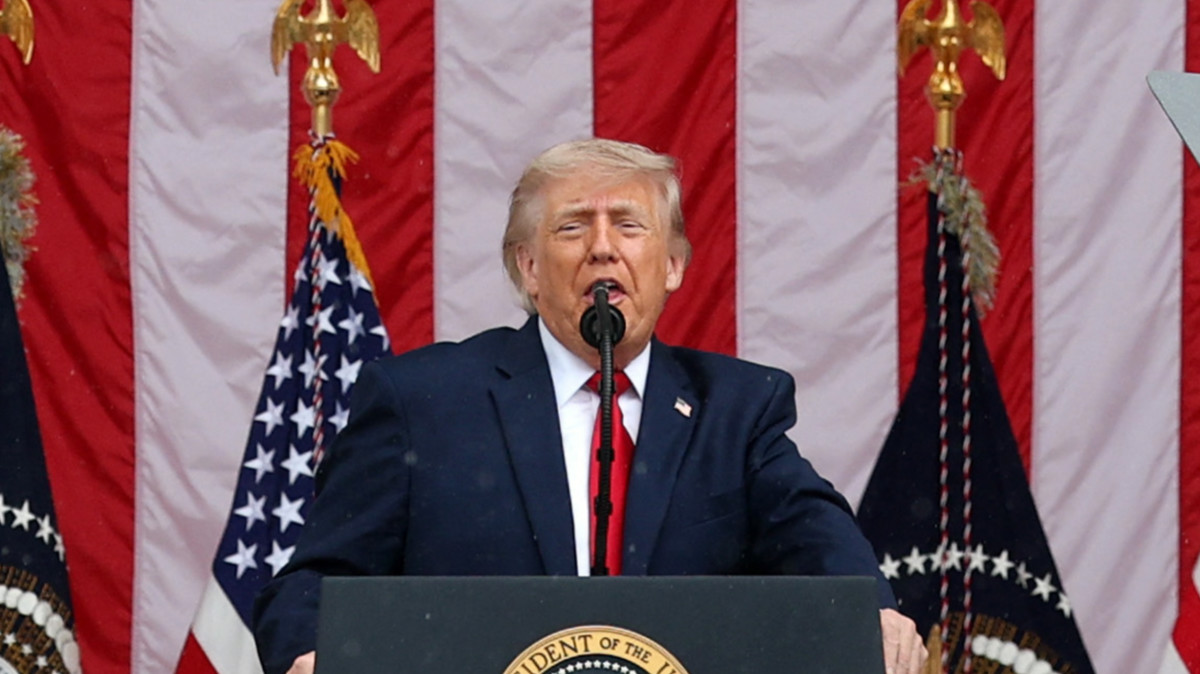
    The growing divide between the United States and the North Atlantic Treaty Organization has deepened further in recent days, after a planned meeting to repair strained transatlantic ties ended with President Donald Trump publicly lashing out at the 75-year-old alliance he has long criticized. Following Wednesday’s closed-door talks with NATO Secretary General Mark Rutte in Washington D.C., Trump took to his social media platform to issue a blunt rebuke of the military bloc, which the U.S. has led since its founding in 1949. Writing in all capital letters, Trump declared: “NATO wasn’t there when we needed them, and they won’t be there if we need them again.”

    This latest accusation aligns with a long-running narrative Trump has pushed since returning to the White House: he insists NATO should have directly joined U.S. and Israeli strikes on Iran, a demand that ignores the alliance’s core founding mandate as a strictly defensive collective security pact, designed to respond to attacks on member states rather than launch offensive military operations.

    Rutte, who assumed the NATO secretary general role earlier this year, framed the discussion with Trump as “very frank” in an interview with U.S. broadcaster CNN. Rather than emphasizing NATO’s defensive rules of engagement, he pushed back on Trump’s criticism by highlighting the practical support European NATO members already provided, noting that “the large majority of European nations have been helpful with basing, with logistics, with overflights.” He added that the situation was a “nuanced picture” rather than a total failure of support.

    The dispute over Iran is just the latest flashpoint in a series of escalating tensions between the Trump administration and the alliance. Earlier disagreements have included a high-profile standoff over Trump’s public claim that the U.S. should acquire Greenland, an autonomous territory that belongs to NATO member Denmark and is not available for purchase. The Trump administration has also repeatedly berated European NATO members for failing to meet the alliance’s target of devoting 2 percent of their annual GDP to defense spending, a longstanding point of U.S. criticism that predates Trump’s first term in office.

    White House Press Secretary Karoline Leavitt reiterated Trump’s harsh assessment Wednesday, confirming the president had told her that NATO had been “tested and they failed.” The escalating string of disputes has also led Trump to repeatedly threaten to withdraw the U.S. from the 32-member transatlantic alliance, a move that would fundamentally reshape global security architecture.

    However, many European policy experts and lawmakers argue that European nations were correct to avoid full participation in the Iran conflict. Koert Debeuf, a distinguished adjunct professor of Middle East studies at the Brussels School of Governance, told China Daily that European capitals have been unified in their position that the Iran conflict is not their war. “If they choose to assist countries such as Saudi Arabia, the United Arab Emirates, or Qatar, they would only do so after the war ends. For now, no European country wants to be involved, and that is unlikely to change,” Debeuf explained.

    He added that while a small number of European leaders, including Spain’s prime minister and Germany’s president, have publicly stated that the U.S.-Israeli strikes on Iran likely violate international law, most have chosen to stay largely silent. This silence, he noted, reflects “deep discomfort with the situation” among European political elites. “What is clear is that this is widening the gap between the United States and Europe in the short term,” Debeuf concluded.

    Ondrej Dostal, a Czech member of the European Parliament, went further in his criticism of Trump’s approach, telling China Daily that European nations must draw a line in opposing the administration’s actions. Dostal pointed to a series of aggressive social media posts from Trump in recent days, including open threats to “exterminate a whole civilization” and reduce Iran to the “Stone Age,” as well as other insulting language directed at the Iranian people. “Europe must clearly and unequivocally reject this,” Dostal said.

    He argued that Europe has repeatedly capitulated to the Trump administration on past disputes, from the lopsided EU-U.S. trade deal to Washington’s coercive policies toward Cuba and Venezuela, and now its illegal offensive against Iran. “This must end now,” Dostal said. “We must be clear: it was the tacit acceptance by the entire European establishment of US hegemonic aspirations that has led to the catastrophe in Iran. Had Europe stood its ground in defending international law and the UN Charter, much could have been prevented.”

  • Return of the Yangtze ‘basket ferry’

    Return of the Yangtze ‘basket ferry’

    On a fog-shrouded early morning on March 31, excitement hung thick in the air at Yangdu Wharf, located along the sprawling banks of the Yangtze River in Zhongxian County, Chongqing. Long before the first golden rays of sunrise broke through the gray mist, the crackle of celebratory firecrackers and the deep, resonant blast of a ship’s horn cut through the quiet, marking a momentous occasion for local communities: the maiden voyage of the Yu Zhong Ke 2180, the newly upgraded iteration of the region’s beloved ‘basket ferry’.

    For decades, these small ferries have earned their affectionate nickname from the wicker baskets local farmers stow on board, filled with fresh produce, livestock, and daily supplies bound for markets on the opposite bank of the river. For generations of agricultural producers cut off from cross-river market access by the Yangtze’s wide waters, the basket ferry has been far more than a simple transport service — it is the economic lifeline that connects their crops to paying customers, and allows them to access essential goods and services unavailable on their side of the river.

    The newly launched Yu Zhong Ke 2180 brings a welcome modern update to this longstanding community service. Its bold, bright red hull cuts a striking figure against the river’s misty surface, a vivid contrast to its predecessor, a faded yellow vessel that faithfully served the Zhongxian community for 13 years before being retired. Photographs from January, ahead of the official launch, show lines of local farmers queuing to board the new craft, their own baskets stacked at their sides, ready to use the upgraded service that will continue to support their livelihoods for years to come.

    This upgrade marks the entry of the iconic Yangtze basket ferry into a new era, balancing the deep cultural and practical roots it has in local life with modern safety and comfort improvements that ensure it can continue serving future generations of Zhongxian farmers.

  • China’s car exports surge as expectations grow for EV pivot on Iran war energy shock

    China’s car exports surge as expectations grow for EV pivot on Iran war energy shock

    Against a backdrop of softening domestic auto demand and shifting global energy markets, China’s passenger car export sector delivered explosive growth in March, data from the China Association of Automobile Manufacturers (CAAM) released Friday shows. Domestic automakers’ aggressive global expansion strategy has driven this sharp uptick, with new energy vehicles (NEVs) leading the charge amid growing consumer interest triggered by volatile fuel prices tied to international conflict.

    Last month, total passenger car exports hit approximately 748,000 units, marking an 82.4% jump from the same period in 2023 and a notable increase from February’s 586,000-unit total. The growth was even more dramatic for new energy passenger vehicles, which include pure battery electric vehicles and plug-in hybrid models. NEV exports soared more than 140% year-on-year to 363,000 units in March, rising 31% from February’s export volume of around 276,000 units.

    Leading domestic automakers, including industry giants BYD and Geely Auto, have ramped up their global outreach in recent quarters, investing heavily in new production facilities outside China and expanding distribution networks across emerging and established markets alike. To date, Chinese auto brands have built meaningful market share across Europe, Latin America, and Southeast Asia, with analysts noting geopolitical developments are poised to further accelerate adoption.

    The ongoing conflict in Iran has sent ripples through global energy markets, pushing fuel prices higher across many regions. While the full impact of this energy shock has not yet been reflected in March’s trade data, industry experts say it has already shifted consumer attitudes toward electric vehicles.

    “In many markets that are structurally well suited for EV adoption, uptake has remained sluggish simply because consumers lacked urgency to make the switch,” explained Chris Liu, a Shanghai-based senior analyst at technology and industry advisory firm Omdia. “A sharp, sustained rise in fuel prices changes that calculation entirely.”

    The push into overseas markets comes at a moment when China’s domestic auto market is facing notable headwinds. This year, the Chinese government rolled back support programs designed to encourage NEV adoption, while cutthroat price competition across domestic brands and a prolonged slump in the real estate sector have eroded consumer willingness to make large-ticket purchases like new vehicles.

    CAAM data confirms that domestic passenger car sales fell 19.2% year-on-year in March, dropping to just under 1.7 million units. That marks the fifth consecutive month of year-over-year declines for domestic sales, putting pressure on automakers to offset slack at home with international growth.

    However, industry analysts remain optimistic about the long-term outlook for Chinese automakers, arguing that strong export growth is more than sufficient to cushion the blow from temporary domestic weakness. “For the overall industry, the overseas market’s sales volume growth is more than enough to offset domestic decline on a full-year basis,” said Paul Gong, head of China autos research at UBS Investment Bank. Gong predicts that total annual passenger car exports by Chinese automakers could grow by 20% or more compared to 2023, a trend that will reshape the global auto landscape for years to come.

  • Officials allay concerns over West Lake disinfectant

    Officials allay concerns over West Lake disinfectant

    A viral social media post that set Chinese social platform Sina Weibo abuzz this week claimed 7 metric tons of bleaching powder would be dumped into Hangzhou’s iconic West Lake, sparking widespread public anxiety over potential ecological and tourism impacts at the UNESCO World Heritage site. But local authorities have stepped forward to ease fears, explaining the measure is a decades-old routine maintenance practice designed to protect the lake’s beloved lotus displays.

    When the speculation spread, thousands of netizens raised questions about the operation, worrying the disinfectant would contaminate West Lake’s water, harm native aquatic wildlife, and disrupt the site’s critical tourism industry. In response, the West Lake Water Area Administration in Zhejiang Province detailed the long-standing practice to China Daily, noting that this annual “pond-clearing” initiative has been carried out for nearly 30 years to safeguard the lake’s iconic lotus plants.

    April marks a critical juncture for lotus growth: as spring temperatures climb, harmful pests, pathogenic bacteria, and filamentous algae like spirogyra multiply rapidly. These invasive organisms compete with young lotus plants for vital nutrients, and can tangle the species’ fragile emerging buds, explained Yu Yangyang, head of the administration’s aquatic plant maintenance team. Adding to the threat, herbivorous fish often graze on tender new lotus shoots. Once shoots are damaged, the plants’ underground rhizomes become susceptible to rot, which can completely block blooming for an entire growing season.

    The bleaching powder used in the operation is primarily composed of calcium hypochlorite, a government-approved disinfectant that kills pathogens and suppresses algae growth before breaking down naturally within 24 to 48 hours, authorities confirmed. Contrary to viral claims that the full 7,000-kilogram batch would be released into the lake at once, the chemical is applied incrementally across 24 designated lotus zones covering roughly 10 hectares — just 1 percent of West Lake’s total water surface area. To avoid disrupting visitor experiences, all application work is carried out overnight, wrapping up before early morning crowds arrive at the scenic site.

    Strict operational protocols are in place to minimize ecological impact. Workers deploy in pairs from small boats, starting at the edges of each enclosed lotus zone to ensure even dispersion and keep the disinfectant contained within treatment areas. All lotus growing zones are separated from the rest of the lake by protective nets; before the operation began, maintenance teams lifted the lower edge of these nets to allow wild fish to swim out of the treatment areas, protecting the animals from chemical exposure while also preventing them from grazing on young lotus shoots once the process is complete.

    “The amount of bleaching powder we use has negligible impact on native fish and bird populations, and the entire operation is completely safe for the environment,” said an administration spokesperson. The 2026 maintenance work began on Wednesday night and is on track to wrap up by Sunday, after which lotus buds will begin to emerge, with the first full blooms expected to open by late May.

    West Lake’s lotus conservation is a year-round commitment for maintenance teams. Each spring, crews reinforce protective nets; in summer, they pull weeds and thin overcrowded plantings; in autumn, they install new enclosure nets to help lotus roots store nutrients for the winter; and in the cold winter months, they clear away withered plants to prepare for the next growing cycle. This year, visitors will also get a preview of an exciting new addition: a trial planting of a long-flowering autumn lotus variety at Fengyu Pavilion, which will extend the lake’s lotus viewing season all the way to November.