作者: admin

  • Tuam dig uncovers remains of another 36 children

    Tuam dig uncovers remains of another 36 children

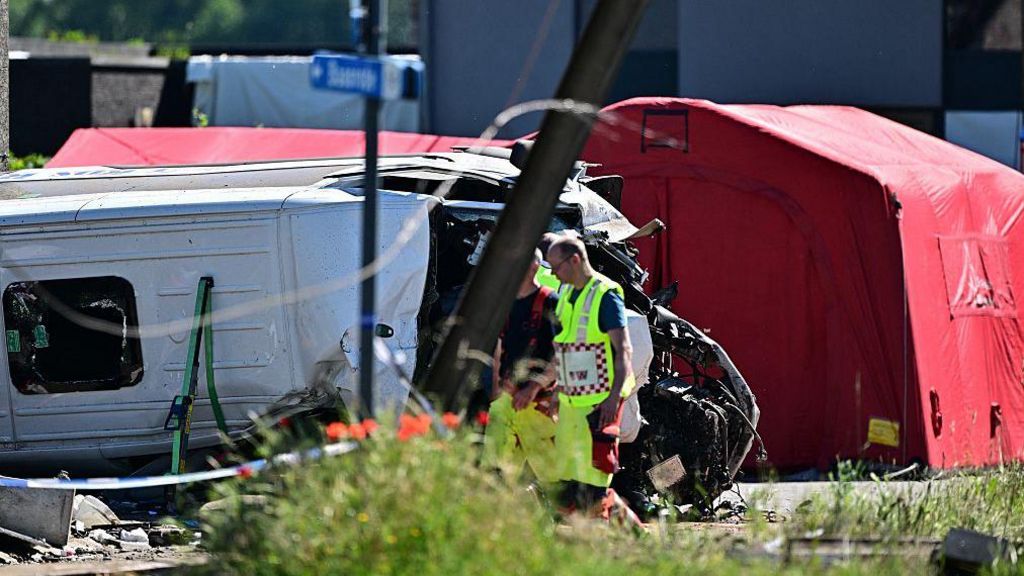
    An ongoing forensic excavation at the site of a defunct mother and baby home in Tuam, western County Galway, Ireland, has unearthed the remains of 36 additional infants, bringing the total number of recovered infant remains to 69, excavation officials confirmed in their latest project update.

    The full excavation, launched by the Irish government last summer, follows years of investigation and public outcry over one of Ireland’s most harrowing historical scandals. The crisis first emerged in 2014, when amateur historian Catherine Corless published groundbreaking research showing that 796 children who died while residents at the Tuam home between 1925 and 1961 had no official death or burial records. The institution, which operated for 36 years to house unmarried mothers and their children, was run by the Bon Secours Sisters, a Catholic religious order. During the home’s operation, widespread malnutrition and inadequate healthcare led to hundreds of childhood deaths, with remains later found disposed of in an unmarked mass grave.

    After an initial test excavation in 2017 confirmed the existence of the unmarked mass burial site, Irish authorities authorized a full forensic dig to recover remains, identify them through DNA matching, and return them to living relatives for formal, dignified burial. The excavation team, which releases progress updates every one to two months, published its sixth update this week, covering work conducted between January 29 and March 31, 2026.

    In the new report, archaeologists detailed new findings about the burials: most of the recovered infants were interred in single white-painted coffins that have since decomposed over decades, while a small number of burials held two or three infants in a single coffin. Since the start of the excavation, 33 DNA samples have been collected from people who suspect they have relatives buried at the site, with five new samples added in the most recent reporting period. The excavation leadership has renewed its public appeal for any member of the public who may have family connections to the Tuam home to come forward and submit DNA samples to support identification efforts.

    The Bon Secours Sisters issued a formal apology years ago, admitting that the children buried at the site were interred in a “disrespectful and unacceptable” manner, in keeping with the cruel systemic policies that stigmatized unmarried mothers and their children across mid-20th century Ireland. The full excavation is expected to continue for months as researchers work carefully to recover all remains and connect them to surviving family members.

  • Popular Tanzanian musician Matonya charged with rape in Kenya

    Popular Tanzanian musician Matonya charged with rape in Kenya

    One of East Africa’s most recognizable bongo flava musicians, Sefu Shabani — professionally known as Matonya — has been taken into custody and formally charged with rape in Kenya, Kenya’s top prosecutorial body confirmed this week. The 43-year-old entertainer, who has built a cross-regional fanbase over a 15-year career of hit releases, has publicly denied the accusation against him.

    In an official statement published to the social platform X, Kenya’s Director of Public Prosecutions (DPP) outlined details of the musician’s first court appearance, which took place Thursday in the coastal Kenyan city of Mombasa. Prosecutors allege the alleged assault occurred two days prior, on Tuesday, inside a private apartment in Nyali — a popular beach resort district just outside Mombasa city center. Following the hearing, the court granted the artist bail set at 500,000 Kenyan shillings, equal to roughly $3,900. As a condition of his release, Matonya was ordered to surrender his Tanzanian travel passport to authorities.

    The DPP noted that officials moved to impose these bail conditions to ensure the musician remains within the court’s jurisdiction for the duration of legal proceedings. Immigration departments across Kenya have already been instructed to add a border alert for Matonya to prevent any unapproved departure from the country before the case concludes. To date, Tanzanian government officials have not released any public comment on the arrest or upcoming legal process.

    Matonya is a household name in East African popular music, best known for his contributions to bongo flava — the iconic homegrown Tanzanian music genre that blends Swahili-language lyrics, romantic melodies, modern urban beats, and traditional influences from the coastal region’s taarab folk music. Rising to mainstream fame roughly 15 years ago, he has maintained a consistent touring schedule across Tanzania, Kenya and neighboring countries, with fan-favorite tracks including *Vaileti*, *Anita*, *Siamini*, *Taxi Bubu* and *Mapito* still drawing large crowds at his live performances.

    News of the star’s arrest has already sparked heated public debate across social media platforms and within Tanzania’s tight-knit music industry. While some fans and industry peers have publicly called for collective support for Matonya and emphasized that he is presumed innocent until proven guilty, stressing the importance of following full due process, other voices have pushed back to highlight the gravity of rape charges and insisted that any person accused of sexual violence must face full accountability to deliver justice for the alleged survivor.

  • Scheffler, Rose to chase McIlroy with early Masters starts

    Scheffler, Rose to chase McIlroy with early Masters starts

    As the second round of the 90th Masters Tournament gets underway at Augusta National Golf Club on Friday, early-morning tee times have handed world number one Scottie Scheffler and British veteran Justin Rose a golden opportunity to close the gap on overnight co-leaders Rory McIlroy and Sam Burns.

    Defending champion McIlroy, who is bidding to become just the fourth golfer in history to claim back-to-back Masters titles, carded an impressive five-under-par 67 in his opening round alongside Burns, sharing the top spot on the leaderboard after 18 holes of play. Despite finding only five of 14 fairways — and just one on the front nine — the five-time major winner pulled off a series of sensational recovery shots from tree-lined rough that would have drawn praise from Spanish Masters legend Seve Ballesteros, securing his second-best opening round at the tournament. “The first seven holes were really important, that I played them in par,” McIlroy said of his opening round. “I made some good swings from where I found myself.”

    For Burns, who held the 54-hole lead at last year’s U.S. Open, the opening 67 marked his lowest career round at Augusta in 13 appearances, achieved even as the tournament’s iconic greens ran firm and fast. “They’re only going to get firmer,” Burns warned of the conditions. “As the golf course speeds up, it only gets more difficult out there, and I think it’s going to be a really good test.”

    Behind the leading pair, 2014 champion Patrick Reed, American Kurt Kitayama and Australian Jason Day all tied for third at two-under-par 69. Like McIlroy and Burns, all three will tee off in Friday’s afternoon wave, when the baked-out course is expected to become even more challenging.

    That leaves the first half of Friday’s draw to two of golf’s biggest names hungry to climb the leaderboard: 2013 U.S. Open champion Justin Rose — a three-time Masters runner-up who lost a playoff to McIlroy for the green jacket last year — and four-time major winner Scheffler, who is chasing a third Masters title in five seasons. Both are three strokes off the lead in a group of players tied at one-under 70, which also includes later starters Shane Lowry, the 2019 British Open champion from Ireland, and two-time major winner Xander Schauffele, who is still seeking his first Masters title.

    Scheffler, who won the Masters in 2022 and 2024, got off to a blistering start in his opening round with an eagle on the par-five second hole followed by a birdie on the par-four third. But as afternoon temperatures climbed and greens hardened further, he could not add more low scores, settling for pars on the par-five 13th and 15th holes. He is optimistic his early Friday tee time will bring more favorable conditions. “I played pretty solid. A lot of good stuff,” Scheffler said. “I hit it nice, made some good iron shots, but it got so firm late in the day, it was pretty challenging.”

    Rose, meanwhile, notched five birdies in his opening round, with four coming on Augusta’s famous par-five holes, but slipped back from the leading pack with back-to-back bogeys to close out his round. The 44-year-old veteran leaned into his years of experience at Augusta, emphasizing that patience is the key to navigating the brutal current conditions. “Every hole you’re just being patient through experience, knowing that grinding out the pars is a good thing,” Rose said. “Just eating up the holes is a good thing.”

    The tough opening conditions have already derailed the title hopes of several big names, who are at risk of missing the cut for the final two rounds, which goes to the top 50 players and ties. Two-time major champion Jon Rahm of Spain sat well outside the cut line after an opening 78, while two-time U.S. Open winner Bryson DeChambeau carded a 76, and Scotland’s Robert MacIntyre shot an 80.

    Rose added that the current rock-hard, lightning-fast greens test more than just shot-making — they demand strategic caution from every competitor. “I can’t even point to anywhere where you can be aggressive,” he said. “I think it’s in their control really how they want it to be… when it gets completely rock hard and you can’t access any pin anywhere, then a lot of good shot-making is taken out of the equation.”

  • Hungary’s election could end Orbán’s journey from liberal firebrand to far-right leader

    Hungary’s election could end Orbán’s journey from liberal firebrand to far-right leader

    BUDAPEST, Hungary — As Europe’s longest-serving head of government and one of the European Union’s most persistent and high-profile critics, Hungarian Prime Minister Viktor Orbán has traveled a stark ideological arc: from a young liberal firebrand organizing against Soviet occupation to a Russia-aligned nationalist icon adored by far-right movements across the globe. Now, after more than 20 years of unchallenged control over Hungarian politics, the 62-year-old leader faces what could be a career-ending defeat in Sunday’s parliamentary election, a contest that will shape not just Hungary’s future but the balance of power across the European Union.

    Most pre-election polls place Orbán and his ruling Fidesz party more than 10 points behind the opposition center-right Tisza Party, led by charismatic challenger Péter Magyar — a gap that even a high-profile campaign visit from U.S. Vice President JD Vance, designed to shore up Orbán’s support, has failed to close. Facing unprecedented headwinds, Orbán has pulled out all the stops to hold power: he has deployed a widespread disinformation campaign, released AI-generated attack ads smearing his opponent, and issued dire warnings to voters that an opposition win would plunge Hungary into national bankruptcy and draw the country directly into the ongoing war in Ukraine.

    The transformation of Orbán’s politics from his anti-communist youth to the illiberal leader of today would have shocked his earliest supporters, analysts agree. Born in 1963 to a working-class family in the small rural town of Felcsút, just outside Budapest, Orbán was a gifted law student and lifelong soccer enthusiast who earned a scholarship to study political science at the University of Oxford through a foundation run by Hungarian-born financier George Soros — a figure Orbán would later demonize as the mastermind of a global plot against Hungarian sovereignty.

    In 1988, at the height of Cold War unrest across Eastern Europe, Orbán co-founded Fidesz as a liberal, anti-communist youth movement. A year later, at just 26 years old, he delivered a thunderous public address to a crowd of tens of thousands in Budapest’s central square, openly demanding that Soviet troops withdraw from Hungarian soil — a risky act of defiance that cemented his reputation as a leading voice of the pro-democracy movement. When Hungary held its first post-communist democratic elections in 1990, Orbán entered parliament as Fidesz’ caucus leader, and by 1998 he became one of the youngest prime ministers in European history at age 35.

    As the Hungarian political landscape shifted and new liberal parties crowded the political center, Orbán gradually steered Fidesz sharply to the right, remaking the party into a vehicle for populist, nationalist conservatism. His narrow 2002 election loss to the Hungarian Socialist Party is widely viewed as a turning point in his approach to power. In a closed-door address to Fidesz members after the defeat, he laid out a blueprint for permanent control: “We only need to win once, but we need to win big,” he told attendees.

    It would take eight years in opposition for that big win to arrive. Riding widespread public anger over the aftermath of the 2008 global financial crisis and a series of corruption scandals that brought down the ruling Socialist government, Orbán led Fidesz to a landslide victory in 2010, winning a two-thirds supermajority in parliament that allowed him to reshape Hungary’s political system without opposition support. That victory launched the Orbán era, a period of radical transformation that rewrote the rules of Hungarian democracy.

    With his unchecked parliamentary majority, Fidesz unilaterally drafted a new national constitution, redrew electoral district maps to favor the ruling party, and stacked the national judiciary with political loyalists. Orbán also channeled billions in European Union infrastructure and development funds into private companies owned by his inner circle and political allies. Those allies in turn consolidated control over Hungary’s media landscape: by the end of the 2010s, independent analysts estimated that Fidesz and its supporters controlled up to 80% of the country’s private media market, forcing hundreds of independent outlets to shut down.

    Orbán’s government also transformed state-run media into a full-time propaganda mouthpiece for the ruling party, spending billions of public forints on billboards, targeted advertising, and direct mail to households to spread his nationalist, anti-EU narrative. Global press freedom watchdog Reporters Without Borders has named Orbán a “predator of press freedom,” and in 2022 the European Parliament officially designated Hungary an “electoral autocracy” over widespread concerns about democratic backsliding. Despite these international criticisms, Orbán retains strong support among older and rural Hungarian voters, who view him as a defender of traditional Christian values and national independence against what he frames as overreach from globalization, Brussels, and mass migration.

    Orbán has positioned himself as the EU’s most disruptive internal critic, building anti-immigrant policies as a core pillar of his political brand. He ordered the construction of fortified border fences to block refugee arrivals in the 2010s, enacted harsh restrictions on asylum, and has repeatedly pushed the “great replacement” conspiracy theory, which claims global elites are seeking to replace Europe’s white native population with non-European migrants. In a 2022 speech to a party gathering in Romania, he stated plainly: “we do not want to become peoples of mixed-race.”

    On the international stage, Orbán has built close, long-standing alliances with other populist nationalist leaders, including former U.S. President Donald Trump and Russian President Vladimir Putin. His government has repeatedly blocked EU efforts to deliver military aid to Ukraine and impose harsh economic sanctions on Russia following Moscow’s 2022 full-scale invasion, a policy that has put him at constant odds with Brussels. The EU has frozen more than €30 billion in cohesion funds for Hungary over ongoing rule-of-law and corruption concerns, a move that Orbán has weaponized on the campaign trail, comparing Brussels’ pressure to the decades of Soviet occupation that followed World War II.

    Critics have long accused Orbán of prioritizing Moscow’s interests over the EU and Western consensus, and recent reporting ahead of the election has reinforced those concerns: multiple media outlets have revealed that Orbán’s foreign minister has repeatedly shared classified details from closed-door EU meetings with his Russian counterpart, and Western intelligence assessments have suggested Russian intelligence services are meddling in the election to boost Orbán’s chances — a claim the Kremlin has denied.

    For his part, challenger Péter Magyar has centered his campaign on reversing Orbán’s pro-Russia shift and restoring Hungarian democracy. His rallies regularly feature crowds chanting “Russians go home!”, and Magyar has framed Sunday’s vote as a defining national choice: “This election is a referendum on whether Hungary continues sliding toward full autocracy, or reclaims its place as a full, democratic member of the European community,” he told supporters in a recent campaign stop. While polling favors the opposition, a Magyar victory is far from guaranteed, and the outcome of the vote will have ripple effects across Europe for years to come.

  • Bean paste flowers top ice cream at Harbin shop

    Bean paste flowers top ice cream at Harbin shop

    In the heart of Harbin, Heilongjiang province, a one-of-a-kind frozen treat is turning heads and drawing long lines of hungry visitors to the city’s iconic Chinese-Baroque Historic and Cultural Block. A local ice cream artisan has turned a simple scoop of ice cream into a stunning work of edible art, topping each serving with delicate hand-piped lilac flowers made from colored bean paste.

    Shop owner Liu Yue has perfected the intricate craft of shaping floral decorations directly on top of cold ice cream. Working with a traditional piping bag, Liu carefully squeezes the tinted bean paste one petal at a time, building each four or five-petal lilac bloom from scratch. She then arranges the finished flower clusters to create a full, lush display that transforms a basic frozen dessert into a shareable, photo-worthy creation. The lilac, which is the official city flower of Harbin, adds a local cultural touch that resonates with both lifelong residents and first-time tourists exploring the historic district.

    Since the signature dessert launched, it has quickly become a viral favorite, prompting crowds of visitors to stop by the shop to sample the treat and capture photos of its intricate design. What started as a small local confectionery creation has turned into a must-have attraction for anyone exploring Harbin’s popular historic cultural neighborhood, blending traditional handcrafting skills with modern dessert trends.

  • Over 800 events to be staged at Xuhui West Bund in 2026

    Over 800 events to be staged at Xuhui West Bund in 2026

    Shanghai’s iconic Xuhui West Bund, one of China’s fastest-growing mixed-use urban hubs, is set to host more than 800 events spanning culture, tourism, commerce, sports and exhibitions across 2026, officials announced during a recent media briefing held at the district’s West Bund Orbit venue.

    Deputy General Manager Chen Anda of Shanghai West Bund Development Group Co. shared details of the year’s headline event lineup, kicking off with the popular Jazz Spring West Bund music festival scheduled for the May Day national holiday. Later in the year, the district will welcome the Shanghai stop of the global FISE World Series extreme sports competition alongside a city-wide urban sports carnival in October, concluding with the annual West Bund Art & Design Week in November, a major draw for international art collectors and creative industry professionals.

    In addition to the packed events calendar, the district is accelerating its infrastructure and commercial expansion. West Bund Central’s Phase II commercial complex is on track to open to the public by the end of April 2026. The multi-purpose development integrates premium retail, Grade-A office space, residential units and open public gathering areas, and will introduce a curated collection of first-of-their-kind stores for the Chinese market. Notable incoming outlets include the Asia Pacific flagship location for Swiss luxury chocolate brand Läderach, China’s first full-series Issey Miyake flagship store, and the first Leica House to launch on the Chinese mainland.

    Further public space development is also underway: the western portion of the new West Bund Nature Art Park will open to visitors in the first half of 2026, while construction on the park’s eastern section continues in parallel. When fully completed, the park will serve as a large integrated public green space that blends recreational sports facilities, open-air art installations and native ecological landscaping.

    Chen also highlighted the hub’s explosive growth over the past five years. Between 2021 and 2025, the number of annual events hosted at Xuhui West Bund surged from 100 to more than 400, while annual visitor numbers skyrocketed from 3.71 million to 21 million, marking a more than five-fold increase in just five years.

    Beyond cultural and commercial development, Xuhui West Bund has also emerged as a leading national hub for artificial intelligence innovation. Yang Jingjing, another deputy general manager of Shanghai West Bund Development Group Co., noted that the Shanghai Foundation Model Innovation Center, launched less than three years ago, has already expanded to occupy more than 50,000 square meters of dedicated office and incubation space, and currently supports more than 200 early-stage AI-focused enterprises through its incubation program.

  • US-Iran talks in Pakistan uncertain as sides trade accusations

    US-Iran talks in Pakistan uncertain as sides trade accusations

    Just days before scheduled high-stakes peace negotiations between the United States and Iran were set to kick off in Pakistan’s capital Islamabad, the entire process hangs in the balance, as both sides have traded sharp accusations over violations of a fragile two-week ceasefire that was meant to pave the way for a permanent end to their deadly conflict. As of Friday, no official confirmation had been released regarding the arrival of negotiating delegations, leaving regional observers and global markets bracing for potential renewed escalation.

    The temporary truce, negotiated to create space for dialogue aimed at ending a conflict that has already claimed thousands of lives and sent shockwaves through the global economy, has been fraying almost from its inception. US President Donald Trump has openly criticized Iran’s management of the strategic Strait of Hormuz, a critical global energy chokepoint that was supposed to be fully reopened under the terms of the ceasefire deal. Data from shipping trackers shows only a tiny fraction of the usual volume of vessels have transited the waterway since the truce was announced, despite the fact that roughly 20% of the world’s daily oil supply, alongside massive volumes of natural gas and fertilizer, normally passes through the strait in peacetime.

    In a series of social media posts Thursday that reignited fears the truce could collapse entirely, Trump accused Iran of doing a “very poor job” of upholding its ceasefire obligations and blocking energy shipments through the strait. On the Iranian side, officials have reacted with fury to intense Israeli airstrikes in Lebanon, carried out just 48 hours after the truce went into effect. Tehran insists that the Lebanese front falls within the scope of the agreed ceasefire, a claim Washington explicitly rejects. Iran’s foreign ministry spokesman Esmaeil Baqaei has framed Iran’s participation in the Islamabad talks as conditional on the US forcing an immediate halt to Israeli attacks on Lebanon, stating: “The holding of talks to end the war is dependent on the US adhering to its ceasefire commitments on all fronts, especially in Lebanon.” Senior Iranian officials have even gone so far as to label the planned negotiations “meaningless” if the strikes continue, though Iran’s powerful Revolutionary Guards has reaffirmed its commitment to the truce, telling state broadcaster that it has not launched any offensive operations against any nation.

    Adding to the growing cloud of uncertainty, Iran’s ambassador to Pakistan deleted a social media post Thursday that had originally announced an Iranian delegation would arrive in the country that same day. Despite the open disputes, Pakistani authorities have continued moving forward with logistical preparations for the talks, which official sources confirm will cover a range of highly sensitive topics, including Iran’s nuclear enrichment program and guaranteed unimpeded trade through the Strait of Hormuz.

    For its part, the US delegation is still scheduled to arrive this weekend, led by Vice President JD Vance, with special envoy Steve Witkoff and Trump’s son-in-law Jared Kushner also in attendance.

    Pakistan’s role as a neutral mediator has already been thrown into question by a controversial remark from its top defense official. On Thursday evening, Defence Minister Khawaja Asif posted a statement labeling Israel a “cancerous state” and “a curse for humanity” amid the Lebanese strikes, a post that was removed several hours later. The Israeli prime minister’s office condemned the comments as “outrageous”, saying the remarks could not be tolerated from a country claiming to act as a neutral peace broker. Pakistan does not formally recognize the state of Israel, and has repeatedly insisted that the ceasefire agreed for the US-Iran talks must include the Lebanese front, a position that puts it at odds with Washington.

    Public opinion inside Iran remains deeply divided and skeptical of the negotiations’ outcome. A 30-year-old Tehran resident, speaking to AFP on condition of anonymity for security reasons, dismissed most of Trump’s public statements as “pure noise and nonsense”, arguing that the US president was only seeking to manipulate the Iranian government into accepting a one-sided deal. Another Tehran local, Sheida (who also withheld her last name over safety concerns), summed up the widespread anxiety gripping the country: “I am scared of the war starting again, and at the same time I’m scared of the regime staying.”

    Parallel to the planned Islamabad talks, separate negotiations are being arranged to address the ongoing conflict on the Lebanese front, after Israel carried out its heaviest bombardment of Lebanese territory since Iran-backed Hezbollah entered the war on Wednesday, killing more than 300 people. Early Friday, Hezbollah announced it had carried out fresh drone and rocket strikes targeting Israeli military positions along the bilateral border and a town in northern Israel, triggering air raid sirens across Tel Aviv and other parts of the country. Trump has claimed that Israeli Prime Minister Benjamin Netanyahu assured him strikes would be scaled back to “low-key” operations after the international backlash, and a Western diplomat speaking anonymously confirmed that European nations, Gulf Arab states and Egypt have all placed heavy pressure on Israel to hold off on further large-scale airstrikes in the Lebanese capital Beirut following what observers have dubbed “Black Wednesday”. As of Friday morning, the Israeli military had not followed through on prior warnings of widespread strikes in southern Beirut.

    Washington has confirmed that it will host separate talks next week focused exclusively on ceasefire negotiations between Israel and Lebanon, a plan that aligns with the US position that the Lebanese front should be handled separately from US-Iran negotiations. The US announcement came shortly after Netanyahu ordered Israeli ministers to pursue direct dialogue with the Lebanese government focused on disarming Hezbollah. Neither the Israeli government nor Lebanon’s caretaker administration has publicly confirmed the planned talks, while a Lebanese official told AFP that Beirut will not enter any negotiations before a formal truce takes effect across the border.

  • KMT chairwoman eyes ‘peace gift’ for Taiwan

    KMT chairwoman eyes ‘peace gift’ for Taiwan

    During an official visit to Shanghai on Thursday, Cheng Li-wun, the incumbent chairwoman of the Chinese Kuomintang (KMT), articulated her core vision for the trip: to deliver what she calls a “gift of peace” to the residents of Taiwan. In public remarks made during her stop in the eastern Chinese commercial hub, Cheng emphasized that cross-strait peace is the foundational prerequisite for advancing every goal and aspiration shared by people on the island. “Peace makes everything people hope for possible,” she told attendees during her engagements in Shanghai. This visit, which later included a meeting with Chinese national leadership in Beijing, marks a high-profile step in cross-strait exchanges between the mainland and Taiwan. Cheng’s framing of the trip around a peace-focused agenda highlights the KMT’s longstanding commitment to constructive cross-strait dialogue and people-centered cooperation across the Taiwan Strait. The visit comes amid shifting regional dynamics, with public opinion in Taiwan broadly prioritizing stability and peaceful relations across the strait as core economic and livelihood priorities.

  • Cambodia’s 72-year-old king says he has prostate cancer and is getting treatment in China

    Cambodia’s 72-year-old king says he has prostate cancer and is getting treatment in China

    PHNOM PENH, Cambodia – In a public announcement made Friday, 72-year-old Cambodian King Norodom Sihamoni confirmed that he has been diagnosed with prostate cancer during a recent medical visit and will receive all required treatment for the condition in China, where the diagnosis was first confirmed.

    The monarch’s statement, published to his official Facebook page and distributed nationwide by Cambodia’s state-run news agency AKP, notes that the cancer was detected during a scheduled health screening at a public Beijing hospital. Sihamoni and his 86-year-old mother, Queen Mother Norodom Monineath, traveled to the Chinese capital at the end of February for their annual routine health check-ups, a long-standing practice for the royal family.

    Notably, the king’s official message did not disclose details about the stage of his cancer or the specific treatment plan he will follow. Medical consensus shows that prostate cancer has a high survival rate when caught in early stages, with the American Cancer Society estimating that roughly one out of every eight men globally will receive a prostate cancer diagnosis at some point in their lifetimes.

    This diagnosis carries personal historical context for the Cambodian royal family: Sihamoni’s father, former King Norodom Sihanouk, was also diagnosed with prostate cancer back in 1993, and similarly traveled to China for ongoing medical care. Sihanouk ultimately lived to 89 years old, passing away in Beijing in 2012, nearly 20 years after his initial diagnosis.

    Sihamoni ascended to Cambodia’s constitutional throne in October 2004, just one week after his father’s voluntary abdication. As a constitutional monarch, his role is almost entirely ceremonial, and he has long maintained a deliberately low public profile across his nearly 20-year reign. Before taking the crown, he represented Cambodia as an ambassador to the United Nations Educational, Scientific and Cultural Organization (UNESCO), and gained early recognition as a trained classical ballet dancer. He currently remains unmarried and has no children.

  • Japan to release extra 20 days’ oil reserves from May

    Japan to release extra 20 days’ oil reserves from May

    Fresh geopolitical volatility in the Middle East has pushed Japan to expand its emergency oil release, announcing an additional 20 days-worth of national petroleum reserves will enter the market starting next month, Prime Minister Sanae Takaichi confirmed Friday. The move builds on the first round of reserve releases launched in mid-March, as Tokyo continues to shore up energy supply stability amid lingering doubts over the safety of shipping through the Strait of Hormuz.

    The announcement came during a cabinet-level meeting focused on responding to shifting Middle Eastern developments, held nearly two months after a sudden outbreak of regional conflict in late February effectively shut down the critical chokepoint, which handles the vast majority of Japan’s crude oil imports. Despite a recently brokered two-week ceasefire between the United States and Iran, Takaichi noted that Tokyo cannot yet count on a full, smooth return to pre-conflict shipping operations through the strait, one of the world’s most vital energy transit routes.

    Japan first began offloading approximately 50 days of stored reserves to domestic and global markets starting March 16, a preemptive measure designed to offset potential supply disruptions following the strait closure. With this upcoming extra release, Japan will have made a total of 70 days of emergency reserves available to the market in under three months. “We will take every possible measure to ensure a stable supply of crude oil,” Takaichi told reporters following the meeting.

    The prime minister added that by the time the new reserve release begins in May, Tokyo expects to source over half of its total crude oil imports through alternative shipping routes that bypass the Strait of Hormuz, though she declined to specify which alternative suppliers or routes Japan is relying on for this diversification.

    Japan’s energy security framework is uniquely vulnerable to disruptions in Middle Eastern oil supplies: the island nation imports more than 90 percent of its total crude oil from the region, and the overwhelming majority of those imports traverse the Strait of Hormuz. This dependency has forced successive Japanese governments to maintain large strategic petroleum stockpiles and respond quickly to any signs of disruption to global oil transit chokepoints.