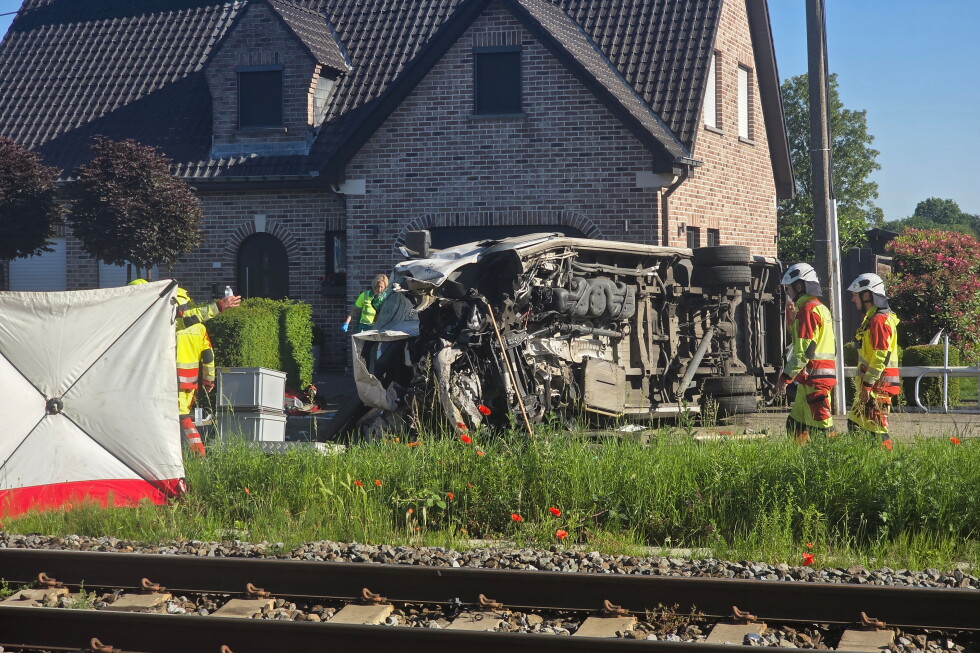
BRUSSELS – A dramatic collision between a passenger train and a minibus transporting children has left multiple people injured in northern Belgium, federal law enforcement officials confirmed Tuesday. The crash unfolded at an unprotected level crossing close to the small municipality of Buggenhout, located roughly 30 kilometers northwest of the country’s capital city. As of Tuesday afternoon, the full sequence of events leading to the incident remained unconfirmed, with authorities still working to piece together how the crash occurred. Federal police have confirmed that “several people” sustained harm in the collision, but declined to share additional information, including the full extent of injuries or the identities of those involved. Local private broadcaster VTM, however, has reported that a number of fatalities have been recorded at the scene, though official confirmation of this detail is still pending. A multi-disciplinary response team, including public prosecutors, forensic investigators, and national transport safety experts, was dispatched to the crash site shortly after the incident to launch a full investigation into the cause. In a public statement posted to social media, Belgian Interior Minister Bernard Quintin offered his reaction to what he described as a devastating loss. “I feel great sadness over the tragic accident in Buggenhout, where a school bus was struck by a train,” Quintin wrote. “My thoughts are with the victims and all of their families and loved ones at this incredibly difficult time.” The incident has sent shockwaves through the local community, with emergency services remaining on site to coordinate response efforts through Tuesday afternoon.
作者: admin
-

Robots in Hubei to get life-cycle tracing ID numbers
As China’s humanoid robot industry surges ahead to capture a dominant share of the global market, a pioneering new initiative in central China’s Hubei province is set to create the country’s first full-lifecycle digital identity system for humanoid robots, addressing critical gaps in industry standardization and safety oversight.
The program, led by the Hubei Humanoid Robotics Innovation Center based in Wuhan, will assign a unique 29-character alphanumeric ID to every registered humanoid robot, embedding core static information ranging from the robot’s brand origin, manufacturing enterprise, product model, and serial number to factory filing records, hardware specifications, and intelligence rating. Modeled after the national ID system used by Chinese citizens, every robot’s identification code is permanently unique, with 11 extra characters added to accommodate industry-specific tracking needs.
Unlike basic product labeling, the digital ID enables end-to-end traceability across the robot’s entire working life. Beyond static manufacturing details, the system logs dynamic information including routine maintenance histories and deployment application scenarios. A cloud-based management platform also allows authorized stakeholders to access real-time performance data at any time, including readings on joint wear and tear, battery health, and operational accuracy, according to Liu Chuanhou, the innovation center’s chief operating officer.
“In the event of a robot malfunction, we can pull its full operational logs and maintenance records via the unique ID to quickly locate the fault, confirm accountability, and complete efficient repairs,” Liu explained. The ID system also streamlines the secondary market for robots: when a robot is transferred to a new user, the new owner can verify full performance and service histories directly through the ID, eliminating the need for costly redundant testing and boosting reuse efficiency.
On May 11, the innovation center completed the first round of product filing applications and coding trials with China’s Ministry of Industry and Information Technology. The first batch of participating enterprises includes major players across Hubei’s entire humanoid robot industrial chain, including Optics Valley Dongzhi, GLRoad, Hubei Qirobotics, Jingchu Humanoid Robot, HandX, Guanggu Haribit, and Maxnova.
Liu Jieni, business director at Maxnova, confirmed that several of the firm’s flagship humanoid robots have already completed unified coding and official filing. Most of the company’s robots are deployed across industrial manufacturing, commercial services, and professional demonstration training, and Liu said joining the national initiative aligns perfectly with the industry’s growing push toward unified standards.
“Participating in this program not only helps us resolve existing compliance gaps and cut overall operation and maintenance costs, but it also clears the way for large-scale market expansion of our products,” Liu Jieni said. “At the same time, it lets us accumulate valuable data assets that further strengthen our core competitiveness and brand influence across the industry.”
Recent industry data underscores the urgency and importance of the new traceability system. A report published in March 2026 by Beijing CCID Publishing and Media and China Electronics News shows that global humanoid robot shipments hit approximately 17,000 units in 2025, with the total global market valued at 2.88 billion yuan (around $424 million). Thanks to strong advantages in supply chains, core technologies, and diverse application scenarios, China now leads the world in the humanoid robot industry, the report found.
China is home to more than 140 active humanoid robot manufacturers, with domestic shipments reaching 14,400 units in 2025 — accounting for 84.7% of total global supply. The country’s domestic humanoid robot market reached 1.55 billion yuan last year, representing 53.8% of the total global market value.
But despite this rapid growth, the industry still faces systemic challenges. Many enterprises operate with incompatible, disconnected technical standards, and there has been no unified regulatory framework for product traceability, safety supervision, and cross-enterprise data circulation to date, Liu Chuanhou noted. The new ID initiative is designed to address these gaps, drive industry-wide standardization, and build a solid institutional foundation for the large-scale, high-quality development of China’s humanoid robot sector.
As high-end intelligent equipment becomes increasingly integrated into industrial production and everyday public life, humanoid robots also carry underaddressed potential risks related to operational safety, data security, and ethical compliance. “In cases involving safety incidents or potential data hazards, the unique ID number supports rapid traceability and clear liability confirmation, helping prevent risks such as technology misuse and sensitive information leakage,” Liu Chuanhou added.
-
Russia maintains attacks on Ukraine as Kyiv warned to brace for possible major barrage
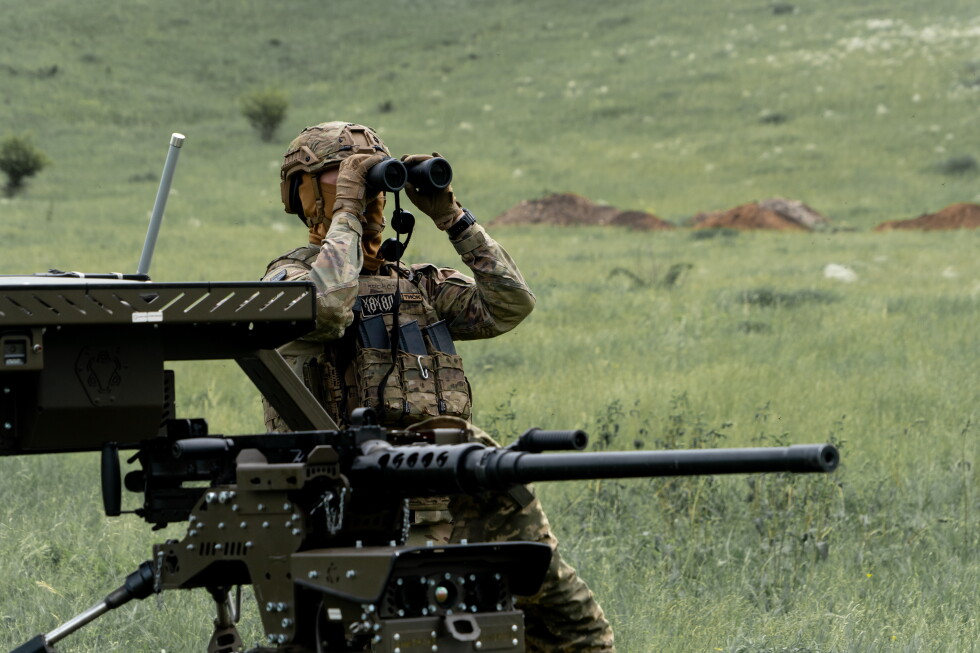
In a major escalation of aerial attacks on Ukraine, Russian forces launched more than 100 drones alongside two ballistic missiles against Ukrainian targets overnight, Ukraine’s Air Force confirmed Tuesday. The attack came just one day after Moscow issued explicit warnings of impending large-scale strikes on the Ukrainian capital, prompting evacuation calls for foreign nationals and diplomatic staff — a threat Ukrainian officials dismissed as nothing new to their experience of nearly three years of constant Russian attacks.
On Monday, Russian authorities urged all foreign citizens, including diplomatic personnel stationed in Kyiv, to evacuate the capital immediately, advising local residents to avoid all military and government infrastructure amid preparations for what it called “systemic strikes” against the city. In a diplomatic readout, Russia’s Foreign Ministry confirmed that Foreign Minister Sergey Lavrov raised the call for U.S. diplomatic evacuation during a phone call with U.S. Secretary of State Marco Rubio. While Rubio did not confirm whether the U.S. State Department would comply with the demand, he expressed concern during an official trip to India that the ongoing “terrible” conflict in Ukraine could spiral into further escalation.
The current Trump administration has spent more than a year pursuing diplomatic efforts to end the full-scale war that began with Russia’s February 2022 invasion of Ukraine. To date, those negotiations have produced no major breakthrough, and talks have been paused entirely as Washington redirects its strategic focus to the ongoing conflict with Iran.
Despite Moscow’s stark warnings, no diplomatic missions have announced plans to withdraw from Kyiv. The European Union, French and Polish embassies have all issued public statements confirming they will remain in the capital. Ukrainian Foreign Ministry officials pushed back on Moscow’s threat assessment Monday, noting that the level of security risk to Kyiv and other Ukrainian urban centers remains unchanged from what the country has navigated for months and years. Russia has carried out continuous missile and drone strikes on Ukrainian population centers since the full-scale invasion began, they added, and Ukraine stands ready to provide additional security support to any diplomatic mission that requests it.
Moscow framed its massive weekend attack — the largest single missile strike of 2025 — as retaliation for a deadly Ukrainian drone strike on a building in Starobilsk, a Luhansk region city under Russian occupation. Russia claimed the strike hit a college dormitory, but Ukraine’s General Staff corrected the account, confirming the target was the local headquarters of a Russian special military drone unit.
A key vulnerability for Ukraine’s defense remains a critical shortage of air defense interceptors needed to stop Russian ballistic missile attacks, Ukrainian President Volodymyr Zelenskyy confirmed Monday. In a social media statement, Zelenskyy noted that advanced U.S.-manufactured air defense systems, which Ukraine relies on to counter Russian ballistic threats, are in short supply due to competing defense demands from the Iran war. “Unfortunately, there has been no progress for a long time with America on expanding the production of anti-ballistic capabilities,” Zelenskyy wrote. He added that Kyiv is now working closely with European partners to scale up domestic production of anti-ballistic defenses to meet battlefield needs.
Despite the air defense shortfall, Zelenskyy noted that Ukrainian forces have made incremental battlefield gains in recent months that have allowed them to stabilize the 1,250-kilometer front line stretching across eastern and southern Ukraine, demonstrating that Kyiv’s military is able to hold its position against Russia’s larger force.
Independent analysis from the Institute for the Study of War (ISW), a Washington-based security think tank, finds that Russia’s planned spring offensive is already struggling to make gains, as mid-range Ukrainian drone strikes repeatedly disrupt Russian rear-echelon supply lines. The think tank noted Monday that Moscow’s public warnings of massive upcoming strikes on Kyiv are largely a distraction tactic, designed to draw public attention away from poor Russian battlefield performance and growing domestic economic pressure caused by war spending and international sanctions.
This report featured contributions from correspondent Hatton in Lisbon, Portugal, and Elise Morton in London, and is part of AP’s ongoing coverage of the Russia-Ukraine war.
-

More climate records under threat as spring heatwave bakes western Europe
An unprecedented early-spring heatwave, driven by a massive African heat dome trapped over Western Europe by a persistent high-pressure system, has smashed all-time May temperature records across the continent, leaving at least seven people dead and forcing emergency restrictions on outdoor work. Temperatures this week have surged far above the seasonal averages normally seen only in the height of summer, confirming what climate scientists have warned for decades: human-caused climate change is turning extreme heat events into the new normal.
On Monday, multiple Western European nations recorded their hottest May days in documented history. The United Kingdom’s Met Office confirmed a new national May high of 34.8°C at London’s Kew Gardens, a full two degrees hotter than the previous record set decades earlier. Across the Irish Sea, two Irish weather stations hit a record 28.8°C, while Scotland saw temperatures climb to 25°C — conditions that sparked a large grass fire near Edinburgh’s iconic Arthur’s Seat, sending plumes of smoke across the capital.
In France, the heat was even more extreme. Meteo-France officially declared Monday the hottest May day since national temperature tracking began, with Paris’s Roland Garros tennis tournament seeing spectators swelter through 33°C conditions. Forecasts called for even higher mercury on Tuesday, with highs forecast to reach 33°C to 36°C across much of the country, and the abnormal heat expected to hold through the end of the week. The extreme warmth has already had deadly consequences: French government spokesperson Maud Bregeon confirmed Tuesday that at least seven deaths have been directly or indirectly tied to the heatwave, five of which were drownings.
The deaths occurred as thousands of heat-fatigued residents flocked to beaches and coastal waters to cool off, despite the fact that most areas do not begin lifeguard patrols until July. For many beachgoers, the unseasonal heat brought unexpected risk. “We were just wondering this morning whether the beach was supervised,” Thomas Dupuy, who was visiting an Anglet beach with his two young non-swimming children, told AFP. “I’m extremely careful for myself, for my children… We know the currents can pull you out, the Atlantic beaches are dangerous.”
The extreme conditions extend far beyond France and the UK. Spain’s State Meteorological Agency (Aemet) warned that extraordinarily high temperatures for this time of year will persist across most of the country all week, with southwestern regions facing widespread tropical nights — when temperatures stay above 20°C — and peak highs of 36°C to 38°C between Wednesday and Friday. Further east, Italy’s Lazio region, which includes the capital Rome, implemented emergency rules banning prolonged outdoor work in direct sunlight between 12:30 p.m. and 4:00 p.m. to protect workers from heat exhaustion and heat stroke.
Climate scientists say the record-breaking heatwave is a clear demonstration of human-driven climate change already reshaping Europe’s weather patterns. A recent joint report from the European Copernicus Climate Change Service and the World Meteorological Organization confirms that since the 1980s, Europe has warmed twice as fast as the global average, and heatwaves have become increasingly frequent and severe across more than 95 percent of the continent. Greg Dewhurst, a meteorologist with the UK Met Office, told AFP that the surge in extreme May temperatures is “a good indication of climate change in action” and that such early-season heat events are increasingly likely to become “the new norm.” While the UK is forecast to see temperatures cool later this week, the early arrival of extreme heat has underscored the growing threat of climate-fueled weather extremes across the continent.
-
Watch: Bridge collapses and car swept away in China river
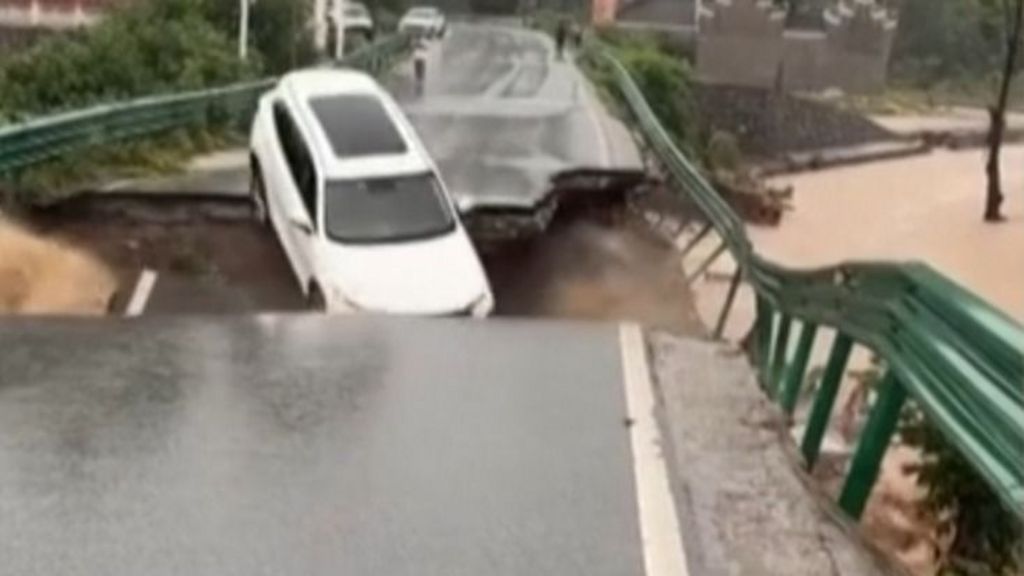
A dramatic bridge collapse incident in Xiaogan, a city located in central China’s Hubei Province, has resulted in a passenger vehicle being swept away by a rushing river – but all people inside the car managed to evacuate to safety before the structure gave way, local reports confirm.
Footage captured by onlookers shows the moment the bridge section fractured and collapsed into the water below, pulling the unsuspecting vehicle down with the collapsing infrastructure. Emergency response teams were quickly dispatched to the scene to assess the damage, search for any potential missing persons, and begin evaluating next steps for clearing the wreckage and restoring river crossing access for local residents.
Preliminary local investigations are ongoing to determine the root cause of the collapse, with early hypotheses pointing to possible prolonged erosion from heavy seasonal rainfall that weakened the bridge’s supporting structures. No injuries or fatalities have been reported in connection with the incident, a outcome that local authorities have described as a stroke of good fortune.
The collapse has disrupted local transportation networks in the affected area, prompting officials to implement temporary detour routes for passenger and freight traffic while planning for reconstruction gets underway. Authorities have also launched a broader inspection of similar aged bridges across the region to identify potential safety hazards and prevent similar structural failures from occurring in the future.
-

China executes man for murdering prominent gaming tycoon
Nearly four years after the sudden, shocking death of iconic Chinese gaming billionaire Lin Qi, the man convicted of his murder has been executed, closing a high-profile case that sent ripples through the global entertainment and gaming industries.
Xu Yao, a former lawyer who once worked closely with Lin on high-stakes media projects, was put to death on May 21 following his 2024 death sentence handed down by the Shanghai First Intermediate People’s Court. The court had previously labeled Xu’s premeditated crime as “extremely despicable”, and Yoozoo Games, Lin’s eponymous company, officially confirmed the execution in a public statement released this Tuesday.
The tragic chain of events that ended Lin’s life at 39 traces back to a bitter professional falling out in 2020. Just after Xu helped Lin secure a landmark adaptation deal with streaming giant Netflix for Liu Cixin’s globally beloved *Remembrance of Earth’s Past* (better known as *The Three-Body Problem*), Lin made the decision to reassign core business leadership responsibilities of the franchise subsidiary to other executives, sidelining Xu. Bitter and resentful over the shift, Xu hatched a lethal plot: he disguised a toxic substance as over-the-counter probiotic supplements and gave them to Lin.
Lin began feeling unwell in early December 2020 and sought medical care, but he died nine days after being admitted. At the time of his death, the Hurun China Rich List estimated his net worth at approximately 6.8 billion yuan, equal to around $941 million. Police took Xu into custody just days after Lin was hospitalized. Investigations also revealed that Xu’s poisoning scheme did not end with Lin: several other colleagues who came into contact with the toxic substances also fell ill, though none suffered fatal injuries.
Lin founded Yoozoo Games, a Shanghai-based gaming development studio that rose to international prominence with its hit strategy title *Game of Thrones: Winter Is Coming*. Beyond gaming, Lin pivoted to expanding intellectual property rights for major science fiction properties, and in 2018 he tapped Xu to head Three-Body Universe, the dedicated subsidiary created to manage all projects tied to the *Three-Body* franchise. The company secured the film and television adaptation rights for Liu Cixin’s trilogy, and ultimately struck the deal with Netflix that led to 2024’s breakout hit series adaptation of *3 Body Problem*. The series quickly became one of the streaming platform’s most-watched original releases of the year, and Lin was posthumously credited as an executive producer for his foundational work bringing the project to life.
In this week’s statement confirming Xu’s execution, Yoozoo Games offered a formal reflection on the case: “Justice has ultimately been served. We deeply mourn Mr. Lin and extend our heartfelt condolences to his family. As colleagues who fought alongside him, all members of the company are grateful for the impartiality of the judicial process.”
One of the non-fatal victims of Xu’s poisoning also shared a reaction with Chinese publication *Economic Observer*, writing on social media that “Justice comes in the end, even if it’s late”. Lin’s sudden death in 2020 sent shockwaves through the global gaming and entertainment sectors, where he was widely recognized as a visionary entrepreneur who bridged Chinese creative IP and global audiences.
-
3 dead in South Korea after collapse at overpass demolition site
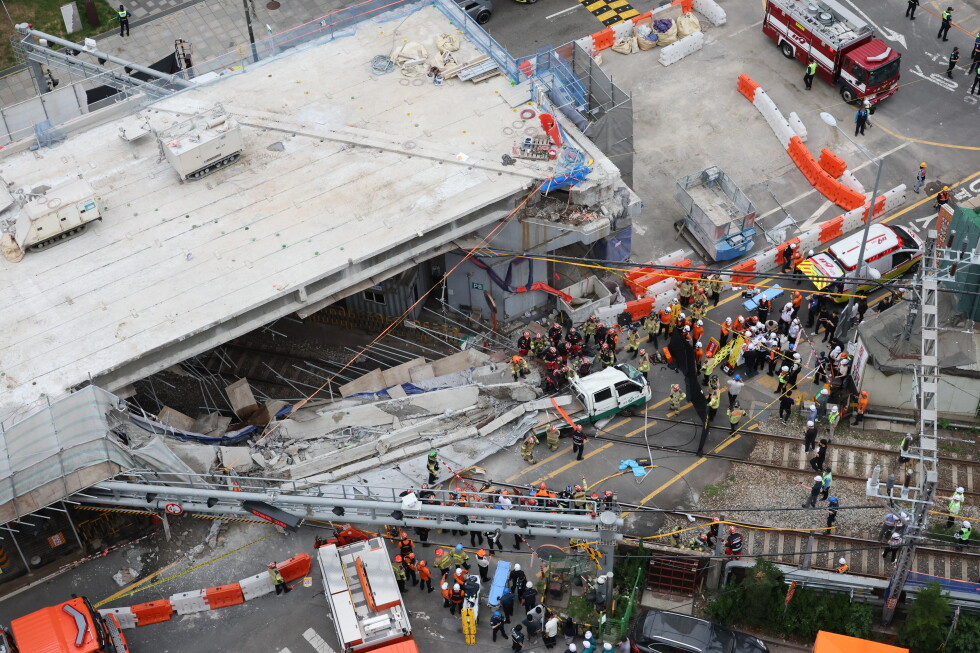
A tragic construction accident in downtown Seoul on Tuesday has left three people dead and three more hospitalized with injuries after a section of a decades-old overpass mid-demolition gave way unexpectedly, South Korean fire authorities confirmed. According to Lee Jong-woon, a representative from Seoul’s Seodaemun District Fire Station, the incident unfolded after on-site crews first paused demolition work when they spotted unusual sinking in a portion of the structure amid ongoing concrete slab cutting operations. Crews had moved to conduct a routine safety check following this discovery when the collapse occurred, leaving victims trapped under falling concrete and steel debris. All fatalities were caused by blunt trauma from falling wreckage after the bridge deck section fractured and collapsed, fire officials added. In the wake of the incident, law enforcement and emergency response teams quickly cordoned off the entire area surrounding the collapse site, where mangled steel girders and broken concrete chunks now dangle dangerously from the remaining overpass structure. A portion of falling debris also landed on an adjacent railway corridor serving major routes into Seoul, prompting state-owned Korea Railroad Corp. to immediately suspend a portion of incoming and outgoing services bound for Seoul Station, disrupting commuter and long-distance travel across the region. First constructed in 1966, the aging infrastructure project had been marked for demolition for years due to longstanding public safety concerns. Demolition work on the overpass first launched in August of the previous year, and crews had been working methodically to take down the structure incrementally before Tuesday’s deadly incident. Emergency teams have not yet released further details on the identities of the victims or the exact timeline of resumed work at the site, as investigations into the cause of the collapse are still in their early stages.
-

‘A distraction’: Anti-corruption commissioner Paul Brereton defiant as exit looms
The sudden resignation of Paul Brereton, the inaugural head of Australia’s National Anti-Corruption Commission (NACC), has sparked intense political debate, with the outgoing commissioner defending his record and framing his exit as a necessary step to end distractions for the integrity watchdog.
Brereton formally stepped down from his post on Monday, and just one day later, he appeared before a Senate estimates hearing to lay out his reasoning for the unexpected departure. The former Major-General told attendees that ongoing public and parliamentary scrutiny of his longstanding ties to the Australian Defence Force (ADF) had become an unmanageable distraction for the nascent anti-corruption body. Brereton has retained an unpaid role with the Inspector-General of the Australian Defence Force (IGADF), where he assists with an ongoing investigation into alleged misconduct by Australian special forces personnel in Afghanistan.
“Every time the NACC’s chief executive officer appears before this committee, he is forced to answer questions about me,” Brereton told the hearing. “All press focus is drawn to me and my overlapping roles, and that has become a distraction. That is why I decided removing that distraction is in the best interest of the organization.”
The resignation comes in the wake of an inquiry by NACC Inspector Gail Furness, which probed Brereton’s handling of a declared conflict of interest connected to the commission’s decision not to probe referrals from the Robodebt royal commission. The inquiry’s draft findings labeled Brereton’s actions as meeting the technical definition of “officer misconduct” — a classification Brereton has warned has created a culture of fear among NACC staff.
“Given the incredibly broad definition that counts any error of fact or any error of law as officer misconduct, we now have a commission where staff are terrified of making any mistake, because they fear they will face a misconduct finding,” he said.
Brereton pushed back against claims of intentional wrongdoing, noting that his early involvement in the Robodebt probe was conducted entirely in good faith. While he acknowledged that with hindsight, he should have recused himself from the process from the start and apologized for the resulting delays, he rejected arguments that his actions were the core cause of the harm suffered by Robodebt victims. “To suggest that that is the main cause of the appalling tragedy that the Robodebt aged victims have suffered is overstating the case entirely,” he said. In a formal statement, Brereton reiterated that he would continue to reject any claims of improper conduct.
The commissioner confirmed he received Furness’ draft investigation report back in March, a standard step in the inquiry process, but declined to comment on specific findings, noting that procedural fairness processes are still ongoing. Brereton also emphasized that he had proactively disclosed all his ADF ties to all relevant statutory officers, arguing that his limited unpaid work for IGADF — totaling less than 30 hours over three years, mostly outside of work hours — did not require further detailed disclosure to NACC leadership. He compared the demand for full details of his ADF work to asking for personal information about his religious attendance or recreational sports participation.
Brereton stressed that the constant need to defend himself against allegations had eaten into an undue amount of his time, and more importantly, had diverted the NACC from its core anti-corruption work. “Regardless of the particular nature of the allegations, this distraction is preventing both of us from doing our work,” he said.
The outgoing commissioner faced sharp criticism from crossbench senators during the hearing. Greens Senator and Canberra representative David Pocock attacked Brereton for refusing to take ownership of missteps during the NACC’s early establishment. “It seems to me, in your final appearance, there’s just absolutely no ownership of any of the stumbles and things that have happened in the establishment of the NACC, and I find that very disappointing from a leader of your stature,” Pocock said. Brereton responded simply that Pocock was entitled to his opinion.
Brereton also confirmed he had not received any indication from the federal government that it had lost confidence in his leadership. “I accept that I have in some way contributed to this outcome, but I do not accept that my standards have in any way fallen below an appropriate standard,” he said. Earlier, he declined to immediately release a copy of his resignation letter to the Governor-General, saying he needed to first check for personal information that should remain private.
Brereton’s tenure as the NACC’s inaugural commissioner was marked by persistent controversy from the start. As early as September 2025, he announced he would recuse himself from all defence-related referrals to the NACC specifically to avoid the distraction that now led to his resignation. In total, the hearing confirmed that NACC Inspector Gail Furness has received nearly 90 conflict of interest complaints against Brereton in less than six months, covering issues including the procurement of counsel assisting the commission. Brereton told the hearing on Tuesday that 40 of those complaints were filed during a 48-hour period following a coordinated social media campaign against him.
In a statement released Monday, Attorney-General Michelle Rowland thanked Brereton for his work standing up the new national integrity body. “Commissioner Brereton has made an invaluable contribution to the establishment of the NACC as its inaugural commissioner,” she said. The federal government will now launch a merit-based selection process to appoint Brereton’s replacement as head of the anti-corruption commission.
-
Search continues for 7 villagers trapped in a flooded Laos cave
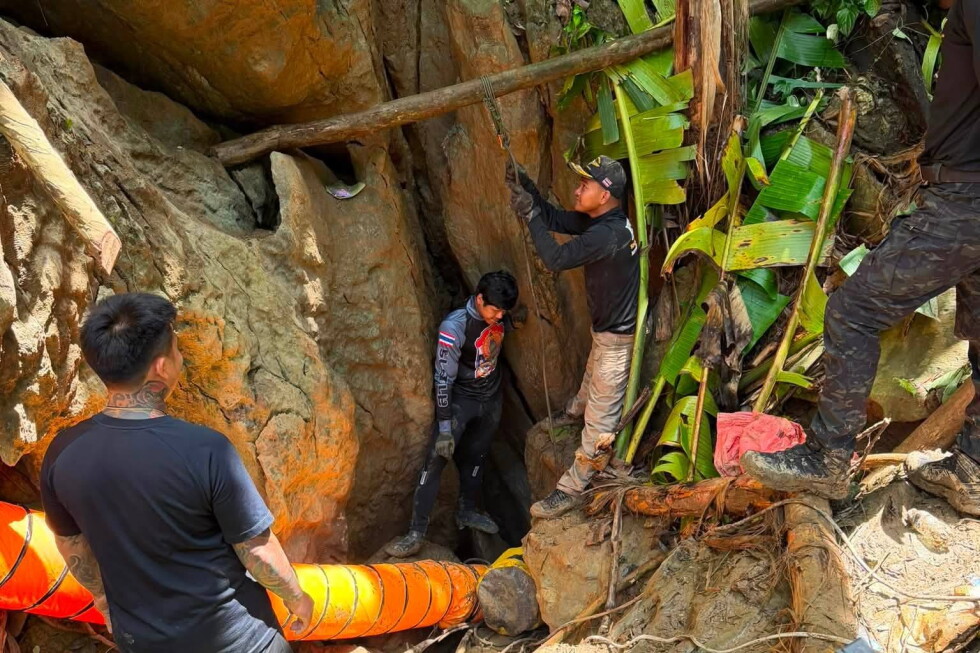
The multi-national search and rescue mission for seven local villagers trapped inside a flooded cave in central Laos has entered its seventh day on Tuesday, with rescuers battling harsh terrain and volatile weather to reach the stranded group whose current status remains unclear.
According to Lao and Thai rescue teams deployed to the operation, the seven entered the cave in Xaisomboun Province on May 19, only for an intense downpour to trigger sudden flash flooding that sealed off their only exit path.
The Lao non-profit Rescue Volunteer for People, which has been collaborating closely with local government authorities on the operation, announced its Tuesday operational priorities via a Facebook post: search teams planned to explore natural air shafts above the cave system to identify alternative access points and pinpoint the location of the trapped group. Rescue personnel from neighboring Thailand arrived at the remote site over the weekend to reinforce the effort.
Difficult conditions have consistently slowed progress from the start of the operation. To date, rescue divers have only managed to navigate roughly 100 meters into the narrow, waterlogged cave system, and estimates place the trapped group around 30 meters beyond the farthest point rescuers have currently reached. Crews are currently working around the clock to pump floodwater out of the cave to open new passage for search teams.
The cave is located in a remote, mountainous area of Longcheng district, Xaisomboun Province, approximately 120 kilometers north of the Lao capital Vientiane. Rescuers have documented on social media how steep terrain and ongoing heavy rainfall have severely hampered movement and operations. Footage shared by Thai rescue teams shows that reaching the cave entrance alone requires a 4-kilometer steep, arduous hike over uneven ground. The entrance itself is rocky, sharply sloped, and only wide enough to allow one person to climb through at a time. Once inside, teams must navigate mud-choked corridors, fully flooded chambers, and tight tunnels that force rescuers to crawl slowly forward.
While no official confirmation of the group’s purpose inside the cave has been released by authorities, participating rescuers confirmed the villagers entered the site to search for untapped gold deposits. Bounkham Luanglath, a representative of the Lao rescue organization, told the Associated Press that local residents had long visited the cave to prospect for gold, despite repeated official warnings about the site’s significant safety risks.
Laos has one of the lowest average per capita incomes in Southeast Asia, ranging between $2,000 and $2,500 annually, with rural, underdeveloped regions seeing even lower average earnings. Though the country is not classified as a major global gold producer, its mining sector makes up a substantial share of its developing national economy, driven by foreign direct investment primarily from neighboring China and Thailand. While copper remains the country’s top mineral export, mining for rare earth elements — critical components for nearly all modern electronics and clean energy technologies — has expanded rapidly across Laos in recent years. As of Tuesday, the Lao Foreign Ministry stated it had no official information to release to media outlets. The one-party communist state maintains strict controls over information sharing, with no formal organized opposition permitted.
The high-profile rescue operation has drawn major attention in neighboring Thailand, where it evokes sharp comparisons to the viral 2018 Tham Luang cave rescue, when 12 youth soccer players and their coach were trapped for more than two weeks before a daring international operation pulled them out alive. That mission claimed one life: a former Thai Navy SEAL diver who died during the search phase. Just earlier this month, another high-profile cave tragedy claimed six lives: five Italian divers who died after going missing during a cave dive in the Maldives, plus a Maldivian military diver who was killed during the high-risk body recovery operation.
Cave rescue experts note that trapped cave explorers face a cascade of life-threatening hazards even in the best conditions. Extended exposure to cold cave temperatures can quickly lead to hypothermia. While the human body can survive for multiple weeks without food, access to clean drinking water is critical to avoid fatal dehydration, and contaminated water can trigger diarrhea that accelerates fluid loss. Falling oxygen levels and carbon dioxide buildup also pose severe risks: low oxygen causes symptoms similar to altitude sickness that can damage lungs and other organs over time, while excess carbon dioxide buildup leads to fatigue and eventual unconsciousness. Constant darkness also disrupts the body’s circadian rhythms and sense of time, and can leave victims with extreme light sensitivity once they are extracted.
This report includes contributions from Associated Press journalists Grant Peck, Anton L. Delgado and Haruka Nuga.
-
ASX 200 slips as US attacks on Iran spook traders and send oil prices soaring
A three-day consecutive gain for Australia’s domestic sharemarket came to an abrupt end on Tuesday, as renewed geopolitical tensions in the Middle East upended market forecasts and sent global crude oil prices surging by 2.3% in a single trading session. The sudden shift in sentiment followed conflicting developments in US-Iran diplomacy that left global investors scrambling to adjust their risk positioning.
The benchmark ASX 200 closed the session down 34.20 points, a 0.39% drop that pushed the index to 8657.80. The downturn began immediately after the opening bell, when news broke of new US military strikes targeting Iranian assets, injecting fresh uncertainty into a region already roiled by ongoing conflict. The broader All Ordinaries index followed a similar trajectory, falling 32.80 points, or 0.37%, to settle at 8882.60. Against this backdrop, the Australian dollar edged slightly higher against the US dollar, hitting 71.67 US cents by market close.
Oil emerged as the defining volatility driver of the session. Just hours before Australian markets opened, crude prices had fallen overnight after both US and Iranian officials announced a tentative, in-principle peace deal that would reopen the strategically critical Strait of Hormuz, a chokepoint through which roughly 20% of global oil supplies pass daily. That optimistic shift was completely erased, however, following reports of explosions near Bandar Abbas, Iran’s key coastal hub for access to the strait.
IG market analyst Tony Sycamore explained that the blasts shattered growing market confidence that a breakthrough in US-Iran tensions was finally at hand. “These doubts have emerged just as markets were growing increasingly confident that a breakthrough was imminent, seemingly ignoring the fact that five previous attempts had fallen apart at the eleventh hour,” he noted. By the close of trading, Brent Crude had jumped 2.3% to settle at $US98.34, equal to around $A137.21, erasing all prior losses from the overnight session.
Nearly all market sectors felt the downward pull of the uncertainty: 10 of the ASX’s 11 core sectors closed the session in negative territory, led by utilities, consumer staples, and Australia’s big four banks. Even the energy sector, which typically rises alongside crude prices, ended the day lower, dragged down by coal producers that reversed the strong gains they posted a day earlier, which had followed a deadly explosion at a major Chinese coal mine that disrupted global supply.
Utilities were hit particularly hard after the national regulator announced an upcoming cut to retail electricity prices. Origin Energy shares dropped 2.30% to $10.64, while competitor AGL fell 2.79% to $8.70. Among consumer staples, major supermarket chains Woolworths and Coles slipped 0.75% and 0.56% respectively, while Treasury Wine Estates saw shares plummet 3.90% to $4.43.
Australia’s four largest national banks all posted losses ahead of the release of key domestic inflation data scheduled for Wednesday. Economists forecast that headline annual inflation will rise to 4.4%, while the Reserve Bank of Australia’s preferred trimmed mean inflation measure is expected to come in at 3.4%. Current market pricing suggests slowing inflation growth, paired with last week’s unexpected jump in national unemployment, will give the RBA room to keep the official cash rate on hold at 4.35%. By close, Commonwealth Bank of Australia fell 0.18% to $164.30, Westpac dropped 0.44% to $36.61, National Australia Bank led the big four losses with a 0.76% drop to $37.99, and ANZ slipped 0.31% to $35.66.
A handful of individual companies posted outsized moves on the day. Market operator ASX Ltd itself suffered its worst single-day performance since 2000, with shares plummeting 13% to an eight-week low of $51.03. Mexican fast food chain Guzman Y Gomez trimmed recent gains, falling 2.22% to $19.42, one day after the company confirmed it would fully exit the US market to focus on its domestic and Asian operations.
Against the broader market downturn, two companies delivered strong positive gains off the back of promising business updates. Online electronics retailer Kogan soared 18.60% to $4.08 after releasing a mid-financial year update showing gross sales grew 18.2% and total revenue jumped 18.1% over the first 10 months of the fiscal year. Medical device manufacturer Fisher & Paykel Healthcare also rallied sharply, with shares jumping 9.2% to $30.05 after reporting a 24% year-on-year rise in full-year net profits that outperformed market expectations.