作者: admin

  • On Iran truce, all sides want bigger China role, but does China?

    On Iran truce, all sides want bigger China role, but does China?

    For nearly a century, Washington has positioned itself as the unchallenged guardian of regional stability across the Middle East, building deep military alliances with both Israel and Gulf Arab monarchies while consistently sidelining Beijing’s ambitions to play a larger diplomatic and security role in the strategically critical region. That long-held narrative of a US-led regional order has recently been fractured by the cross-border escalation between Israel, the United States and Iran, which has upended long-held assumptions about deterrence in the Gulf. Far from being cowed by Washington’s persistent military deployment in the region, Tehran launched retaliatory strikes against Gulf Arab states that had long been viewed as secure under US security umbrella, directly exposing the gaps in the decades-old US-led framework.

    In the moments before a devastating escalation, China played a quiet but pivotal part in pulling the region back from the brink of all-out war. Yet in a striking paradox, Beijing has refused to claim credit for its diplomatic intervention, a choice that experts trace to careful strategic calculation: Beijing judges that deeper, more public involvement in Middle East security carries major risks, while the current post-escalation status quo — where US influence appears weakened but Washington remains committed to shouldering the burden of Gulf security — already serves China’s core interests.

    Former US President Donald Trump, in an interview with Agence France-Presse, credited Chinese diplomatic pressure for pushing Iran to agree to the two-week ceasefire, a breakthrough that came barely an hour before Trump’s public threat to obliterate Iranian infrastructure and cultural sites was set to take effect. This account was independently corroborated by a senior Pakistani government official, who told reporters that Chinese negotiators stepped in to convince Iranian leadership to accept the truce at a moment when international hopes for a de-escalation were all but gone.

    Despite these accounts from third parties, Beijing’s own public statements on the ceasefire have been deliberately muted. Chinese officials have confirmed their support for the truce but have made no effort to highlight or celebrate their own diplomatic work behind the scenes.

    Yun Sun, director of the China Program at the Washington-based Stimson Center, noted that this low-key approach is unusual for Chinese diplomacy, and suggested that Iran may have deliberately framed China as the key peace broker for strategic purposes. “Iran has singled out China as a potential security guarantor so there is an incentive on the part of Iran in presenting the optics of China playing an oversized role, in the hope that China would then be accountable for the implementation of the ceasefire,” she explained. “China doesn’t provide security guarantees and how do you even try to guarantee something with President Trump? It would just create problems for China down the road,” she added.

    Diplomatic moves continue this week, with US Vice President JD Vance set to open talks with Iranian officials in Pakistan on Saturday. Pakistan maintains close bilateral ties with China, and has actively courted the Trump administration in recent months, in large part to seek US backing in its ongoing territorial and diplomatic disputes with India.

    Liu Pengyu, spokesperson for the Chinese Embassy in Washington, struck a careful balance in his official comment, saying that China “welcomes all efforts conducive to peace and supports Pakistan in actively undertaking mediation.” He added, “As a responsible major power, China will continue to play a constructive role and make efforts to de-escalate tensions and quell the conflict.”

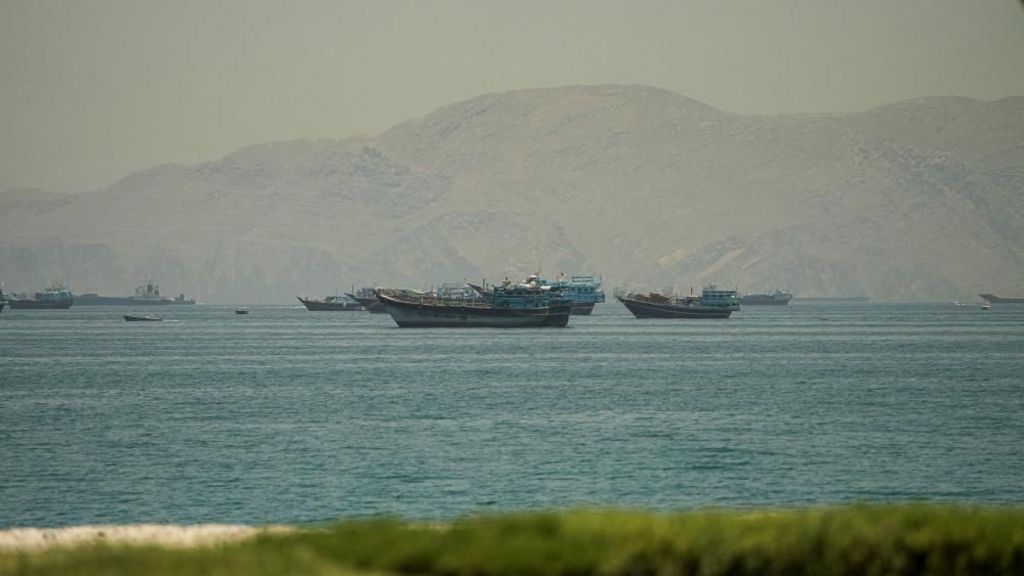
    Beyond diplomacy, China holds extensive economic stakes across the Middle East. As the world’s second-largest economy, China draws roughly half of its total oil imports from the region, though it has gradually reduced this reliance in recent years through rapid expansion of renewable energy capacity. Beijing has also been the most prominent country defying longstanding unilateral US sanctions on Iranian oil exports, and it stands to gain additional economic advantages after Tehran consolidated its control over the Strait of Hormuz, the critical chokepoint through which a fifth of global oil supplies pass daily.

    This is not Beijing’s first major diplomatic breakthrough in the region: in 2023, Iran and Saudi Arabia announced the restoration of full diplomatic relations during talks hosted in Beijing, a deal that the Biden administration at the time deliberately downplayed to minimize China’s diplomatic influence.

    One senior regional diplomat based in the Gulf summed up Beijing’s approach, saying, “China’s strategy in the Middle East has been masterful. It has dominated business and never fired a single bullet, but with the changes in the region it knows it needs a political element.”

    Lyle Morris, a senior fellow at the Asia Society Policy Institute’s Center for China Analysis, noted that Trump’s decision to credit China for the ceasefire may also be rooted in his own diplomatic agenda. Morris suggested Trump may be seeking to improve bilateral goodwill ahead of his planned visit to Beijing next month, where he intends to push for concessions on trade and other key issues. Still, Morris emphasized that Beijing ultimately has far fewer core stakes in the conflict than the United States, Iran, Israel and the Gulf states. “China’s not a primary actor here,” Morris said. “Ultimately, it’s a supporting role, just by the nature of their capacity and their stakes in the conflict.”

    Even as Beijing regularly criticizes US global military dominance, it has almost no history of large-scale military deployments outside of Asia, and few analysts expect it to seek to directly replace the US security presence in the Middle East. Henry Tugendhat, a fellow at the Washington Institute for Near East Policy who focuses on China’s regional role, pointed out that Beijing’s top military priority remains focusing its forces near the South China Sea and Taiwan, the self-governing democracy that China claims as its own territory.

    “At the end of the day, China’s greatest interest in the region is simply stability for the economic relations it seeks to foster with the region,” Tugendhat said. “So it may yet accept a return to US security guarantees as their least bad option but that also depends on what’s negotiated by all parties at the conclusion of this conflict.”

  • Man accused of coercing wife into sex with 120 men goes on trial in Sweden

    Man accused of coercing wife into sex with 120 men goes on trial in Sweden

    A high-profile criminal trial got underway on Friday at a district court in Härnösand, a quiet coastal town in eastern Sweden, where a 61-year-old local man faces severe charges including multiple counts of rape, assault, and coercion for allegedly forcing his ex-wife to provide paid sexual services to more than 120 men over three years.

    Prosecutors lay out a disturbing account of systematic abuse that exploited the isolation of the couple’s remote farm near Kramfors, in northern Sweden, to maintain control over the victim. According to official charging documents, the abuse began in 2022, when the defendant first coerced his then-wife into engaging in sexual encounters with men he sourced and communicated with online, who traveled to the couple’s property from across Sweden to pay for the services. The violence and coercion only ended in October 2025, when the victim gathered the courage to file an official report with police. She has since divorced her abuser, and both she and the defendant have had their full identities withheld from public records to protect the victim’s privacy.

    Prosecutors allege the defendant used multiple tools to break his wife’s resistance and maintain his control: he plied her with drugs to lower her ability to resist, installed surveillance cameras throughout the family home to monitor her every move (including recording the non-consensual sexual encounters, footage that will be entered as evidence in the trial), and exploited her limited social network to cut her off from outside support. He also carried out repeated violent threats against her, including threats to kill her, burn her with petrol, and sever her fingers, according to the indictment cited by Swedish public broadcaster SVT.

    Lead prosecutor Ida Annerstedt told Swedish national daily Expressen ahead of the opening of the trial that the defendant intentionally “exploited her particularly vulnerable situation” and her deep-seated fear of him to gradually normalize his pattern of coercive abuse.

    The defendant has pleaded not guilty to all charges against him. He claims all sexual encounters were consensual, and argues he only acted as an organizer to facilitate arrangements between his ex-wife and the men who contacted her. His defense lawyer, Martina Michaelsdotter Olsson, confirmed to SVT on the first day of the trial that her client rejects the entire narrative presented by prosecutors, saying he does not recognize the version of events outlined in the indictment.

    Swedish law enforcement has to date identified 120 men who are alleged to have participated in the encounters at the farm. However, only 28 of these men have so far been formally charged in connection with the case. Most of the co-accused have denied the allegations against them, claiming either they never engaged in sexual activity with the victim or that no payment was exchanged. Prosecutors plan to corroborate their case with a range of evidence including online chat logs between the defendant and the accused men, financial transaction records of payments, and calendar entries the defendant kept to schedule encounters.

    The case has drawn widespread international attention, with many observers drawing comparisons to the high-profile 2024 Pelicot trial in France, where Dominique Pelicot was convicted of drugging his own wife and allowing dozens of men to rape her over a nine-year period. To protect the victim’s privacy, the Swedish trial moved into a closed session immediately after the charges were read in court. The entire proceeding is scheduled to run for 14 days, with a verdict expected at the conclusion of proceedings.

  • ‘Sky Ladder’ via ferrata in Zhangjiajie draws global thrill-seekers

    ‘Sky Ladder’ via ferrata in Zhangjiajie draws global thrill-seekers

    Nestled among the dramatic karst landscapes of Zhangjiajie, Central China’s Hunan province, a heart-pounding new adventure attraction has quickly become a global sensation, drawing daredevils and outdoor lovers from every corner of the world. The 168-meter fixed-climbing route, carved into the side of a near-vertical sheer cliff, has earned the nickname ‘Sky Ladder’ — and the reputation as China’s highest via ferrata.

    In recent weeks, first-person perspective clips of climbers navigating the narrow, exposed route have spread rapidly across social media platforms, sparking widespread interest among global thrill-seeking communities. What makes this attraction particularly striking is its combination of extreme adventure and unmatched natural scenery.

    The Sky Ladder route is situated on Qixing Mountain, a karst tableland formation roughly 13 kilometers from Zhangjiajie’s city center. Standing at an average elevation of 1,328 meters, the mountain is defined by plunging sheer cliffs, deep winding gorges, rolling seas of mist and cloud, and thundering cascading waterfalls. For decades, this region has drawn hikers and outdoor explorers for its otherworldly landscapes, and the new via ferrata adds a high-adrenaline dimension to the area’s already robust tourism offerings.

    Unlike traditional rock climbing that requires advanced technical skill and heavy gear, via ferrata — a system that uses permanently anchored iron rungs, cables and safety rails along the route — allows even casual adventure lovers to experience the thrill of scaling a massive cliff with proper safety equipment. This accessibility has helped the Sky Ladder attract a wide range of visitors, from experienced mountaineers looking for a new challenge to first-time cliff climbers eager to check a once-in-a-lifetime experience off their bucket lists.

    As visitor numbers continue to climb, the Sky Ladder has solidified Zhangjiajie’s position as a top global destination for both natural scenery and outdoor adventure tourism.

  • Tourist boat capsizes in northern India, killing at least 10

    Tourist boat capsizes in northern India, killing at least 10

    On a Friday afternoon in northern India, a preventable boating disaster unfolded on the waters of the Yamuna River, claiming the lives of at least 10 people near the sacred Hindu pilgrimage destination of Vrindavan, according to local government officials. Vrindavan, a temple-centric town in Uttar Pradesh, draws millions of religious pilgrims and recreational tourists every year, with river boat tours being one of the most popular activities for visitors.

    Preliminary investigations into the incident have painted a clear picture of negligence that led to the tragedy. The private tour vessel, which was only certified to carry a maximum of 15 passengers, was carrying nearly 25 people when it began to overturn in the middle of the river. Investigators confirmed that strong river currents whipped up by sudden gusts of wind caused the overloaded boat to rock violently before it collided with a fixed pontoon bridge, the impact that ultimately sent it capsizing.

    Senior local administrative official Chandraprakash Singh confirmed that rescue teams pulled 15 survivors from the river, but four of those rescued remain in critical condition, receiving urgent care at local hospitals. All 10 deceased were Indian citizens, and six of the victims were women, per official casualty records.

    Multiple official sources also highlighted widespread safety failures that contributed to the death toll. The vast majority of passengers on board were not provided with or required to wear life jackets, and inspectors noted that the aging vessel showed clear signs of poor ongoing maintenance. Shockingly, the boat operator abandoned the scene immediately after the accident and remains at large as of the latest updates.

    All the passengers killed and rescued were part of a larger organized tour group of 150 people that had traveled to the Vrindavan area for a multi-day religious visit. This latest incident has once again drawn attention to the long-standing pattern of unsafe recreational boating across India, where lax safety regulation, unlicensed operators, and disregard for passenger capacity rules have made fatal boat accidents a disturbingly common occurrence. Just last year, a similar capsizing incident in southern India killed 22 tourists, highlighting a national crisis that has yet to be effectively addressed by regulators.

  • Invisible power protects Dunhuang’s iconic desert oasis

    Invisible power protects Dunhuang’s iconic desert oasis

    As spring unfolds across northwest China’s Gansu province, the legendary desert oasis of Dunhuang is coming alive with color. Some 1,500 hectares of fragrant Li Guang apricot blossoms are blanketing the slopes below Mingsha Mountain (the Singing Sand Dunes) in soft layers of blush pink and creamy white, drawing growing crowds of domestic and international travelers to the region’s popular Mingsha Mountain and Crescent Spring Scenic Area for the start of the peak tourism season. What many visitors never notice, however, is the quiet, unobtrusive system keeping the destination running smoothly: an innovative ‘invisible power protection’ model that balances reliable energy access with preservation of Dunhuang’s one-of-a-kind natural and cultural landscape. Developed and implemented by State Grid Jiuquan Power Supply Company, this approach prioritizes minimizing visual disruption to the desert oasis environment. At the core of the strategy is the full underground burial of all low-voltage power cables, moving all critical energy infrastructure entirely out of sight to eliminate the visual clutter that above-ground utility poles and lines would create in the scenic area. To maintain safe, consistent power delivery without disturbing the natural scenery or disrupting visitors’ experiences, the company has also implemented a routine maintenance regime that includes regular insulation testing and round-the-clock remote monitoring. This proactive system allows technicians to identify and resolve potential equipment risks long before they cause outages, all without requiring obtrusive above-ground construction work that would alter the desert landscape. For a destination that draws millions of visitors annually to experience its dramatic desert dunes, historic cultural sites, and rare oasis ecosystem, the invisible power model delivers a dual win: it ensures a reliable, uninterrupted power supply to support tourism operations and local livelihoods, while keeping Dunhuang’s iconic natural vista unspoiled for generations of future visitors.

  • The deal to reopen Hormuz is nowhere near done

    The deal to reopen Hormuz is nowhere near done

    A U.S.-brokered ceasefire announcement by former President Donald Trump, paired with an Iranian pledge to reopen the critical Strait of Hormuz, sparked immediate market optimism in early April 2026 that global commercial shipping would quickly rebound through the world’s most important oil chokepoint. But that optimism faded within hours, as shipping traffic remained near standstill the following morning, underscoring deep unresolved risks that have paralyzed one of the world’s most vital maritime trade routes.

    The day after the ceasefire declaration, only a small number of vessels, most with direct ties to Iran, completed transits of the 21-mile-wide strait, through which roughly 20% of the world’s daily oil consumption and 30% of global liquefied natural gas trade passes. Most commercial ships anchored waiting in the Persian Gulf stayed in place. Just hours after the ceasefire announcement, Iran backtracked, announcing it would effectively shutter the waterway in response to Israeli strikes on Lebanon, amplifying the already chaotic political messaging around the status of the strait.

    Contrary to popular framing of the crisis as a binary “open vs. closed” dispute, the reality of the current situation is far more nuanced. The strait has never been physically blocked by Iranian forces; instead, commercial shipping has been effectively deterred by a sustained campaign of attacks and credible threats targeting civilian vessels over recent weeks. Those actions have cut daily transits from a historical average of roughly 130 vessels per day to just a handful, and no political declaration is enough to reverse that trend until the underlying threat is eliminated.

    The ceasefire announcement has done more to deepen uncertainty than resolve the crisis, according to security analysts. While Washington has issued blanket statements confirming the strait is “open” to traffic, Tehran’s official messaging has remained deliberately vague. Iranian officials have publicly stated that all vessels must notify Iranian authorities before completing a transit, leading many regional observers to warn this could be a precursor to imposing a toll on commercial passage – a direct violation of established international maritime law.

    This ambiguity is not a minor communications misstep: it is a critical barrier to the resumption of normal shipping activity. Commercial shipping is a risk-sensitive industry, where operators and crew make route decisions based on tangible on-the-ground conditions, not untested political declarations. Given recent attacks on commercial shipping, industry leaders have little confidence that inconsistent political statements will hold in the long term.

    Restoring full commercial traffic through the Strait of Hormuz will require a deliberate two-phase approach, argues Jennifer Parker, an adjunct professor of defense and security at The University of Western Australia and UNSW Sydney, and former director of plans for the 2019 International Maritime Security Construct.

    The first and non-negotiable phase is a material reduction in threat to civilian vessels. This can be achieved through military deployment, diplomatic negotiation, or a combination of the two, but it must meaningfully reduce both Iran’s capability and willingness to target transiting commercial shipping. The second phase is deliberate confidence-building: even if all attacks stop immediately, shattered industry confidence will not rebound overnight, and requires visible reassurance from the international community.

    A core pillar of this reassurance should be limited naval escort operations for commercial vessels, particularly in the initial phase of the ceasefire. Parker notes that the U.S. missed a critical opportunity to signal confidence immediately after the ceasefire by declining to escort U.S.-flagged and U.S.-crewed vessels out of the Persian Gulf. A quick escort mission would have sent a clear signal to global shipping markets, undercut Iranian claims that vessels need Tehran’s approval to transit, and restored early confidence. Instead, U.S. hesitation has allowed Iran to consolidate its control over the waterway, pushing commercial shipping closer to Iranian territorial waters and entrenching its ability to dictate how the strait is used. Given Iran’s stated interest in upholding the ceasefire, it would have been very unlikely to challenge vessels under U.S. naval protection, making this missed opportunity all the more consequential.

    Beyond unilateral U.S. action, a broad international coordinated presence is needed to provide shared maritime surveillance, real-time information sharing, and rapid response capabilities for vessels in the region. This model is not untested: after a wave of Iranian attacks on commercial shipping in 2019, the International Maritime Security Construct (IMSC) was established to deliver just this kind of layered reassurance, focusing on coordination and transparency rather than large-scale convoy operations. Parker, who led planning for the IMSC in 2020, argues a similar, more refined iteration of the framework is needed today. While it is not a permanent solution to regional tensions, it would deliver the clarity and consistent communication that shippers require to resume normal operations.

    Diplomatic coordination is also a critical component of any long-term solution. Clear, unified messaging from the global community, backed by explicit commitments to impose economic consequences for any renewed attacks on commercial shipping, is essential to rebuilding lasting confidence.

    A growing point of international concern is mounting speculation that Iran may seek to impose a formal transit toll on vessels passing through the strait. Under the United Nations Convention on the Law of the Sea (UNCLOS), the Strait of Hormuz is classified as an international strait, which guarantees all commercial and military vessels the unconditional right of transit passage. Imposing a toll on passage would directly violate this core international principle and set a dangerous precedent that could be replicated in other strategic waterways around the globe, from the Strait of Malacca to the Bab el-Mandeb.

    Early indicators already show Iran testing the boundaries of international law: reports of radio communications warning vessels they need Iranian approval to transit, and repeated calls for pre-transit notification, clearly point to an effort to assert greater sovereign control over the waterway. This push must be resisted by the international community. Allowing even limited restrictions or a toll system to take hold would undermine the foundational principle of freedom of navigation that underpins the entire global maritime trade system. Regardless of recent political comments from U.S. leadership, the global community is unlikely to accept any permanent Iranian toll system, and any attempt to impose one should trigger immediate coordinated economic consequences, including targeted sanctions.

    Additional uncertainty has been fueled by unconfirmed reports that Iran has laid naval mines in or near the strait’s transit lanes. Even unsubstantiated claims of mining add to risk calculations that keep ships anchored, underscoring the urgent need for a coordinated international threat assessment. A transparent, public, independently verified assessment of whether the strait has been mined, and any subsequent mine clearance operation, should be an early top priority for any international coalition established to secure the waterway.

    At its core, the current crisis is not about political declarations of the strait being “open” or “closed.” Commercial shipping will only return to the Strait of Hormuz when shippers universally assess the waterway to be safe enough for transit. That outcome will require a sustained period without attacks on commercial vessels, a visible ongoing international commitment to securing the waterway, and clear unified action to uphold the long-established international rules that govern navigation through global straits. Until those conditions are met, the world’s most critical oil chokepoint will remain largely empty, and most commercial ships will continue to wait.

  • The high-stakes diplomacy that led to Pakistan hosting US-Iran peace talks

    The high-stakes diplomacy that led to Pakistan hosting US-Iran peace talks

    In what is being hailed as a unprecedented diplomatic breakthrough for the South Asian nation, Pakistan is preparing to host upcoming peace negotiations between the United States and Iran, just days after Islamabad successfully mediated a two-week ceasefire between the two adversarial powers. With talks scheduled to open this Saturday, Pakistani authorities have already taken extensive security measures across the capital city, declaring a two-day public holiday and deploying roughly 10,000 police officers and security personnel to secure the venue and surrounding areas. While the final confirmation of the talks’ proceeding remains pending, the capital has already entered a state of quiet preparedness, with lowered civilian foot traffic and heightened security patrols across key districts.

    The stakes of these negotiations extend far beyond the immediate parties involved. For the global community, the core priority is securing a permanent end to hostilities and reopening the Strait of Hormuz, the critical maritime chokepoint that carried roughly 20 percent of the world’s total oil supply before the outbreak of the current conflict. For Pakistan itself, however, the risks are deeply personal and potentially devastating. If negotiations collapse and the country is pulled into broader regional conflict, analysts warn Islamabad could face a catastrophic security scenario.

    Abdul Basit, a South Asia security expert at Singapore’s Nanyang Technological University, explains that Pakistan’s 2025 mutual defense pact with Saudi Arabia, a key U.S. regional ally, means Islamabad is already bound to honor security commitments if tensions escalate between Riyadh and Tehran. Combined with long-standing active tensions along Pakistan’s borders with India and Afghanistan, and ongoing counter-insurgency operations in two of its four provinces, a new front of conflict would leave Pakistan facing three heated border zones — a outcome the country cannot militarily or economically sustain, Basit notes.

    Despite these stark risks, the ceasefire breakthrough has sparked widespread celebration across Pakistani public discourse, with viral memes and positive commentary dominating social media platforms. Basit argues that the mediation success is already a victory in its own right: no other global power was able to de-escalate the crisis that brought the region to the brink of full-scale war, and Pakistan’s intervention averted that catastrophic outcome. For a country that has endured years of political instability, a near-debt default just two years ago, and persistent cross-border rivalry with India, this diplomatic win comes at a moment when the nation desperately needs a demonstration of global influence.

    How did Pakistan pull off this high-profile mediation? Analysts point to Islamabad’s unique diplomatic position: it is one of the few nations that maintains trusting relationships with all three key parties — the U.S., Iran, and the leading Gulf Cooperation Council (GCC) states. Much of the behind-the-scenes work has been led by Pakistan’s powerful military chief, Asim Munir, who has built close rapport with U.S. President Donald Trump, according to ruling Pakistan Muslim League Senator Mushahid Hussain Syed. In a country where the military has long held predominant political influence, Munir is widely considered the most powerful figure in Pakistani public life.

    Soon after Trump began his second presidential term, Munir moved quickly to strengthen bilateral ties, delivering two early high-profile wins for the U.S. administration, according to Maleeha Lodhi, Pakistan’s former ambassador to the United States and United Nations. First, acting on intelligence provided by the CIA, Munir’s forces captured and transferred to U.S. custody the alleged mastermind of the 2021 Kabul airport suicide bombing that killed 13 U.S. service members and more than 170 Afghans during the American withdrawal from Afghanistan. Lodhi notes that Trump publicly expressed his gratitude for the capture in his first address to Congress after taking office.

    The second win, Lodhi says, came when Pakistan confirmed to the Trump administration that it had played a pivotal behind-the-scenes role in de-escalating a major flare-up between India and Pakistan, preventing a wider regional war. Pakistan is also one of the few countries to nominate Trump for the Nobel Peace Prize — an honor the U.S. president has long sought. At a time when Trump’s global tariff war was delivering little political gains at home, the diplomatic wins from Pakistan filled a key need for the White House, Lodhi adds.

    Economic and commercial ties have also strengthened the relationship between the two countries. Pakistan has granted U.S. firms access to its rich reserves of critical minerals, a priority for U.S. national security strategy. In September 2025, Pakistan’s Frontier Works Organisation — a military-run leading critical minerals producer — signed a $500 million investment deal with a U.S. company, a deal that was finalized at the Prime Minister’s residence with Munir in attendance. In January 2026, Pakistan signed an agreement with an affiliate of World Liberty Financial, the cryptocurrency venture co-founded by Trump and his family, to potentially integrate the venture’s stablecoin into Pakistan’s national digital payment system, further deepening ties with the Trump inner circle.

    Despite this close alignment with Washington, Pakistan has maintained a carefully balanced diplomatic stance with Tehran. Islamabad officially condemned the initial U.S.-Israeli strikes on Iran, but also issued a strong condemnation of Iran’s subsequent retaliatory strikes on Saudi oil infrastructure, in line with its security commitments to Riyadh. On 7 April, Pakistan abstained from voting on a United Nations Security Council resolution calling for coordinated international action to reopen the Strait of Hormuz, which Syed described as “one-sided” for failing to note that the U.S. and Israel launched the first strikes. This principled, balanced approach helped Pakistan maintain Iran’s trust, Syed says.

    Pakistan’s civilian leadership has also played a critical role in the reconciliation process, according to former Pakistani Foreign Secretary Aizaz Chaudhry. Over the five weeks leading up to the ceasefire, Prime Minister Shehbaz Sharif and Foreign Minister Ishaq Dar held direct talks with more than a dozen global leaders and senior officials across Washington, Moscow, Beijing, key European capitals, Turkey, Egypt, and leading GCC states including Saudi Arabia and Qatar. On the day the ceasefire was announced, Sharif held what he described as a “warm and substantive conversation” with Iranian President Masoud Pezeshkian, who reaffirmed Iran’s commitment to participate in the Islamabad talks and thanked Pakistan for its mediation efforts.

    Analysts note that Sharif was able to leverage Pakistan’s decades-long close relationship with Tehran, built on shared 920-kilometer border and decades of security cooperation. Former Pakistani ambassador to Iran Asif Durrani explains that both nations share core security concerns, including cross-border militant activity and instability in neighboring Afghanistan. For more than 50 years, both countries have also grappled with the humanitarian consequences of regional refugee flows, creating a foundation of shared experience and mutual understanding. Religious ties have also fostered trust: while Pakistan is a majority Sunni nation, it is home to one of the world’s largest Shia populations, and thousands of Pakistani pilgrims travel to Iran — the world’s largest Shia-majority country — for religious pilgrimage every year.

    Even with all the preparation and diplomatic groundwork, however, uncertainty hangs over the talks as the opening date approaches. The fragile two-week ceasefire is already under growing strain, and it remains unconfirmed whether both the U.S. and Iranian delegations will actually arrive in Islamabad as planned. Chaudhry notes that moving from a temporary ceasefire to a comprehensive long-term peace agreement will be an enormously difficult task, and Pakistan must continue its role as a neutral facilitator moving forward.

    Israeli actions are already undermining the fragile ceasefire, according to Lodhi, pointing to fierce Israeli air strikes in Lebanon Wednesday that killed more than 300 people. Israel has stated that its ceasefire with Iran does not apply to Lebanon, expanding the scope of regional conflict even as talks are set to begin. Pakistani officials share deep concern over this escalation, Lodhi says, and the onus now falls on President Trump to restrain Israeli military action to keep the talks on track.

    For his part, Durrani argues that Pakistan has already done all it can to create the conditions for peace. “As a broker, mediator or facilitator, your job is to take the horse to water. You can’t make it drink,” Durrani says. “It is up to the parties to make use of that opportunity which is provided by Pakistan.”

  • Cross-Strait travel sees sharp increases under new policies

    Cross-Strait travel sees sharp increases under new policies

    New policy adjustments to streamline cross-Strait travel have delivered tangible, positive results, driving a notable year-on-year and quarter-on-quarter increase in people-to-people exchanges across the Taiwan Strait in the first quarter of 2026, according to official data released Friday by China’s National Immigration Administration (NIA).

    NIA spokesperson Lyu Ning announced that demand from Taiwan residents for travel permits to visit the Chinese mainland has expanded steadily since the implementation of two key easing measures rolled out in 2025. Starting July 1 last year, the mainland scrapped document processing fees for first-time permit applicants from Taiwan. Then, on November 20, the mainland expanded the number of ports authorized to issue on-arrival one-time travel permits for Taiwan residents from 58 to 100. This expanded network now covers 56 airports, 27 water ports, and 17 rail and highway ports across the mainland, greatly expanding access for Taiwan residents traveling from different regions and routes.

    Official statistics show that total applications for mainland travel permits from Taiwan residents climbed 11.8 percent year-on-year in the first three months of 2026, while the total number of Taiwan visitor arrivals to the mainland jumped 27.6 percent compared to the same period last year. Compared to the fourth quarter of 2025, applications from first-time Taiwan visitors to the mainland rose 4.5 percent, and applications for on-arrival one-time permits at ports increased 24.7 percent quarter-on-quarter.

    In addition to measures benefiting Taiwan residents traveling to the mainland, a third policy change introduced in November 2025 removed geographic restrictions for mainland residents applying for family visit endorsements to Taiwan. Previously, applicants were required to submit their materials at local immigration offices in their registered hukou (residence) region; the new policy allows mainland residents to submit applications at any immigration office across the mainland, regardless of their place of registration. This reform has drastically cut the time and financial costs for mainland residents seeking to travel to Taiwan to reunite with family members who reside on the island.

    Data shows travel from the mainland to Taiwan has also grown steadily following the policy adjustments. In the first quarter of 2026, total applications for travel endorsements to Taiwan from mainland residents increased 8.2 percent quarter-on-quarter. Family visit endorsements accounted for 21.8 percent of all endorsement applications, marking a 24.2 percent rise from the previous quarter, and the total number of trips made by mainland residents to Taiwan rose 10.7 percent quarter-on-quarter.

    Lyu emphasized that since the new policies took effect, both port-of-entry permit applications from Taiwan residents and family visits from the mainland to Taiwan have registered consistent growth, with the tangible benefits of the easing measures continuing to emerge for people on both sides of the Strait. The policies have not only made entry and exit procedures safer and more convenient for Taiwan residents around the globe seeking to travel to the mainland, but have also removed longstanding barriers to family reunions for cross-Strait families.

    Looking ahead, Lyu confirmed that China’s immigration authorities will continue rolling out additional targeted measures to further facilitate cross-Strait travel, support deeper integrated development across the Taiwan Strait, advance people-to-people exchanges and practical cooperation, and better serve the interests and needs of residents on both sides of the Strait.

  • Dutch police urge victims of ‘international sextortion campaign’ to come forward

    Dutch police urge victims of ‘international sextortion campaign’ to come forward

    Dutch law enforcement has taken to social media to urge unreported victims of a brutal, transnational sextortion ring to come forward, after a 22-year-old local man went on trial this week for orchestrating a campaign that left dozens of women and girls coerced into committing degrading, violent sexual acts on camera.

    The suspect, identified only as Damian A. in line with Dutch privacy regulations, crafted a deceptive online persona posing as a teenage girl to lure targets on widely used social and messaging platforms. His MO followed a chilling pattern: he first convinced victims to share explicit personal photos, then leveraged that material as blackmail. Under threat to distribute the private images to the victims’ friends, family members, and classmates, he forced them to create increasingly graphic, sadistic content—including forced self-directed sexual abuse and orders to lick public toilet seats. Some victims were even coerced into writing or holding signs reading “Owned by Turpien”, the suspect’s reported online alias, effectively branding themselves in the imagery that would later be exploited for profit.

    Damian A. was first taken into custody in January 2025, and his trial opened this week in the Dutch city of Dordrecht. Court documents confirm the suspect has confessed to the charges, which include counts of online sexual assault and online rape. Prosecutors have formally requested a nine-year prison sentence alongside court-mandated psychological treatment. In remarks reported by local Dutch media, Damian A. told the court, “I didn’t think about the consequences. That you can hurt people.” A final verdict from the court is expected within the coming weeks.

    The international scale of the abuse only came to light after a group of young women in the United States reported their exploitation to authorities, sparking a cross-border investigation that led investigators to Damian A. One high-profile case in the Netherlands involved a schoolgirl who was ordered to skip class and send a nude photo to the suspect within 10 minutes, or face having her existing explicit images sent to all her classmates. Rotterdam Police’s Sexual Crimes Team has described the harm inflicted as catastrophic, with the suspect turning his victims’ daily lives into “a living hell.”

    Beyond blackmail, Damian A. is alleged to have sold the abusive, explicit content on third-party platforms, extending the harm far beyond the initial coercion, and even shared the victims’ private personal data with other bad actors. To date, investigators have positively identified more than 50 victims across six countries: the Netherlands, the United Kingdom, the United States, Canada, Germany, and Montenegro. But law enforcement stressed that this number is almost certainly a fraction of the true total, as many victims remain too afraid or ashamed to come forward.

    Milou van der Kolk, a member of the Rotterdam Police Sexual Crimes Team, emphasized the urgency of the public appeal. “We are very worried because what these girls have had to endure is so extreme and so intense, and we know that there are more girls but we don’t know who they are,” she said.

    The ongoing social media campaign by Dutch police serves three core goals: to identify additional unreported victims, to reassure existing survivors that the suspect is in custody and cannot contact them, and to encourage caregivers and parents to have open conversations with young people about the dangers of sharing intimate imagery online. All police posts include direct links and contact information for free, confidential victim support services.

    Authorities explained that many victims of this type of online abuse grapple with overwhelming isolation, chronic stress, and feelings of hopelessness. Because the shame, fear, and despair caused by sextortion can be so debilitating, professional support is not just helpful—it can be life-saving. The case also highlights a growing, underrecognized threat: how a single offender with just a smartphone can exert total, terrifying control over young victims in the privacy of their own homes, turning everyday social media platforms into tools of intimidation, abuse, and exploitation while the adults in their lives remain completely unaware of the harm taking place.

    Police have also issued a separate warning to any individual who purchased or shared the abusive content: all such material must be deleted immediately, as investigators have confirmed that a permanent digital trail exists to trace activity. The suspect’s actions are part of a sharply rising global trend of sextortion: in the Netherlands alone, police recorded roughly 3,000 sextortion cases in 2025, marking a 46% jump from the previous year.

    Any individuals who have experienced online sexual abuse can access confidential support resources through the BBC Action Line.

  • Vietnamese man pleads guilty to possessing protected python parts in Malaysia

    Vietnamese man pleads guilty to possessing protected python parts in Malaysia

    KUALA LUMPUR, Malaysia — A 39-year-old Vietnamese national entered a guilty plea in a Malaysian court on Friday to charges of unlicensed possession of protected wildlife components, according to his defense counsel.

    Hoang Van Thai faces criminal charges linked to a large-scale seizure of contraband carried out early this April, where authorities recovered 1,022 python gallbladders and 195 python tongue sections taken from the reticulated python, a species listed as protected under Malaysian conservation law. The contraband was uncovered during a April 4 raid on a private property in Johor, a southern Malaysian state bordering Singapore.

    The haul of wildlife parts found in the operation totaled an estimated 37 million Malaysian ringgit, equal to roughly $9.3 million. Beyond the python parts that form the basis of Hoang’s charges, the seizure also included bear bile, suspected tiger body parts, primate remains, and animal reproductive organs that investigators have linked to transnational illegal wildlife trafficking networks. To date, authorities have not publicly explained why Hoang faces charges only for the python components, despite the broader range of contraband recovered at the site.

    Reticulated python parts are highly sought after on black markets, driven by persistent traditional beliefs: python bile stored in gallbladders is falsely attributed with unproven medicinal benefits, while python tongues are sold for use in traditional cultural rituals or marketed incorrectly as an aphrodisiac.

    Hoang’s defense attorney, Mohamad Fazaly Ali Mohamad Ghazaly, confirmed to reporters that his legal team has challenged the valuation of the contraband provided by Malaysia’s Department of Wildlife and National Parks, arguing that the agency failed to provide official supporting documentation for the $9.3 million estimated value. He also told the court that Hoang had entered Malaysia last November, was working locally as a driver, and that his two children were enrolled in schools in the country.

    Sentencing in the case has been scheduled for a later date. Hoang faces a maximum penalty of three years imprisonment, a fine, or both penalties if convicted. The court scheduled a April 20 hearing to review Hoang’s immigration status before ruling on a bail application. Prosecutors have formally opposed granting bail, arguing that the massive volume of contraband recovered points to Hoang’s involvement in a coordinated organized criminal operation.

    Vincent Chow, senior advisor for the Johor branch of the Malaysian Nature Society, told local English-language outlet *The Star* that the circumstances of the case suggest Hoang was likely operating as a storage agent for a much larger international trafficking syndicate.

    “Most of the wildlife parts seized had already been processed, and some were even packed for shipment, likely waiting to be moved out to either local black markets or international buyers,” Chow explained.

    Malaysia has long been identified as a critical hub for the global illegal wildlife trade, functioning both as a source country for native endangered species and as a key transit point for contraband moving between Southeast Asian suppliers and consumer markets across East Asia and beyond. Criminal networks exploit the country’s porous borders and logistics infrastructure to move protected animal parts, fueled by persistent unregulated demand for exotic wildlife products.