作者: admin

  • Peru election results delayed after thousands get a one-day voting extension

    Peru election results delayed after thousands get a one-day voting extension

    LIMA, Peru — Widespread logistical failures that blocked thousands of voters from casting ballots on Sunday have forced Peru’s electoral officials to extend voting into Monday, pushing the final outcome of the country’s highly contested presidential election past the original scheduled announcement date. The chaotic opening day of voting, which saw countless citizens both within Peru and overseas locked out of polling stations, left millions waiting in uncertainty as the nation navigates one of its most fragmented political moments in modern history.

    Electoral authorities confirmed that just over 52,000 eligible voters will get a second chance to cast their ballots on Monday. This extension applies to voters registered in Lima, Peru’s densely populated capital, as well as two overseas polling locations: Orlando, Florida, and Paterson, New Jersey. Officials initially put the number of eligible voters for the extended voting period at 63,300 before revising the figure downward to correct an earlier miscount.

    Peru enforces mandatory voting for all citizens between the ages of 18 and 70, with a fine of up to $32 imposed on those who fail to participate without a valid excuse.

    Sunday’s vote caps a turbulent decade for Peruvian politics: 35 candidates are competing to claim the presidency, a role that has already changed hands eight times in 10 years. The crowded field includes a former cabinet minister, a popular comedian, and the heir to a well-established political dynasty, reflecting deep divisions within the country’s electorate.

    The election is being held against a backdrop of soaring violent crime and persistent institutional corruption, which has spawned overwhelming public discontent. Most Peruvian voters already view the full slate of candidates as untrustworthy and ill-prepared to tackle the country’s most pressing crises. In response to widespread public anxiety over public safety, many candidates have put forward hardline policy proposals, including plans to construct massive new maximum-security megaprisons, restrict food access for incarcerated people, and reinstate the death penalty for severe criminal offenses.

    For many ordinary voters, public safety remains the top priority, even as frustration with political brokenness runs deep. Heidy Justiniano, a 33-year-old nurse waiting in line to vote at a Lima public school, told reporters she had still not settled on a candidate by the time she reached the polling station. “There’s so much crime, so many robberies on every corner; a bus driver was killed just recently,” Justiniano said. “What matters most to us right now is safety, the lives of every person. Politicians don’t always keep their promises. This time, we have to choose our president wisely so that he can improve Peru.”

    In total, more than 27 million Peruvians are registered to vote in the election, with roughly 1.2 million of those registered at overseas polling stations, primarily in the United States and Argentina.

    Under Peruvian electoral law, a candidate must win an outright majority of more than 50% of the vote to claim the presidency without a runoff. Given the fragmented electorate and the unprecedented size of the candidate field — the largest in Peruvian history — political analysts almost universally predict that a second-round runoff election will be held in June.

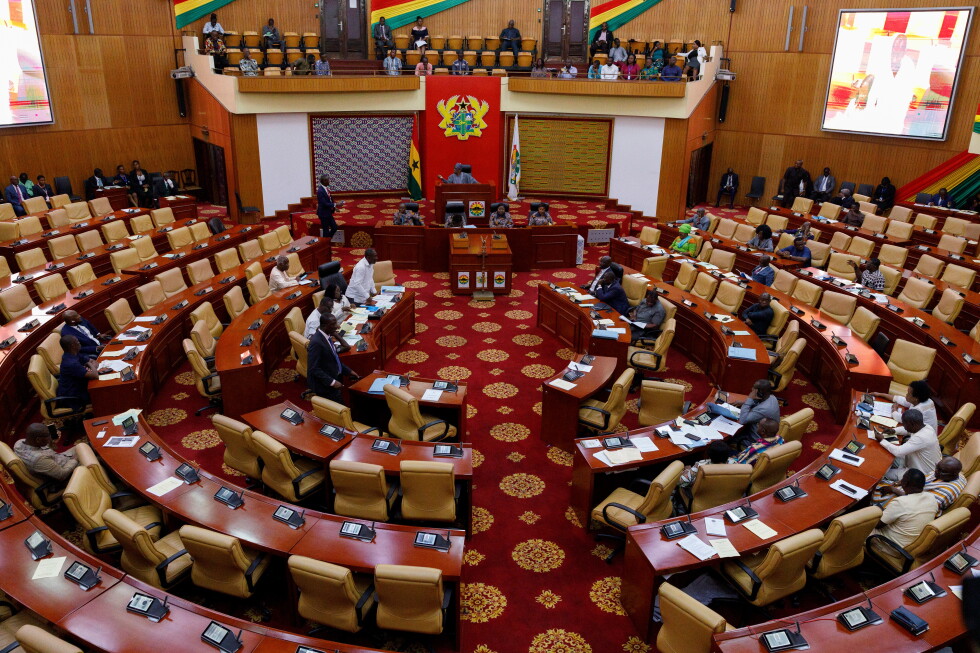
    In addition to selecting a new president, voters are also casting ballots to fill seats in a newly reconfigured bicameral Congress, a change mandated by recent legislative reforms. This marks the first time in more than three decades that Peruvians will directly elect members to a full two-chamber legislature, with the reforms concentrating substantial new governing power in the newly established upper chamber.

  • Strikes on alleged drug boats kill 5, leave 1 survivor in eastern Pacific, US military says

    Strikes on alleged drug boats kill 5, leave 1 survivor in eastern Pacific, US military says

    In a latest escalation of the Trump administration’s aggressive campaign against suspected Latin American drug trafficking networks, the U.S. military announced Sunday that it destroyed two small vessels it accuses of smuggling narcotics in the Eastern Pacific Ocean. The operation left five people dead and one person rescued, marking the most recent deadly action in a crackdown launched back in early September. Since the administration began labeling its targets “narcoterrorists” and authorizing open-target strikes, the death toll from these U.S. military boat attacks has climbed to at least 168, according to official data.

    U.S. Southern Command, the military branch overseeing operations in Latin America and the Caribbean, confirmed the Saturday strikes were carried out along well-documented smuggling corridors that traffickers routinely use to move contraband north toward the United States. Unlike many previous strikes, the command did not release any concrete evidence to verify the boats were actually carrying illegal drugs at the time of the attack. Footage circulating on the social platform X, formerly Twitter, captures the two small craft moving across open water before large, bright explosions engulf both vessels.

    Following the strikes, Southern Command said it alerted the U.S. Coast Guard to launch search-and-rescue operations for the lone reported survivor. The Coast Guard has confirmed it is leading coordination for the search effort and stated it will release further updates as more information becomes available.

    The operation comes as the Trump administration is simultaneously ramping up military pressure on two separate global fronts: Latin American drug networks and the Iranian government in the Persian Gulf. Just hours after the Pacific strike, President Donald Trump announced the U.S. Navy will implement a full naval blockade of Iranian ports and restrict all commercial traffic moving through the Strait of Hormuz, a critical chokepoint through which roughly 20% of the world’s daily oil supplies pass. The blockade announcement comes just days after ceasefire negotiations between U.S. and Iranian delegates held in Pakistan collapsed without any breakthrough, ending a fragile multi-week truce that had paused open hostilities between the two nations.

    Trump has framed the ongoing boat strikes against suspected traffickers as a core component of what he calls an “armed conflict” with transnational drug cartels, arguing the escalated military action is critical to cutting off the flow of narcotics into the U.S. and reducing the record number of fatal drug overdoses that kill tens of thousands of Americans annually. To date, however, the administration has failed to produce substantive public evidence backing its repeated claims that those killed in the strikes are confirmed “narcoterrorists.”

    Critics have raised two core objections to the campaign: they question the legality of extrajudicial military strikes targeting non-state actors in international waters, and they cast doubt on the policy’s actual effectiveness in addressing the country’s overdose crisis. Policy analysts have pointed out that the synthetic opioid fentanyl, which is responsible for the vast majority of fatal overdoses in the U.S., is almost exclusively trafficked across the land border with Mexico. Fentanyl is primarily produced in Mexican laboratories using precursor chemicals imported from China and India, making maritime Pacific smuggling a negligible contributor to the overall drug flow.

    The simultaneous dual military deployments mark a rare moment where the U.S. is carrying out active offensive operations in two separate regions. While the Trump administration has prioritized its counternarcotics campaign in the Western Hemisphere, it has shifted significant naval and air resources to the Middle East over the past several weeks following the outbreak of open hostilities with Iran. The new blockade of Iranian ports is designed to cut off Iran’s key oil export revenue, its primary leverage in the ongoing war, after Tehran briefly closed the Strait of Hormuz earlier this month.

    Related developments unfolding alongside the Pacific strike include a growing public feud between former President Trump and newly elected Pope Leo XIV, the first American pope, over the U.S.’s war with Iran, as well as an immediate spike in global oil prices following the blockade announcement, as markets react to the threat of disrupted global crude supplies.

  • Liverpool seek ‘special’ Anfield night to salvage troubled season

    Liverpool seek ‘special’ Anfield night to salvage troubled season

    Liverpool Football Club enters one of the most pivotal nights in its recent history this Tuesday, tasked with a seemingly insurmountable mission to overturn a 2-0 first-leg deficit against Paris Saint-Germain in the Champions League quarter-finals – a result that could not only rescue a deeply underwhelming season but also decide the future of manager Arne Slot.

    Just 12 months after lifting the Premier League title, the Reds have endured a turbulent 2024-25 campaign. Currently sitting fifth in the top-flight table, the club was eliminated early from both the FA Cup and EFL Cup, leaving the continent’s premier club competition as their only remaining path to silverware this term. Their challenge became far steeper after a dominant PSG side outclassed them in the French capital two weeks ago, but wasteful finishing from the Parisians kept Liverpool in the tie, setting the stage for a potential iconic night at Anfield.

    As one of European football’s most successful clubs with six Champions League crowns to their name, Liverpool has a storied history of pulling off miraculous come-from-behind wins on their home ground. The most famous of these recent examples came in 2019, when current captain Virgil van Dijk was part of the side that erased a 3-0 first-leg deficit to beat Lionel Messi’s Barcelona 4-0 at Anfield, a result that propelled the club to its sixth European title under then-manager Jurgen Klopp.

    That legendary night stands as the high water mark of Klopp’s trophy-laden reign, which included three Champions League finals in five seasons. But for the core group of players who featured in that iconic run, Tuesday’s clash could be their final Champions League chapter at Anfield bar a stunning turnaround. Mohamed Salah and Andy Robertson have already confirmed they will depart the club at the end of the season, while Van Dijk and Alisson Becker face an uncertain future, with no guarantee Liverpool will even qualify for next season’s tournament despite five English spots being on offer this cycle.

    For Slot, the pressure could not be higher. The Dutch manager is in the final stretch of his second season at the helm, and his position has been in serious doubt after a string of underwhelming results. Following a humiliating 4-0 FA Cup quarter-final defeat to Manchester City last month, Liverpool supporters chanted the name of Xabi Alonso, the club’s former midfield icon and the overwhelming favorite to take the job should Slot be sacked at the end of the campaign, who left his role at Real Madrid earlier this year.

    A much-needed 2-0 victory over Fulham at the weekend has given Slot and his squad a boost, snapping a three-game losing streak and extending their advantage over the sides chasing Champions League qualification spots in the Premier League. In the aftermath of that win, Slot issued a public rallying cry to Anfield supporters, urging them to recreate the iconic atmosphere that has lifted the club through past crises.

    “This was a massive win not only for the league but looking forward to Tuesday,” Slot told reporters. “Not only for the players but also for the fans. After a 4-0 loss and a 2-0 loss everybody could do with this win. One thing is clear is that on Tuesday we need our fans. There were fans in Paris but we had a very hard time. Anfield has shown many times that it can lift the team to another level and we need that again. Half an hour before the game the players need that support and need to feel it is going to be another special evening.”

    Van Dijk echoed that sentiment, drawing on his experience of the 2019 Barcelona comeback to inspire his teammates. “It’s down to us to be in the best shape possible to make a special evening on Tuesday,” the captain said. “We are at home and we have to show belief that we can do it. It needs a special performance but I’m lucky I have been part of special performances so I will try and bring that across for the team.”

    Even beyond the tie, a second humiliating defeat in as many weeks on home soil would deal a further blow to Slot’s standing with supporters. Another underperformance matching the debacles in Manchester and Paris could prove to be the final straw for the fanbase, putting even more pressure on the club’s hierarchy to make a change at the end of the season.

  • AFL 2026: Darcy Cameron on the age profile of Collingwood’s list

    AFL 2026: Darcy Cameron on the age profile of Collingwood’s list

    As the 2026 AFL season gets underway, Collingwood Magpies star and reigning best-and-fairest winner Darcy Cameron has pushed back hard against growing fan and analyst speculation that the club’s veteran-heavy playing list is the root cause of its underwhelming opening stretch.

    Through the first five rounds of the new campaign, the Pies have only secured two wins, dropping three consecutive matches to premiership contenders Adelaide, the Brisbane Lions, and Fremantle. This underperformance has reignited long-simmering questions about Collingwood’s list composition, with critics arguing the club overrelies on young star Nick Daicos and 400-game veteran Scott Pendlebury, warning that an ‘age cliff’ is imminent for the side that reached two preliminary finals and one grand final over the past four seasons.

    Cameron, however, has labelled these concerns nonsensical. He pointed to Collingwood’s sustained on-field success over the previous four years as evidence that the current group of players remains competitive, even with the advancing age of several key leaders. “I know those guys are getting a little bit older but they’re still performing at a really high level,” Cameron told reporters, doubling down that the narrative of an impending age-related collapse is unfounded.

    Instead of focusing on age, Cameron shifted the conversation to the Pies’ well-documented attacking struggles, particularly in the inside 50, which he identified as the far more pressing issue for the club to address. The Magpies controlled the inside 50 count in their recent loss to Fremantle, but failed to convert that territory into meaningful scoreboard damage. Outside of a win over GWS where coach Craig McRae adjusted the side’s attacking structure, Collingwood has only posted low totals of 78, 79, 65 and 39 points in its other four 2026 outings, leaving the forward line starved of quality scoring opportunities.

    Cameron said the root of the problem lies with the midfield’s ball movement, not the forward group’s ability to convert. The ruckman acknowledged that midfielders, including himself, too often fell into predictable attacking patterns against Fremantle, which flooded extra defenders behind the ball to clog the Collingwood forward 50. “We probably missed a few opportunities in the first half to lower our eyes and not be so predictable,” Cameron explained. “Freo flood a lot of numbers back and we probably played into their hands at times. We just need to create more opportunities to link up with our forwards. We will go back and look at the vision and fix this moving forward.”

  • Eight to be awarded for bravery in Bondi Junction stabbing

    Eight to be awarded for bravery in Bondi Junction stabbing

    Two years to the day after a horrific mass stabbing tore through Sydney’s busy Bondi Junction Westfield shopping center, eight people who risked their lives to protect complete strangers during the deadly attack will receive formal national recognition for their extraordinary courage. The 2024 tragedy left six innocent people dead and 10 others wounded, shocking communities across Australia and the globe.

    The attack was carried out by Joel Cauchi, a man who had first been diagnosed with schizophrenia as a teenager. On the day of the attack, Cauchi was unmedicated and experiencing a severe psychotic episode, and was homeless when he entered the crowded shopping mall armed with a knife. After the attacker wounded multiple people and lunged toward responding New South Wales Police Inspector Amy Scott, Scott made the split-second decision to shoot Cauchi dead, ending the rampage and preventing further loss of life. Scott is one of the recipients of the prestigious Australian Bravery Decorations, set to receive a Bravery Medal for her actions that day.

    Several awards will be bestowed posthumously to victims who gave their lives to protect others. Ashlee Good, a 38-year-old mother, was stabbed from behind by Cauchi as she pushed her infant daughter in a stroller. When the attacker turned to her child, Good shoved him away, sustaining a second fatal stab wound, but successfully got her baby to safety before she died. Faraz Tahir, a 30-year-old security guard working his very first shift at the shopping center, also suffered a fatal stab wound to the stomach when he and colleague Muhammad Taha responded to a “code black” alert and confronted Cauchi. Both Tahir and Taha will receive Bravery Medals; Taha survived his injuries and called the honor a meaningful tribute to everyone who stood against the attacker that day.

    Two French tourists, Silas Despréaux and Damien Guerot, also stepped up to intervene, arming themselves with heavy metal bollards to block Cauchi’s path, and they will also receive bravery honors. Two other Australians round out the list of honorees: Noel McLaughlin, the husband of victim Jade Young, who rushed to the scene after a call from his daughter and shouted warnings to others to retreat before administering first aid to his fatally wounded wife, and Catherine Ann Molihan, an experienced nurse who left her safe hiding place in a retail store to stabilize the wounded security guards as they waited for emergency services.
    In a statement announcing the honors, Australia’s Governor-General Sam Mostyn highlighted the extraordinary selflessness of all eight recipients. Hailing from across Australia and around the world, each person prioritized the safety of strangers over their own in an unimaginably violent situation. “Every one of them showed strength, and profound courage, as they placed the safety of others above their own, demonstrating ultimate care for others,” Mostyn said.

    In the wake of the attack, a coronial investigation into the tragedy uncovered systemic gaps in mental health care. The coroner referred Cauchi’s long-time psychiatrist to state health regulators, raising concerns that the provider missed critical opportunities to restore the attacker’s antipsychotic medication after he was weaned off the treatment. The inquiry also produced 23 formal recommendations, calling on the New South Wales government to expand community mental health outreach services and fund emergency short-term housing for vulnerable people living with mental illness, many of whom face unstable housing like Cauchi did at the time of the attack.

  • Uber driven by fuel crisis to fresh price hike

    Uber driven by fuel crisis to fresh price hike

    Australian riders using Uber will soon face another increase to their ride costs, as the rideshare giant has rolled out a new temporary fuel surcharge to support drivers grappling with unprecedented global fuel price spikes.

    This new charge comes less than four weeks after a routine fare review already pushed average Uber prices up by 6% across the country. Designed as a targeted short-term intervention to offset drivers’ growing fuel-related expenses, the new 5 cent per kilometer surcharge will go into effect this Wednesday, stacked on top of the March fare increase.

    Industry union leaders have thrown their support behind the measure, noting that it is structured to deliver direct financial relief to drivers who bear the full cost of fuel for their work. Transport Workers’ Union (TWU) national secretary Michael Kaine estimates that the extra revenue from the surcharge could add up to roughly $35 in extra savings for drivers every time they fill up their tanks. Kaine pointed out that rideshare operators face the same inflated fuel costs as all other transport workers, with drivers now paying $40 to $50 more per tank than just a few months ago, and the surcharge will go a long way toward easing their financial strain.

    The TWU has actively collaborated with major rideshare brands operating in Australia, including Uber and its main competitor Didi, to address the mounting pressure on drivers amid the ongoing fuel crisis. Didi was the first major player to roll out the exact same 5-cent per kilometer surcharge, a policy that the company says has been widely well-received by its driver base. Uber’s matching surcharge will launch this Wednesday, and will run as a temporary emergency measure through June 8 of this year.

    Kaine expressed confidence that Uber customers will be understanding of the extra cost, noting that Australian consumers are already well aware of skyrocketing fuel prices from their own household budgets. “Australians have grown accustomed to the reliable convenience that rideshare services provide, and they recognize the pressure that drivers are under to keep operating right now,” Kaine explained. “If paying a small extra amount means drivers can earn a fairer income while keeping that convenience available, I believe the vast majority of customers will accept this change.”

    Emma Foley, Managing Director of Uber Australia, confirmed that the surcharge was developed through close, productive collaboration between the company and the TWU. “We have worked hand-in-hand with the union to tackle the rising fuel costs that cut into our driver partners’ earnings,” Foley said. “This temporary fuel surcharge delivers immediate, short-term relief for drivers as we navigate this ongoing fuel crisis, and it builds on the national fare update we rolled out in March that already boosted driver earnings across the country. This move reaffirms our ongoing commitment to improving driver compensation.”

    For its part, Didi implemented its 5-cent per kilometer surcharge roughly a month ago, and has reported that the policy has been popular among its driver workforce. Following the positive reception of the initial surcharge, Didi has also moved to increase its minimum fare prices across several major Australian markets. “We will continue to monitor fuel prices and adjust our fare structures and surcharge policies as needed to ensure our driver community gets the support they need through this crisis,” a Didi spokesperson said.

  • AFL 2026: Carlton captain Patrick Cripps on the Blues’ floundering flag chances

    AFL 2026: Carlton captain Patrick Cripps on the Blues’ floundering flag chances

    Against a backdrop of early-season struggles that have left many questioning Carlton’s 2026 premiership hopes, captain Patrick Cripps is holding firm to his belief that the club is still on track to compete for Australian Football League’s ultimate prize, despite a disappointing 1-4 record through the first five rounds.

    The 31-year-old skipper, now competing in his 13th professional season, has not written off his chance to lift the club’s long-elusive premiership trophy this year. For Cripps, the slow start is far from a final verdict on what the evolving Blues squad can achieve in the coming months.

    With a high-stakes clash against longtime archrival Collingwood scheduled for Thursday night, Cripps argues it is far too early to count his side out of contention. A win against the Pies, he insists, could provide exactly the momentum shift Carlton needs to turn its season around.

    “Competing for a premiership is still what drives me. Any player in the back half of their career plays for that one goal above everything else,” Cripps told reporters ahead of the Collingwood game. “What I and a lot of us learned last season is that when you fixate too much on the end prize, you lose the joy of putting in the work week after week. That ultimate goal will always be there for as long as I keep playing, but I still love this game – I love training, I love competing against the best.”

    Cripps highlighted that while the early results have not gone Carlton’s way, the internal culture and training intensity at the club remain as strong as he has ever experienced in his tenure. “My focus lately has been on leading this group day in and day out. We’ve carried great energy through the first weeks of the season, and that’s one thing we’ve really nailed this year. The start has obviously been challenging, and we haven’t gotten the wins we wanted, but the energy around the club and the standard of our training is higher than I’ve ever felt it. Even when results aren’t going your way, I still love showing up to the club every day – that’s always the biggest test. It’s still early, there’s so much untapped potential in this group, and we can’t wait to get out there on Thursday and kick this campaign into gear.”

    Carlton turned in an improved performance against Adelaide last week, fixing the second-half slumps that had plagued earlier outings, but still walked away empty-handed without the four competition points. That result followed a controversial call from head coach Michael Voss to drop George Hewett, the club’s reigning best and fairest winner, a decision that sent shockwaves through the competition.

    Cripps acknowledged that the cutting of a popular, experienced teammate like Hewett serves as a wake-up call for every player in the Carlton squad. “It’s always tough losing George – he’s someone I love playing alongside, we’ve shared the field for four years now, every player at the club loves having him around, you always know what you’re going to get from him,” Cripps said. “But at the same time, when results aren’t going your way, you have to be willing to shake up the combination to get things back on track. The way George has handled this, showing up and putting in the work this week, that’s a credit to his character. He puts in more effort than anyone I’ve ever seen at this club, and I’m proud to call him a teammate.”

  • Lieutenant General Susan Coyle appointed first female Australian Chief of Army

    Lieutenant General Susan Coyle appointed first female Australian Chief of Army

    The Australian Defence Force (ADF) is undergoing one of its most high-profile leadership reshuffles in recent years, with a series of historic appointments announced just days after the service was thrown into turmoil by the arrest of Australia’s most decorated veteran, Ben Roberts-Smith. Amid growing global geopolitical friction including escalating conflict in the Middle East, Prime Minister Anthony Albanese’s government has confirmed a shake-up that will see the ADF welcome its first female Chief of Army and a new Chief of Defence.

    On Monday, Lieutenant General Susan Coyle, a decorated 40-year veteran with extensive operational experience across multiple global deployments, was officially named to the top army post. Coyle, who most recently served as Chief of Joint Capabilities starting in 2024, will step into the role vacated by Lieutenant General Simon Stuart AO, who has held the position since 2022. A graduate of both the United States Army War College and Harvard University and a Member of the Order of Australia, Coyle has completed deployments to Timor Leste, the Solomon Islands, Afghanistan, and the Middle East, bringing deep on-the-ground experience to her new command.

    In a parallel senior promotion, outgoing Chief of Navy Mark Hammond AO will ascend to the role of Chief of Defence, taking over from Admiral David Johnston, whose two-year term is set to conclude in July. Upon his promotion, Hammond will be elevated to the rank of Admiral, while Rear-Admiral Matthew Buckley will step into Hammond’s current role as the new Chief of Navy.

    Speaking to reporters following the announcement, Hammond struck a humble note about his new appointment, acknowledging the weight of the responsibilities ahead. “This is probably the most humbling moment in my career,” he said. “I certainly look forward to serving with, and for Australia’s sailors, soldiers, and aviators as their Chief of Defense through the challenging times ahead.”

    Hammond also used the press briefing to address growing concerns over regional security following recent Iranian drone attacks in the Strait of Hormuz, pushing back against any questions about the ADF’s operational readiness. “Today, that navy is as ready as it ever has been,” he stated, adding that Australian vessels deployed to the Red Sea are equipped with the world’s most advanced radars alongside cutting-edge missile and defensive systems. Responding to questions about a potential request for contribution related to former U.S. President Donald Trump’s proposed blockade of the strait, Hammond noted that no formal request for Australian support had been received, and any deployment decision would rest solely with the Australian government.

    Defence Minister Richard Marles framed Coyle’s historic appointment as a landmark moment for the ADF, ahead of his much-anticipated national defence strategy update — a two-yearly policy review scheduled to be delivered to the National Press Club on Wednesday. Marles described Coyle as “the standout candidate” for the role, emphasizing that her elevation to Chief of Army carries profound meaning for both current and future servicewomen in the ADF. “It is deeply significant … for women who are thinking about serving in the Australian Defence Force in the future,” he said. The role of Chief of Army carries core responsibilities for overall command of the service, as well as oversight of training and operational readiness.

    The leadership overhaul comes at a sensitive juncture for the ADF, which is already navigating multiple pressures. In recent days, the government has faced intense scrutiny and pressure from veteran communities following the arrest of Ben Roberts-Smith, who is currently being held on remand on multiple war crime-related charges. Roberts-Smith has consistently maintained his innocence and has not entered any pleas in the case.

    On the strategic front, the Australian government has been actively reframing its national defence posture in recent years, with a growing focus on countering potential threats along the country’s northern border. Earlier this year, Canberra announced a large-scale sell-off of ageing defence assets as part of this reset, while the alliance has also faced repeated calls from Donald Trump for U.S. allies to dramatically increase their defence spending commitments.

    Prime Minister Albanese paid tribute to the departing leaders, Admiral Johnston and Lieutenant General Stuart, for their years of service to the nation. “There is indeed no higher calling than to serve in the Defence Force, and all Australians owe a debt to those who protect the Australian way of life,” he said.

  • Pope Leo says he does not fear Trump, citing Gospel as he pushes back in feud over Iran war

    Pope Leo says he does not fear Trump, citing Gospel as he pushes back in feud over Iran war

    A high-stakes public clash between history’s first U.S.-born pontiff and sitting U.S. president has erupted over the ongoing U.S.-Israel war in Iran, with Pope Leo XIV rejecting Donald Trump’s harsh attacks and reaffirming his commitment to the Catholic Church’s longstanding call for global peace.

    The confrontation unfolded after Leo delivered a pointed message during a Saturday prayer service at St. Peter’s Basilica, held the same day U.S. and Iranian negotiators sat down for face-to-face talks in Pakistan amid a fragile ceasefire. Though the pope did not name Trump or U.S. officials directly, he criticized what he called the “delusion of omnipotence” that fuels ongoing conflicts worldwide — a remark widely interpreted as a rebuke of the Trump administration’s framing of the Iran war, which has been justified through appeals to U.S. military superiority and religious endorsement.

    Leo doubled down on his position Monday while speaking to reporters aboard the papal plane, midway through the first leg of his 11-day trip to Africa. He pushed back against Trump’s weekend broadside, emphasizing that the Vatican’s appeals for peace and reconciliation are rooted in Gospel teachings, not political opposition to the U.S. president.

    “To put my message on the same plane as what the president has attempted to do here, I think is not understanding what the message of the Gospel is,” Leo told The Associated Press. “And I’m sorry to hear that but I will continue on what I believe is the mission of the church in the world today.”

    The pontiff stressed that his general calls for peace are not direct attacks on Trump or any other political leader. He noted he has no intention of engaging in a public political debate, and will not step back from his core mission of spreading the Gospel’s call for peacemaking.

    “I will not enter into debate. The things that I say are certainly not meant as attacks on anyone. The message of the Gospel is very clear: ‘Blessed are the peacemakers,’” Leo said. “I will not shy away from announcing the message of the Gospel and inviting all people to look for ways of building bridges of peace and reconciliation, and looking for ways to avoid war any time that’s possible.”

    When asked about the Trump administration’s criticism, he added simply: “I have no fear of the Trump administration.”

    Trump first launched his extraordinary attack on Sunday, during a trip from Florida back to Washington. In a lengthy social media post and subsequent remarks to reporters on the tarmac, the president said he “is not a fan of Pope Leo” and claimed the pontiff “is not doing a very good job” as leader of the Catholic Church. He labeled Leo “a very liberal person” and accused him of catering to the U.S. radical left, going far beyond his criticism of the pope’s comments on the Iran war.

    In his social media post, Trump argued he did not “want a Pope who thinks it’s OK for Iran to have a Nuclear Weapon,” a claim Leo has never publicly made. He also criticized Leo for opposing the Trump administration’s January ousting of Venezuelan President Nicolás Maduro, writing: “I don’t want a Pope who thinks it’s terrible that America attacked Venezuela, a Country that was sending massive amounts of Drugs into the United States.”

    Trump went so far as to claim that he was directly responsible for Leo’s ascension to the papacy, writing: “If I wasn’t in the White House, Leo wouldn’t be in the Vatican.” He added that “Leo should get his act together as Pope, use Common Sense, stop catering to the Radical Left, and focus on being a Great Pope, not a Politician. It’s hurting him very badly and, more importantly, it’s hurting the Catholic Church!”

    He repeated the false claim that Leo supports Iran’s nuclear program in subsequent comments to reporters, and added the unfounded assertion that Leo “likes crime I guess.” Later that day, Trump also posted an altered image portraying him with saint-like healing powers comparable to Jesus Christ, showing him in a biblical-style robe laying hands on a sick man, surrounded by onlookers, American symbols, and religious imagery.

    The conflict has drawn reactions from religious and political leaders on both sides of the Atlantic. Archbishop Paul S. Coakley, president of the U.S. Conference of Catholic Bishops, issued a statement saying he was “disheartened” by Trump’s comments. “Pope Leo is not his rival; nor is the Pope a politician. He is the Vicar of Christ who speaks from the truth of the Gospel and for the care of souls,” Coakley said.

    Across the Atlantic, Italian political leaders from all ideological factions have expressed solidarity with Pope Leo. Italian Prime Minister Giorgia Meloni publicly voiced support for his peace mission, while Elly Schlein, leader of Italy’s main opposition party, called Trump’s attacks “extremely serious.”

    The public clash comes amid a uniquely polarized religious and political landscape in the U.S. AP VoteCast data from the 2024 presidential election shows Trump won 55% of the Catholic vote, but his administration maintains extremely close ties to conservative evangelical Protestant leaders, who have publicly claimed the war on Iran has heavenly endorsement. Defense Secretary Pete Hegseth has urged Americans to pray for victory “in the name of Jesus Christ,” and when asked whether he believes God approves of the war, Trump responded: “I do, because God is good — because God is good and God wants to see people taken care of.”

    Prior to the current ceasefire, when Trump publicly warned of mass strikes against Iranian civilian infrastructure that would wipe out “an entire civilization,” Leo called the remarks “truly unacceptable.” The pontiff has previously doubled down on his anti-war stance, citing Old Testament scripture to argue that “God does not listen to the prayers of those who wage war, but rejects them.”

    While disagreements between sitting popes and U.S. presidents are not unheard of, direct, public confrontation of this intensity is extremely rare for both sides.

  • Marata Niukore to return to Australia next year as Eels leave the door open for Jaydn Su’A move

    Marata Niukore to return to Australia next year as Eels leave the door open for Jaydn Su’A move

    The National Rugby League (NRL) off-season transfer market has already begun to heat up, with two high-profile forward movements emerging as the 2025 season approaches its midpoint. The Newcastle Knights have pulled off a major long-term recruitment coup, locking in Warriors enforcer Marata Niukore on a three-year contract that will see the 29-year-old move to Newcastle starting in 2027.

    Niukore’s rugby league career began in Australia with the Parramatta Eels, where he spent the first five seasons of his top-flight career before making the move to the New Zealand Warriors four years ago. He comes to the Knights off one of his strongest recent performances, having scored a try in the Warriors’ historic drought-breaking victory over the reigning-premier Melbourne Storm last week.

    Despite still being in the prime of his career at 29, Niukore opted to make the move to Newcastle after facing a growing logjam of young elite talent in the Warriors’ forward pack. With the New Zealand side boasting one of the most promising youth development systems in the NRL, opportunities for senior players in the coming seasons were projected to become increasingly limited, opening the door for Niukore to seek a fresh start down under.

    Knights’ head of recruitment Peter O’Sullivan expressed strong enthusiasm for the signing, noting Niukore’s rare versatility and on-field impact that will add major depth to the club’s future squad. “He is a big athletic body, who can play in the middle or on the edge, with the same level of execution,” O’Sullivan said in a statement confirming the deal. “Marata is one of the top edge defenders in the game and having played a lot of NRL in the centres, he adds genuine skill and versatility to our future stocks. Equally importantly, we know he is a great person, who cares about the club, the community and the teammates he represents, already committing to leaving the jersey in a better position than how he receives it.”

    The Knights have built a strong track record of shrewd recruitment in recent seasons: former Canberra Raiders forward Trey Mooney has thrived since making the switch to Newcastle, while five-eighth Dylan Brown was in elite form before a season-ending knee injury cut his 2025 campaign short.

    Meanwhile, across the NRL, the St George Illawarra Dragons have confirmed that representative forward Jaydn Su’A will depart the club at the end of the 2025 season. In a statement confirming Su’A’s exit, Dragons chief executive Tim Watsford paid tribute to the forward’s contributions during his tenure with the club. “Jaydn has been an important part of our squad and has made a valued contribution to the club during his time in the Red V,” Watsford said. “We thank Jaydn for his contribution to the Dragons and wish him and his family all the best for the future.”

    The former State of Origin forward has quickly emerged as a top target for the Parramatta Eels, who are currently grappling with a worsening injury crisis that has gutted their forward pack. The club has not ruled out pushing for an early mid-season transfer to bring Su’A to the club immediately, rather than waiting for the end of the season. When asked about a potential move, Eels head coach Jason Ryles confirmed the club was exploring all options to reinforce their injury-hit squad. “We do have the ability to do that (sign players now) but that’s something that we’ll have to look at with our recruitment team during the week and the weeks coming,” Ryles said.