
For nearly three decades, the rallying cry “United, we will win!” defined the unbreakable facade of Venezuela’s Chavista movement, a fiercely nationalist socialist project that weathered decades of U.S. hostility, economic collapse, and mass unrest to hold onto power. From street protests to state television broadcasts, generations of Venezuelans—young and old, party leaders and grassroots loyalists—pumped their fists to the slogan, reinforcing the coalition’s lockstep loyalty to the project and its longstanding antagonism toward Washington. But that long-touted unity has fractured dramatically, following the January U.S. military operation that resulted in the capture of longtime president Nicolás Maduro, opening deep rifts within the once-cohesive ruling bloc.
作者: admin
-

Philippine senator charged with plunder says he will surrender
MANILA, Philippines — In a high-profile development tied to one of the Philippines’ most prominent political corruption cases, Philippine Senator Jinggoy Estrada announced Monday that he will comply with a new court-ordered arrest warrant stemming from a plunder charge connected to massive kickback payments in a national flood-control infrastructure project.
The sequence of legal actions unfolded rapidly last week: the Sandiganbayan, the country’s specialized anti-graft court, first issued an arrest warrant for 63-year-old Estrada this past Friday on a separate graft charge that qualified for bail. Following that initial warrant, Estrada turned himself in to authorities, secured his release on bail, and once again publicly rejected all accusations of misconduct against him.
The core allegations against the senator originate from testimony given by a former public works department engineer, who claims Estrada accepted illicit kickbacks totaling more than 570 million Philippine pesos — equivalent to roughly $9.3 million — from the flood-control construction contracts at the center of the investigation. Estrada has repeatedly and forcefully denied all wrongdoing tied to the case, maintaining his innocence in the face of the corruption allegations that have dominated recent political headlines in the country.
-

Australian sharemarket finishes flat as technology stocks surge, Middle East tensions weigh on sentiment
On Monday, Australia’s domestic sharemarket ended the trading session almost entirely unchanged, as a dramatic rebound in technology stocks offset growing investor jitters stirred by escalating geopolitical friction in the Middle East.
The country’s benchmark index, the S&P/ASX 200, slipped a marginal 2.3 points to close at 8729.4, giving up only a tiny portion of the prior Friday’s 138-point surge even as global uncertainty amplified. Across the broader market, performance was sharply split: only 3 of the 11 tracked industry sectors finished the day in positive territory. The clear outlier was the information technology sector, which jumped 5.61 percent as investors scrambled to re-enter oversold growth stocks that had seen steep declines in preceding months.
Multiple major Australian tech firms posted double-digit or near double-digit gains to lead the market upward. Online travel platform SiteMinder led all ASX 200 gainers, climbing 11.7 percent to settle at $3.91. Logistics software leader WiseTech Global rallied 9.1 percent to hit $39.30, while medical imaging tech firm Pro Medicus rose 8.9 percent, cloud accounting platform Xero gained 8 percent, and enterprise software provider Technology One advanced 6.6 percent.
On the losing side of the ledger, counter-drone technology manufacturer DroneShield dropped 8.6 percent in the wake of a broker downgrade, while sleep healthcare producer ResMed fell 7.5 percent. Property developer Lendlease, neobank Judo Capital and home goods retailer Temple & Webster also closed the session lower. Australia’s big four commercial banks turned in a mixed performance: Westpac added 0.44 percent, National Australia Bank gained 0.35 percent, Commonwealth Bank slipped 0.96 percent, and ANZ held largely steady with a near-zero change. By the end of Monday trading, the Australian dollar was quoted at 72.1 U.S. cents.
IG market analyst Tony Sycamore explained that the headline flat close hides a far more challenging operating environment for global and domestic investors this week. “We started the week in a cautious mode. There was a very strong rally on Friday … just not able to quite build on that today,” Sycamore noted.
He pointed to renewed geopolitical instability in the Middle East as the key headwind dampening broad risk appetite. Recent reports indicate U.S. President Donald Trump is pushing for revisions to a proposed regional peace deal, while ongoing active clashes between factions linked to Iran, Israel and Lebanon have lifted global crude oil prices. Brent crude rose roughly 1.8 percent on Monday to reach $93.50 U.S. per barrel.
Despite this turbulent backdrop, U.S. equity markets have proven largely resilient to the geopolitical and oil price shocks. “You’ve got the Nasdaq up around 0.6 per cent and they just don’t seem to really care that much about what’s going on with the oil market,” Sycamore said. “It will matter at some point, but we’ve been able to see US markets look through that and focus on the AI side of things.”
The Monday tech rally in Australia marks a continued recovery for a sector that endured a months-long prolonged sell-off, which pulled the segment down more than 50 percent from its earlier peak valuations. Sycamore observed that investors have begun rotating back into the sector after weeks of widespread sell-offs. “It’s got a long way to claw back given that it did fall by over 50 percent,” he said. “But if it keeps going like this each day it’ll certainly make some headway.”
He framed the solid gains for leading stocks including WiseTech, Xero and SiteMinder as early “green shoots” that signal a potential turnaround for the beleaguered tech sector. Looking ahead, investors are now shifting their focus to key Australian economic data scheduled for release later this week, most notably the country’s third quarter gross domestic product figures.
Sycamore noted that the upcoming GDP reading will offer a critical snapshot of how the Australian economy was performing before the full impact of recent global volatility and elevated interest rates fully filters through domestic activity. “It is a big week to see how the Australian economy was tracking into these headwinds,” he added.
-
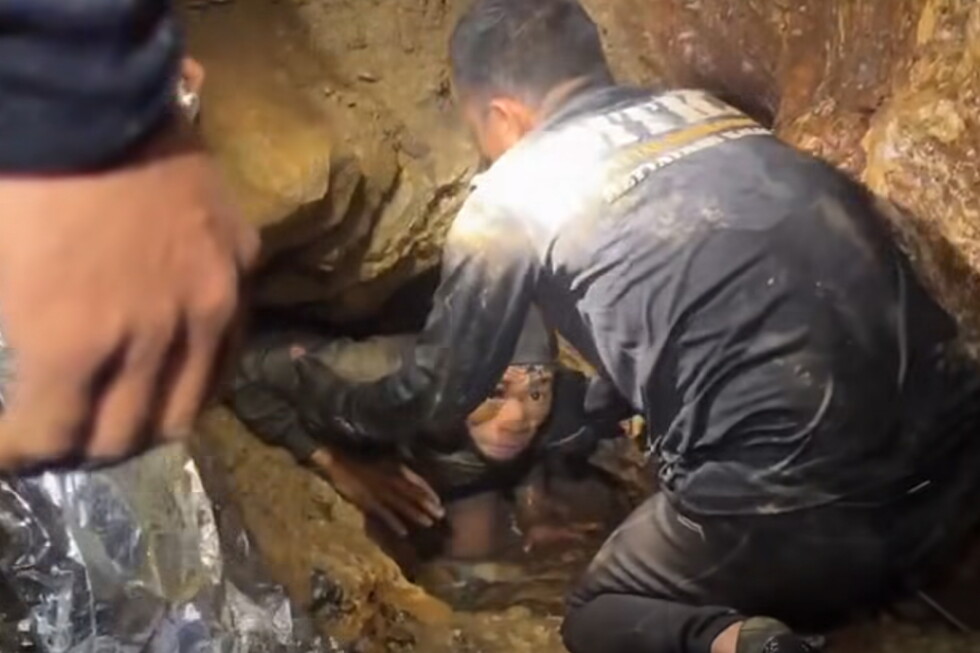
Rescuers search for alternative route to reach 2 missing in a flooded Laos cave
BANGKOK – Nearly two weeks after a sudden flash flood trapped seven people inside a remote cave in northern Laos, international rescue teams are racing against shifting weather conditions to locate the two remaining missing people, after five others were successfully pulled to safety over recent days.
The incident unfolded around 120 kilometers north of Vientiane, Laos’ capital, in the rugged terrain of Xaisomboun province. According to rescue accounts, a group of local villagers ventured into the cave nearly two weeks ago to prospect for valuable minerals including gold. A sudden bout of heavy rainfall triggered a massive flash flood that surged through the cave system, blocking the only exit the group had used to enter. One villager managed to escape the rising waters immediately and alerted local emergency authorities, launching what has become a complex cross-border rescue operation.
When teams first reached the site, all seven villagers were trapped deep within the flooded cave system. The first extraction came on Friday, when an expert diver guided one survivor out through a narrow, water-filled passage. Four more were able to walk out on their own the following day, after receding water levels opened up a temporary safe route. That brings the total number of rescued people to five, leaving two unaccounted for nearly two weeks since the flood.
Rescue efforts have been complicated by persistent hazardous conditions: the main entrance to the cave has remained completely flooded and impassable since the initial flood event, and a new round of heavy downpours on Sunday forced teams to suspend active search operations overnight as water levels rose again. The Laos-based Rescue Volunteer for People group noted on its official Facebook page that intense rainfall sent massive volumes of water cascading into the cave system, pausing progress.
Now, teams from across Southeast Asia and beyond are adapting their strategy to reach the missing. Joint operations have been running for more than a week, with lead rescue teams from Laos and neighboring Thailand, supported by expert divers from Finland, Malaysia, Japan, Indonesia, France and Australia. Many of the participating rescuers bring hands-on experience from the high-profile 2018 Tham Luang cave rescue, where 12 youth soccer players and their coach were saved after 18 days trapped in a flooded northern Thailand cave – one of the most complex cave rescue operations in modern history.
Current search efforts are focused on three alternative routes to reach the area where the two missing are believed to be trapped. First, rescue crews are actively pumping excess water out of the cave system. Malaysian diver Lee Kian Lie, a member of the international rescue contingent, told the Associated Press that once water levels drop sufficiently, teams will advance into the section where the cavers are thought to be. Second, a separate search team is surveying the opposite side of the cave mountain to locate a naturally dry, passable opening that connects to the trapped area. Third, Kengkaj Bongkawong, leader of Thailand’s Metta Tham Rescue Kalasin team, confirmed that crews are also searching from the mountain above for undiscovered air shafts that could provide entry to the deep cave section.
Rescuers say the two missing are located deeper in the cave system than the spot where the five survivors were recovered last Wednesday. The passage leading to this deeper section is extremely narrow and remains almost entirely submerged, making any entry through the main route impossible with current water levels. Teams are continuing their work around the clock to open an alternative path before further weather shifts complicate the operation.
-
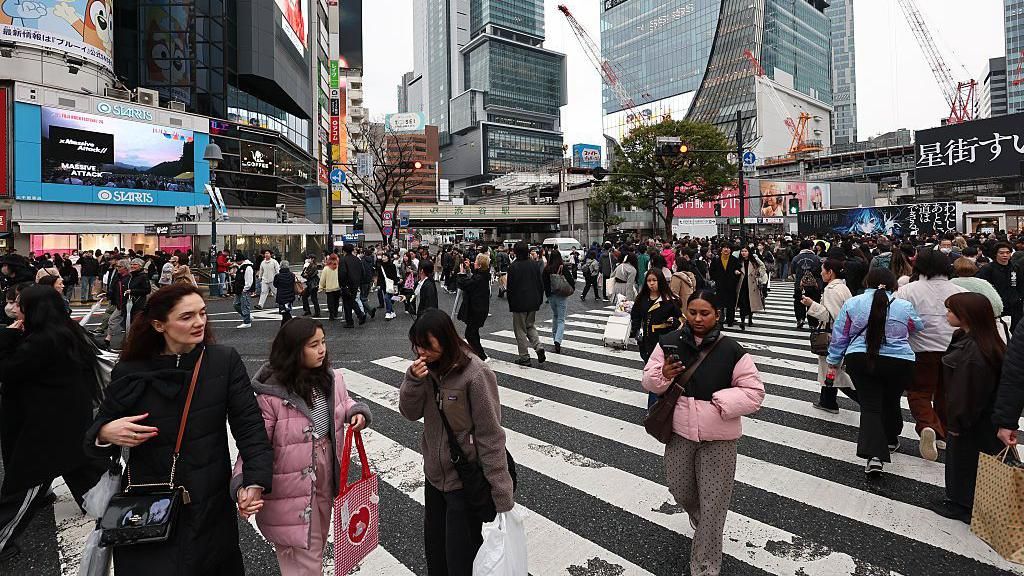
Litterbugs now face on-the-spot fines in Tokyo’s tourist hotspot
As Japan grapples with unprecedented post-pandemic growth in international tourism, one of the country’s most iconic visitor destinations is rolling out strict new penalties to crack down on public littering. Starting this Monday, anyone caught dropping trash in Tokyo’s Shibuya Ward — the bustling commercial and entertainment hub home to the world-famous Shibuya Crossing — will face an immediate fine of 2,000 Japanese yen, equal to roughly $13 USD or £9 GBP.
The new penalty regime expands beyond individual litterbugs: in targeted high-traffic districts of the ward, food and beverage retailers that fail to provide on-site waste bins for customer use will also receive financial penalties. Enforced under an anti-litter campaign branded with the slogan “if you throw trash, you lose cash,” the new system allows offenders to pay fines instantly via multiple payment methods including cash, credit card, and digital QR codes. Up to 50 dedicated enforcement officers will patrol high-footfall areas of Shibuya to monitor for violations and issue penalties on site.
Japan’s tourism sector has hit historic highs in recent years, with official data showing the country welcomed a record-breaking 42.7 million international visitors in 2025. While the boom delivers significant economic benefits, it has also created growing frictions for local communities, who increasingly report disruptions from overcrowding and public misconduct. Japan’s national public broadcaster NHK notes that local officials have recorded a sharp rise in open alcohol consumption and littering across Shibuya, a large share of which is linked to visiting international tourists.
The scarcity of public waste bins across Japan, a longstanding policy rooted in national security concerns following past domestic and international terror attacks, has been cited by many as a contributing factor to rising litter. A 2024 government survey of over 4,000 foreign visitors found that the lack of public trash facilities ranked as the top inconvenience for tourists, named by more than 20% of respondents. Shibuya Ward officials, however, rejected the lack of bins as an excuse for improper waste disposal in a public statement, noting “We cannot tolerate littering simply because there are no rubbish bins. We ask for your cooperation in creating a city where everyone can enjoy themselves comfortably.”
Shibuya is not the only Japanese community grappling with the negative side effects of overtourism. In Fujiyoshida, the small town located at the base of Mount Fuji, chronic traffic congestion, excessive litter, and repeated disruption to local daily life prompted authorities to cancel the town’s popular annual cherry blossom festival this year, citing that the surge in visitor numbers had become unmanageable for local residents.
National authorities have rolled out a suite of nationwide measures to address overtourism strains, including increasing tourist accommodation taxes, launching crowd management mobile applications that provide real-time updates on visitor density at popular sites, and supporting local governments rolling out local penalty regimes like Shibuya’s new littering fines. The current tourism boom, driven by a weakened yen making travel to Japan more affordable and widespread social media exposure highlighting the country’s cultural and natural attractions, has put unprecedented pressure on urban infrastructure and residential communities across the country.
-
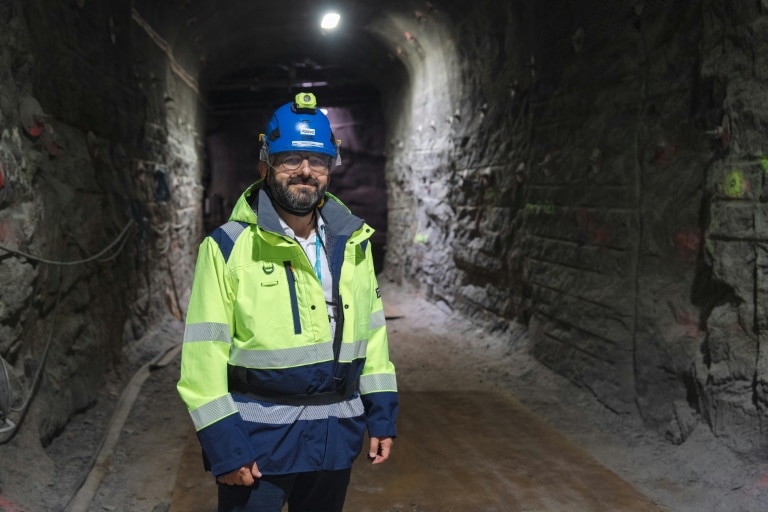
In Finland, radioactive spent nuclear fuel soon to be buried underground
Deep beneath the Finnish soil, 433 meters below the surface in the southwestern municipality of Eurajoki, a landmark engineering project is nearing its final stages. Carved into 1.9-billion-year-old geologically stable bedrock, Onkalo — Finnish for “cave” — is poised to become the world’s first permanent repository for high-level radioactive spent nuclear fuel, closing a decades-long gap in global nuclear waste management.
Since the first commercial nuclear power plants launched in the 1950s, governments around the world have grappled with the intractable challenge of what to do with the toxic, long-lived byproducts of nuclear energy generation. To date, the vast majority of global spent nuclear fuel remains in temporary above-ground or shallow storage facilities, a stopgap solution that leaves future generations to bear the risk of contamination. While other nations including neighboring Sweden and France have plans for similar permanent repositories in development, Finland is on track to commission its facility first, breaking new ground for the global nuclear industry.
The project has cleared most regulatory hurdles already. Finland’s Radiation and Nuclear Safety Authority (STUK) is scheduled to release its final safety assessment this coming June, after which an operating license will be formally granted. Philippe Bordarier, chief executive of Finnish nuclear operator Teollisuuden Voima Oyj (TVO), told reporters the facility is on track to begin operations by the end of 2024, or more likely early 2025. The first canisters of spent fuel, currently cooled in water pools at the nearby Olkiluoto nuclear power plant on the Baltic Sea coast, will be the first to be moved to the permanent underground site.
Once fully operational, Onkalo will hold a total of 6,500 tons of uranium waste, enough to accommodate all spent fuel produced by Finland’s five existing nuclear reactors, three of which are located at Olkiluoto. Developed by Finnish nuclear waste management firm Posiva, construction began at the site back in 2004, with total projected costs now reaching 1 billion euros ($1.16 billion).
The facility is designed for millennia-long safety. Fuel will be deposited incrementally in Onkalo’s sprawling network of underground tunnels over the next century, with operations potentially extended if Finland approves and builds new nuclear reactors in the coming decades. After operations conclude, the entire vault will be sealed permanently, engineered to remain secure for at least 100,000 years. “Basically, it needs to be safe forever,” explained Lauri Parviainen, a Posiva chemist leading facility tours for media. Parviainen noted that after 100,000 years of radioactive decay, the waste will drop to roughly the same natural radioactivity level as the original uranium ore from which the fuel was manufactured.
The multi-layer safety protocol is designed to prevent leakage over that extraordinary timeline. Above ground, spent fuel assemblies are first sealed inside thick, highly corrosion-resistant copper canisters. These canisters are then lowered into individually drilled holes in the tunnel bedrock, and the gaps are filled with dense bentonite clay to block water flow and radiation. Once a 300-meter disposal tunnel is completely filled, it is sealed off with a steel-reinforced concrete plug. “So if the bentonite stays in place, we are safe,” Parviainen said.
STUK safety experts have run detailed risk assessments modeling potential hazards across up to a million years of future geologic change. Jarkko Kyllonen, a STUK nuclear safety specialist, told AFP that the first 10,000 years are the most critical period for maintaining canister integrity, when radioactivity levels remain highest. Key long-term risks include slow corrosion of the copper canisters and seismic activity associated with future ice ages, which could shift bedrock and damage the sealed containers. To date, however, all risk assessments have returned positive conclusions that the probability of leakage remains well within acceptable safety thresholds.
Unlike similar projects in other nations that have faced fierce grassroots pushback, the Onkalo facility has enjoyed broad public support in Finland. Local opposition emerged when plans were first floated in the 1970s, but over time public trust in regulatory oversight has grown. “People have gotten used to it and they trust the assessments made by STUK,” said Matti Kojo, a social sciences professor at the University of Lappeenranta (LUT). He added that public support for nuclear power in Finland is currently at a historic high, amid global efforts to transition away from fossil fuels.
That said, the project is not without its critics. The Finnish Association for Nature Conservation remains publicly opposed, warning that the facility imposes unmanageable long-term risk on future generations. “No one can guarantee the safety of Onkalo for thousands of years,” association director Tapani Veistola said in a statement to AFP.
The facility comes as Finland actively expands its nuclear energy sector. Under current Finnish law, all nuclear waste produced within the country must be permanently stored on domestic soil — a policy that replaced the pre-1994 practice of exporting spent fuel to Russia. Finland’s current right-wing government has prioritized expanding nuclear generation to boost energy independence and cut carbon emissions, and is currently evaluating proposals for new small modular reactors (SMRs) across the country. Climate and Environment Minister Sari Multala told AFP that a framework for managing spent fuel from future SMRs has not yet been finalized, with an official assessment expected to be completed by March 2025.
-
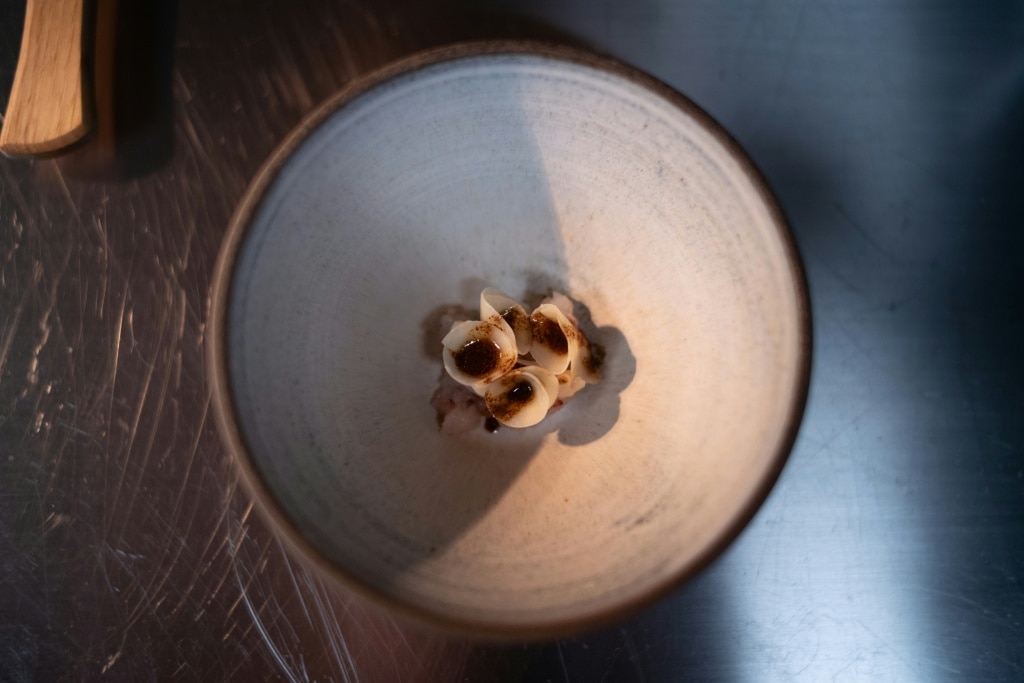
Chef Khaliqdad’s crusade for Greenland’s first Michelin star
Against a backdrop of soft piano melodies and the rich, warm scent of brown butter drifting through the dining room, 33-year-old chef Habi Khaliqdad puts the final touches on a signature dish: a slice of soy-glazed narwhal, garnished with crispy puffed bacon. For seven years, this single-minded pursuit has anchored his life above the Arctic Circle, so deeply ingrained that the goal is even tattooed on his right arm: to claim the first-ever Michelin star for Greenland.
The culinary world will turn its attention to the Nordic region this Monday, when the iconic Michelin Guide announces its annual list of starred establishments. From the floor-to-ceiling bay window of Khaliqdad’s Ulo Restaurant, tucked in the remote Arctic town of Ilulissat, guests gaze out at a sweeping expanse of snow that blurs into the famous Icefjord, where towering icebergs drift slowly out to the open ocean.
Khaliqdad cuts a distinct figure: sharp, smiling features, arms lined with intricate tattoos, and a plain-spoken style laced with colorful language. Even he sometimes questions why he took on this unprecedented challenge, because every step of building a world-class restaurant in one of the harshest inhabited environments on Earth comes with extraordinary hurdles.
Securing consistent ingredients is the first and most persistent mountain to climb. In late March, shifting winds push packed sea ice to close off Ilulissat’s harbor, forcing local fishermen to suspend operations and leaving Khaliqdad unable to source the tender, flavorful redfish his menu relies on. Even core menu items like his signature Qaqortoq lamb sweetbreads with Italian white truffle and onion jus require logistical feats: Greenland’s harsh Arctic climate supports almost no commercial agriculture, so the lamb travels nearly 1,000 kilometers by boat or plane from the island’s warmer southern region to reach his kitchen. When winter storms roll in, air travel is grounded and cargo ships are trapped by ice, cutting off the town from outside supplies for weeks at a time. “If there’s a storm … you have to wait,” Khaliqdad says simply.
His fight to build a starred restaurant here mirrors the larger paradox of modern Greenland: a land brimming with new opportunity, but held back by deep structural and geographic constraints.
For Khaliqdad, the journey is as much personal as it is culinary. A Dane of Afghan origin, he carried a lifetime of loss, hardship and addiction before finding redemption in the heat of commercial kitchens. He got his start as a teenager washing dishes, and fell in love with the craft through French cuisine, devouring cookbooks from legendary French chef Paul Bocuse. He worked his way up through Copenhagen’s most prestigious dining establishments, earning a nomination as a finalist for the city’s 2017 Chef of the Year award.
Today, Denmark holds 37 Michelin stars across 263 Nordic Guide listed restaurants, transforming the country once known only for heavy, traditional fare into a global destination for innovative gastronomy. But that culinary revolution has never crossed the Labrador Sea to reach Greenland. Deep in debt and looking for a fresh start, Khaliqdad took his former mentor’s advice: “Go to Greenland, man. It’s cold and you’ll find yourself.” He relocated to the Danish autonomous territory to rebuild his life and chase his culinary dream.
In his kitchen, centered on an Italian-made island, Khaliqdad uses a sharp Japanese knife to break down local Arctic ingredients: narwhal, reindeer, and ptarmigan, all sourced from the region. When he first arrived, he pored over botany textbooks to find native flavors that could lighten the traditional heavy, meat-centric Greenlandic diet. It was a local hotel housekeeper named Stella who ultimately taught him where to forage wild mushrooms and angelica native to the tundra. Each summer, during the few short snow-free weeks, Khaliqdad and his team hike the rocky hills outside town to gather their own fresh ingredients. “I learned to not think about Nordic, European, Michelin cuisine. I have to think about this country’s cuisine,” he explained.
Today, Ulo draws a steady stream of well-traveled tourists, who arrive in stylish apres-ski gear to dine while gazing out at the icebergs. Ilulissat, a town of just 5,000 permanent residents, already welcomes 50,000 tourists a year drawn to its iconic Icefjord. Now, the town is positioning itself as Greenland’s emerging gastronomy capital, with a new culinary training program launched recently and a new international airport set to open in October, which is expected to double annual visitor numbers. “Maybe they can help me with this small dream I have in my body, you know?” Khaliqdad says, tapping the star tattoo inked into his arm.
Even with this growing momentum, steep hurdles remain. Travel to Greenland remains expensive and logistically complex, even for anonymous Michelin inspectors. Khaliqdad also struggles to hire trained local kitchen staff, as few Greenlandic workers have formal culinary training. The long, dark Arctic winters also bring a heavy weight: a few years ago, a young kitchen hand died by suicide, a stark reminder of the widespread mental health challenges that plague the island’s remote communities. “It’s hard. It’s fun. It’s sadness too, man… It’s odd,” Khaliqdad reflected.
Still, he continues forward, his eyes fixed firmly on the guiding star that brought him to the Arctic, waiting to see if his seven-year quest will finally be rewarded this Monday.
-

Marilyn Monroe lookalikes gather to celebrate her 100th birthday
On what would have been the 100th birthday of one of Hollywood’s most iconic and enduring stars, Marilyn Monroe, hundreds of adoring fans came together to honor her legacy in a spectacular, record-breaking fashion. The event, organized to celebrate the screen legend’s centenary, brought together dozens of lookalikes who donned Monroe’s signature platinum blonde curls, red lipstick, and the classic form-fitting white dress that catapulted her to global fame in *The Seven Year Itch*. When organizers counted the participants, it was confirmed that the gathering had officially broken the Guinness World Record for the largest assembly of people dressed as the legendary actress, beating the previous mark set more than a decade ago. Attendees, who traveled from across the country and even from several international locations to participate, shared stories of their admiration for Monroe, recalling her comedic talent, her magnetic on-screen presence, and her lasting impact on pop culture. Many noted that even 61 years after her untimely death, Monroe remains a cultural touchstone, inspiring new generations of fans with her timeless style and complicated, human story. Event organizers called the record-breaking turnout a fitting tribute to a star whose influence has stretched far beyond the golden age of Hollywood, proving that her star power has not dimmed in the century since her birth.
-

Returning to the fold? Some young Spaniards embrace Catholicism and can’t wait for Pope Leo’s visit
For most of her young adulthood, 26-year-old Sara Cabral fit the mold of a generation of secularized Southern European youth: raised in the Catholic tradition, but never actively practicing, with faith feeling distant from her daily life on Spain’s Canary Islands. That changed three years ago, when a track from a local faith-based youth group sparked something unexpected in her — a feeling that the lyrics carried a message from God directly to her.
Cabral quickly joined the movement, and today she not only attends the group’s weekly music-fueled adoration sessions, but is also preparing excitedly to join her friends for Pope Leo XIV’s open-air Mass in Gran Canaria during his upcoming trip to Spain this month. Reflecting on her journey back to the church, Cabral describes an unidentifiable inner restlessness, a hollow feeling she could not fill through other means. “God is the one looking for you first, but you need to go meet him,” she explained of her decision to embrace Catholicism.
When Pope Leo travels to Spain in June and France this September, he will encounter thousands of young people like Cabral across two nations that are historically the heart of Catholicism, but have grown firmly secular in recent decades. Across the region, centuries-old parish churches dot nearly every town and city, but weekly Mass attendance has dwindled to just a small fraction of the population. This new wave of young interest in faith has left church leaders and religious scholars debating what it means for the future of Catholicism in Western Europe, with many framing the trend as both a surprising revival and a long-term challenge for the institution to adapt to modern spiritual needs.
## A Shifting Religious Landscape Decades in the Making
To understand this emerging trend, it is necessary to trace the decades-long shift in Spanish religious life that created the current moment. Until 1975, Spain was governed by dictator Francisco Franco, who tightly aligned his regime with a deeply traditional Catholic Church still recovering from the violent anticlerical purges of the Spanish Civil War. After the transition to democracy, a marked separation emerged between popular cultural traditions rooted in Catholicism and active religious participation, explained Mónica Cornejo Valle, a religion professor at Madrid’s Complutense University.Even today, iconic public religious celebrations such as processions and feast days remain widespread across most Spanish regions, and tangible traces of Catholicism’s centuries-long central role in Spanish life are visible in nearly every community. The country still counts nearly 23,000 active parishes, but ordinations of new priests have not rebounded from decades of decline. Data from a 2024 Pew Research Center survey underscores the scale of secularization: while 80% of Spanish adults were raised Catholic, only 47% still identify with the faith, and just 2% are converts from non-religious or non-Catholic backgrounds. Only around 16% of self-identified Spanish Catholics attend Mass at least once a week, a core obligation for practicing believers.
This generational shift is palpable for young returning believers. José María Marrero, a friend of Cabral’s in Gran Canaria, recalled attending Mass as a child with his mother and noticing the pews were filled almost entirely with elderly worshippers. Marrero’s wife, who converted to Catholicism and was baptized in her early 20s, recently said some of her elementary school students saw an image of Jesus on a class trip and asked, “Miss, that’s the Catholic one, right?”
Against this backdrop, Rev. Josetxo Vera, spokesperson for the Spanish Catholic Bishops Conference, has observed a surprising new trend: growing numbers of teenagers whose parents identify as atheist are surprising their families by asking to be baptized, drawn to spiritual themes increasingly visible in mainstream popular culture. Catalan global pop star Rosalía’s recent spirituality-infused album *Lux* is one high-profile example of how Christian messaging is reaching young audiences outside of traditional church settings.
Some scholars, including Cornejo Valle, caution that the apparent revival of youth religiosity may be partially a “publicity effect,” amplified by strategic use of social media and partnerships with popular culture. But for church leaders and youth movement organizers, the broad shift away from lifelong religious practice has created a blank slate to reintroduce faith to a new generation. For Cabral, that means sharing the faith in accessible, joyful terms that resonate with modern young people.
## Grassroots Youth Movements Fuel New Interest
The re-engagement of young Spanish Catholics has been largely driven by grassroots lay movements that frame faith as a source of community and meaning, rather than rigid doctrine. One of the largest of these groups is Hakuna, which counts Cabral and roughly 35,000 other young people among its members. The movement launched in the early 2010s at a Madrid parish, when a small group of college students organized a weekly gathering that paired an opening lecture, a full hour of Eucharistic adoration, and an informal social meetup at a local bar afterward.Hakuna became an official lay organization of the Spanish Catholic Church in 2017 and has since expanded to offer volunteer service trips and faith-focused concerts, even releasing seven full albums of original Christian music. “It’s the Holy Spirit, we’re the first to be surprised” by the movement’s rapid growth, said Hakuna spokeswoman Maca Torres. She added that most members are young people who had stopped practicing the faith after childhood, though a small share are first-time converts.
This growth in youth engagement has translated directly to a sharp rise in adult baptisms across the region. The most recent annual report from the Spanish Catholic Bishops Conference recorded more than 13,300 baptisms for people over the age of seven, a marked increase from a decade ago. In France, which enforces a strict form of secularism that bans most religious expression in public spaces — a policy that has sparked growing political and social debate in recent years — the trend is even more stark: this year’s Easter Vigil saw roughly 13,000 adult baptisms, 42% of them between the ages of 18 and 25. That number represents a threefold increase compared to adult baptism counts 10 years ago, according to France’s Conference of Catholic Bishops.
Pope Leo has openly embraced this wave of new young believers. Last summer at the Vatican, he addressed a gathering of French baptism candidates and newly baptized adults, urging them to share their spiritual journeys with peers and let their faith guide their daily lives. “What a joy to see young people who are engaging with faith and want to give a sense to their life, by letting themselves be guided by Christ and his Gospel,” he told the group.
Religion scholars say the rising interest in Catholicism among young people stems from two key factors: widespread disillusionment with traditional political and social institutions, and growing recognition of the loneliness epidemic fueled by social media and hyper-connected digital life. Compounding this, the church since the papacy of Francis has shifted its public focus away from rigid doctrinal rules and toward issues of social justice, migration, and equity — priorities that align far more closely with the values of young progressive believers.
Pope Leo’s upcoming trip to Spain reflects this shift in outreach. On June 6, he will kick off his visit with a large-scale prayer vigil for young people in a central Madrid public square, before traveling to the Canary Islands to visit a migrant reception center and a prison near Barcelona. These outreach efforts to marginalized communities are particularly resonant for socially conscious young Catholics.
Cornejo Valle notes that while the total number of young Catholics has not grown dramatically, the cohort that remains active is far more engaged and committed than previous generations. “We don’t think that the number of Catholic young people has grown by a lot, but we do see that in general the profile of the Catholic youth is more committed than before,” she explained.
## A New Generation’s Quest for Meaning and Connection
For many young believers, the pull of the church is rooted in a search for peace and purpose in a chaotic, fast-paced world. María Salazar, 23, leads a local chapter of the global Catholic youth movement Effetá in Barcelona, based at the iconic Sagrada Familia — Antoni Gaudí’s unfinished modernist masterpiece and one of the most visited tourist sites in Europe. Salazar says many of her peers are exploring different forms of spirituality, both inside and outside the institutional church, in a search for something missing from their daily lives.“More than looking for faith, we look for a feeling of peace,” Salazar said. “We live in a microwave society — everything has to be immediate — but the Lord doesn’t work this way.”
Salazar’s parish at the Sagrada Familia has seen a noticeable boom in young participation in recent years. Around 120 young regulars take part in weekly adoration sessions and multi-day spiritual retreats; for the first retreat, organizers and the basilica’s rector worked well past midnight to prepare the space for attendees. The group also volunteers to assist elderly worshippers attending Mass in the basilica’s crypt, and to welcome the millions of international tourists who attend public worship services in the main sanctuary.
On June 10, Pope Leo will celebrate Mass at the Sagrada Familia and formally inaugurate the basilica’s newly completed Tower of Jesus Christ, a project decades in the making. For Salazar, the pope’s visit feels like a homecoming. “We’re going to have him here at home,” she said excitedly. “I see the tower from afar and I see the home that God gave us.”
-

Nvidia announces new AI chip for personal computers
Leading global graphics processing unit designer Nvidia has launched a groundbreaking new artificial intelligence-focused processor for consumer personal computers, marking the firm’s latest aggressive push into the fast-growing integrated AI device market. The product announcement, dubbed the RTX Spark chip, was made by Nvidia Chief Executive Jensen Huang during a headline keynote address on Monday, kicking off this year’s Computex technology trade show hosted in Taipei, Taiwan.
In his opening remarks, Huang framed the launch as a paradigm shift for the global computing industry, comparing the transformation to the revolution that turned basic mobile phones into modern, multifunctional smartphones. “This reinvention of the computer is as big of a deal as the reinvention of the phone into what we now know as the smartphone,” Huang told the audience of tech industry insiders and attendees.
On its official website, Nvidia positions the RTX Spark as a “new superchip” purpose-built for the emerging era of personal AI agents, designed to redefine what consumer computers can do by shifting their role from a basic productivity tool to an intuitive collaborative teammate. The new chip will be integrated into an upcoming line of Windows-powered PCs manufactured by some of the biggest names in the global PC industry, including Asus, Dell, HP, Lenovo, Microsoft Surface, and MSI. These initial systems are scheduled to hit retail markets in autumn this year, with additional models from Acer and Gigabyte set to launch shortly after the first wave.
The entry of Nvidia’s customized AI consumer chip into the mainstream PC market sets up a direct competitive challenge to established industry giants including Apple and Intel, which have long dominated key segments of the global personal computing market. The broader global AI boom has already catapulted Nvidia to extraordinary corporate milestones: the firm is now the most valuable publicly traded company in the world, boasting a total stock market valuation that exceeds $5 trillion (£3.7 trillion).
The RTX Spark launch came just one day after the U.S. government implemented new restrictions on Nvidia chip exports to Chinese entities. On Sunday, the U.S. Department of Commerce announced updates to its existing export control rules aimed at closing a long-flagged loophole that had previously allowed Chinese firms to access advanced AI chips through overseas-based subsidiaries. Under the new rules, exports of Nvidia’s top-tier Blackwell processors, among other cutting-edge AI chips, to these offshore Chinese company affiliates will now be restricted. Washington has pursued this series of escalating restrictions for years, with the stated goal of blocking Chinese technological groups from acquiring the high-performance chips required to advance cutting-edge domestic AI development.