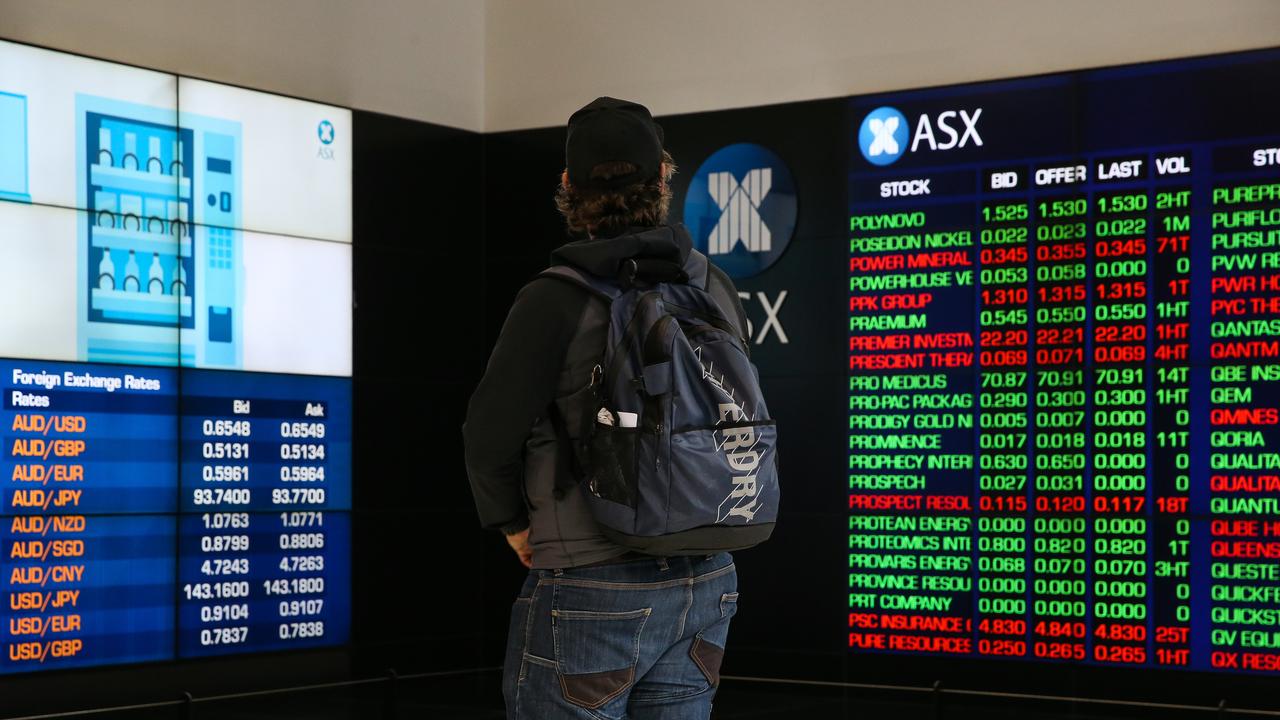
On Monday, Australia’s domestic sharemarket ended the trading session almost entirely unchanged, as a dramatic rebound in technology stocks offset growing investor jitters stirred by escalating geopolitical friction in the Middle East.
The country’s benchmark index, the S&P/ASX 200, slipped a marginal 2.3 points to close at 8729.4, giving up only a tiny portion of the prior Friday’s 138-point surge even as global uncertainty amplified. Across the broader market, performance was sharply split: only 3 of the 11 tracked industry sectors finished the day in positive territory. The clear outlier was the information technology sector, which jumped 5.61 percent as investors scrambled to re-enter oversold growth stocks that had seen steep declines in preceding months.
Multiple major Australian tech firms posted double-digit or near double-digit gains to lead the market upward. Online travel platform SiteMinder led all ASX 200 gainers, climbing 11.7 percent to settle at $3.91. Logistics software leader WiseTech Global rallied 9.1 percent to hit $39.30, while medical imaging tech firm Pro Medicus rose 8.9 percent, cloud accounting platform Xero gained 8 percent, and enterprise software provider Technology One advanced 6.6 percent.
On the losing side of the ledger, counter-drone technology manufacturer DroneShield dropped 8.6 percent in the wake of a broker downgrade, while sleep healthcare producer ResMed fell 7.5 percent. Property developer Lendlease, neobank Judo Capital and home goods retailer Temple & Webster also closed the session lower. Australia’s big four commercial banks turned in a mixed performance: Westpac added 0.44 percent, National Australia Bank gained 0.35 percent, Commonwealth Bank slipped 0.96 percent, and ANZ held largely steady with a near-zero change. By the end of Monday trading, the Australian dollar was quoted at 72.1 U.S. cents.
IG market analyst Tony Sycamore explained that the headline flat close hides a far more challenging operating environment for global and domestic investors this week. “We started the week in a cautious mode. There was a very strong rally on Friday … just not able to quite build on that today,” Sycamore noted.
He pointed to renewed geopolitical instability in the Middle East as the key headwind dampening broad risk appetite. Recent reports indicate U.S. President Donald Trump is pushing for revisions to a proposed regional peace deal, while ongoing active clashes between factions linked to Iran, Israel and Lebanon have lifted global crude oil prices. Brent crude rose roughly 1.8 percent on Monday to reach $93.50 U.S. per barrel.
Despite this turbulent backdrop, U.S. equity markets have proven largely resilient to the geopolitical and oil price shocks. “You’ve got the Nasdaq up around 0.6 per cent and they just don’t seem to really care that much about what’s going on with the oil market,” Sycamore said. “It will matter at some point, but we’ve been able to see US markets look through that and focus on the AI side of things.”
The Monday tech rally in Australia marks a continued recovery for a sector that endured a months-long prolonged sell-off, which pulled the segment down more than 50 percent from its earlier peak valuations. Sycamore observed that investors have begun rotating back into the sector after weeks of widespread sell-offs. “It’s got a long way to claw back given that it did fall by over 50 percent,” he said. “But if it keeps going like this each day it’ll certainly make some headway.”
He framed the solid gains for leading stocks including WiseTech, Xero and SiteMinder as early “green shoots” that signal a potential turnaround for the beleaguered tech sector. Looking ahead, investors are now shifting their focus to key Australian economic data scheduled for release later this week, most notably the country’s third quarter gross domestic product figures.
Sycamore noted that the upcoming GDP reading will offer a critical snapshot of how the Australian economy was performing before the full impact of recent global volatility and elevated interest rates fully filters through domestic activity. “It is a big week to see how the Australian economy was tracking into these headwinds,” he added.