作者: admin

  • Trump says troops turned back from Beirut after Netanyahu call

    Trump says troops turned back from Beirut after Netanyahu call

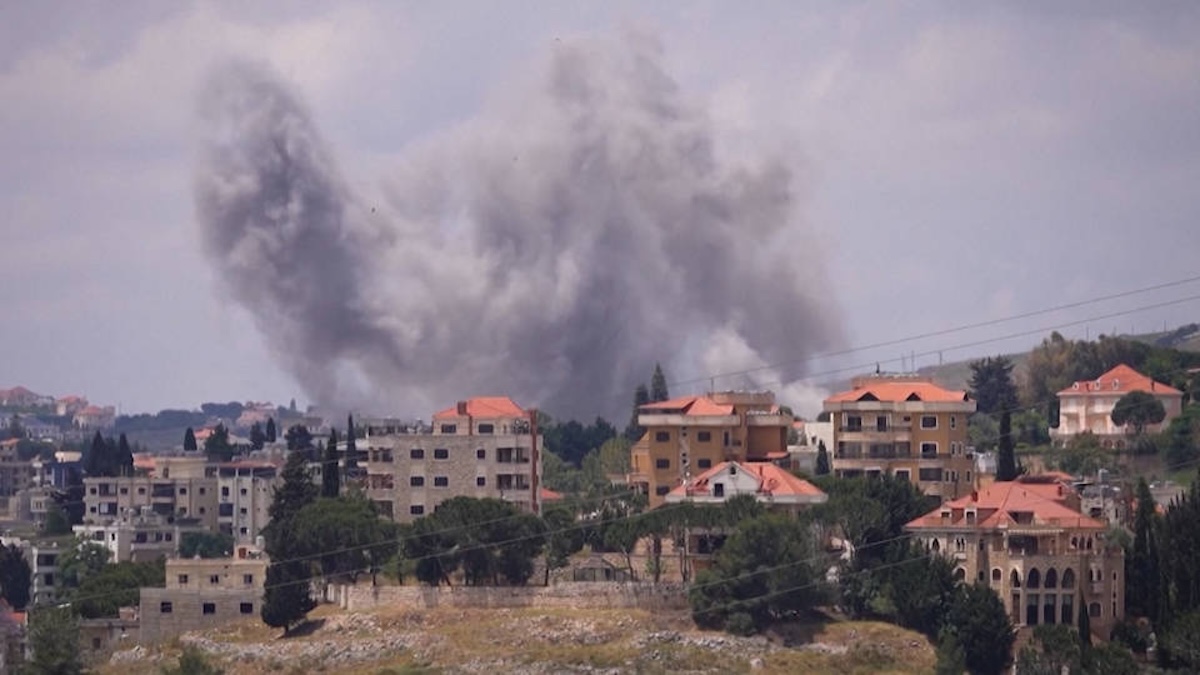
    On Monday, a fresh wave of diplomatic and military upheaval roiled the Middle East, as Iran paused indirect negotiations with the United States in response to Israel’s intensifying military campaign in Lebanon – just hours before former President Donald Trump announced unexpected claims of a de-escalation between Israeli forces and the Lebanese militant group Hezbollah.

    The escalation traces back to joint military strikes launched by Trump and Israeli Prime Minister Benjamin Netanyahu against Iran in late February. Since that offensive began, Iranian officials and independent global analysts have repeatedly charged that Israeli leadership is intentionally working to sabotage any diplomatic path toward a lasting regional ceasefire.

    Iran’s state-owned Tasnim News Agency, which has close ties to the country’s Islamic Revolutionary Guard Corps (IRGC), confirmed the suspension of mediated talks on Monday. In its official announcement, the outlet noted that a full ceasefire across all fronts, including Lebanon, had been a core precondition for continuing negotiations. With Israeli attacks ongoing across Lebanese territory, that precondition had been fully violated, prompting Tehran’s negotiating team to pause all talks and draft exchanges through third-party intermediaries.

    In an official statement published by the IRGC-affiliated outlet, the corps warned that any crossing of Iran’s red lines in Lebanon and Gaza constitutes a direct act of war that threatens Iranian national security and the broader Islamic Resistance movement. In response to ongoing violations, the statement confirmed Iran would carry out defensive operations via unconventional tactics, open new military fronts, and maintain its current leverage over the Strait of Hormuz, one of the world’s most critical global chokepoints for energy trade.

    Tehran has already leveraged this leverage in response to the US-Israeli offensive, restricting commercial vessel traffic through the strait – a key transit route for global fossil fuel and fertilizer shipments. As international oil prices have spiked sharply in response to the supply chain disruption, Trump imposed a US naval blockade of Iran, a measure he has continued to uphold even after a tentative April ceasefire agreement that Israel initially argued did not apply to military operations in Lebanon.

    Shortly after news of Iran’s negotiation suspension broke, Trump spoke to NBC News, saying he had not received official notification of Tehran’s decision, but downplayed the development, saying “I think it’s fine if they’re done talking.” He added that “they’re better negotiators than they are fighters, but they haven’t informed us of that,” and stressed that the US would not immediately launch a new round of widespread bombing.

    Trump’s comments came just days after his administration launched new targeted strikes against Iranian assets over the weekend, which were followed by Iranian retaliatory attacks on US military installations across the Middle East. The president reaffirmed that the US naval blockade would remain in place, adding: “If they don’t want to talk, that’s OK with me. I think it’s fine. I don’t particularly want to talk either. We talk too much.”

    Less than a day after those remarks, however, Trump posted a correction and new announcement on his Truth Social platform, stating he had held what he called a “very productive call” with Netanyahu. In the post, he claimed “there will be no Troops going to Beirut, and any Troops that are on their way, have already been turned back.” He added that he had also held indirect talks with Hezbollah representatives through a third party, and that the group had agreed to a full ceasefire: “That Israel will not attack them, and they will not attack Israel.” Within 15 minutes of that post, Trump added a follow-up note confirming that talks with the Islamic Republic of Iran were “continuing, at a rapid pace.”

    While Iran’s top leadership had not formally confirmed the suspension of talks as of Monday evening, Iranian Foreign Minister Abbas Araghchi issued a clear warning on social media, stating that the existing ceasefire between Iran and the US unequivocally applies to all fronts, including Lebanon. “Its violation on one front is a violation of the ceasefire on all fronts,” he wrote, adding that the US and Israel bear full responsibility for any consequences that stem from the breach.

    Mohammad Bagher Ghalibaf, Iran’s chief nuclear negotiator and Parliament Speaker, echoed that stance, arguing that the ongoing US naval blockade and the escalation of what he called “war crimes” in Lebanon by the “genocidal Zionist regime” are clear proof the US has failed to uphold its ceasefire commitments. “Every choice has a price, and the bill comes due. It will all fall into place,” he said.

    Independent regional analysts have framed Iran’s actions as a clear response to Israel’s escalating campaign, with a consistent red line linking Lebanese security to the future of broader diplomacy. “The Iranian message is increasingly clear: no Lebanon ceasefire, no broader framework, and potentially no talks at all,” explained Sina Toossi, senior nonresident fellow at the Washington-based Center for International Policy. Toossi noted that negotiations have fallen into a damaging cycle: “progress, escalation, backtracking.” Many Iranian leadership suspect Trump is intentionally seeking to push down global oil prices ahead of potential further military expansion, while Israel is working to completely derail diplomacy by turning southern Lebanon into a second Gaza, he added.

    The tactics Israel is deploying in Lebanon mirror the “Gaza playbook,” Toossi argued, including widespread scorched-earth operations, mass forced displacement of civilian populations, and what he characterized as ethnic cleansing of the small neighboring country.

    Other analysts have echoed this comparison, pointing to the ongoing humanitarian catastrophe in Gaza, where Israel faces widespread global accusations of perpetrating genocide against the besieged Palestinian population. Assal Rad, a fellow at the Arab Center Washington DC, criticized mainstream media coverage of Israel’s Lebanon escalation, noting that just as the phrase “targeting Hamas” is used to justify widespread destruction in Gaza, labeling areas “Hezbollah-controlled” is used to justify flattening entire civilian neighborhoods in Lebanon. “This isn’t journalism, it’s stenography,” she said, sharing publicly available satellite imagery that shows widespread destruction of residential infrastructure across southern Lebanon. “This is what Israel’s total destruction of southern Lebanon looks like, deliberately destroying people’s homes so they have nothing to return to.”

    Mohamad Safa, who resigned earlier this year as a United Nations representative for the nongovernmental organization Patriotic Vision Association, issued a blunt accusation Monday: “Israel is committing another genocide in real time in Lebanon with complete impunity.”

    Former US Department of Defense advisor Jasmine El-Gamal, who now leads global consulting firm Averos Strategies, noted that the current crisis in Lebanon highlights a long-building conflict of interest between the US and Israel. “Early in the Iran war, I warned that US and Israeli interests would inevitably diverge and that President Trump would have to make a choice: to actually put America first, or to continue to allow Netanyahu to threaten our interests,” El-Gamal said early Monday. “Lebanon is the epitome of this choice.”

  • ‘Messi, Maradona, Tim’: NZ footballer’s viral fan club hits 4 million

    ‘Messi, Maradona, Tim’: NZ footballer’s viral fan club hits 4 million

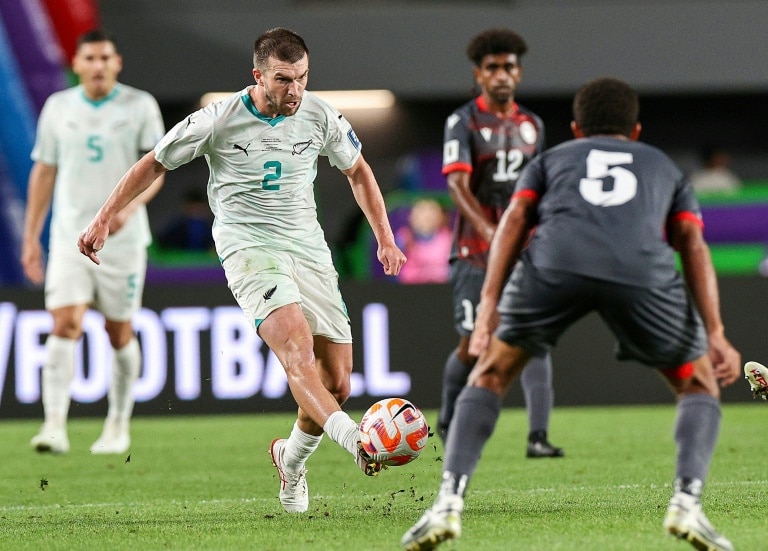
    A little-known New Zealand defender at the upcoming men’s FIFA World Cup has become one of the most talked-about names in global football this week, after a viral social media campaign catapulted his Instagram following from just 4,000 to more than 4 million followers in only seven days. The unexpected surge in fame comes thanks to Argentine influencer Valen “El Scarso” Scarsini, who set out last week to lift the profile of what he called the “least recognizable player” at the 2026 World Cup, zeroing in on Wellington Phoenix right-back Tim Payne, 32. By Tuesday, the grassroots social media movement had pushed Payne’s follower count past the 4 million mark, outstripping the follower base of the All Blacks — New Zealand’s world-famous national rugby union team, a cultural institution in the rugby-mad nation. If the growth continues at its current pace, Payne will soon match the total population of New Zealand, which stands at roughly 5.3 million. The viral campaign has been the top source of banter and conversation at New Zealand’s World Cup training camp in Florida, where the side is wrapping up warm-up preparations ahead of the tournament kicking off across Mexico, the United States, and Canada next week. Ranked as the lowest-placed side heading into the World Cup, New Zealand has never seen a player draw this level of global social media attention, a fact that has taken the entire squad by surprise. New Zealand head coach Darren Bazeley told local outlet Stuff.co.nz that the sudden explosion of fame has not shaken the steady 32-year-old defender, adding that Payne is handling the unprecedented attention better than most players would. “At the moment I do feel like he’s dealing with it really well, probably better than maybe some others would have,” Bazeley said. “Putting Tim up on a pedestal like that was really cool and probably not something that he, or anyone, expected.” The coach added that the squad has leaned into the lighthearted hype, with teammates constantly teasing Payne about his new celebrity status. “The players talk about it. I can hear the banter they’re having with Tim, and I think it’s amazing,” he said. Payne himself has described the outpouring of online attention as “pretty crazy,” and he is now set to meet the man who started the viral movement. Scarsini announced he would travel to Fort Lauderdale to watch New Zealand’s warm-up match against Haiti on Tuesday, with a meeting with Payne planned after the final whistle. “Guys tomorrow is the day,” Scarsini posted ahead of the match. “Let’s go watch Tim’s game v Haiti and then we’re going to meet him! Thanks to all who made it possible.” The lighthearted viral trend has spawned countless humorous memes and online comments, with many football fans drawing playful comparisons between Payne and Argentina’s two greatest football icons. One top comment on Payne’s latest Instagram post, which has racked up more than 2.1 million likes and 66,000 comments (most written in Spanish), read simply: “Messi, Maradona, Tim.”

  • Shocking dashcam captures moment alleged drink driver smashes head-on into couple’s vehicle

    Shocking dashcam captures moment alleged drink driver smashes head-on into couple’s vehicle

    Terrifying dashcam footage has documented a near-catastrophic wrong-way collision outside Adelaide, Australia, that left two vehicles totaled, but all people involved surprisingly walked away with no life-threatening harm. The incident unfolded at 6:44 p.m. local time on a Sunday, as 27-year-old Abissantun Priyambodo traveled along Whites Road in Paralowie, a northern suburban area of the state capital. As Priyambodo stayed in his designated travel lane, a Honda station wagon driven by a 56-year-old Paralowie resident suddenly veered across the center line directly into the oncoming path of Priyambodo’s Mitsubishi Lancer. Seconds later, the two vehicles slammed into one another in a violent head-on impact.

    Priyambodo, who captured the entire incident on his vehicle’s dashcam, described the aftermath of the crash in comments to local media. The force of the collision crumpled the front end of his Mitsubishi, leaving the vehicle too damaged to drive and requiring it to be towed from the crash site. Photographs from the scene confirm the extensive wreckage: both vehicles suffered severe structural damage, with the front ends of the cars compressed by the force of the impact.

    In a striking stroke of luck, Priyambodo, his wife, and the 56-year-old Honda driver all escaped serious injury in the crash. While the pair did not suffer life-altering harm, they developed minor body aches after the collision and sought a medical check-up with their general practitioner the next day as a safety precaution. “We are grateful that both of us were able to walk away safely from what could have been a much more serious incident,” Priyambodo said of the near-tragedy.

    Following the collision, South Australia Police officers arrived at the scene and administered a breath and blood alcohol test to the Honda driver. Officials confirmed the driver recorded a blood alcohol content of 0.130, well above the legal limit for operating a motor vehicle in South Australia. In response to the violation, police issued the driver an immediate six-month license suspension, an immediate penalty for high-range drink-driving offenses in the state. The crash has renewed public calls for stricter enforcement of drink-driving laws to prevent preventable, dangerous incidents on suburban roads.

  • Russian strikes rock Ukraine, killing nine and wounding dozens

    Russian strikes rock Ukraine, killing nine and wounding dozens

    Just five days after Ukrainian President Volodymyr Zelenskyy publicly warned that Moscow was gearing up for a large-scale new offensive across the country, a coordinated wave of Russian missile and drone attacks killed at least nine civilians and injured dozens more across Ukraine on Tuesday, local authorities confirmed. The assault marks the latest escalation in a grinding, two-year-plus full-scale invasion that has become Europe’s deadliest conflict since World War II, with diplomatic efforts to reach a ceasefire remaining completely stalled as of this report.

    Agence France-Presse reporters on the ground in Kyiv, Ukraine’s capital, reported hearing multiple loud explosions rip through the city early in the attack. Local officials confirmed Russia used advanced ballistic missiles for the strikes, which ignited large structural fires and knocked out electrical power for residents in multiple central and residential districts.

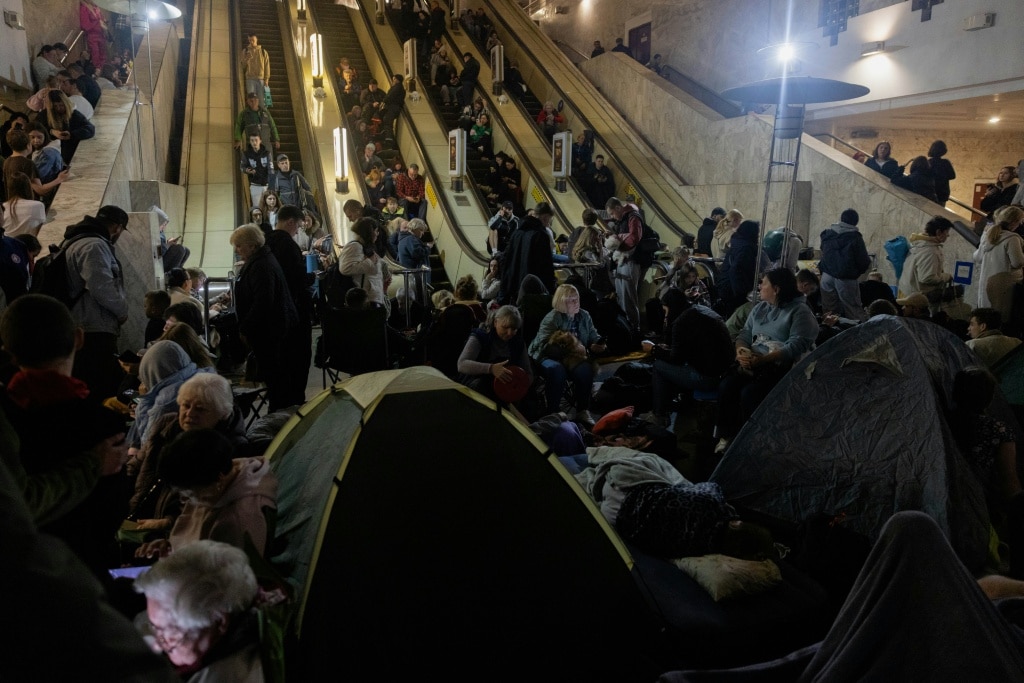
    Kyiv Mayor Vitali Klitschko confirmed that four residents were killed in the capital’s assault, and at least 58 more people — including two young children — were wounded. “Explosions in the city. Air defence forces are working! Stay in shelters!” Klitschko had posted in an urgent public alert minutes after the first strike. AFP journalists observed panicked residents rushing to underground bomb shelters, many carrying only small bags of belongings and blankets, while a thick column of black smoke billowed over central Kyiv.

    Tymur Tkachenko, head of Kyiv’s City Military Administration, confirmed that all of the capital’s strikes were carried out with ballistic missiles, a weapon type that is far harder for Ukrainian air defenses to intercept than slower drones.

    The deadly assault was not limited to the capital. In the central Ukrainian city of Dnipro, local regional governor Oleksandr Ganzha confirmed a separate Russian attack killed five additional people and wounded 25 others, three of whom remain in critical condition as of Tuesday evening. In Ukraine’s second-largest city Kharkiv, located just miles from the Russian border, Mayor Igor Terekhov reported 10 wounded people, including one child, from the coordinated strikes.

    In what has become a standard pattern of retaliation amid the ongoing conflict, Ukrainian drone strikes hit targets inside Russian territory hours after the Russian barrage. Alexander Khinshtein, governor of Russia’s western Kursk region which borders Ukraine, confirmed one person was killed in a Ukrainian drone strike there. Separately, a second drone sparked a large fire at an oil refinery in Krasnodar, a major southwestern Russian city, according to the facility’s operational management team via Telegram.

    The timing of Tuesday’s Russian offensive lines up exactly with warnings Zelenskyy issued last Friday. The Ukrainian leader stated at the time that Kyiv had received credible intelligence confirming Russia was preparing a new massive strike, and urged all citizens to take air raid alerts seriously. “Please pay attention to air alerts, protect your lives. Our services are working efficiently and are prepared; the Air Force and other defenders of our skies will be on duty 24/7, as always,” Zelenskyy said in his address.

    Zelenskyy has repeatedly pushed Western allies to approve and fund additional supplies of Patriot air defense systems, the only weapon Ukraine currently operates capable of reliably intercepting Russian ballistic missiles. Last week, he sent formal requests to U.S. President Donald Trump and the U.S. Congress specifically asking for additional Patriot batteries to counter the growing intensity of Russian air attacks.

    In response to near-daily Russian bombardments across Ukrainian territory, Kyiv has significantly stepped up its own drone and missile strikes on Russian-occupied Ukrainian territories and targets inside mainland Russia. An Agence France-Presse analysis of official Ukrainian Air Force data found that Russia launched a record 8,150 long-range attack drones against Ukraine in May alone, a 24% increase from the total number launched in April. Ukrainian air force data indicates the country’s air defenses managed to intercept roughly 90% of all incoming Russian missiles and drones last month.

  • Only on AP: Under Notre Dame cathedral, a ‘dig of the century’ unearths 1,700 years of history

    Only on AP: Under Notre Dame cathedral, a ‘dig of the century’ unearths 1,700 years of history

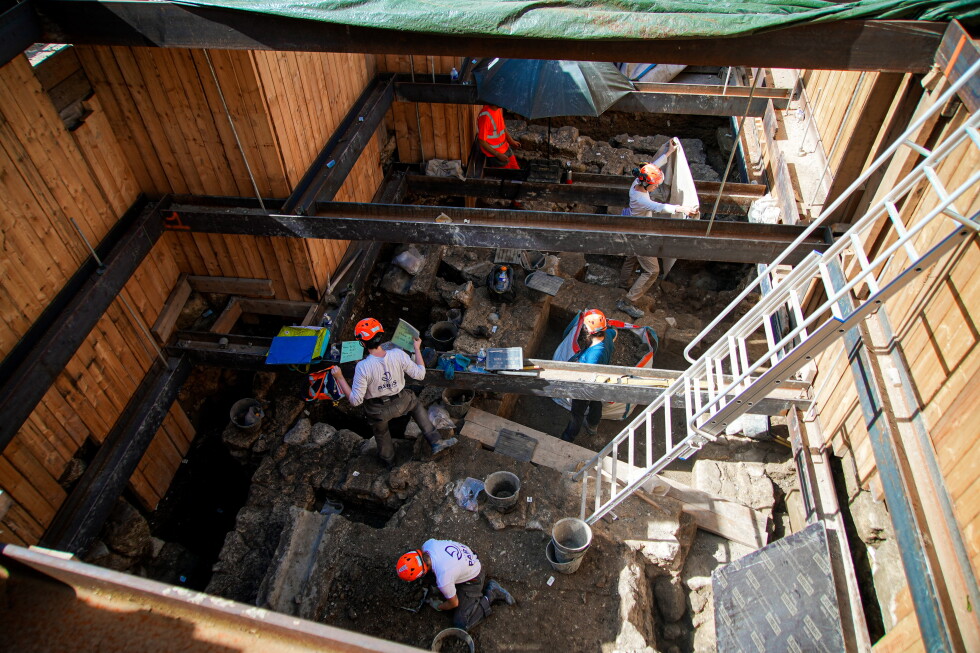
    Beneath the baking summer sun where crowds of tourists queue to climb the iconic Notre Dame cathedral and glimpse its famous gargoyles, an unprecedented archaeological excavation is unfolding 13 feet underground. This dig is not just a side project to post-fire reconstruction: it is a journey back through millennia, pulling back the curtain on the layered origins of Paris, from its Roman beginnings to the medieval era and beyond.

    Five years after a devastating 2019 fire collapsed Notre Dame’s spire in an event watched by the world, the historic cathedral completed its extensive reconstruction and reopened to the public in late 2024. As part of post-reopening improvements, city officials planned to transform the harsh, sunbaked public square in front of the cathedral into a greener, shaded space to accommodate visitors and combat rising temperatures linked to climate change. Under French archaeological protection rules, however, any ground disturbance for construction must be preceded by full excavation to protect undiscovered historical artifacts. What began as a pre-construction survey quickly grew into what local French media has dubbed the “dig of the century.”

    “It’s a rare opportunity for us to work on something that’s tangibly going to make a difference to the history of Paris,” explained Lucie Altenburg, a conservator with Paris’ municipal archaeology unit, in an interview with the Associated Press. Already, the small excavation team has uncovered hundreds of significant objects, ranging from a well-preserved 4th-century Roman coin bearing the portrait of Emperor Constantine to fragments of medieval pottery marked with undeciphered symbols that have left experts baffled — a puzzle many on site compare to a real-life ancient Da Vinci Code.

    For tourists visiting the newly reopened landmark, the active dig has added an unexpected layer of magic to their trip. “It makes Notre Dame feel alive again,” shared Emily Carter, a 34-year-old visitor from Manchester who was waiting in the tourist line with her two children. “You come to see the cathedral, then realize there’s another city under your feet. That’s almost more moving.” Just 20 inches below the surface, the first traces of earlier settlements emerge, and the team has continued to recover new artifacts all the way down to the 13-foot depth. On busy dig days, the team fills up to 15 crates of finds from ground that has remained undisturbed for hundreds of years.

    This type of layered urban archaeology is not unique to Paris, but it offers one of the clearest glimpses into how ancient cities evolve. As the old adage goes: in historic global cities, the past is not kept in a distant museum — it lies directly beneath the modern streetscape. Every successive civilization builds its new structures atop the rubble of the one that came before it, pushing the ground level higher over centuries. For context, ground level in central Rome has risen roughly 30 feet since the fall of the Western Roman Empire in the 5th century, and the large-scale Athens metro construction ahead of the 2004 Olympics triggered the largest archaeological excavation in Greek modern history, unearthing tens of thousands of artifacts that are now displayed directly in the city’s metro stations. Paris is no exception to this rule.

    All of Paris traces its origins to the small Ile de la Cite, the island in the Seine River where Notre Dame now stands. When construction first began on the cathedral in 1163, the entire forecourt area was tightly packed with medieval homes, divided only by a single narrow street, according to Camille Colonna, the lead archaeologist heading the excavation. Colonna’s team has already excavated down to the cellars of these long-gone medieval homes, placing them firmly in their historical context. Deeper still beneath these cellars lie grain pits dating to the Merovingian and Carolingian eras, between the 6th and 10th centuries. Further down, researchers have uncovered a dense residential quarter from Roman Lutetia, dating to the 4th and 5th centuries. In total, 20 centuries of human settlement are compressed into just 4 meters of earth — roughly the height of two and a half Napoleon Bonapartes stacked atop one another.

    “Here you can see the layers — medieval Paris, Roman Paris, maybe even before that,” said Yasmine Benali, a 22-year-old archaeology student observing the dig from behind public barriers. “It makes the city feel less like a postcard and more like something still being discovered.”

    Some of the most well-preserved finds have come from an unexpected source: the deep medieval latrine pits that doubled as community trash dumps centuries ago. The anaerobic, soft waste environment cushioned fragile ceramic objects, leaving many fully intact even after hundreds of years. The team has pulled whole jugs, cups, and drinking vessels out of these pits, alongside broken pottery fragments and animal bones. “It’s rare to find complete ceramics,” noted Valentine Breloux, an archaeologist with the Paris unit, adding that the intact pottery recovered at the site is nothing short of miraculous.

    The most puzzling discovery so far is a series of faint red markings painted on the inner surface of multiple medieval pottery shards. No expert has yet been able to decode the meaning of the repeated symbols, which Breloux describes as the most “astonishing” find from the dig to date.

    Coins recovered from the dig also play a critical scientific role beyond their historical value. After cleaning and X-ray analysis, one heavily corroded black disc was confirmed to be a 4th-century coin bearing the face of Emperor Constantine, who ruled Rome in the early 300s AD. Dated objects like these coins allow archaeologists to accurately assign timelines to each stratigraphic layer of the excavation, Altenburg explained.

    For the research team, the Roman-era finds are the most valuable, as they fill major gaps in historical knowledge. Researchers have long known that the center of Roman Lutetia was originally located on the Seine’s Left Bank, and as the Roman Empire collapsed in Western Europe, the local population retreated to the defensible Ile de la Cite, reusing stone from older Roman structures to build new fortifications. The Notre Dame dig has already turned up physical proof of this practice: a large Roman doorstep, taken from a much grander public building, flipped upside down, and repurposed as paving stone for a medieval road.

    All artifacts recovered from the excavation are transported to Paris’ central regional archaeology center, a large, secure storage facility Colonna describes as “a huge archaeological store” and a hidden treasure house of Parisian history.

    For archaeological teams across Europe, large open urban digs like this only happen when major construction is scheduled, a dynamic Altenburg compares to industrial quarry workers stumbling on dinosaur fossils. “This only happens because the city of Paris decided it wanted to beautify the area,” she said.

    The redevelopment of Notre Dame’s forecourt is scheduled for completion by 2028. The new public space will be designed as a shaded woodland clearing, planted with 160 new trees and fitted with a shallow cooling water feature to combat the extreme summer heat waves that have become more frequent due to climate change. Tourists who currently wait in direct sun to enter the cathedral will eventually queue in cool shade, and the existing underground parking lot will be redeveloped into a new public visitor center overlooking the Seine.

    Until construction begins, however, the excavation team plans to continue digging deeper, pushing past the Roman layers to search for traces of the Gaulish settlement that gave Paris its original name. “The hope is that we are able to go back in time even further than we’ve ever been before,” Altenburg said.

  • Six people killed in Iowa domestic dispute, police say

    Six people killed in Iowa domestic dispute, police say

    A series of domestic violence-linked shooting sprees left six people dead in the eastern Iowa city of Muscatine on Monday, with the identified 52-year-old suspect later found dead from a self-inflicted gunshot wound, local law enforcement confirmed this week.

    Authorities identified the shooter as Ryan Willis McFarland, a resident of Muscatine. All six victims are believed to be immediate or extended family members of McFarland, according to official statements from the Muscatine Police Department.

    The first emergency call about an active shooting reached local police dispatch just after noon on Monday. When first responding officers arrived at a residential address in the city, they discovered four people already suffering from fatal gunshot wounds; all four were pronounced dead at the scene shortly after. By the time law enforcement arrived, McFarland had already fled the property.

    A coordinated search across the city quickly located McFarland on a public riverfront trail close to a pedestrian bridge. He had already shot himself, and despite immediate emergency medical intervention, first responders were unable to save him and declared him dead at the location.

    The investigation did not end there. Detectives continued clearing locations connected to the suspect, and found a fifth victim, a man, dead from a gunshot wound at a separate Muscatine residence. A subsequent search of a local business address — listed on public online maps as a metal workshop — yielded the sixth and final fatal victim, also killed by an apparent gunshot wound.

    In an official press statement, Muscatine Police Chief Anthony Kies described the violence as an “act of evil.” Preliminary investigative results confirm the entire incident originated from an ongoing domestic dispute, Kies added. As of the latest update, authorities have not released the names or ages of the victims, citing an ongoing active investigation. Kies also confirmed that McFarland had a prior criminal record, but declined to release additional details about that record to avoid disrupting the investigation.

    Local city leadership has reacted with grief to the unprecedented tragedy. Muscatine Mayor Brad Bark shared his condolences in a public Facebook post, writing, “Our hearts are heavy tonight after the tragic shootings that claimed innocent lives.”

    Located on the banks of the Mississippi River in eastern Iowa, Muscatine has a recorded population of roughly 23,500 residents, according to the latest U.S. Census data released last year. The mass shooting adds to the growing national conversation around gun violence and domestic abuse-related attacks in the United States.

  • Asian shares mostly slip as latest fighting undermines the US-Iran ceasefire.

    Asian shares mostly slip as latest fighting undermines the US-Iran ceasefire.

    Global financial markets faced fresh downward pressure on Tuesday, driven by the resurgence of armed conflict between the United States and Iran that has undermined a recently brokered ceasefire and stoked new fears over energy supply disruptions.

    Most major Asian equity benchmarks ended the trading day in negative territory as investors pulled back from risk assets amid escalating geopolitical tension. Japan’s benchmark Nikkei 225 index fell 1.6% to close at 65,833.49, while South Korea’s Kospi dropped 1.7% to settle at 8,642.82. Australia’s S&P/ASX 200 also shed 0.4% to reach 8,692.20, and China’s Shanghai Composite posted a minor dip of less than 0.1% to close at 4,056.56. In a rare bright spot for the region, Hong Kong’s Hang Seng Index bucked the downward trend to gain 1.2%, finishing at 25,698.75. U.S. futures also moved lower in early Asian trading, extending the risk-off sentiment across global markets.

    The downturn in Asia comes on the heels of a record-setting session on Wall Street Monday, when U.S. equities notched new all-time closing highs. The broad S&P 500 added 0.3% to close at 7,599.96, the Dow Jones Industrial Average gained 0.1% to finish at 51,078.88, and the tech-heavy Nasdaq composite climbed 0.4% to end the day at 27,086.81. Chipmaking giant Nvidia led market gains, jumping 6.2% after CEO Jensen Huang unveiled a slate of new product updates at an industry conference. As the world’s largest publicly traded company by market capitalization, Nvidia’s performance exerts an outsize influence on overall U.S. market movements. In the U.S. bond market, the 10-year Treasury yield ticked up to 4.46% by the end of trading Monday, up slightly from 4.45% late Friday, after briefly touching a high of 4.52% during the session.

    Geopolitical volatility has sent energy prices swinging in recent sessions, with crude oil remaining far elevated from pre-war levels. After rising in overnight trading Monday, benchmark U.S. crude lost 39 cents to trade at $91.77 per barrel in early Asian trading Tuesday. Brent crude, the global pricing benchmark for oil, fell 28 cents to $94.70 per barrel. Even with this minor pullback, both benchmarks remain well above the roughly $70 per barrel price seen before the outbreak of the current conflict. Higher oil prices have already hit U.S. companies with high fuel costs: United Airlines shares fell 2.6% Monday, while Alaska Air Group dropped 3.3%.

    Analysts warn that the current energy market squeeze is spreading beyond crude oil inventories to the refined fuels that power everyday economic activity. “Crude shortages have already forced refiners across Asia and Europe to aggressively reduce runs,” said market analyst Stephen Innes. “The result is that the squeeze is no longer confined to crude inventories. It is spreading into the fuels that actually power economies: gasoline, diesel, jet fuel, LPG, and naphtha.”

    Much of the future trajectory of global energy prices and inflation hinges on whether the U.S. and Iran can reach a lasting agreement to reopen the Strait of Hormuz, a critical chokepoint through which a large share of global oil supplies pass from the Persian Gulf. A reopening would resume normal oil deliveries and ease upward inflationary pressure on global markets. Japan, which imports nearly all of its oil needs, has so far avoided extreme price spikes for gas and other energy products by releasing national petroleum reserves, but the long-term impact of sustained high prices remains uncertain.

    The latest escalation in tensions comes after a series of tit-for-tat strikes over the weekend. On Monday, the U.S. announced it had bombed Iranian radar and drone sites after Tehran shot down an American drone. Iran also claimed it launched missile strikes targeting U.S. soldiers stationed in Kuwait, a strike U.S. officials said they successfully intercepted. While U.S. President Donald Trump announced that Israel and Hezbollah had agreed to de-escalate hostilities following his conversations with Israeli Prime Minister Benjamin Netanyahu and mediated communications with the Lebanese militant group, the renewed fighting between the U.S. and Iran has erased early hopes of a broad regional ceasefire.

    In currency markets, the U.S. dollar posted a minor gain against the Japanese yen, rising to 159.70 yen from 159.66 yen. The euro held steady, remaining unchanged at $1.1631.

  • Benjamin Swann: Jailed baby killer admits assault on infant boy’s mother

    Benjamin Swann: Jailed baby killer admits assault on infant boy’s mother

    A Melbourne man already imprisoned for the 2024 killing of his girlfriend’s 115-day-old infant has entered a guilty plea for a savage, previously unreported assault on the mother of the child that took place less than two weeks before the baby’s death.

    Thirty-one-year-old Benjamin Joseph Swann, a former carpenter, was sentenced to 13 years in prison in November 2024 after being convicted of the homicide of 3-month-old Elijah, the infant son of his partner whom he began dating while she was pregnant. The fatal attack unfolded in the early hours of January 19, 2024, when Swann stayed overnight to help care for the newborn.

    On Tuesday, Swann appeared before the Melbourne Magistrates’ Court via video link to answer for the assault that occurred at his Manor Lakes home 13 days prior, on January 6, 2024. Court documents detail that the attack erupted after an argument when the woman told Swann she intended to leave him. Swann proceeded to punch her repeatedly in the head and torso, before grabbing her by the neck, pinning her to a bed and choking her. Prosecutors told the court he then pressed a pillow over the woman’s face, leaving her terrified she would lose consciousness. The woman managed to push Swann off and begged him to stop, convinced he intended to kill her. Swann pleaded guilty to a single charge of recklessly causing injury.

    Swann’s defense told the court that in the week leading up to the January 6 assault, their client had reached out to his general practitioner seeking treatment for persistent anger issues. Medical records show Swann told his doctor his anger had recently worsened and was damaging his relationship with his partner. The defense added that Swann came from a supportive, upstanding family and maintained consistent full-time employment before he was taken into custody following Elijah’s death. The court also heard that Swann has spent the majority of his 2.5 years of incarceration to date in protective custody, and he was supported by family members during the virtual hearing, waving to his mother as the proceeding concluded.

    In handing down the new sentence, Magistrate Kieran Gilligan ruled that a prison term was the only fitting penalty for the offense, calling out family violence as a growing threat to Australian communities. “Family violence is a scourge on society,” Gilligan told the court. “I’m afraid it’s my experience in this court it continues to grow exponentially.”

    Gilligan sentenced Swann to 12 months behind bars for the assault, to be served concurrently with his existing 13-year sentence for the infant homicide, meaning no additional custodial time will be added to Swann’s term. Under the sentence handed down for Elijah’s killing by the Victorian Supreme Court last year, Swann will become eligible for parole after serving 9.5 years of his sentence.

    The fatal circumstances surrounding Elijah’s death were previously laid out during Swann’s homicide sentencing. Last year, Justice James Gorton noted that Swann had initially expected to step into a father figure role for the newborn. In the early hours of January 19, the baby’s mother asked Swann to feed Elijah while she rested, before she heard a loud bang coming from the infant’s room. When Swann returned to the bedroom, he handed the unconscious baby back to his mother, telling her “Take this f**king baby.” The mother noticed Elijah was struggling to breathe and immediately called emergency services, while Swann performed cardiopulmonary resuscitation. The infant was diagnosed with severe, unsurvivable traumatic brain injury and major cranial trauma, and was taken off life support the following day. In the immediate aftermath of the attack, Swann initially denied harming Elijah and falsely attempted to direct blame to the boy’s mother, according to court records. Justice Gorton described the killing as an unpremeditated outburst of frustration common to tired caregivers, but noted that the infant was completely defenseless and could not recover from the harm inflicted.

  • For Roland Garros youth, quarter-final moment of truth

    For Roland Garros youth, quarter-final moment of truth

    The established young monarchs of men’s tennis have already been dethroned at this year’s Roland Garros, and as the tournament enters its quarter-final round on Tuesday, an even younger cohort of rising stars is preparing to leave their mark on the iconic Paris clay. Over the past two years, 24-year-old Jannik Sinner and 23-year-old Carlos Alcaraz have claimed nine of the 12 available Grand Slam titles, cementing their status as the sport’s new top elite. But an early exit has cleared the way for the next wave: Alcaraz withdrew before the tournament due to injury, while Sinner crumpled under the unforgiving Parisian heat and suffered a shock second-round defeat, opening the door for three teenagers to compete in their first ever Grand Slam quarter-finals.

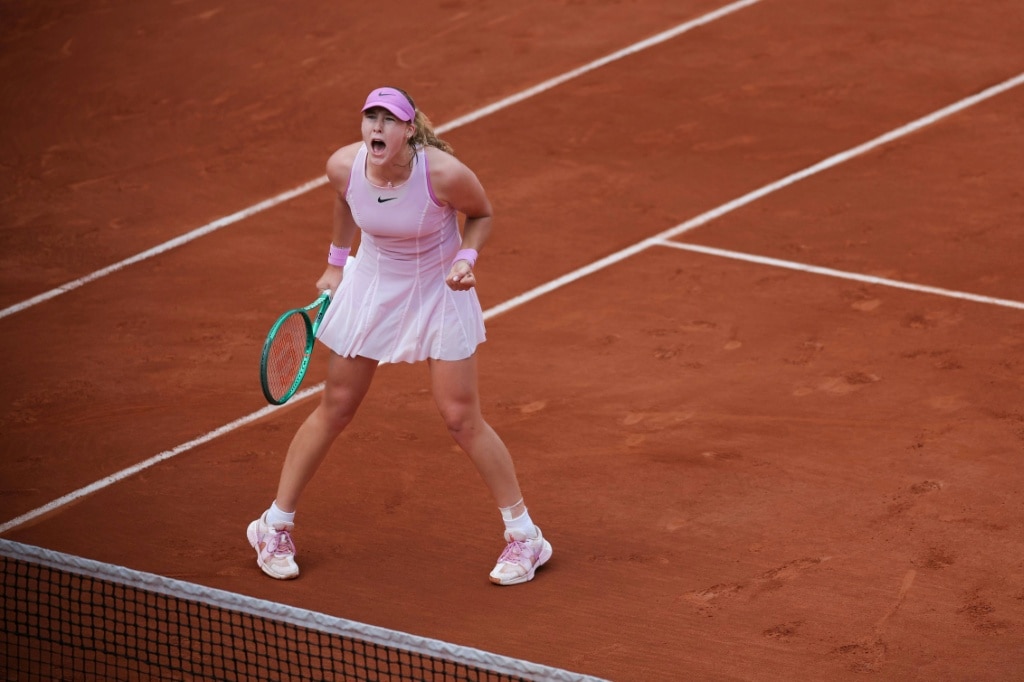
    Leading the charge of this new generation is 19-year-old Rafael Jodar, Spain’s next prodigy molded in the mold of legendary clay-court great Rafael Nadal. He will face off against Alexander Zverev, the highest-seeded player remaining in the men’s draw, to kick off Tuesday’s quarter-final action. Closing out the day on Court Philippe Chatrier will be 20-year-old Jakub Mensik, a rising Czech talent, against 19-year-old Brazilian Joao Fonseca – the undisputed breakout sensation of this year’s tournament. The only 19-year-old on Tuesday’s schedule with prior Grand Slam late-round experience is women’s eighth seed Mirra Andreeva, who will contest her third consecutive Roland Garros quarter-final against Romania’s Sorana Cirstea.

    History has long proven that the French Open is uniquely welcoming to teenage prodigies. Of the five youngest men to win a Grand Slam in the Open Era, four – Michael Chang, Mats Wilander, Rafael Nadal and Bjorn Borg – lifted the Coupe des Mousquetaires at Roland Garros. Among the 16 women who have claimed a major title as teenagers, seven captured their Roland Garros crown in Paris, including tennis icons Monica Seles, Steffi Graf, Chris Evert and current world No. 1 Iga Swiatek.

    On Monday, two of the sport’s most famous teenage champions returned to Paris for the annual reunion of former Roland Garros title holders, and both shared their insights into what makes this generation of young stars so dangerous. Chang, who became the youngest men’s Grand Slam winner in history when he took the 1989 Roland Garros title at 17, now coaches 18-year-old American rising star Learner Tien. He noted that youth brings unique advantages on court, but also added that modern young players carry a heavier burden of expectations than he did decades ago.

    “In some ways it’s easier when you’re young because you don’t overthink the moment,” Chang explained. “But at the same time, a lot of these kids already have massive spotlight on them, and that brings a lot of pressure. That pressure doesn’t always let them go out and play freely. When I was 17, no one expected me to win. I got to be the underdog through the second week, and that gave me all the freedom in the world.”

    Wilander, who won the first of his three Roland Garros titles at 17 in 1982, argued that today’s teenagers hold a distinct mental edge over more experienced opponents. “You can’t find a 19-year-old playing this well that feels fear. None of them do,” the Swede said. “There’s no pressure, no nerves – I don’t think that, I know that. They don’t have a history of losing big matches yet. Losing a quarter-final doesn’t feel like the end of the world the way it does for a player who’s been around longer. That freedom lets them swing without hesitation, and that’s what makes them so tough to beat.”

    Wilander is one of the most high-profile fans of Fonseca, who has already claimed three stunning upsets to reach the quarter-finals. The Brazilian rallied from a two-set deficit to beat Dino Prizmic in the third round, followed by an even more historic upset of 23-time Grand Slam champion Novak Djokovic in the round of 16, before outlasting former finalist Casper Ruud to book his spot in the final eight. Wilander called Fonseca a future great, and the teenager himself says the rising generation is ready to compete at the top of the sport long-term.

    “It’s amazing to see the next generation coming through together,” Fonseca said after his win over Djokovic. “It’s not just me, Jodar and Mensik. There’s Learner Tien, Alex Michelsen, Martin Landaluce – so many of us pushing each other to get better, putting on great matches. That can only make all of us stronger.”

    Chang, meanwhile, has been equally impressed by Jodar’s run through the draw. “On clay, he’s just taken off this tournament,” Chang said. “He’s riding this incredible wave, he’s not overthinking anything, and that’s why he’s playing such great tennis right now.” Jodar, for his part, says he is still finding his footing at the highest level, even as he advances deep into the draw. “I’m still building my game, I know I still have a huge margin for development,” he said after reaching the quarter-finals. “I’m just going to keep going out there and competing.”

    The final match of the day on Tuesday shifts focus to the women’s draw, where two Ukrainian compatriots will face off: 31-year-old veteran Elina Svitolina will take on 23-year-old Marta Kostyuk in an all-Ukrainian quarter-final. Svitolina noted that it is the first time two Ukrainian women have advanced this far in the same Grand Slam, and Kostyuk credited her older compatriot for paving the way for the next generation of Ukrainian tennis. “She’s a legend of our sport in Ukraine,” Kostyuk said. “None of us would be here without what she’s done for our country.”

  • Bollywood divided over bid to cap punishing work hours

    Bollywood divided over bid to cap punishing work hours

    India’s iconic Hindi film industry, Bollywood, is currently roiled by a rare public debate over one of its most entrenched cultural norms: punishing, 12-to-18-hour daily shooting schedules that have been accepted as an unavoidable part of movie-making for generations. The conversation over implementing a mandatory 8-hour daily work cap has split top talent and industry leaders, pitting calls for humane work-life balance against practical concerns of big-budget production logistics.

    The debate first gained national traction last year, after leading A-list actress Deepika Padukone reportedly walked away from a major upcoming project over disputes around working hour limits, a request she raised after returning to work following motherhood. Padukone’s exit pushed the long-underreported issue of unregulated work conditions in Indian entertainment firmly into the public spotlight, opening the floodgates for widespread discussion across the industry.

    For decades, Bollywood has been synonymous with grueling production timelines: it is not uncommon for shooting shifts to stretch 12 to 18 hours a day, with intensive sequences sometimes requiring continuous work for more than 24 hours straight. What was once framed as a necessary sacrifice for cinematic success is now facing growing scrutiny, as an increasing number of industry professionals demand standardized, humane working conditions that protect cast and crew alike.

    Advocates for the 8-hour cap argue that the existing unregulated system places disproportionate strain on women in the industry. Women who push for shorter work hours are often labeled uncooperative or difficult, a social stigma that is almost never attached to male stars who set similar boundaries. A slate of high-profile names have publicly backed the push for clearer work-hour boundaries, including actors Suniel Shetty, Kajol, and Ram Kapoor. Kapoor notes that once artists achieve industry success, they gain the bargaining power to set their own working limits — a comment that underscores a key reality: negotiating power for better work conditions remains deeply tied to an artist’s name recognition and status in Bollywood.

    However, opponents of a rigid 8-hour mandate argue that fixed limits are unworkable for large-scale, big-budget productions, given the unpredictable nature of filmmaking. “This is not like a corporate job,” explained actor Ali Fazal, pointing out that different projects have wildly varying demands, especially action-heavy or technically complex shoots. Actress Chitrangda Singh echoed this perspective, noting that unforeseen disruptions from bad weather to unexpected equipment failures routinely derail even the most carefully planned schedules, forcing productions to extend shifts to hit deadlines. Singh added that filmmaking is ultimately shaped by unforgiving business realities that cannot be ignored when crafting industry rules.

    Industry insiders elaborate on these economic pressures: large-scale productions can accrue daily costs exceeding $26,000 just for location rentals, crew wages, and equipment, creating enormous pressure to maximize every minute of shooting time. Amit Behl, a former official with the Cine & TV Artistes’ Association, highlighted the example of hit action blockbuster *Animal*, whose location rental alone cost 25 lakh rupees (roughly $26,300) per day. On top of that base cost, productions face additional expenses for supporting cast, catering, power, star accommodation, and on-site security, leaving little room for unplanned downtime. Behl added that filmmakers simply cannot afford to halt mid-sequence when large crews or elaborate action set pieces are already assembled.

    Critics of the status quo push back, arguing that these cost concerns often serve as a cover for systemic inefficiency and poor production planning, shifting the entire burden of disorganization onto the backs of lower-paid cast and crew. Acclaimed filmmaker Shekhar Kapur has criticized Bollywood’s hierarchical structure, which often prioritizes convenient scheduling for top-billed actors while ignoring the needs of low-wage technicians and supporting crew. Kapur insists that work-hour protections should extend to every person on a set, not just A-list stars. “Everyone should have the privilege to define the hours they want to work,” he told AFP.

    The ongoing debate has also drawn attention to deep inequities within Bollywood: while established stars have the clout to negotiate for shorter hours, junior artists, entry-level technicians, and daily-wage crew members have almost no bargaining power to push for better conditions, leaving them stuck in grueling schedules with no recourse.

    Many industry observers frame the current split as a sign of a broader generational shift in Bollywood, where both rising young professionals and established senior stars are beginning to push back against outdated norms that prioritized output over worker well-being. Still, opinions on a mandatory 8-hour cap remain deeply divided.

    Behl pointed to the example of Bollywood superstar Shah Rukh Khan, who has been known to work 27 hours straight to complete a key sequence, even though his fame and fortune mean he is not required to do so. “You can’t leave a scene mid-way… if it is an action scene where fighters are involved, anything can happen… it is not like shutting a laptop and working for an IT company,” he explained.

    Veteran star Madhuri Dixit framed the issue as a matter of personal choice rather than a systemic problem that requires regulation. Speaking of her 2025 crime thriller *Mrs Deshpande*, Dixit noted the cast worked 12-hour or longer shifts daily, but added “if a woman wants to work fewer hours, that is her prerogative, her life… more power to her. To each his own, I’m a workaholic!”