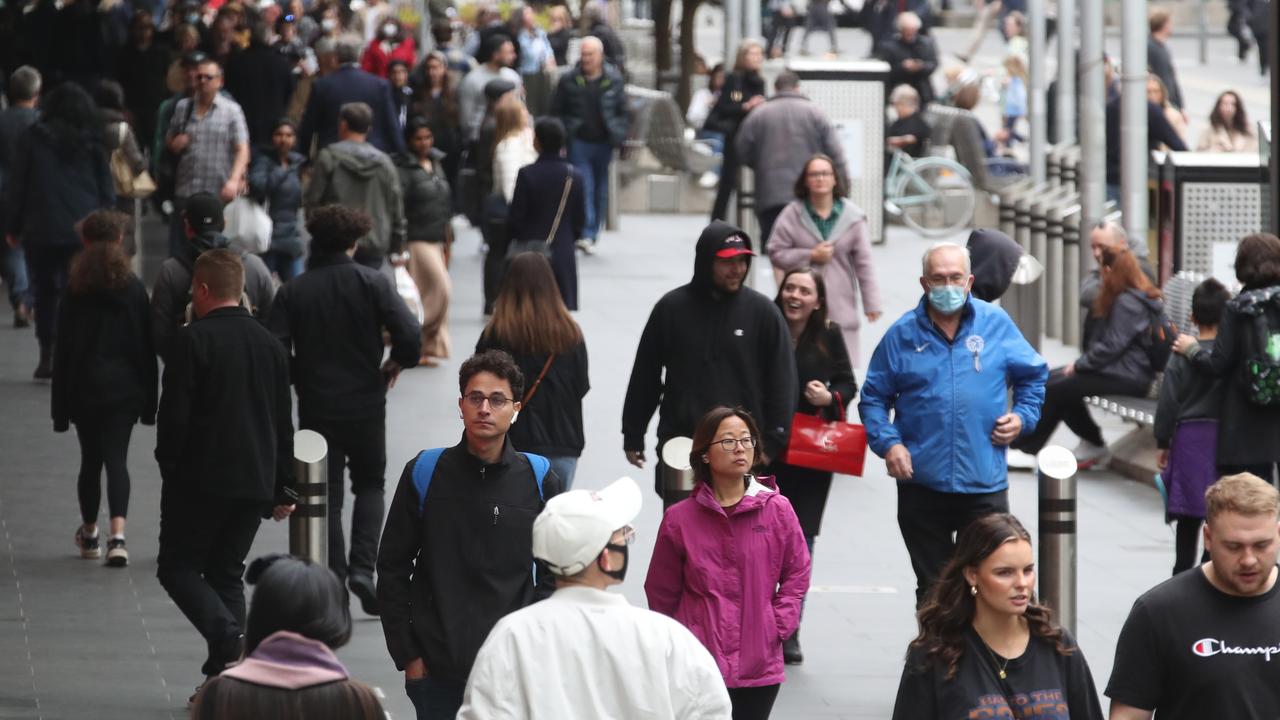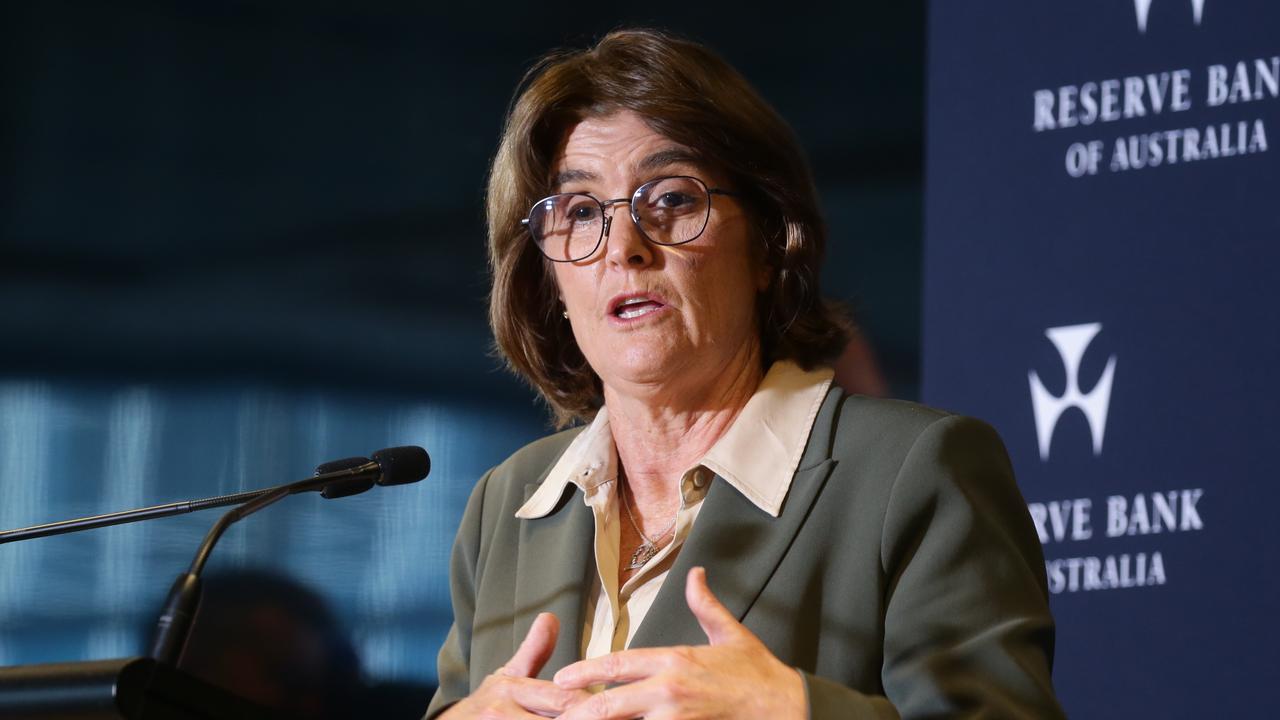
On Tuesday, Australia’s domestic sharemarket touched a closely watched psychological threshold, briefly crossing the 9000-point mark before retreating, as investor sentiment got a boost from emerging signals that peace negotiations could restart in the conflict-torn Middle East.\n\nBy market close, the benchmark ASX 200 had gained 44.80 points, a 0.50% increase, to settle at 8970.80. The broader All Ordinaries index followed the upward trend, adding 51.70 points or 0.57% to close at 9165.10. Meanwhile, the Australian dollar edged slightly lower, dipping 0.08% to trade at 70.93 U.S. cents.\n\nSix out of the market’s 11 major sectors closed the trading day in positive territory, with technology and mining stocks leading the rally. In the tech segment, logistics software firm WiseTech Global rose 3.77% to $38.56 per share, cloud accounting provider Xero gained 3.92% to hit $73.18, and data center operator Next DC climbed 4.30% to close at $13.10.\n\nMining stocks also posted strong gains, fueled by reports that China had relaxed some iron ore cargo restrictions on major miner BHP. BHP’s share price rallied 3.22% to $56.10, while industry peers Rio Tinto added 1.29% to $174.29 and Fortescue Metals gained 1.58% to $20.60. Healthcare shares also contributed to the market’s upward momentum: CSL added 0.58% to $138.08, Sigma Healthcare jumped 1.50% to $2.71, and cochlear implant manufacturer Cochlear lifted 1.60% to $175.06.\n\nA decline in global crude oil prices also supported market gains, with Brent Crude futures falling 1.1% to slip back below $100 U.S. per barrel, trading at $98.30 U.S. ($138 Australian) at the time of reporting. Falling fuel prices take pressure off inflation and business input costs across the Australian economy.\n\nIG market analyst Tony Sycamore explained that the early-day surge above 9000 points was fueled by a positive lead from overnight trading on Wall Street, where investors latched onto news of potential renewed Middle East peace talks. That optimism pushed the U.S. Nasdaq index to its ninth consecutive daily gain, marking the longest winning streak for the index since December 2023.\n\nHowever, the local market could not hold onto the 9000-point milestone through the close, as a raft of downbeat domestic economic data dampened investor enthusiasm. Westpac’s latest consumer confidence survey showed Australian household sentiment remains near the record lows seen during the height of the COVID-19 pandemic, while National Australia Bank’s monthly business survey recorded a 29-point drop in business conditions in March.\n\nAdding to market caution, Reserve Bank of Australia (RBA) deputy governor Andrew Hauser flagged significant economic risks in a speech delivered in New York shortly before the Australian market opened. Hauser warned of a potential “nightmare” stagflation scenario, where inflation reaccelerates even as economic growth weakens – a combination that would severely limit the RBA’s policy options to support the economy.\n\nIndividual company news also brought mixed results. Flag carrier Qantas saw its shares slip 0.33% to $8.98 after it warned that spiking jet fuel prices would cut $800 million from its bottom line in the second half of the current financial year, and announced it would cut domestic flight capacity by 5% to offset costs.\n\nTop lender Westpac closed 2.61% lower at $41.48 after the bank acknowledged that ongoing Middle East conflict and resulting oil price volatility have created a more challenging operating environment for many of its customers. Waste management firm Cleanaway Waste Management dropped 2.58% to $2.27 after it downgraded its 2026 earnings guidance by $20 million, citing higher fuel and logistics costs tied to Middle East supply disruptions. Infant formula producer A2Milk extended losses from the previous trading day, falling 3.11% to $7.79, after it issued a profit warning on Monday due to ongoing shipping disruptions for exports to China.
作者: admin
-

Pope to walk in Augustine’s footsteps on day two of Algeria visit
On the second day of his groundbreaking first-ever papal visit to Algeria, Pope Leo XIV is set to travel to the northeastern coastal city of Annaba on Tuesday to walk in the footsteps of one of Christianity’s most influential theologians, Saint Augustine. This trip marks the opening stop of a four-nation African tour that already made history on Monday, when the American-born pontiff became the first pope to set foot on Algerian soil — but the opening day of his journey was largely overshadowed by sharp public criticism from United States President Donald Trump.
Annaba, which was known as the ancient Roman city of Hippo in centuries past, was Saint Augustine’s long-time home. The theologian’s autobiographical work *Confessions* remains a foundational text across Christian denominations worldwide, holding deep spiritual and cultural significance for believers across the globe. As a member of the Augustinian religious order, Pope Leo has previously described himself as a “son” of Saint Augustine, adding personal weight to this stop on his itinerary.
During his day in Annaba, the pontiff will first tour the archaeological vestiges of the city’s ancient Roman and early Christian past, before stopping at a reception center operated by Catholic nuns that provides support and care for low-income elderly residents of the city. In the afternoon, he is scheduled to lead an open-air Mass at the hilltop Basilica of Saint Augustine, with clergy from across the African continent in attendance.
On Monday, during his first public remarks in the Algerian capital of Algiers following his arrival, Pope Leo honored the memory of those killed during Algeria’s 1954–1962 war of independence from French colonial rule, and issued a powerful call for cross-community forgiveness. His comments come at a moment of sharply elevated diplomatic tensions between Algiers and Paris, and were delivered just days after he held a private meeting with French President Emmanuel Macron at the Vatican.
Beyond addressing historical tensions, the pope also used his address to urge Algeria’s ruling leadership to embrace greater public participation in national political life, calling for the growth of a “vibrant, dynamic and free civil society.” His appeal follows years of restricted civic space after the 2019 pro-democracy Hirak protest movement, which demanded sweeping governmental reform and greater institutional transparency. International human rights organizations have documented consistent rolling back of civil freedoms and increased state control over public assembly and expression in the years since the protests began. “Authorities are called not to dominate, but to serve the people and foster their development,” the pontiff told the crowd gathered at Algiers’ Basilica of Our Lady of Africa.
The most high-profile drama of the trip’s opening day came not from Algerian politics, however, but from across the Atlantic, where Trump launched repeated public attacks on the pope over his recent calls for peace in the Middle East. Pope Leo’s calls for de-escalation in the ongoing U.S.-Israeli war against Iran have drawn fierce pushback from the American president, who lashed out at the pontiff before the trip even began. In pre-trip comments, Trump accused the pope of “toying with a country (Iran) that wants a nuclear weapon,” and added that he was “not a big fan” of the current pontiff.
When faced with public outcry over his remarks after the pope arrived in Algeria on Monday, Trump doubled down on his criticism, saying he had “nothing to apologise for” and insisted that the pope was “wrong” to speak out on the conflict. Aboard the papal plane en route to Algiers, the pope pushed back against the attacks with calm resolve, telling reporters that the Gospel itself mandates advocacy for peace. “The Gospel says… blessed are the peacemakers,” he said, adding: “I have no fear, neither of the Trump administration, nor speaking out loudly about the message of the Gospel.”
After wrapping up his two-day visit to Algeria on Wednesday, Pope Leo will travel onward to Cameroon, the second stop on his four-nation African tour. He will then continue to Angola and Equatorial Guinea for official visits before concluding the trip.
-

US Hormuz blockade, tariffs jolt China
Tensions in the Middle East have reached a new boiling point after the United States launched a naval operation to enforce a blockade of the strategic Strait of Hormuz on Monday, paired with an unprecedented tariff threat targeting third-party countries that supply weapons to Iran. The escalation has drawn a firm response from China, which has called for both Washington and Tehran to return to diplomatic negotiations to de-escalate the crisis.
The tariff threat expanded to China in mid-April, when then-U.S. President Donald Trump warned of a 50% punitive tariff on Chinese goods over unconfirmed reports that Beijing planned to deliver air defense systems to Tehran. The move represents a clear escalation of Washington’s strategy to cut off external support for Iran and extend pressure to other major trading partners that maintain normal economic ties with the Islamic Republic.
Chinese analysts widely view the dual campaign of military blockade and tariff threats as a deliberate act of extreme pressure aimed at forcing Beijing to align its policy with U.S. demands and push Iran into concessions on key negotiating issues. They note that after failing to secure breakthroughs either through military confrontation or diplomatic talks, the U.S. has increasingly turned to unilateral trade measures and coercive tariff threats to gain strategic leverage.
“Trump has shifted tactics. The White House wants to combine military pressure alongside Israel and use tariffs to cut off Iran’s external lifelines,” said Da Bao, a Henan-based political commentator, referring to Iran’s critical crude oil export revenue that flows through trade with China. He added that the U.S. warning against Chinese arms shipments is less about enforcing international norms and more about setting a precedent to weaponize tariffs amid regional conflicts. “What counts as military equipment today? Drone components? Semiconductors? Maintenance services? Today it’s weapons, tomorrow it could be technology, then financing. This is just an expansion of political coercion,” Da Bao explained. He also argued that deploying tariffs as a strategic tool in an active conflict reflects the U.S.’s declining ability to mobilize allied consensus and growing difficulty resolving disputes through targeted, traditional measures.
Ming Yue, a Hebei-based analyst, pushed back on the U.S.’s unsubstantiated claims of Chinese weapons supplies to Iran. She pointed out that China is Iran’s second-largest import source, with bilateral trade hitting $9.96 billion last year, and that Chinese exports to Iran consist primarily of industrial machinery, electrical goods, auto parts, textiles and metal products – not tanks, missiles or ammunition. She added that U.S. media and officials have deliberately mislabeled legitimate, routine economic cooperation between Beijing and Tehran as military support to frame China as a destabilizing actor, a move aligned with U.S. domestic political and electoral priorities.
On the economic impact of additional tariffs, Ming Yue noted that China has already diversified its export markets to the European Union and ASEAN, meaning new U.S. tariffs would have only limited economic impact. Instead, she argued, most tariff costs would ultimately be passed to American consumers and businesses, while U.S. firms with deep supply chain exposure to China, such as Apple and Tesla, would face disrupted production and lost revenue. She also observed that the public has grown accustomed to the pattern observers have dubbed “TACO” – short for “Trump Always Chickens Out” – where threats are dramatically escalated then partially rolled back later.
The current crisis follows a turbulent sequence of diplomatic and military moves in early April. After Trump threatened massive military strikes that would push Iran back to the “Stone Age” if it did not reopen the Strait of Hormuz, a 14-day provisional ceasefire between the U.S., Iran and Israel was reached in the final 90 minutes before Trump’s April 7 deadline, raising tentative hopes of de-escalation that was set to expire on April 21. But just one day after the ceasefire took effect, Israel launched large-scale airstrikes across Beirut, the Bekaa Valley and southern Lebanon, targeting Hezbollah Secretary-General Naim Qassem. The strike killed Qassem’s nephew and personal secretary, Ali Yusuf Harshi, failing to eliminate the Hezbollah leader but escalating tensions on the Lebanese front.
On April 11, U.S. Vice President JD Vance held 21 hours of negotiations with Iranian Foreign Minister Abbas Araghchi in Islamabad, Pakistan, aimed at forging a long-term ceasefire. The talks collapsed without agreement: Washington demanded that Tehran abandon its stockpile of highly enriched uranium and halt all nuclear weapons-related development, as well as accept a U.S.-Iran joint management framework for the Strait of Hormuz. Iranian negotiators rejected both proposals, and insisted any ceasefire deal must cover Lebanon amid ongoing Israeli strikes on Hezbollah – a condition Washington failed to enforce on its ally.
Chinese analysts argue the provisional ceasefire was a deliberate trap set by the U.S. and Israel to reset pressure on Iran while preserving military leverage, noting Tehran would never have accepted the pause if it had known Israel would immediately launch strikes on Lebanon. Lao Ge, a Guangdong-based commentator, drew parallels to ancient Chinese military wisdom from *The Commentary of Zuo*, which notes that a fighting force loses momentum if it pauses before securing its goals: the first push is strong, the second weaker, the third exhausted. He outlined three core strategic risks Iran faces from the ceasefire trap: first, it loses mobilization momentum, as wartime urgency shifts to public relief that erodes deterrence and national resolve; second, it puts key ally Hezbollah in an impossible position – if Iran intervenes to support the group, it is blamed for breaking the ceasefire, but if it holds back, Hezbollah is gradually weakened by ongoing Israeli strikes; third, reopening the Strait of Hormuz surrenders Iran’s strongest bargaining chip, stabilizes global oil markets, and gives the U.S. time to reinforce its military presence in the region. “Tehran would have been better off maintaining pressure despite U.S. threats and even limited infrastructure damage than losing its core ally in Lebanon,” Lao Ge argued.
Qin Tian, deputy director of the Institute of Middle East Studies at the China Institutes of Contemporary International Relations (CICIR), confirmed the Strait of Hormuz is the decisive stake in the current standoff. “For Iran, the Strait is one of the most effective tools in its confrontation with the U.S. and Israel, and a core national security asset,” Qin said. “Tehran should use this leverage to secure meaningful concessions from the U.S. side.” He added that competition between Washington and Tehran for control over the waterway will only intensify in the coming weeks.
As of Monday, the U.S. has expanded its blockade operation into the Gulf of Oman, targeting vessels linked to Iranian trade while claiming to allow neutral shipping to pass unimpeded. U.S. Central Command has issued warnings that any vessels entering the restricted zone risk interception, underscoring the large scale of the operation. U.S. officials also confirmed they have begun mine-clearing operations in and around the Strait after reports of Iranian naval mine deployments that disrupted a large share of global oil flows, noting that reopening full shipping lanes will be slow and carry operational risks. The operation has already pushed global oil prices above $100 per barrel, drawing public criticism from NATO allies who oppose the blockade’s disruptive impact on global energy markets.
China has issued a formal response to the escalating crisis. Guo Jiakun, a spokesperson for China’s Foreign Ministry, emphasized that the Strait of Hormuz is a critical global trade and energy route, and maintaining its safety, stability and open access serves the shared interests of the entire international community. “The root cause of the current disruption is the ongoing military conflict. To resolve the issue, hostilities must end as soon as possible, and all parties must maintain calm and exercise maximum restraint,” Guo said, adding that China will continue to play a constructive role in advancing diplomatic talks.
Chinese Defense Minister Admiral Dong Jun issued a firmer warning to Washington, cautioning against the Strait of Hormuz blockade and rejecting any U.S. interference in normal bilateral relations between Beijing and Tehran. “China has legitimate trade and energy agreements with Iran, and we expect other parties not to interfere in our sovereign affairs,” Dong said, noting that the Strait of Hormuz remains open to Chinese commercial shipping in line with international law.
-

Irish musician Moya Brennan dies aged 73
The global Celtic music community is mourning the loss of one of its most influential voices, with news that Moya Brennan, the legendary lead singer of award-winning Irish folk group Clannad, has passed away at the age of 73 in her native Donegal.
Born and raised in Gaoth Dobhair, an Irish-speaking Gaeltacht region in Donegal, Brennan built a decades-long career that defined modern Celtic music for audiences around the world. A multi-talented artist, she worked not only as a vocalist but also as a celebrated songwriter and harpist, building an extensive discography that spans roughly 25 studio albums. Her work with Clannad and as a solo artist drove total global record sales into the millions, cementing her status as one of Ireland’s most successful musical exports.
As the eldest of nine children in the Brennan musical family, Brennan rose to public attention as a core founding member of Clannad when the group launched in 1968 (gaining its formal lineup in 1970). Built around performances with her siblings and extended family, the group quickly carved out a unique space in the global music industry, blending traditional Irish folk sounds with contemporary production to create a genre-defining style. Over the decades, Clannad earned some of the entertainment industry’s highest honors, including both Grammy and BAFTA awards, and grew to become one of the most prominent traditional Irish acts on the international stage. Today, the group’s name is widely recognized as synonymous with Celtic music itself, a legacy that begins and ends with Brennan’s distinctive haunting vocals and artistic vision.
-

China Evergrande founder Hui Ka Yan pleads guilty to a set of charges including fraud and bribery
One of the most high-profile figures at the center of China’s years-long property market crisis has reached a landmark legal milestone, as Hui Ka Yan, the founder of embattled real estate giant China Evergrande, has pleaded guilty to a sweeping array of criminal charges, a mainland Chinese court confirmed in an official statement this week.
The charges against Hui, who is also known as Xu Jiayin, include illegal absorption of public deposits, fraud, corporate bribery, illegal lending, improper misuse of corporate funds, and rule-breaking disclosure of material market information. Hui was first taken into custody by Chinese authorities in September 2023 while investigations into Evergrande’s collapse were ongoing. His trial was held over two days, Monday and Tuesday, at the Shenzhen Intermediate People’s Court, which released details of the proceedings via a public post on its official WeChat account. During the hearing, the court noted that Hui formally expressed remorse for his actions. A final judgment on sentencing will be issued at a future, unspecified date.
In addition to the charges against Hui personally, China Evergrande Group itself faces multiple criminal allegations including illegal public deposit absorption, fundraising fraud, corporate bribery, and illegal lending. The firm’s core mainland China property subsidiary, Evergrande Real Estate Group, has additionally been accused of fraudulent securities issuance. Observers from multiple stakeholder groups were in attendance for the trial, including representatives of investors who participated in the firm’s past fundraising campaigns, as well as delegates from China’s National People’s Congress, the country’s top legislative body.
The conviction of Hui marks the latest chapter in a years-long downfall that reshaped China’s $60 trillion property sector and sent ripples through global financial markets. Founded by Hui in the mid-1990s, Evergrande grew to become China’s second-largest property developer, amassing a sprawling business empire that extended far beyond residential construction into everything from electric vehicles to theme parks. By the time the firm hit its breaking point in 2021, it held total liabilities of more than $300 billion, making it the most heavily indebted real estate developer in the world.
Evergrande’s collapse was triggered by a 2020 regulatory move by Chinese authorities to crack down on excessive borrowing among private property developers, a policy designed to rein in skyrocketing debt levels and cool overheating housing prices. The crackdown left dozens of overleveraged developers, Evergrande included, unable to access new financing to cover their existing obligations. What followed was a wave of cross-sector defaults that tipped the entire Chinese property industry into a deep systemic crisis. The meltdown dragged on growth in the world’s second-largest economy and shook confidence in financial markets both within China and across the globe.
In the years after the default, Evergrande underwent a lengthy insolvency process. A Hong Kong court issued a formal liquidation order for the firm in 2024, and court records confirmed that more than 90% of Evergrande’s assets were located on the Chinese mainland. By 2025, Evergrande’s shares were officially delisted from the Hong Kong Stock Exchange, closing out the public trading chapter of the firm’s 30-year history.
-

Rabbitohs rocked by David Fifita blow as Stephen Crichton eyes shock return from injury
The 2024 NRL season has delivered another week of dramatic late team reshuffles, as injury crises, surprise comeback stories and debutant announcements have reshaped match-day lineups across all competing sides this weekend. The most high-profile shakeup has landed at South Sydney Rabbitohs, where a pair of key injury blows have cleared the way for a fairy-tale NRL return after four years on the sidelines. Fullback Matt Dufty, who spent five seasons with Saturday’s opponent St George Illawarra Dragons, has earned an unexpected call-up to the starting side after a string of standout performances in the NSW Cup that caught Rabbitohs coaching staff’s attention.
Dufty’s promotion comes as South Sydney copes with two critical absences that will sideline key players for multiple weeks. Young gun Jye Gray, who Dufty is deputising for, suffered a grade three AC joint sprain, with the club yet to confirm a definitive timeline for his return to the field. The news is even bleaker for high-profile recruit David Fifita: the forward tore his hamstring during last week’s clash against the Canberra Raiders, and is set to miss up to six matches as he recovers. To fill the gap in the back row, Lachlan Hubner has been named to make the starting line-up against the Dragons, who have retained their core starting spine, with Mat Feagai stepping into the side to replace injured Moses Suli.
Over at Wests Tigers, head coach Benji Marshall has wasted no time reinstating star playmaker Jarome Luai to the starting five-eighth position, after Luai made a full recovery from a recent knee injury. Jock Madden, who stepped up to deliver an impressive performance in the halves in Luai’s absence, retains his spot in the match-day 17. Patrick Herbert has also kept his starting centre position after a remarkable comeback performance last round, pushing exciting young talent Heamasi Makasini to the wing. Forward Samuela Fainu has also been named in the side, despite an injury scare that put his availability in question just days ago. The high-flying Tigers will face off against the Brisbane Broncos this weekend, who welcome captain Adam Reynolds back to the side following his own injury layoff, with Xavier Willison named at lock to replace suspended star Pat Carrigan.
The Canterbury Bulldogs are on the cusp of a major double boost heading into their clash with the Parramatta Eels, with two key injury returnees set to take the field. Club captain Stephen Crichton, who damaged his shoulder on Good Friday, has been named on the extended bench, marking an earlier-than-expected return from injury. Key off-season signing Leo Thompson will make his club debut this weekend, after overcoming a calf injury that delayed his first appearance for the Bulldogs. Max King, who suffered a jaw injury, remains sidelined for the clash. The Eels, meanwhile, have named Charlie Guymer and Jack Williams in their starting back row, with Saxon Pryke set to make his NRL debut coming off the interchange bench.
Melbourne Storm head coach Craig Bellamy has made targeted changes to his side, breaking a four-game losing skid. Manaia Waitere has been named on the wing, though he is widely expected to shift to centre following the dropping of Moses Leo. Shawn Blore, who has been sidelined with a foot injury, has a strong chance of featuring this weekend after being named on the extended bench alongside Hugo Peel. Over at the Canberra Raiders, winger Savelio Tamale has been dropped to the interchange bench, opening the door for Seb Kris to shift to the wing, while Matt Timoko has been recalled to starting centre after a stint in reserve grade focused on shoring up his defensive game.
In the final match-day announcements, Penrith Panthers confirmed that Izack Tago will make his 2024 season debut in the centres, replacing suspended player Casey McLean. Luke Garner has stepped into the side to cover for Liam Martin, who remains sidelined with a knee injury, for the Panthers’ clash against the Dolphins. Meanwhile, the Newcastle Knights welcome playmaker Dylan Brown back to the side following his recovery from a knee injury, with Fletcher Sharpe shifting to fullback to accommodate his return.
-

War intensifies uncertainty for makers of the ultimate in bling, luxury watches
GENEVA — After two consecutive years of shrinking global demand, the luxury watch industry is gathering this week in Geneva for its flagship industry event, Watches and Wonders, where top brands from across the globe were set to showcase new timepiece innovations, court high-net-worth buyers, and lay the groundwork for a long-awaited market recovery. But a fresh wave of geopolitical instability sparked by the U.S.-Israeli military conflict against Iran that began in late February has upended optimistic projections, injecting severe new uncertainty into an industry already grappling with lingering headwinds from trade policy and currency fluctuations.
Kicking off Tuesday, the annual invitation-only fair hosts 65 exhibiting watch brands and expects to draw roughly 60,000 attendees, ranging from industry buyers to celebrity guests. High-profile names including tennis champion Jannik Sinner and Hollywood actor Patrick Dempsey turned out for the opening, and event leadership says the gathering is still on track to draw a near-record number of visitors, with only a small handful of last-minute cancellations and minor adjustments to travel plans for some participants. Even so, the ongoing conflict in the Middle East has already sent ripples through the global economy — driving up energy costs, disrupting global supply chains for key commodities, halting fertilizer shipments, and upending international air travel — and the $100-billion-dollar luxury watch industry has not escaped the fallout.
Long before the outbreak of hostilities, the sector was already navigating significant challenges. A year ago, then-U.S. President Donald Trump implemented steep tariffs on Swiss imports, which pushed costs higher for manufacturers and retailers. While those tariffs have been lowered from their peak levels following a late-year diplomatic deal brokered after a Swiss business delegation visited the White House bearing high-end gifts, the cumulative impact of the trade policy, combined with soaring prices for gold, silver and other precious metals used in watchmaking, has already put downward pressure on margins and demand.
Now, the Middle East conflict has added renewed inflationary pressures and eroded consumer confidence in key markets across the region, which accounts for a sizable chunk of global luxury watch sales. Industry data shows Middle Eastern markets make up 10% of total Swiss watch exports, a share that analysts call substantial enough to move the needle on annual industry revenue. “Some markets in the Middle East are totally halted,” explained Oliver Müller, founder of Swiss luxury industry consultancy LuxeConsult. He pointed to the United Arab Emirates, one of the region’s top luxury hubs, where roughly 60% of luxury watch sales come from international tourism — a segment that has ground to a near halt amid regional conflict fears and widespread travel disruptions.
Morgan Stanley’s 9th Annual Swiss Watch Industry Report, produced in partnership with LuxeConsult and released in February, underscores just how eager the industry is for a rebound. The report found that the total value of Swiss watch exports fell 1.7% last year, marking the second straight year of market contraction. The downturn was exacerbated by a strong Swiss franc relative to the U.S. dollar and euro, which made Swiss-made timepieces more expensive for international buyers.
“When you look back at a year ago, the sort of theme was: The tariffs and the uncertainty,” said industry analyst Ming Liu. “Unfortunately, we aren’t anywhere closer to certainty, probably even less with what’s happening in the Middle East.”
Even amid the broader contraction, the industry has seen clear segmentation in performance. The report confirms a trend playing out across the global luxury sector: top-tier brands are steadily capturing more market share. Just four of the roughly 450 Swiss watch manufacturers — Rolex, Cartier, Patek Philippe and Omega — control more than half of the total Swiss retail market for luxury watches. The ultra-high-end segment, meanwhile, has continued to grow: handcrafted timepieces priced above 50,000 Swiss francs (over $63,000) made up 37% of the total value of Swiss watch exports last year, up from 33.5% in 2024.
Swiss manufacturers retain an unrivaled hold on the global luxury watch market overall. The Morgan Stanley report found that Swiss-made watches account for roughly 96% of all global sales of timepieces retailing for 2,000 francs ($2,200) or more. While Japan’s Grand Seiko stands out as the “most credible non-Swiss challenger” and India’s Titan is working to break into the upper premium segment, no other country has come close to matching Switzerland’s reputation for precision craftsmanship and brand cachet in the luxury watch space.
For industry leaders gathered in Geneva this week, the core question remains whether the pent-up demand for luxury timepieces that was expected to drive a post-contraction rebound will outweigh the new economic and geopolitical risks sparked by the Middle East conflict. With consumer sentiment already fragile, the coming weeks will test just how resilient the luxury watch industry is to global turbulence.
-

Afghanistan’s capital is in the grip of a water crisis
On a muddy, sloped lane in one of Kabul’s poorest neighborhoods, 52-year-old Marofa stands visibly frustrated, pulling back her headscarf to show her thick graying hair. Like thousands of other residents in the Afghan capital, she is forced to haul heavy water containers long distances every day just to access drinkable water for her household.
“My back has no strength left, my legs can barely carry me,” she says. “Even with my white hair, I still have to do this work.”
Down the hill, a local mosque operates a free well, but its water is too yellow and brackish to drink, meaning residents still have to haul it for other uses. Potable water is only available via small three-wheeled water trucks that sell it at a price out of reach for many low-income families. “We can barely afford bread to eat,” said 90-year-old Wali Mohammad, another angry Deh Mazang neighborhood resident. “How are we supposed to pay for water?”
Both long-term residents say that just months after the Taliban retook control of Afghanistan in 2021, Taliban authorities cut illegal pipes that some households had laid to siphon water from a shared communal well directly to their homes. Mohammad says officials gave no explanation for the cut-off: “They hold all the power, and they did not even tell us why they cut our water.” But 32-year-old local resident Najibullah Rahimi says the unregulated piping drained the well’s water level so drastically that households further up the hill were left completely dry, forcing the government to intervene.
This tense neighborhood conflict is just one visible symptom of a far deeper, rapidly accelerating crisis unfolding across Kabul: the capital is running out of groundwater at an alarming rate, threatening an unprecedented humanitarian disaster in the coming years, aid experts warn.
Nestled in a high-altitude valley of the Hindu Kush mountains, Kabul’s population of 6 million relies almost entirely on groundwater pumped from underground aquifers for daily use. A 2025 report from international aid organization Mercy Corps found that aquifer levels across the city have plummeted by 25 to 30 meters (80 to 100 feet) over the past decade. Today, some new wells must be drilled as deep as 150 meters (nearly 500 feet) just to reach usable water.
Aquifers are underground storage zones that collect water slowly over decades, as rain and melted snow seep through natural soil to replenish supplies. Depletion occurs when water is pumped out faster than it can be refilled, a process driven by two major forces: climate change and unregulated population growth.
Climate change, fueled by global fossil fuel emissions, has brought repeated multi-year droughts to Afghanistan, cutting the snowpack that normally melts gradually through spring and summer to replenish Kabul’s aquifers. Instead, the region now sees more frequent sudden, intense downpours that cause destructive flash flooding rather than slow recharge of groundwater. A recent 10-day period of heavy rain and landslides already killed 77 people across the country, underscoring the new climate reality facing the nation.
But water expert Najibullah Sadid, a Germany-based member of the Afghanistan Water and Environment Professionals Network, says the crisis would have arrived even without climate change. Kabul’s population has exploded more than twofold over the past 20 years: from 2.5 million in 2001, when the Taliban first fell from power and many Afghan refugees returned from neighboring countries, to an estimated 6 million today. A second wave of refugee returns began in 2023, when Pakistan and Iran launched large-scale expulsions of undocumented Afghans, putting even more strain on the capital’s infrastructure.
Rapid unplanned urbanization has compounded the problem: most new development has covered open natural ground with concrete and asphalt, eliminating the porous soil needed to absorb rainwater into aquifers. “Even if it rained every single day, it would not raise groundwater levels anymore,” Sadid explained. “There is simply no unpaved ground left for water to seep through.” Longstanding mismanagement has made the crisis worse, he added, pointing to unregulated groundwater extraction by large commercial beverage companies and commercial greenhouses that draw down massive amounts of water for profit.
Taliban authorities acknowledge the gravity of the situation. “The water situation in Kabul city is in a critical state,” said Qari Matiullah Abid, spokesman for the Afghan Ministry of Water and Energy. “The main causes are a dramatic population increase, reduced rainfall, and sharply higher consumption across the city.”
Abid says the Taliban administration has already implemented a series of corrective measures: it has restricted commercial groundwater extraction by beverage producers, large-scale farmers and other businesses, installed water meters and imposed usage quotas on high-consumption operations like car washes and large commercial buildings, with eviction from the city as a penalty for exceeding limits. To boost groundwater recharge, the government has built small check dams across seasonal waterways in all 14 of Kabul’s districts, and dug thousands of absorption wells to capture stormwater for recharge. It also completed the Shah wa Arous Dam, inaugurated in 2024 with a 10 million cubic meter storage capacity, and removed millions of tons of sediment from the existing Qargha Dam to expand its usable storage.
Even with these steps, experts say the measures are not enough to reverse the depletion trend. Two large-scale infrastructure projects that could deliver a long-term sustainable solution for roughly 4 million Kabul residents have been bogged down by delays and funding gaps.
The first is a 200-kilometer pipeline that would carry fresh water from the Panjshir River north of Kabul to the capital, and the second is the planned Shah Toot Dam, a reservoir project located 30 kilometers southwest of the city. Together, the two projects would deliver a sustainable long-term water supply for the capital, Sadid says. While the dam would require six to seven years of construction, the pipeline could be completed relatively quickly if funding and approvals move forward.
Shafiullah Zahid, Kabul Zone Director for Afghanistan’s state-run Urban Water Supply and Sewage Corporation, says the Panjshir pipeline’s $130 million budget has been approved, but the original survey completed under the former Afghan government has required full revision, and an additional review is still pending. Once the review is complete, construction can begin, he said. The Shah Toot Dam, first planned as a joint Afghan-Indian project months before the 2021 Taliban takeover, has also been held up by funding delays, and would take six to seven years to complete if construction launches.
Sadid says the persistent delays stem from a long-running pattern, across both the current and former Afghan governments, of prioritizing flashy, visible infrastructure over life-sustaining water projects. “They spend billions on new roads and flyovers that catch the public eye,” he said. “But water projects that are fundamental to public health and people’s basic human rights get no priority. Water is essential to life — it is more important than any road.”
-

Lebanon, Israel to meet for tough talks in Washington
A high-stakes round of diplomatic talks between Lebanese and Israeli representatives is set to convene in Washington on Tuesday, hosted under the mediation of U.S. Secretary of State Marco Rubio. But as the meeting gets underway, deep irreconcilable gaps between the two sides, combined with open opposition from key armed group Hezbollah, have left even veteran regional observers deeply skeptical that any meaningful breakthrough will be achieved. The talks mark the first direct, high-level diplomatic engagement between the Israeli and Lebanese governments since 1993, according to an anonymous senior State Department official. Attendees will include both nations’ ambassadors to Washington, as well as the U.S. ambassador to Beirut, the official confirmed. The core stated goals of the dialogue are to lay the groundwork for long-term security along Israel’s northern border and back the Lebanese government’s push to reassert full sovereign control over its entire territory, the official added. The conflict that brings delegates to the negotiating table erupted on March 2, when Hezbollah launched attacks against Israel, drawing Lebanon fully into the broader regional conflict centered on tensions between Israel and Iran. Hezbollah’s entry into the fighting came just days after the February 28 joint Israeli-American offensive that killed Iranian supreme leader Ali Khamenei, an attack the group has vowed to avenge. In the months since the conflict escalated, Israeli military operations have devastated large swathes of Lebanon. Intensive air strikes, including a massive bombardment of central Beirut on April 8, and a full ground invasion of southern Lebanon have killed more than 2,000 people and displaced over 1 million Lebanese civilians, despite repeated international calls for an immediate ceasefire. The biggest immediate rift between the parties centers on core demands that neither side appears willing to compromise on. For Israeli officials, any successful outcome is tied to the full disarmament of Hezbollah and the removal of the group from southern Lebanon. Israeli government spokeswoman Shosh Bedrosian told reporters on Monday that the country has no interest in discussing a ceasefire with Hezbollah, which she condemned for continuing unprovoked, indiscriminate attacks on Israeli civilian areas. Israeli Prime Minister Benjamin Netanyahu doubled down on that position over the weekend, emphasizing that Israel’s non-negotiable goals are the full dismantling of Hezbollah’s weapons arsenal and a durable, long-term peace agreement that will stand for generations. Public opinion in Israel heavily backs that hardline approach: a new poll published Monday by the Israel Democracy Institute found that 80% of Jewish Israeli respondents support continuing military operations against Hezbollah in Lebanon regardless of diplomatic progress with Iran, even if that puts the country at odds with the Trump administration. On the Lebanese side, government leaders are framing the talks around an entirely different priority: securing an immediate ceasefire to end the ongoing devastation. Lebanese President Joseph Aoun said Monday he hopes the Washington talks will produce a ceasefire agreement that clears the way for full formal direct negotiations between the two states. Even before the talks began, Hezbollah’s leader Naim Qassem, head of the Iran-aligned movement that has led the fight against Israel, has openly called for the talks to be canceled, dismissing the entire process as “futile.” For the Trump administration, mediating the talks has proven to be a fraught diplomatic balancing act. U.S. officials have insisted that any resolution must meet two core demands that many analysts see as difficult to reconcile: the full disarmament of Hezbollah, and full respect for Lebanon’s territorial integrity and national sovereignty, all while unconditionally upholding Israel’s right to security. The broader regional context has further complicated U.S. efforts: the Washington talks come just days after a new round of U.S.-Iran talks held in Pakistan failed to produce any breakthrough, and U.S. diplomats fear a continued escalation in Lebanon could derail any future progress on the Iranian nuclear and regional security file. Most regional analysts and even former insiders are already bracing for failure. “It would take a lot of imagination and optimism to think that the deep issues dividing Israel and Lebanon can be resolved in one day of talks in Washington,” a former senior Israeli defense official told reporters on condition of anonymity, acknowledging that “expectations are extremely low” going into the meeting. The former official added that if no agreement is reached, Israel is likely to move forward with establishing a large buffer zone in southern Lebanon, mirroring the security arrangement it currently maintains in the Gaza Strip.
-

Roosters issue ominous warning as former assistant receives high praise ahead of his return to Sydney
This weekend presents one of the most intriguing storylines of the NRL season, as former Sydney Roosters attack coach Justin Holbrook returns to Sydney to plot an upset against his old side, leading a vastly improved Newcastle Knights outfit that has defied early-season expectations.
Many elite assistant coaches struggle to find their footing when they first step into a head coaching role, but Holbrook has wasted no time leaving his mark on the Knights. Just months into the job, he has transformed the club’s once-lowest-ranked attack into a dynamic, dangerous unit — a remarkable turnaround for a side that finished last in the 2023 competition, even with star players Kalyn Ponga and Dylan Brown sidelined through injury.
Holbrook first joined the Roosters after departing the Gold Coast Titans, spending two seasons as the club’s attack architect and turning the Sydney side into one of the most prolific attacking teams in the league. His work at the Roosters earned him high praise from the club’s playing group, a respect that remains unchanged even ahead of this weekend’s clash.
Roosters forward Angus Crichton, who has experienced Holbrook’s coaching first-hand, opened up about the impact the new Knights head coach has had across his career. “He’s a really good man manager,” Crichton explained. “He knows how to get the best out of his players, and it’s impressed me seeing him go to Newcastle and still thrive. A lot of great assistants struggle with the jump to head coaching, but he looks like he’s learnt so much from his first stint in the top job. I’m really happy for him — he’s such a great bloke. He really got our attack humming when he was here, so this weekend is going to be a really good test for us.”
The Roosters head into Sunday’s home clash against Newcastle on the back of a hard-fought 12-point win over Cronulla Sharks in Perth. The side looked shaky in the opening 20 minutes, failing to hold onto possession, but rallied strongly in the second half to pull away for victory. Crichton was quick to note that despite the win, his side is still far from hitting their peak form. “I think we’re still so far from our best and we’re nowhere near where we want to be yet,” he said. “We’ve got so much work to do, and we were back putting in the hard yards again this week. We’re not out here thinking we’re world beaters — we know we’ve still got a long way to go. We’re still working on our timing and our attacking shapes, we’re not always in the right spots at the right time. That’ll only come with more game time and continuity, so we just keep building our combinations and making sure every player does their job.”
The victory over the Sharks was marred by a controversial refereeing call that saw a clear try from Roosters winger Robert Toia ruled out by the NRL Bunker for an incorrect obstruction ruling. The call sparked widespread outrage across the league, with the NRL later admitting the decision was wrong. Toia missed Tuesday’s team training as he recovers from influenza, and Crichton said controversial refereeing calls are nothing new to rugby league. “How long have you been in rugby league for? You shouldn’t be surprised, this is what we do!” he laughed. “I’m not surprised. This stuff happens every year, there’s always new things that pop up. It’s just about how you adapt as a team, there’s no point sulking and crying about it. You just move forward, make sure you understand the interpretations, and get ready when things change. It’s good that the NRL admitted they got this one wrong, and hopefully we’ll see more common sense prevail in future decisions.”
Off the field, Crichton is adjusting to life as a new father after he and his partner welcomed their first child, son Sullivan, on Easter Sunday. Crichton said the club has been incredibly supportive as he navigates the early days of parenthood. “We went into hospital on Saturday night, and he arrived Sunday morning,” Crichton said. “The club was great. The boys were meant to train on Monday, but I called the coach and he let me have the day off. I came in on Tuesday, did the bare minimum — got some field work in, skipped the meetings, did a bit of gym and headed home to be with my family. I went back to hospital, the boys travelled to Perth on Wednesday, and I got to stay an extra night to make sure my partner and Sullivan were settled at home before I flew out on Thursday. It was such a special time, and the club couldn’t have been more understanding. It’s good to be back home now so I can help out.”