作者: admin

  • Flowers  present a colorful tapestry in Qingdao

    Flowers present a colorful tapestry in Qingdao

    As spring settles over eastern China’s Shandong province, a stunning floral display has turned a new rural destination into a must-visit spot for nature lovers across the region. The Linggui Lake Rural Organic Farm, located in Qingdao’s rapidly developing West Coast New Area, has officially opened its gates to the public this month, and its sprawling fields of moss phlox are stealing the show at the peak of their blooming season. The low-growing flowers have spread across rolling terrain, blanketing the ground in layers of breathtaking color that stretch as far as the eye can see. Bright white, blushing pink, and soft lavender purple blossoms weave together to create a living, textured tapestry that transforms the ordinary rural landscape into a postcard-perfect natural attraction. Local photos already capture the joyful atmosphere at the farm, with visitors stopping to pose for photos amid the sea of blooms, soaking in the warm spring air and the vivid natural scenery. For urban residents of Qingdao and neighboring cities, the new farm offers a refreshing weekend escape, connecting people to rural landscapes while supporting local agricultural tourism development in the region. The blooming moss phlox is expected to remain at its peak for the next two weeks, drawing hundreds of casual visitors and photography enthusiasts daily to the new Qingdao attraction.

  • King will not meet Epstein survivors on US visit

    King will not meet Epstein survivors on US visit

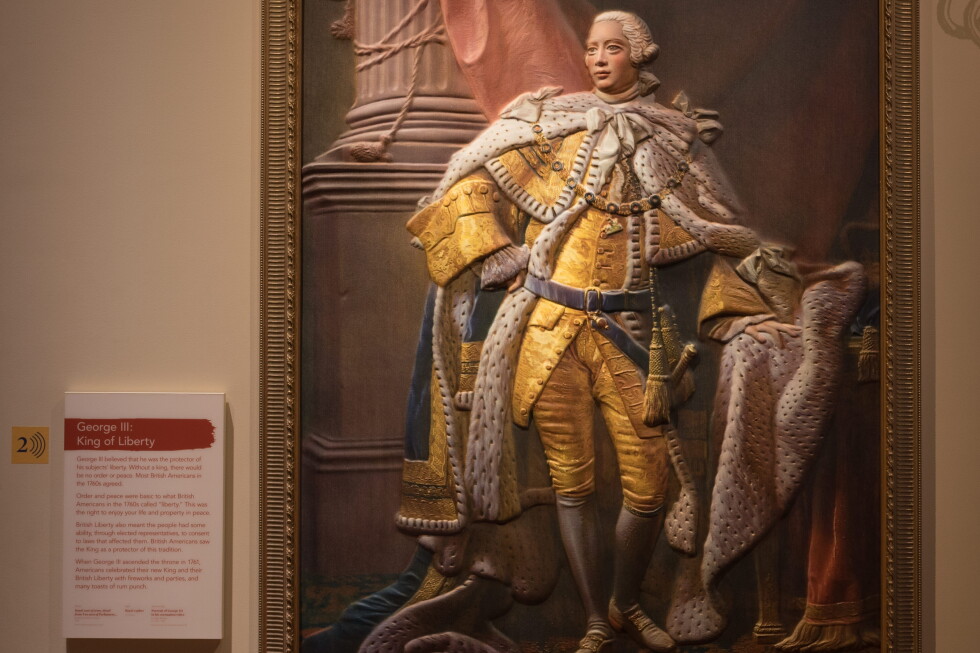
    In late April 2026, King Charles III and Queen Camilla of the United Kingdom will undertake a historic state visit to the United States, a trip crafted to mark the 250th anniversary of American independence. But even weeks before the royal party touches down in Washington D.C., the visit has been tangled in two overlapping sources of friction: growing public calls for a meeting with survivors of convicted sex offender Jeffrey Epstein, and unusually strained political relations between the UK and US governments.

  • Kuwait detaining journalist Ahmed Shihab-Elbin after social media posts

    Kuwait detaining journalist Ahmed Shihab-Elbin after social media posts

    More than 30 days have passed since award-winning international journalist Ahmed Shihab-Eldin was taken into custody by Kuwaiti authorities, rights campaigners have confirmed, in a case that has drawn renewed scrutiny of growing restrictions on press freedom across the Gulf region amid escalating Middle East tensions tied to the US-Israeli war on Iran.

    The 41-year-old, a dual American-Kuwaiti citizen, was apprehended on March 2 during a routine trip to Kuwait to visit family members. Since his arrest, he has been held in arbitrary detention, with his legal team granted only extremely limited access to meet with him, leaving his legal status uncertain more than a month on.

    While official charges have not been formally clarified by Kuwaiti officials, the Committee to Protect Journalists (CPJ) has confirmed that the arrest followed a series of social media posts Shihab-Eldin published related to the ongoing US-Israeli war on Iran. Among the shared content was publicly available footage of a United States fighter jet crashing at a US air base located within Kuwait’s borders. CPJ has stressed that all material the journalist shared was already accessible to the general public, and he did not publish any restricted or unapproved content.

    The press freedom organization notes that the most likely charges Kuwaiti authorities will bring against Shihab-Eldin are spreading false information, endangering national security, and misusing a personal mobile device—offenses that CPJ says are routinely weaponized by Kuwaiti authorities against independent reporters and critical voices.

    Shihab-Eldin’s decades-long journalistic career includes bylines at some of the world’s most prominent news outlets, including *The New York Times*, Al Jazeera English, and PBS. His work focusing on human rights and conflict in the Middle East has earned him multiple major industry awards, including a British Journalism Award and an Amnesty International Human Rights Defender Award.

    His detention is not an isolated incident, CPJ emphasizes, but part of a sweeping regional crackdown on online expression that has accelerated since the outbreak of the US-Israeli war on Iran. Like other Gulf states, Kuwait has enacted increasingly strict controls on digital speech amid rising regional tensions, in a move officials frame as an effort to limit unapproved reporting on attacks targeting the country’s infrastructure.

    On the same day of Shihab-Eldin’s arrest, Kuwait’s Ministry of Interior released an official public statement urging citizens to avoid “photographing or publishing any clips or information related to missiles or relevant locations,” and confirmed that multiple people had already been taken into custody on charges of “spreading false news.”

    Weeks after the arrest, Kuwait’s legislature introduced a new bill that would hand down maximum 10-year prison sentences to anyone found guilty of “disseminating news, publishing statements, or spreading false rumors related to military entities” with the alleged intent of eroding public confidence in state security institutions.

    Data from the Gulf Centre for Human Rights (GCHR) shows that dozens of people across the region have been arbitrarily detained since the war began, all for the act of “peacefully expressing their opinions on social media.” The rights organization reports that most of these detainees are held in unrecorded facilities run by state security forces for days at a time, with no access to contact their families or meet with legal representation.

    “Governments in the region are exploiting the current war to intensify their systematic repression, targeting and suppressing all public freedoms, including the right to free expression both online and offline,” the GCHR said in a statement.

    Rights group HuMena has confirmed that Shihab-Eldin is not the only high-profile detainee held in Kuwait in recent weeks; other prominent detainees include activists Farrah Alsaqqaf and Suad Al-Munayes.

    Sara Qudah, CPJ’s Middle East representative, called Shihab-Eldin’s detention “emblematic” of a accelerating trend across Gulf states, where “national security is used as a convenient pretext to crack down on independent journalism and fundamental freedom of speech.”

    This report was compiled based on original independent reporting from Middle East Eye, which provides unfiltered coverage of the Middle East, North Africa, and surrounding regions.

  • ‘Water ballet dancers’ get ready for spring courtship

    ‘Water ballet dancers’ get ready for spring courtship

    As spring unfolds across northeastern China, a beloved seasonal ritual has begun in the reed marshes of Changchun’s Yitong River South Creek Wetland Park. Four pairs of great crested grebes, scientific name Podiceps cristatus, have arrived at the protected wetland, marking the start of their annual courtship period, according to a report updated on April 14, 2026.

    Nicknamed “water ballet dancers” for the elegant, synchronized courtship displays they perform during mating season, these waterbirds are currently in the early “ambiguous phase” of their pairing. While they have not yet entered the peak of their passionate breeding rituals, their tentative, cautious interactions already draw the attention of birdwatchers and environmentalists alike, forming one of spring’s most vivid ecological landscapes along the Yitong River.

    Local wildlife observers note that the regular return of great crested grebes to the Changchun wetland each spring serves as a clear indicator of the region’s improving ecological health. Years of wetland conservation and restoration work along the Yitong River have created a stable, food-rich habitat that supports migratory waterbirds through their breeding cycle, turning the annual grebe courtship season into a popular natural attraction for local nature enthusiasts.

    Photographers have already begun documenting the grebes’ behaviors, with the first batch of photos capturing the birds’ soft, tentative interactions among the reeds, ahead of the more elaborate synchronized swimming and courtship dances that will emerge as the season progresses.

  • England beats Spain again, winning 1-0 in Women’s World Cup qualifier

    England beats Spain again, winning 1-0 in Women’s World Cup qualifier

    LONDON – In a highly anticipated rematch between two of women’s soccer’s global powerhouses, European champion England secured a dramatic 1-0 victory over top-ranked Spain in a 2027 FIFA Women’s World Cup Group A3 qualifier at iconic Wembley Stadium on Tuesday. The only goal of the match came just three minutes after kickoff, when forward Lauren Hemp poked the ball into the net from an early corner kick. Although Spanish star Alexia Putellas made a last-ditch attempt to clear the ball off the goal line, replays confirmed the effort had already crossed the boundary, giving England an early lead that it never relinquished.

    Tuesday’s clash marked the latest in a string of high-stakes meetings between the two elite sides. It mirrored the matchups of both the 2022 UEFA Women’s Euros final and the 2023 FIFA Women’s World Cup final, two of the biggest matches in recent women’s soccer history. In the 2022 Euros final, England claimed victory to defend their continental title, securing back-to-back European championships. Just one year later, Spain flipped the script at the 2023 World Cup, lifting the trophy for the first time in their history after defeating England in the final.

    With the result, England maintains a perfect winning record through its qualifying campaign so far and sits firmly at the top of Group A3. Heading into the next round of matches, the three points gained from this marquee win give the Lionesses a major boost in their bid to qualify for the 2027 Women’s World Cup, which is scheduled to be hosted by Brazil. Fourth-ranked England’s defeat of world number one Spain also serves as a powerful statement of intent ahead of the upcoming tournament, reigniting debate over which side enters the global event as the favorite.

    This report was compiled from original wire coverage of the match, part of ongoing international soccer qualifying action for the 2027 cycle.

  • Italy suspends defence agreement with Israel

    Italy suspends defence agreement with Israel

    In a significant shift that underscores growing rifts in Italy’s longstanding alignment with Israel and changing political tides ahead of next year’s national election, Italian Prime Minister Giorgia Meloni has announced her government will not renew the bilateral five-year defense cooperation agreement between Rome and Tel Aviv. The decision was framed as a response to “the current situation” in the region, though no further specific details were provided by the prime minister’s office.

    While Italy and Israel have maintained historically solid diplomatic and security ties, relations have deteriorated sharply in recent weeks amid a series of escalating diplomatic spats. Last week, Italian officials summoned Israel’s ambassador to Rome after Israeli forces fired warning shots at a convoy carrying Italian UN peacekeepers deployed in southern Lebanon. The incident left one Italian vehicle damaged, though no peacekeepers were injured. Just days later, Israel reciprocated by calling in Italy’s top diplomat to protest harsh comments from Italian Foreign Minister Antonio Tajani, who publicly condemned what he called Israel’s “unacceptable attacks” on Lebanese civilians.

    According to data compiled by the Stockholm International Peace Research Institute (SIPRI), Italy ranks as the third-largest supplier of arms to Israel, though Italian exports accounted for just 1.3% of all Israeli arms imports between 2021 and 2025. The United States and Germany hold the top two positions as Israel’s leading arms providers. Meloni’s announcement puts Italy in line with a growing bloc of European nations that have already paused or restricted arms exports to Israel since the launch of Israel’s large-scale military offensive in Gaza, which began after the October 7, 2023 Hamas attack that killed roughly 1,200 people in southern Israel and took 251 hostages into Gaza. As of the latest update from Gaza’s Hamas-run Ministry of Health, more than 72,330 Palestinians have been killed in Israeli military operations across the territory, including 757 fatalities recorded since a fragile ceasefire took effect in October 2025.

    Domestically, the decision to end the defense pact renewal comes after months of mounting public pressure on Meloni’s administration. Hundreds of thousands of Italian citizens have participated in mass street protests and general strikes across the country demanding an end to arms sales and security cooperation with Israel, a call that has gained growing traction among voters. Until recently, Meloni’s right-wing coalition government had stood as one of Israel’s firmest allies in Europe, refusing to join the expanding group of nations that have formally recognized Palestinian statehood.

    However, a key turning point came in late March, when Meloni’s coalition lost a high-profile national referendum on judicial constitutional reform. Political analysts widely framed the result as a de facto vote of no confidence in the government’s overall popularity, particularly its unpopular alignment with Israel and the current U.S. administration under President Donald Trump. With just 18 months remaining before Italy holds its next general election, Meloni has begun systematically adjusting her policy rhetoric to distance herself from these increasingly unpopular political associations.

    In recent weeks, the rift between the Italian prime minister and the U.S. president has widened publicly. After the referendum defeat, Meloni described ongoing military escalations between the U.S.-Israel alliance and Iran as part of a dangerous pattern of international intervention that operates “outside the scope of international law”. Earlier this week, she issued a rare public rebuke of Trump, calling his recent disparaging remarks about Pope Leo XIV “unacceptable” and confirming the pontiff had her full solidarity.

    The comment drew an immediate and harsh response from Trump, who told leading Italian daily *Corriere della Sera* that he was “shocked at her” conduct. “I thought she had courage, but I was wrong,” Trump said, adding that Meloni “does not care whether Iran has a nuclear weapon and would blow Italy up in two minutes if it had the chance.”

    For months, Trump’s public support for Meloni was seen as a key political asset for the prime minister, with her supporters framing it as a unique opportunity for Italy to gain privileged influence in Washington as a leading interlocutor for the European Union. But as Trump’s approval rating has plummeted among Italian voters — a January public opinion survey found 63% of Italian electorate holds a negative view of the U.S. under his leadership — that close association has become a significant political liability. Meloni’s decision to distance herself from both Trump and Israel is widely interpreted as a calculated move to rebuild support among centrist and left-leaning voters ahead of the 2027 election.

    In the days following the public exchange between Meloni and Trump, senior members of her government have rushed to defend the prime minister’s position while reaffirming the core of the Italy-U.S. alliance. “Italy’s alliance with the U.S. is built on mutual loyalty, respect, and honesty,” Foreign Minister Tajani wrote on social media platform X. “On Pope Leo XIV she said exactly what all of us Italians think. The prime minister and the government defend and will always defend only and solely the interests of Italy.” Defense Minister Guido Crosetto echoed that framing, noting: “Being allies does not mean accepting everything in silence, but having the courage to clearly state what one believes to be right.”

    Italian defense ministry officials told the BBC that they are still assessing what concrete legal and operational changes the decision to scrap the defense pact renewal will bring to existing security cooperation frameworks between Italy and Israel.

  • Powerball is going international in an effort to build larger jackpots that draw more players

    Powerball is going international in an effort to build larger jackpots that draw more players

    One of the United States’ most famous lottery brands is making its historic leap across the Atlantic. Powerball, the game that has created thousands of millionaires across American states and territories, will officially welcome players from England, Scotland and the entire United Kingdom to its player pool starting this summer, under a newly announced partnership agreement.

    The landmark deal was revealed Tuesday by the Multi-State Lottery Association (MUSL), the U.S.-based organization that manages Powerball, and Allwyn UK, the current operator of the U.K. National Lottery. Regulators still need to greenlight the expansion: the agreement requires final approval from the U.K. Gambling Commission before the first U.K. Powerball tickets can go on sale.

    If approved, the expansion will mark a first for the 30-plus year old Powerball game: for the first time since its launch, players outside the United States will be able to participate and contribute to the game’s rolling jackpot pool.

    Matt Strawn, CEO of the Iowa Lottery and leader of the Powerball product team, framed the cross-border expansion as a natural evolution for the game. “We’re constantly looking for ways to make sure that we’re keeping Powerball culturally and commercially relevant,” Strawn said in comments after the announcement. “And this really is the next natural progression in doing just that.”

    For existing Powerball players in the United States, the expansion will bring no changes to how the game works. The $2 price per ticket will remain unchanged, and the long odds of claiming the top jackpot – 1 in 292.2 million – will also stay the same. The biggest benefit for U.S. players will be faster jackpot growth: adding millions of potential U.K. participants to the player pool means more ticket sales, which pushes the top prize up more quickly between rollovers.

    “Players consistently tell us in survey after survey that faster growing Powerball jackpots is what they’d like to see,” Strawn explained. “Not surprisingly, the higher the jackpots grow the more people play the game in a particular drawing. The more people play, the higher sales grow. The higher sales grow, the higher the jackpots get, the more people play.” It’s a self-reinforcing cycle that Powerball leaders expect will boost engagement on both sides of the ocean.

    For U.K. players, the launch of Powerball will unlock access to far larger top prizes than any existing domestic or European lottery currently offers. In 2022, a single winning Powerball ticket sold in California claimed a record jackpot of just over $2 billion, an amount that dwarfs the largest European lottery win on record. That same year, the biggest U.K. EuroMillions prize – a pan-European lottery also operated by Allwyn UK – hit £195 million (equal to roughly $265 million at the time), less than 15% of the record Powerball payout.

    Allwyn UK leaders say adding Powerball to the U.K. National Lottery roster aligns with their goal of bringing fresh excitement to British players. “Our ambition is to bring more games, more innovation and more excitement to The UK National Lottery — and it doesn’t get more exciting than Powerball, with its transformative jackpots and life-changing contribution to good causes,” Allwyn UK Chief Executive Andria Vidler said in a statement announcing the deal.

    While all players will compete for the same base jackpot amount, there are key differences between the U.S. and U.K. versions of the game to align with local regulatory and market norms. Estimated jackpot values will be listed differently in each country, due to fluctuations in currency exchange rates and differing advertising conventions: the U.S. advertises jackpots as the pre-tax value of the full annuity payout, while the U.K. advertises post-tax prizes. Additionally, U.K. jackpot winners will only be able to claim their prize through a 30-year annuity, unlike U.S. winners who can choose between the annuity or a one-time lump-sum cash payment – a option that nearly all U.S. jackpot winners choose. Secondary smaller prizes for non-jackpot winners will also have different values and structures in the two countries.

    Powerball is currently available to players in 45 U.S. states, plus Washington D.C., Puerto Rico and the U.S. Virgin Islands. The core game rules will remain unchanged after expansion: players still select five numbers from a pool of 1 to 69 for the white balls, and one number from 1 to 26 for the red Powerball, and drawings will continue to be held three times a week on Mondays, Wednesdays and Saturdays. More than 31 million people participate in at least one U.K. National Lottery game each year, representing a massive potential new player base for Powerball. The expansion will have no impact on the operation of Mega Millions, Powerball’s main rival large U.S. lottery game, which will remain exclusive to U.S. players.

  • ‘I can feel the difference’ – Americans react to soaring gas prices

    ‘I can feel the difference’ – Americans react to soaring gas prices

    Across the United States, ordinary drivers are already grappling with the tangible impact of skyrocketing gasoline prices, with many reporting they can already sense the heavy financial strain hitting their monthly budgets. As fuel costs continue to climb at pumps nationwide, the issue has moved rapidly to the forefront of national economic and political conversation.

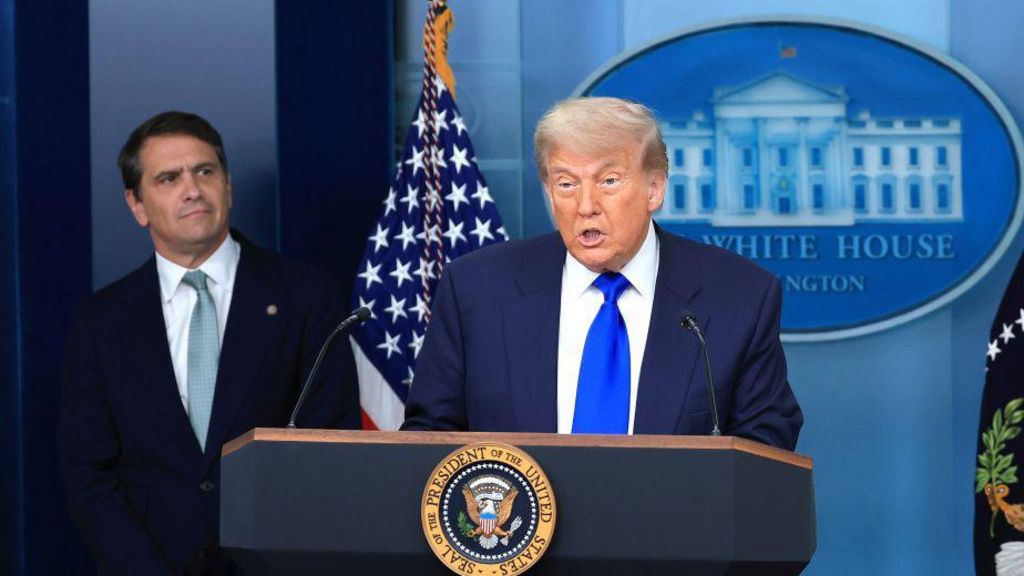
    Over the recent weekend, former President Donald Trump offered a sobering forecast for the months ahead. Speaking on the trajectory of oil and gasoline prices, Trump stated that current costs are likely to remain at their elevated levels, or could even climb higher in the coming months.

    The prediction has amplified concerns among American households, which already face broader inflationary pressures across food, housing, and other essential goods. For millions of commuters who rely on personal vehicles to get to work, school, and daily errands, rising gas prices directly cut into disposable income, forcing many to adjust spending habits by cutting back on leisure activities, delaying major purchases, or carpooling to cut down on fuel use.

    As the issue continues to develop, energy market analysts are closely watching global oil supply dynamics and domestic policy decisions that could shape future price movements, while American consumers wait to see whether Trump’s forecast will prove accurate.

  • Former defense firm executive sentenced to 13 years for bribery

    Former defense firm executive sentenced to 13 years for bribery

    In a recent ruling issued on Tuesday, the Nanyang Intermediate People’s Court in Henan Province has sentenced Liu Weidong, former deputy general manager of state-owned defense contractor China South Industries Group Corp, to 13 years in federal prison and ordered a 4 million yuan ($586,800) fine over convictions of bribery. Alongside the custodial sentence and monetary penalty, the court also ruled that all of Liu’s illegal gains and related illicit assets must be fully confiscated and transferred to the national state treasury.

    Court investigators established that over a 26-year period spanning from 1999 to 2025, Liu exploited his senior executive positions at two major state-owned enterprises — including his roles as deputy general manager of Dongfeng Motor Corp and deputy general manager of China South Industries Group Corp — to secure improper advantages for connected business entities and individual applicants on matters ranging from corporate business operations to internal personnel promotions. In exchange for these favors, Liu accepted direct bribes totaling more than 41.39 million yuan, according to official court documents.

    The court confirmed that Liu’s actions clearly meet the statutory criteria for the crime of bribery, noting that the scale of illicit funds involved qualified as “extremely large”, which would typically warrant severe punitive measures. However, justices opted to apply a lenient sentencing adjustment after accounting for multiple mitigating circumstances: Liu fully confessed to all known charges, voluntarily disclosed additional bribery details that had not been uncovered by investigating authorities prior to his statement, and cooperated fully with the prosecution by turning over all illegal proceeds proactively.

    A review of public career records shows the 59-year-old, a native of Hubei Province, launched his professional career in the automotive sector after graduating from the Wuhan University of Technology in his home region. He spent decades rising through the ranks at Dongfeng Motor Corp, Hubei’s state-owned automotive manufacturing giant, and earned a promotion to deputy general manager of the firm in 2001.

    In May 2018, Liu transferred to China South Industries Group Corp, one of China’s leading national defense contracting conglomerates and a major player in the domestic automotive industry, to serve as its deputy general manager. The first crack in his decades-long career came in February 2025, when he was formally placed under investigation for suspected severe violations of Communist Party of China discipline and national law. By July 2025, he had been expelled from the Communist Party of China and removed from all public office positions. Prosecutors formally filed bribery charges against him that November, and the Nanyang Intermediate People’s Court held a public open hearing on the case at the start of 2026, leading to this week’s final sentencing ruling.

  • ‘Bit of pain’ worth long-term security from Iran, Bessent tells BBC

    ‘Bit of pain’ worth long-term security from Iran, Bessent tells BBC

    The ongoing US-Israel conflict with Iran has sparked fierce debate over the trade-off between short-term global economic stability and long-term international security, as the International Monetary Fund (IMF) has laid out stark worst-case projections that could tip the world into recession for the first time since the COVID-19 pandemic.

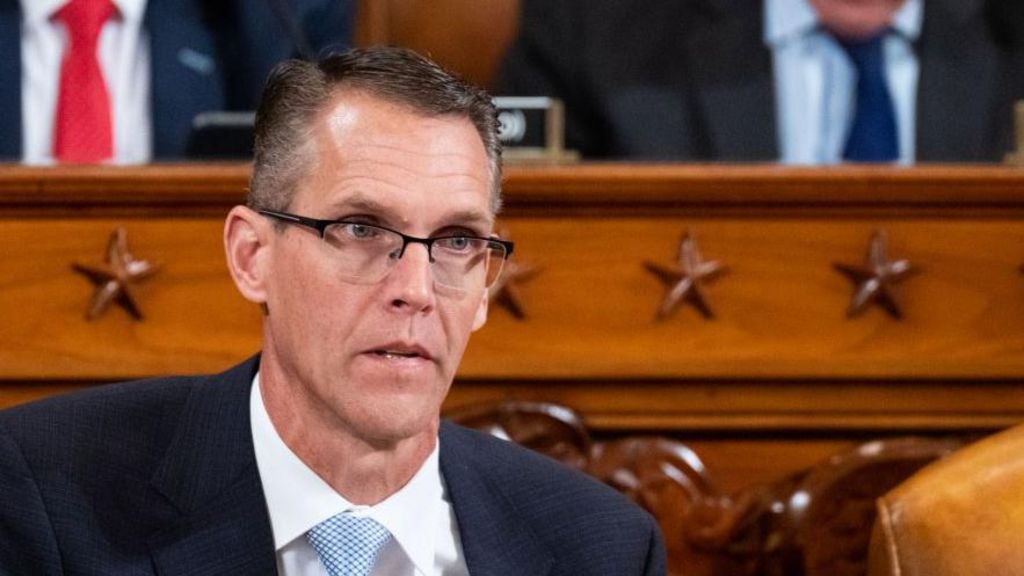
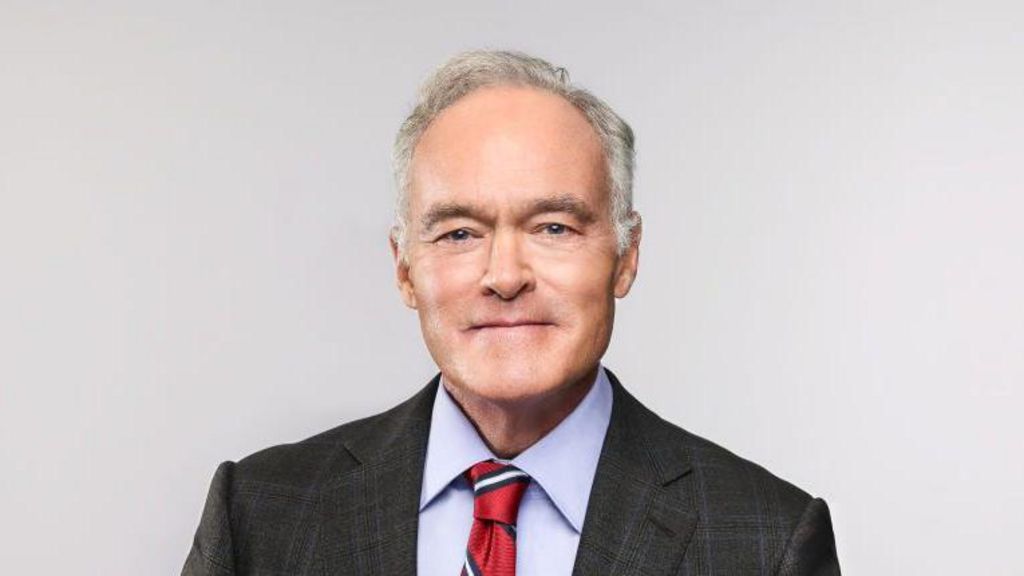
    In an exclusive interview with the BBC, US Treasury Secretary Scott Bessent argued that a modest period of near-term economic hardship is a necessary sacrifice to eliminate what he frames as a growing Iranian threat to Western capitals. “I wonder what the hit to global GDP would be if a nuclear weapon hit London,” Bessent said. “I am saying that I am less concerned about short-term forecasts, than I am about long-term security. The biggest risk you can take is one you don’t know you were taking.” He claimed that recent US and Israeli strikes have eliminated the so-called “tail risk” of Iranian nuclear strikes against Western nations, noting that Iran had enriched uranium to 60% purity—close to the level required for a functional nuclear weapon—at the start of the conflict. He also pointed to Iran’s strike on Diego Garcia as evidence the country already possesses mid-range intercontinental ballistic missiles capable of reaching the United Kingdom.

    However, multiple official sources have pushed back on Bessent’s framing. The BBC has previously confirmed that the threat of an Iranian ballistic missile strike on London remains extremely remote, and Iran does not currently possess a nuclear weapon. A spokesperson for the UK government added: “There is no assessment Iran is trying to target Europe with missiles. But we have the military capability we need to keep Britain safe from any kind of attacks, whether it’s on our soil or from abroad. We are ready to defend the country, whatever the threat.”

    In its latest World Economic Outlook report, the IMF detailed the severe economic risks the conflict poses six weeks after it began in late February 2026. The closure of the strategic Strait of Hormuz, a critical chokepoint for global energy shipping, and the collapse of US-Iran peace talks have sent energy prices soaring, with crude prices peaking near $120 a barrel before moderating to $95 per barrel as of Tuesday.

    The IMF laid out two core scenarios for global growth. In the most severe outcome, if energy and food prices spike and remain elevated through 2027, global growth will drop below 2% in 2026—an outcome the IMF calls a near-certain global recession, a situation that has only occurred four times since 1980. Under this scenario, oil prices would average $110 per barrel in 2026 and rise to $125 in 2027, pushing global inflation as high as 6% next year and forcing central banks to implement aggressive interest rate hikes to cool price growth. IMF chief economist Pierre-Olivier Gourinchas warned that a prolonged conflict would trigger spiraling inflation, rising unemployment, and widespread food insecurity in vulnerable nations, noting that even an immediate end to the conflict would leave an economic impact comparable to the 1970s oil crisis. Still, he added that the global economy is far less dependent on fossil fuels today than it was 50 years ago, softening the blow for consumers.

    In the more optimistic baseline scenario, where the conflict is resolved within the next few weeks and energy exports and production return to normal by mid-2026, global growth will slow to 3.1% this year—down just 0.2 percentage points from the IMF’s January forecast—before rebounding to 3.2% growth in 2027, a projection that remained unchanged from earlier estimates.

    The report also breaks down the uneven economic impact of the conflict across major economies and regions. Among advanced economies, the UK is projected to bear the brunt of the energy shock, with its 2026 growth forecast cut from 1.3% to 0.8% before a 1.3% recovery in 2027. Most Gulf energy exporting nations face steep slowdowns or outright contraction this year: the IMF projects Iran’s economy will shrink by 6.1% in 2026, before a 3.2% rebound in 2027 if the conflict ends soon—a projection that remains highly uncertain following US President Donald Trump’s recent announcement of a full blockade on Iranian port exports to halt all Iranian oil shipments. Qatar, home to the world’s largest liquefied natural gas refinery at Ras Laffan, faces an 8.6% contraction this year after the facility was struck by Iranian drones and missiles, leaving it non-operational for the foreseeable future. Iraq, Iran’s neighboring state, will see growth slow by 6.8% in 2026 before bouncing back to 11.3% growth in 2027.

    The IMF notes that national economic resilience depends on key factors including infrastructure damage, reliance on the Strait of Hormuz, and access to alternative export routes. For example, Saudi Arabia’s East-West pipeline, which can carry up to 7 million barrels of oil per day from the Persian Gulf to the Red Sea, allows the kingdom to avoid the worst disruptions. The IMF still projects 3.1% growth for Saudi Arabia in 2026, followed by 4.5% expansion in 2027, in line with broader forecasts for a regional upturn next year if energy markets normalize. The IMF cautioned, however, that this optimistic outlook could be revised downward if the conflict drags on and infrastructure damage worsens.

    Globally, the IMF cut its 2026 growth forecast for China to 4.4%, down 0.1 percentage points from January, while leaving its 2027 projection of 4% growth unchanged. One major beneficiary of the surge in global energy prices, the IMF found, is Russia, which has been under sweeping Western sanctions since its full-scale invasion of Ukraine four years ago. The IMF now projects 1.1% growth for Russia in both 2026 and 2027, up from earlier forecasts of 0.8% and 1% respectively, after Trump lifted all restrictions on Russian oil exports and temporarily unfroze 140 million barrels of Iranian oil for 30 days to curb global price spikes.

    European officials have pushed back against the easing of sanctions, warning that Russia is positioned to emerge as a winner from the conflict. “Energy prices are up, and that gives additional revenues for Russia’s war machine,” European Commissioner for finance Valdis Dombrovskis told reporters on the sidelines of the IMF summit in Washington. “Now is not the time to ease the pressure on Russia.”