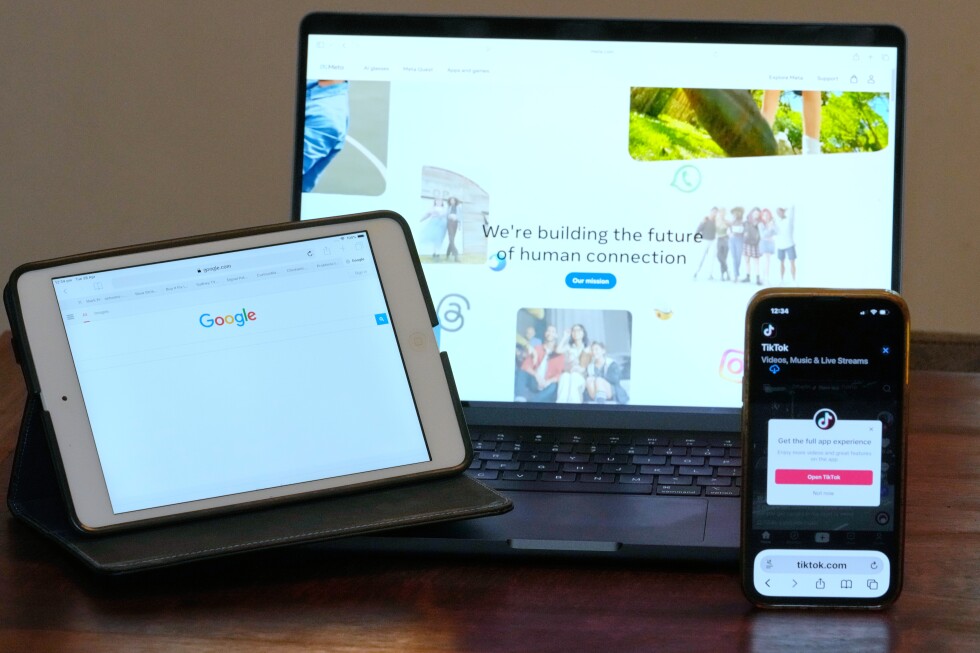
MELBOURNE, Australia — The Australian government has tabled a groundbreaking new legislative proposal that would impose a revenue-based tax on three major global digital platforms — Meta, Google, and TikTok — to compensate local news creators for their journalistic work, marking the nation’s second attempt in three years to enforce fair compensation for news content shared on big tech services.
Unveiled on Tuesday, the draft legislation will be submitted to Australia’s Parliament by July 2. The policy, dubbed the News Bargaining Incentive, is structured to push large platforms to negotiate voluntary commercial deals with domestic news organizations. Under the framework, any qualifying platform that declines to strike such agreements will face a 2.25% levy on their annual Australian-generated revenue. If platforms do agree to compensate publishers for news content, they will qualify for tax offsets that reduce their overall financial obligation.
This proposal comes in response to the failure of Australia’s 2021 regulatory framework, the News Media Bargaining Code. That original law required platforms to negotiate payment for news content with publishers, threatening binding arbitration if no deal was reached. While most major platforms opted to strike initial deals to avoid arbitration rather than face judicial price-setting, many have since refused to renew agreements, opting instead to remove news content from their platforms to avoid payment obligations.
The Australian government projects the new incentive scheme will generate between AU$200 million and AU$250 million (US$144 million to US$179 million) annually — a figure that matches the highest annual total of platform payments to news outlets under the original 2021 code. Collected funds will be distributed to local news organizations proportional to the number of journalists each outlet employs, according to Communication Minister Anika Wells.
Prime Minister Anthony Albanese defended the policy, arguing that journalistic work must be fairly compensated rather than exploited by multinational corporations for profit. “It shouldn’t just be able to be taken by a large multinational corporation and used to generate profits for that organisation with no compensation appropriate for the people who produce that creative content,” Albanese told reporters. “We think that investment in journalism is critical to a healthy democracy.” The prime minister also pushed back against potential criticism from the U.S. — where all three targeted firms are based — noting that Australia is a sovereign nation acting in its own national interest.
Not surprisingly, the proposal has drawn sharp pushback from the targeted digital giants. All three argue the plan is an unfair “digital services tax” that misrepresents the value exchange between platforms and news publishers, and will not create a sustainable future for the Australian news sector.
Meta argued in an official statement that news organizations voluntarily share content on its platforms because they benefit from the distribution and audience reach the company provides. “The idea that we take their news content is simply wrong,” the company said, adding that the tax would apply even if platforms host no news content at all, calling the policy “a government-mandated transfer of wealth from one industry to another” that would only create a news sector dependent on government subsidies rather than sustainable innovation.
Google echoed the criticism, saying it already maintains active commercial agreements with Australian news creators. The company also pointed out that the policy arbitrarily excludes other major digital platforms active in Australia, including Microsoft, Snapchat, and OpenAI, despite the changing landscape of how consumers access news. “It ignores the fact that Google already has commercial agreements with the news industry, misunderstands how the ad market changed and mandates payments from some companies while arbitrarily excluding platforms,” Google’s statement read. TikTok has not yet issued a public response to the proposal as of Tuesday.