Along the sunbaked Indian Ocean coastline of East Africa, generations of small-scale fishing communities have built their lives around the sea. But today, rapidly warming waters, rampant overfishing, and illegal industrial fishing operations have pushed traditional livelihoods to the breaking point, forcing coastal residents — and women in particular — to reimagine their relationship with the ocean through conservation-led enterprises that offer both hope and stability.
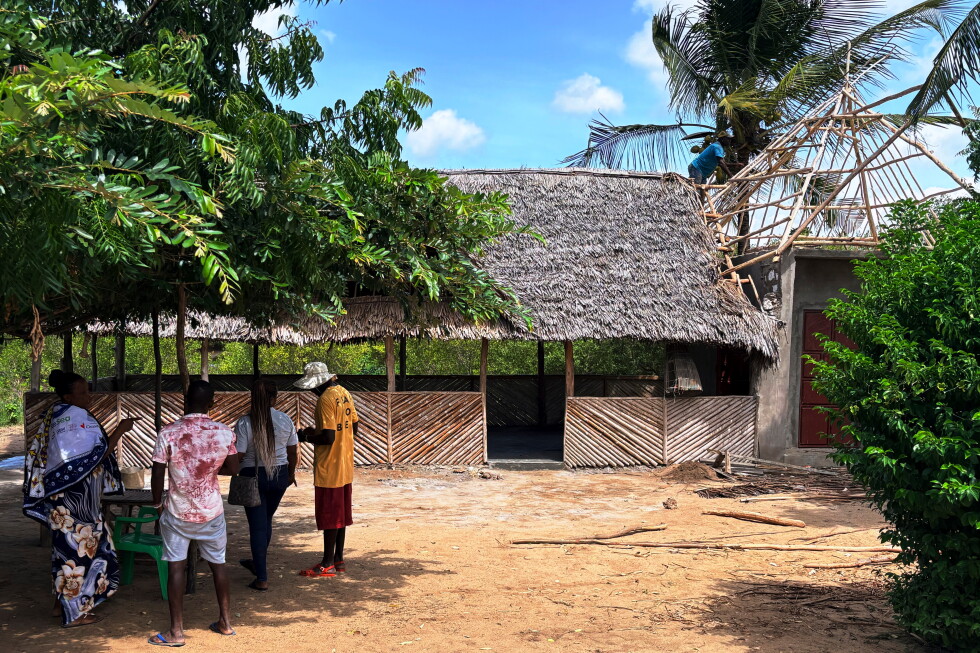
In Malindi, a coastal town northeast of Kenya’s major port Mombasa, 54-year-old Nuru Mohamed is putting the final touches on her new beachside restaurant, where fishing nets hang as rustic decor while her daughter sweeps away construction sand. For most of her life, Mohamed was one of the region’s rare female artisanal fishers, but she has faced declining catches, stolen boats, and unfair competition from large-scale industrial trawlers that operate illegally in nearshore waters. A nearby Chinese-owned fish processing facility stands as a stark reminder of how the local industry has shifted beyond the reach of small-scale operators. “I can’t compete with that kind of power or scale,” she says. “I fought to remain a fisherwoman. But I think it’s a fight I can no longer win.” For Mohamed and the women working with her on the restaurant, the new business is more than just a construction project — it is a lifeline. “For us women, this is hope,” she says. “It will help support many families that have depended on the ocean for decades.”
This shift is not an isolated case. Across East Africa’s entire coastal belt, communities are turning to tourism, mangrove and seagrass restoration, and other conservation-focused ventures to build sustainable incomes as traditional fishing becomes increasingly unviable. In Kenya, women have turned restored mangrove forests into income streams through beekeeping and ecotourism; in Tanzania’s Zanzibar archipelago, fishing communities run locally managed coral reef protected areas to reverse ecosystem damage; in Mozambique, seagrass restoration projects create jobs while reviving critical marine habitats. Far from abandoning the ocean that has sustained their families for generations, these initiatives redefine resilience as restoring the marine ecosystem while building long-term livelihoods that work with, not against, the ocean’s natural health.
Ten kilometers from Mohamed’s restaurant, where the Sabaki River flows into the Indian Ocean, Beatrice Mwanyiro manages both a mangrove nursery and a community restaurant, run by a 30-member women’s self-help group called ReSea that receives funding from the Canadian government. “We have to adapt to the changing times,” Mwanyiro says. “The number of fish coming into the shallow waters are falling every year. Without another source of income, we won’t be able to feed our families.”
Critical coastal ecosystems — mangroves, coral reefs, seagrass meadows, and nearshore fisheries — provide far more than food: they buffer coastlines from destructive storm surges, support biodiversity, and store massive amounts of carbon that help slow global climate change. Yet these habitats are increasingly threatened by warming oceans, plastic pollution, habitat destruction, and overfishing. In Lamu, Kenya’s UNESCO World Heritage coastal site, veteran fishery leader Mohamed Somo notes that where boats once brought in up to 100 kilograms of fish per trip, today catches often top out at less than 30 kilograms. While Kenyan law restricts industrial trawlers to operating at least 5 nautical miles offshore, Somo says many vessels flout the rules, moving into shallow, nearshore waters where small-scale fishers work overnight to strip the remaining fish stocks. “By morning, there’s very little left for us,” he says.
This crisis is not unique to Kenya. The United Nations Food and Agriculture Organization estimates that illegal, unreported, and unregulated fishing costs the global economy roughly $23 billion annually, while threatening marine biodiversity and the food security of billions of people who rely on fish as their primary source of protein.
As coastal communities fight to survive, growing pressure has pushed ocean conservation higher up the global political agenda. Conservation leaders emphasize that the communities that depend on the ocean are also its most effective protectors, particularly when women lead local efforts. “Communities that depend on the ocean are also its best stewards,” says Andreane Martel, ReSea’s project director. “When local people, especially women, lead conservation, they protect biodiversity while creating more resilient and inclusive livelihoods.”
Jerry Mang’ena, co-founder and executive director of Tanzania-based conservation group Action for Ocean, which restores mangrove habitats along the country’s coast, echoes this view. “Coastal communities are on the frontlines of climate change and declining ocean health, but they are also among the strongest drivers of resilience,” he says. “Supporting sustainable livelihoods, from aquaculture and eco-tourism to ecosystem restoration, helps families adapt while reducing pressure on the ocean. If we’re serious about protecting our seas, we must invest in the people who have cared for them for generations.”
At the recent Our Ocean Conference held in Mombasa, conservation groups called on African governments to quickly ratify the landmark UN Biodiversity Beyond National Jurisdiction (BBNJ) Agreement, also known as the High Seas Treaty. The global pact, which entered into force in January this year, establishes frameworks to create marine protected areas in international waters and ensure equitable sharing of marine genetic resources. As of April, 145 countries have signed the agreement, and 81 have fully ratified it. For small-scale fishers like Mohamed, the outcome of global ratification efforts could reshape their future, reducing the pressure of unregulated fishing on nearshore stocks and creating more stable conditions for their new conservation-led livelihoods.
“The BBNJ Agreement gives African governments a historic opportunity to protect the high seas and safeguard the future of our fisheries,” says Aliou Ba, oceans campaign lead at Greenpeace Africa. “But protecting the ocean also means confronting illegal, unreported and unregulated fishing that is stripping African waters of marine life and robbing coastal communities of food and income. Governments cannot afford to delay.”
This reporting on climate and environment by The Associated Press is supported by funding from multiple private foundations, with AP retaining full editorial control over all content.