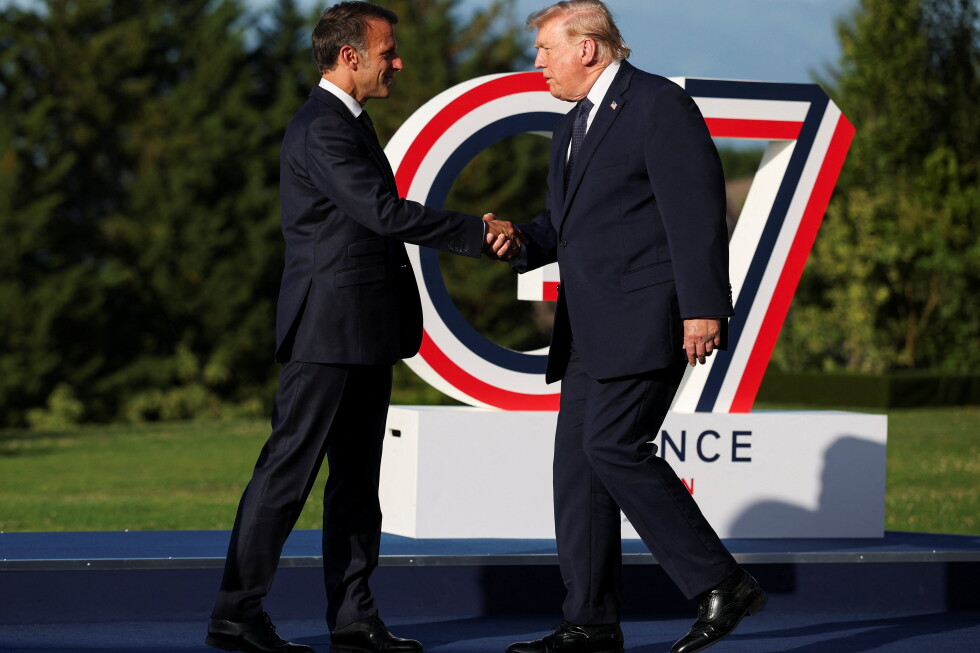
On Wednesday, some of the world’s most influential artificial intelligence executives convened in France, capping off the Group of Seven major industrialized nations summit with a urgent conversation centered on balancing AI innovation with growing global demands for technological independence from U.S. industry dominance.
While this year’s G7 summit was dominated by discussions of ongoing armed conflicts in Iran and Ukraine, the final day of the gathering carved out dedicated space for one of the most pressing technological issues of our time: the future of global AI governance and development. In a rare high-profile gathering of cross-border AI leadership, the chief executives of three of the world’s most powerful AI companies – OpenAI’s Sam Altman, Google DeepMind’s Demis Hassabis, and Anthropic’s Dario Amodei – gathered for a working lunch focused on the goal of “Ensuring a safe, rapid and effective deployment of artificial intelligence.”
The meeting was not limited to the sector’s largest players: it also included the heads of emerging AI labs from across the globe, including Canada’s Cohere AI, French developer Mistral AI, Germany’s Black Forest Labs, Italy’s Domyn, Japan’s Sakana AI, and U.K.-based generative AI firm Synthesia.
This summit comes amid a sharp rise in calls for tech sovereignty across Europe and other non-U.S. regions, driven by mounting concerns about the outsized control U.S. companies hold over the global AI ecosystem. Just weeks before the G7 gathering, the European Commission rolled out a sweeping tech sovereignty strategy aimed at accelerating the growth of homegrown European AI development. Even the Pope added his voice to the debate last month, calling for strict, globally coordinated regulation of artificial intelligence to prevent unchecked domination by a small number of major powers.
Tensions around this issue flared just one week before the summit, when Anthropic was forced to take its two most advanced AI models, Claude 5 2 (wait correction original it’s Fable 5 and Mythos 5, right) – Fable 5 and Mythos 5 – offline globally to comply with an executive order from the Trump administration that cited unspecified U.S. national security priorities. The order barred all non-U.S. persons, regardless of their location, from accessing the models, forcing the company to cut off access for every international customer overnight.
That sudden blackout served as a stark wake-up call for governments and industry leaders around the world, highlighting the extreme strategic vulnerability that comes from relying on foreign-controlled AI infrastructure. Zach Meyers, research director at Brussels-based think tank CERRE, noted that the incident laid bare just how exposed non-U.S. nations are to unilateral policy shifts from Washington. “There is a general anxiety about the state of Europe, the fact that we’re relying on other countries for quite important strategic infrastructure and a desire to do something about it, whatever that is,” Meyers explained.
Canadian Prime Minister Mark Carney echoed that concern on his way to the G7 summit, speaking to reporters during a stop in Dublin. The Anthropic incident, he said, makes clear the urgent need for the global community to “build out and diversify” AI development capacity. True national sovereignty, Carney emphasized, depends on “unhindered access to AI” that cannot be cut off by the policy decisions of another country. Earlier this month, Canada unveiled its own plan to help middle powers and like-minded nations develop alternative AI ecosystems independent of the largest U.S. players. The move came just days after the Trump administration released an executive order outlining a new framework for oversight of cutting-edge AI systems.
For host nation France, the conversation around digital AI sovereignty is far from new: French President Emmanuel Macron has made the issue a core policy priority for years, even mandating that French civil servants replace U.S.-owned video conferencing tools Zoom and Microsoft Teams with a domestic French alternative.
Aidan Gomez, CEO of Canadian AI firm Cohere – which acquired leading German AI startup Aleph Alpha earlier this year – outlined his company’s goals for the summit, saying the firm aims to expand sovereign AI ecosystem partnerships beyond its existing bases in Canada and Germany to include all G7 nations and private sector stakeholders. The end goal, Gomez explained, is to establish a global standard that guarantees national and local ownership of AI models, training data, and computational infrastructure.
In addition to the seven core G7 members – France, the United States, Canada, Germany, Italy, Japan, and the United Kingdom – the summit invited guest nations including Brazil, India, Kenya, and South Korea to participate in select discussions, broadening the global perspective on AI development and sovereignty.