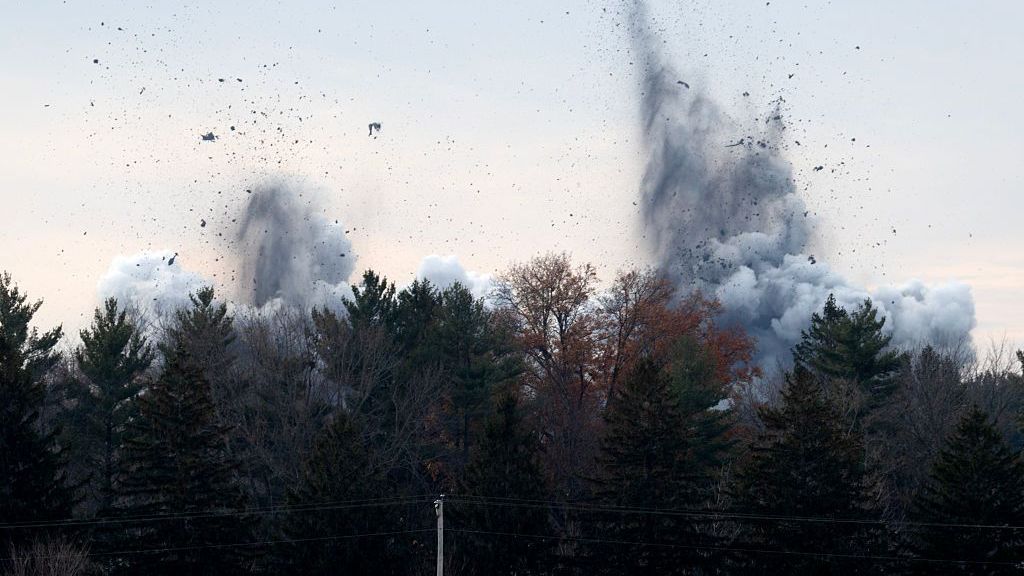
Days after the U.S. Army executed a planned controlled detonation of nearly five tonnes of deteriorated, highly volatile lead azide at a military disposal site near Middletown, Iowa, the U.S. Environmental Protection Agency (EPA) has released initial test results showing no detectable elevated lead levels in local public drinking water supplies, addressing widespread public anxiety over potential toxic contamination. The 25 November detonation was the culmination of months of contentious debate, repeated procedural pauses, and legal challenges from local residents, environmental advocacy groups, and regional political leaders, who warned that the blast could release hazardous lead particles into surrounding air, soil, and water systems and trigger severe long-term public health harm. The stockpile of lead azide, which had been in secured military storage for roughly 20 years, had undergone a chemical degradation process called recrystallisation that made the explosive compound prone to unprompted, accidental detonation from even minor friction or movement. Army officials had repeatedly rescheduled the operation to complete it before frigid winter temperatures arrived, as colder conditions were projected to drastically raise the risk of an uncontrolled, unplanned blast that could cause far greater harm. Ahead of the detonation, the U.S. military issued formal public advisories for Middletown area residents, warning of potential exposure to toxic lead dust, establishing a voluntary evacuation zone, and mandating a temporary shelter-in-place order for nearby communities. A team of 300 trained personnel and contracted environmental specialists worked nonstop for 30 consecutive hours immediately after the explosion to collect environmental samples and conduct continuous real-time monitoring for airborne lead particulates. Prior to the blast, the EPA had collected baseline water samples from 35 separate drinking water sources spanning Iowa, Illinois, and Missouri to establish a clear reference point for post-detonation contamination testing. Initial analysis of 38 post-blast samples, covering both fully treated finished public drinking water and raw untreated intake water, found no measurable lead traces, the agency confirmed in a public post on its X social media account. The EPA noted that more than 3,200 additional pre- and post-detonation samples covering air, soil, household dust, and water are currently undergoing laboratory validation, with full, updated results to be shared transparently with the public as they are finalized. Lead is a potent neurotoxin for which the EPA acknowledges no safe exposure threshold exists: even low levels of lead inhalation or ingestion can cause irreversible developmental damage in children, and severe cardiovascular and neurological harm in adults and wildlife. Prior to the blast, a federal appeals court ruled in favor of allowing the detonation to proceed, acknowledging that public health and environmental concerns were legitimate, but concluding that the catastrophic risk of an unplanned, accidental detonation of the unstable 20-year-old stockpile posed a far greater threat to nearby communities. Following the successful execution of the controlled operation, U.S. Army representatives characterized the detonation as a landmark, high-stakes operational success that eliminated the longstanding imminent safety risk to the surrounding region.
No elevated lead levels in drinking water following Iowa explosion, EPA finds