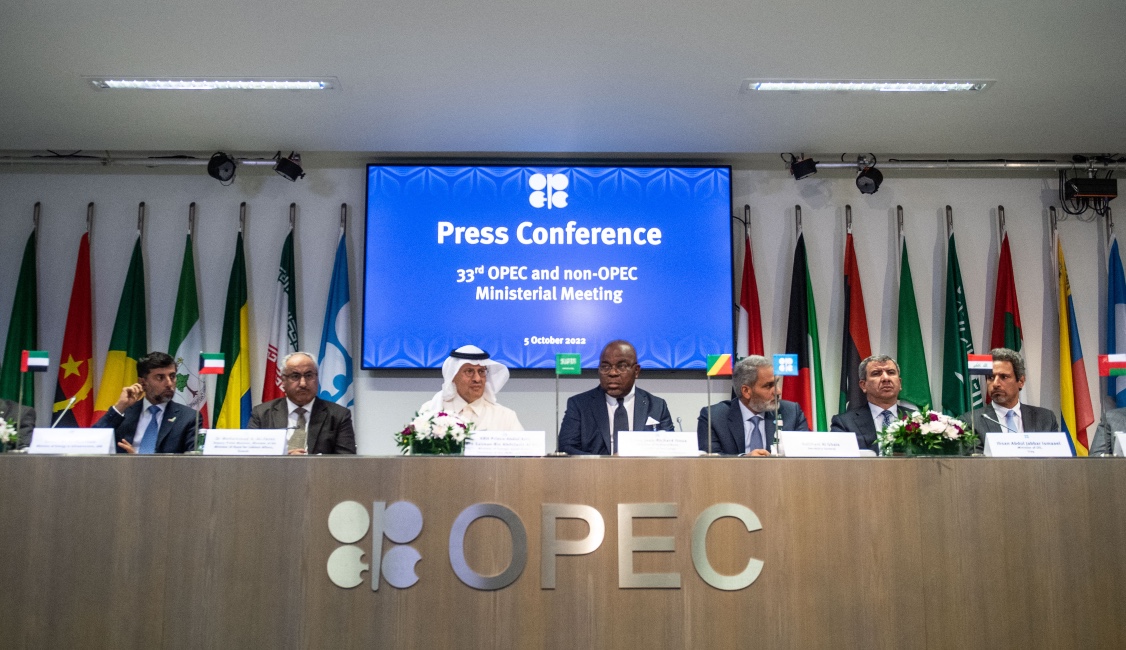
A newly published Reuters investigative report, released on a recent Friday, exposes previously undisclosed diplomatic maneuvering by the Donald Trump administration earlier this year: Washington launched a targeted lobbying push to persuade Iraq and Venezuela to exit the Saudi Arabia-led OPEC energy cartel, a gambit that forced Saudi Arabia’s Crown Prince to step in directly to prevent the 64-year-old alliance from collapsing entirely.
The behind-the-scenes campaign was rooted in the Trump administration’s urgent policy priority of ramping up global crude output to drive down energy prices, a goal shaped by heightened military and economic tensions with Iran. The initiative put the United States on a collision course with Saudi Arabia, a longstanding regional security ally that hosts thousands of U.S. troops and conducts all its oil trade transactions in U.S. dollars.
These newly unearthed details also offer critical context for the United Arab Emirates’ unexpected decision to withdraw from OPEC last May, a move the Trump administration openly celebrated at the time. Shortly after the UAE’s exit, at the peak of U.S.-Iran hostilities when crude flows through the strategic Strait of Hormuz had plummeted, Washington extended a rare currency swap line offer to the Emirates, a safety net that would grant the nation access to emergency U.S. dollar liquidity if its foreign reserves were depleted.
Founded in 1960 by five core members: Iraq, Saudi Arabia, Venezuela, Iran, and Kuwait, OPEC has faced mounting structural pressures for years. At the time of the U.S. lobbying effort, Iran was already effectively operating outside the cartel’s formal decision-making framework, due to sweeping unilateral U.S. sanctions that have pushed Tehran to conduct unregulated “shadow sales” of crude primarily to China. Analysts widely note that if Iraq and Venezuela, two of the organization’s top historical producers, had followed through on exiting OPEC, the alliance would have ceased to function as a cohesive global market regulator.
The lobbying push gained traction during Iraqi Prime Minister Ali Faleh al-Zaidi’s high-profile official visit to Washington last July, where the Trump-endorsed premier announced a series of bilateral economic deals designed to ease frictions over Iran-aligned militia groups operating on Iraqi soil. During that trip and subsequent closed-door talks, Zaidi raised the prospect of Iraq withdrawing from OPEC, a proposal U.S. officials actively encouraged. The idea faced stiff internal pushback from Iraq’s oil ministry, however, where senior officials argued Baghdad would gain far more leverage by negotiating a higher production quota within OPEC to unlock greater output, rather than abandoning the group entirely.
U.S. financial leverage over Baghdad is extraordinarily substantial: nearly all revenue generated from Iraq’s global crude sales is held in accounts at the Federal Reserve Bank of New York, rather than being transferred directly to domestic Iraqi financial institutions. The Trump administration had previously frozen all U.S. dollar shipments to Iraq, only lifting that restriction after Zaidi was confirmed as prime minister, a selection that also secured backing from Iraq’s pro-Iran political factions. A separate previously disclosed Middle East Eye report first revealed that the U.S. had also thrown its support behind a long-discussed Iraqi proposal to build a new cross-border oil pipeline running through Syria to the Mediterranean coast.
Washington’s influence over Caracas is even more pronounced. Earlier this year, the Trump administration launched a military and diplomatic intervention that ousted longstanding Venezuelan leader Nicholas Maduro from power, after which U.S. authorities seized full administrative control over Venezuela’s state finances and national oil revenue streams, and contracted the Switzerland-based, employee-owned global commodities trading firm Vitol to manage all of the country’s crude sales.
Venezuela holds the world’s largest proven crude reserves, though decades of underinvestment have left the nation unable to tap much of that resource base. Its heavy, high-viscosity crude requires specialized, costly extraction processes and extensive refining, most of which is currently outsourced to facilities in the U.S., China, and India. By contrast, Iraq’s crude is a low-density, light variety that is far cheaper and easier to extract and process.
Even informal U.S. outreach to Caracas about leaving OPEC sent significant alarm bells ringing in Riyadh, to the point that the Saudi Crown Prince personally intervened to ensure Venezuela continued to meet its mandatory OPEC membership dues, to prevent a domino effect of departures that would dismantle the cartel.