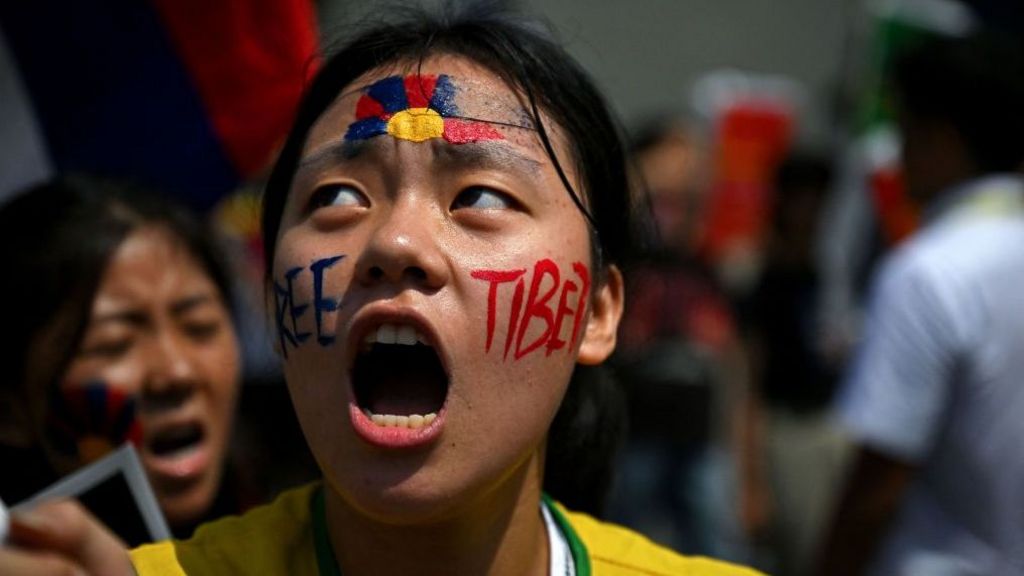
For nearly 30 years, Uyghur activist Dolkun Isa has built his advocacy work from his exile base in Munich, Germany. A stark, tangible shift in public participation lays bare how dramatically his movement’s global visibility has faded: in 2018, when international reports first surfaced documenting up to 1 million Uyghurs and other Muslim ethnic minorities being held in mass state-run internment camps in China’s Xinjiang region, he could easily rally thousands of demonstrators to take to European streets. Today, he struggles to draw even 500 attendees to similar events. That 2018 wave of revelations sparked widespread global outcry: Western governments imposed targeted sanctions on senior Chinese officials and froze their overseas assets, while at least nine national parliaments passed formal resolutions condemning the mass detentions. Beijing pushed back against all allegations of systemic human rights abuses, framing the camps as voluntary “vocational re-education” facilities designed to curb separatist extremism. For a brief window, Isa, who led the Munich-based World Uyghur Congress as president between 2017 and 2024, says the advocacy community truly felt the world was finally paying attention. That momentum has since all but evaporated, he notes, as activists now find themselves forced to compete with overwhelming global economic interests and geopolitical cost-benefit calculations to earn even a sliver of international public attention. “For me, this is one of the most painful aspects of our decades-long struggle,” Isa says. This dynamic is not isolated to Uyghur advocacy circles. Across every corner of the global market, China’s economic footprint has expanded exponentially in recent years: its electric vehicles fill highways from Brazil to Belgium, its domestically manufactured batteries, solar panels, AI tools and short-form micro-dramas have become staples of daily consumer life across dozens of countries, and its viral Pop Mart Labubu plush toys dangle from backpacks on nearly every continent. This immense commercial weight has translated into unprecedented soft power leverage, as Beijing deploys its global image as a hub of cutting-edge innovation, gleaming modern urban development and accessible consumer goods to eclipse dissident voices critical of the Chinese Communist Party’s governance. As Arslan Hidayat, an Australian-raised Uyghur journalist who runs the diaspora outlet Kashgar Times, explains, Beijing has increasingly swapped harsh punitive pressure for targeted, incentive-driven outreach to overseas exile communities. Multiple activists interviewed by the BBC confirm that Chinese consular officials have offered exiles the chance to reunite with long-separated family members, access financial support and secure legal safety guarantees, in exchange for two key concessions: sharing detailed information about their overseas advocacy networks, and amplifying pro-government narratives about stability and development in China’s ethnic minority regions. The cumulative effect, community leaders say, has been a sharp erosion of collective trust and a dramatic drop in the number of people willing to speak out publicly against Beijing. When contacted for comment, the Chinese Embassy in the UK explicitly rejected all claims that its consular staff pressure exiles to act as informants or disclose private information about fellow community members. Pulitzer Prize-winning journalist Ian Johnson, who has spent decades reporting on Chinese civil society, notes that China’s growing economic muscle has earned it unprecedented diplomatic respect across the globe, while shifting the priorities of Western governments, many of which have turned inward to focus on domestic populist agendas, pushing human rights concerns far down their foreign policy priority lists. This shift was on full public display this year, when human rights issues related to China were not even mentioned during any of the three face-to-face summits between Chinese President Xi Jinping and U.S. President Donald Trump, including their most recent meeting held in the high-profile tech hub of Shenzhen. As Beijing’s global economic leverage rises, the tangible diplomatic and commercial costs of public condemnation of its human rights record have grown far too high for most nations to bear. Dissident and exile community leaders warn this shifting global landscape is actively weakening their internal organizing networks and eroding the international pressure they have spent decades building. In July, Tibetan activist Lobga Rangzen died after self-immolating outside the United Nations headquarters in New York, in protest of China’s newly passed sweeping “ethnic unity law” that mandates minority communities including Tibetans adopt Mandarin as their primary language of use. While the UN released a brief statement calling the incident “absolutely tragic,” global media and public attention faded within days. “His death was a desperate appeal to the international community,” explains Tenzin Dorjee, a researcher at the Tibet Action Institute, “but the vast majority of global stakeholders are simply unwilling to publicly criticize China, given the enormous economic and political power it now wields.” That same month, Dolkun Isa attempted to organize a global demonstration against the same ethnic unity law, but saw only a muted, underwhelming response from his usual supporter base. “Many people have dialled back their activism completely over the years, because they are terrified of retaliation against their loved ones who still reside inside China,” Isa says. Arslan Hidayat confirms he has personally interviewed at least a dozen Uyghur exiles who were offered the chance to return to China for family visits, on the informal condition that they pass small, seemingly harmless pieces of information to Chinese consular agents on a regular basis. The requests appear trivial on the surface: questions about who lives in an exile’s neighborhood, which local Uyghur restaurants they frequent, who they meet with on a regular basis. But advocacy groups say these small data points are compiled to build detailed surveillance profiles of every dissident living outside China. The Chinese Embassy in the UK pushed back on these claims, stating in its official response to the BBC that facilitating family reunions for overseas Chinese communities is a standard, normal component of its consular services. The statement added that “China respects and protects the lawful rights and interests of people of all ethnic groups, including the Uyghurs, and their freedom to maintain contact with family members overseas.” These organized group family visits are widely publicized on official Chinese government social media platforms. In January, for example, Chinese Consul-General in Istanbul Wei Xiaodong was photographed seeing off a group of 30 Uyghur exiles preparing to travel back to Xinjiang from Turkey, which hosts an estimated tens of thousands of ethnic minority exiles from the region. A post on the consulate’s official WeChat account noted that Wei expressed hope the travellers would witness first-hand the region’s rapid modern development, and would share positive accounts of that progress with their communities after returning to Turkey. Beijing has invested heavily in rebranding Xinjiang as a world-class, exotic tourist destination: official government data records more than 300 million domestic and international tourist visits to the region last year, more than double the total recorded in 2018. The consulate’s social media post concluded with a video clip showing emotional airport reunions, with family members embracing and presenting bouquets to returning travellers in Urumqi, Xinjiang’s capital. “Many people are happy to stay quiet and lay low for the rare chance to re-establish even a small amount of contact with their loved ones they haven’t seen for decades,” Hidayat notes. The eligibility criteria for these highly coveted family visit programs remain opaque. Community members report that even past personal relationships with politically active people can disqualify a candidate. One Uyghur exile living in Turkey, identified by the pseudonym Alim, recounts that a close friend of his who applied to join one of the trips was summarily rejected by consular staff, who referenced her past romantic relationship with a Kazakh activist who had previously advocated for his own detained parents in China. “She hadn’t seen her family back home for years, and was so desperate to go,” Alim says. “She was absolutely crushed when they turned her down. From what we can tell, the ‘ideal participant’ is someone who has enough influence to amplify Beijing’s positive narratives, but has no ties to anyone or anything that could be deemed politically sensitive.” For Mehmut, a Uyghur businessman living in exile who was invited to join one of the trips in October 2024, the experience fell far short of the joyful reunion he had imagined. He had hoped the visit would help him rebuild the professional networks he needed to keep his overseas import-export business afloat. Instead, every conversation he had with friends and family members back in Urumqi felt stiff, superficial and guarded. “It wasn’t that officials were actively following me around or locking down my movements,” he recalls. “But there was this thick, unspoken atmosphere of fear and self-censorship hanging over every interaction. Some people were completely shocked to see me, others would not say a single word of substance about their daily lives. The whole experience left me feeling deeply uncomfortable.” Advocacy leaders warn these state-organized family visit programs do not just serve Beijing’s public relations goals: they actively drive deep, lasting wedges between members of already fractured exile communities. Abduweli Ayup, a prominent Uyghur linguist based in Norway, says he has watched multiple former long-time activists cut off all contact with their advocacy circles and delete all their public social media accounts immediately after returning from these trips. “Some of them now treat us with open suspicion, because they are terrified any action we take will put them or their remaining family members inside China at risk,” Ayup says. The limited, selective nature of who gets approved for these trips creates widespread confusion and distrust across the entire diaspora, adds Tibetan activist Karma Rinchen, who serves as information secretary for the Tibetan government-in-exile based in Dharamshala, India. His parents were among the tens of thousands of Tibetans who fled their homeland alongside the Dalai Lama after China’s 1959 annexation of the region. “People who return from these trips often get sidelined by the rest of the community,” Rinchen explains. “Very sadly, many of our long-held suspicions that some of these approved travellers are passing information back to Chinese authorities have turned out to be completely true.” Over the past 70 years, successive waves of dissidents have fled Chinese rule to seek safety abroad: student activists in the aftermath of the 1989 Tiananmen Square crackdown, human rights lawyers, independent journalists and purged political critics in the decades that followed, and more recently, a large cohort of pro-democracy activists who left Hong Kong after the city’s mass protest movement was crushed. Many of these communities have sustained their advocacy work for generations, but they now say Beijing’s growing global economic and political might is steadily eroding their ability to push back against Chinese Communist Party policies. “So many of us have been separated from our families for entire generations, and would give anything to step foot on our homeland again,” Rinchen says. “That is exactly the vulnerability the Chinese government is deliberately targeting to break us apart.” But he remains resolute: the exile communities will only work harder to amplify their marginalized voices. “For Tibetans, this is not a struggle we can ever walk away from. It is about our identity, our culture, our religion, and the most basic human rights of every person in our community. We have been doing this work for decades, and we have learned to be patient and unshakably persistent.” That persistence comes with enormous personal cost, however. Mirkamel Tourghoun, a 42-year-old Uyghur musician and filmmaker who has lived as a refugee in Paris since 2008, has made the agonizing decision to cut off all contact with his immediate family members who still reside in Urumqi. Earlier this year, he received a phone call from a man claiming to be a local Chinese official, who told him his father was gravely ill, and that he could arrange for Mirkamel to return home to see him on the condition that he abandon his public advocacy work documenting Uyghur cultural history. “It was blatant emotional blackmail,” Mirkamel says. He rejected the offer outright, telling the official to tell his family “to forget they ever had a child like me. There is no other possible solution.” All names marked with an asterisk have been changed to protect the identities of interviewees who face potential retaliation.
Behind China’s spectacular rise, voices who defied it say they are being drowned out