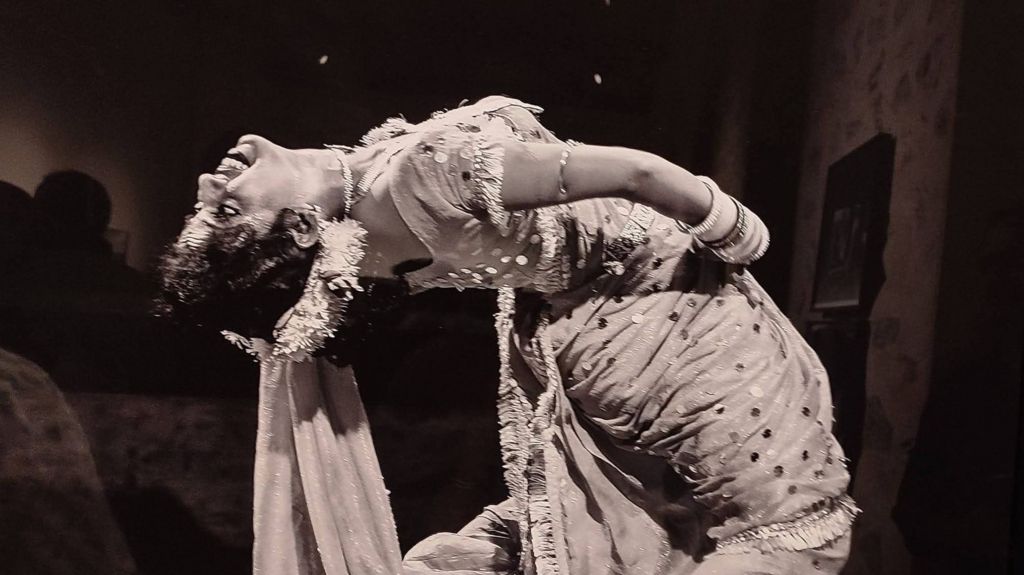
Long before Bollywood turned its lens on her extraordinary life, Vithabai Narayangaonkar reigned as the undisputed “Tamasha Samradnyi” – Empress of Tamasha – Maharashtra’s beloved centuries-old travelling folk theatre tradition, captivating audiences across the western Indian state for decades with her razor-sharp wit, magnetic stage presence and boundary-pushing Lavani performances. Born into a family of travelling folk performers in 1935, Vithabai entered the world mid-performance as her mother continued touring with the family troupe through pregnancy; by age 13, she had become the star of the company inherited from her father, and soon took full leadership after the sudden passing of her father and his co-performer. Her legendary dedication to her craft became the stuff of local folklore: in the 1960s, while performing in the village of Shikhar Shingnapur, she went into labour mid-show, quietly stepped behind the curtain to a makeshift tent to give birth, and returned to the stage minutes later cradling her newborn seventh child, stunning the packed crowd who immediately departed to let her rest. Just three months after giving birth to another child, she braved the freezing high-altitude conditions of India’s North-East Frontier Agency (now Arunachal Pradesh) to perform for frontline soldiers during the 1962 Sino-Indian war, where she spoke openly about the cruel caste inequities facing men from oppressed Mang and Dalit communities who were expected to die defending the nation yet barred from entering village public spaces. A trailblazer unafraid to confront social injustice, Vithabai wove sharp political commentary into her Lavanis, once publicly rebuking lewd audience members for misinterpreting her art, clarifying she danced not for their amusement but to earn an honest living to support the 50 families that relied on her travelling troupe. She turned down multiple lucrative offers from iconic Bollywood filmmakers including Raj Kapoor, refusing to abandon her community of performers even as mainstream cinema stardom beckoned, arguing that personal fame in film would benefit only her while the Tamasha troupe depended entirely on her leadership. Yet for all her widespread adoration, Vithabai’s life was marked by profound hardship. Hailing from a historically oppressed caste community, she faced systemic discrimination even as crowds flocked to her shows; her husband mismanaged the troupe’s finances and accumulated massive debts in her name, leaving her heavily in arrears by the time she left him in 1982. By 1986, local press reported the woman once celebrated across Maharashtra was travelling on overcrowded public buses and staying in budget roadside accommodation to make ends meet. She was forced to disband her beloved troupe in 1990 – the very same year she was awarded the Sangeet Natak Akademi Award, India’s highest national honour for performing arts. She spent her final years campaigning for state-funded pensions for struggling Tamasha artists, and passed away in January 2002, with her family only able to cover part of her Pune hospital bill before fellow artists and fans pooled funds to return her body to her ancestral village of Narayangaon. More than 20 years after her death, her life story is now the basis for the upcoming Bollywood musical *Eetha*, directed by Laxman Utekar and starring Shraddha Kapoor, scheduled for theatrical release on 4 December 2024. Kapoor, who had never trained in Lavani prior to the production, spent months learning the rigorous dance form, practicing with 4-kilogram musical anklets to authentically capture the raw blend of joy and quiet pain that defines the performances of marginalized Tamasha artists. The film, adapted from Yogiraj Bagul’s well-researched Marathi biography of the star, aims to recreate the vibrant, bustling golden age of Tamasha theatre, but it has already sparked significant public debate. Critics have raised concerns over the creative choice to rename Vithabai’s on-screen protagonist, altering her full legal name that included markers of her Mang caste identity and her family’s Narayangaon village roots, details that formed the core of her community identity and the name of the iconic family troupe she led. Prominent Marathi writer and Dalit rights advocate Pradnya Daya Pawar argues that erasing these specific identifiers risks stripping Vithabai’s story of its radical anti-caste context, reducing her extraordinary life of resistance to a generic rags-to-riches individual success story. Even so, Vithabai’s daughter Mangala Bansode, a veteran folk performer who toured alongside her mother for decades, has expressed unreserved joy that the story of Tamasha’s legacy is reaching a new generation of Indian viewers, noting that the film will shine a long-overdue spotlight on the struggles of folk artists that persist to this day: most contemporary Tamasha troupes spend 8 months of every year on the road, with performers facing persistent financial precarity, barriers to accessing quality education for their children, and continued reliance on predatory private moneylenders despite limited government support. Maharashtra has already instituted a state lifetime achievement folk arts award in Vithabai’s name, and advocates hope *Eetha* will push broader public conversation to address the systemic inequities that the legendary artist spent her whole life fighting to dismantle.