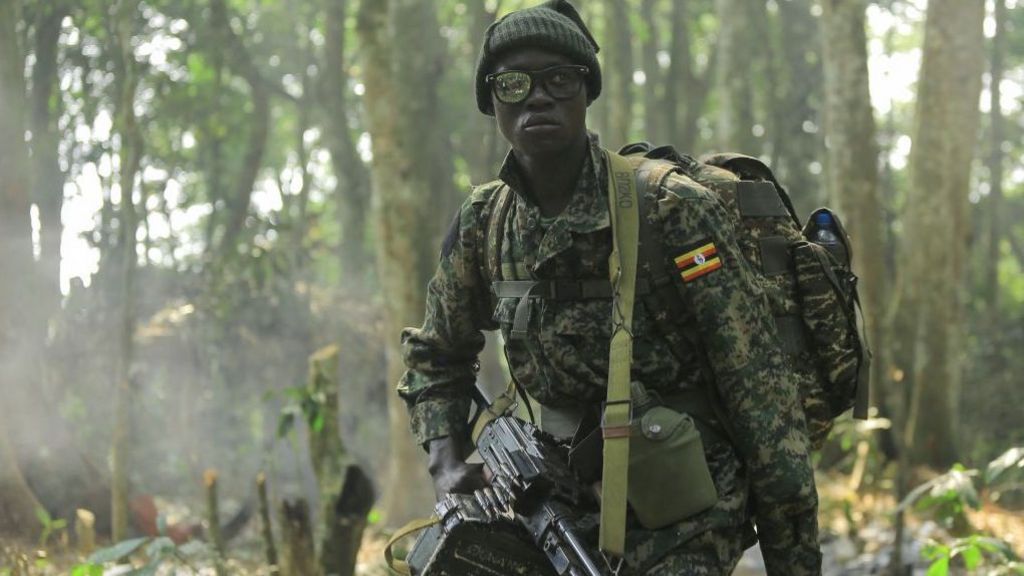
KAMPALA, UGANDA – The Uganda People’s Defence Forces (UPDF) confirmed in an official Friday statement that it will pull all its deployed personnel out of the strategic eastern Democratic Republic of Congo town of Lubero, located in North Kivu province, within a 14-day window, ending nearly two years of on-the-ground military operations in the locality. The pullout will see full security responsibility for Lubero transferred entirely to Congolese national security forces, the UPDF added, though no explicit rationale for the partial withdrawal was provided in the release, nor did officials confirm a direct link to the recent sharp diplomatic friction between the two neighboring nations.
The announcement came just days after Kinshasa summoned Uganda’s top diplomatic envoy stationed in the DR Congo capital, in protest over a series of incendiary social media posts published by Uganda’s military chief Gen. Muhoozi Kainerugaba – who is also the son of long-serving Ugandan President Yoweri Museveni. In the controversial posts, Gen. Kainerugaba appeared to openly endorse a rebel takeover of mineral-rich Walikale territory, even threatening that Ugandan troops would seize the area themselves if local armed groups failed to do so. The Congolese foreign ministry condemned the remarks as “particularly serious,” demanding that Uganda issue a formal clarification of its official stance on eastern DRC territorial integrity and implement safeguards to prevent similar provocative public statements in the future. Gen. Kainerugaba has since defended Uganda’s cross-border military presence, framing it as a necessary step to address national security threats originating from DRC territory.
The Lubero deployment was initially launched to track down remnants of the Allied Democratic Forces (ADF), an Islamist militant group that fled joint counter-insurgency operations being carried out in other pockets of eastern DRC. The ADF first emerged in Uganda in the 1990s, has since pledged affiliation to the Islamic State, and has been tied to hundreds of fatal attacks on civilian populations across both countries. Uganda first dispatched troops to eastern DRC under the bilateral joint military initiative codenamed Operation Shujaa in November 2021, in direct response to a string of deadly bomb blasts that rocked Uganda’s capital Kampala earlier that year.
UPDF spokesperson Col. Chris Magezi emphasized that the Lubero withdrawal is a localized, limited measure, and that Operation Shujaa will continue unimpeded in other operational zones across eastern DRC. Data compiled by independent conflict monitoring body the Armed Conflict Location & Event Data (ACLED) paints a complicated picture of the five-year long joint offensive: while ADF attacks on Ugandan soil have dropped dramatically, with no recorded assaults on Ugandan territory since June 2025, the group remains the deadliest active armed faction operating in the DRC, killing an average of four civilians per day and expanding its footprint into previously untouched regions of eastern North Kivu and surrounding provinces.
John Ngono, ACLED’s lead DRC analyst, noted that the operational trends suggest Operation Shujaa has succeeded in improving domestic security for Uganda, but has effectively displaced ADF violence across different geographies inside the DRC. The militant group’s growing focus on controlling artisanal mineral resources in eastern DRC, Ngono added, provides it with a steady new revenue stream to fund its operations, preserving its long-term capacity to launch cross-border threats against both nations.
The partial troop pullout unfolds against a backdrop of renewed armed clashes between Congolese government forces and various rebel factions across the broader Lubero territory, sparking widespread new fears for the safety of tens of thousands of vulnerable local civilians. Eastern DRC has grappled with more than two decades of unrelenting conflict involving over 100 distinct armed groups, a crisis that has displaced millions of people internally and across regional borders.