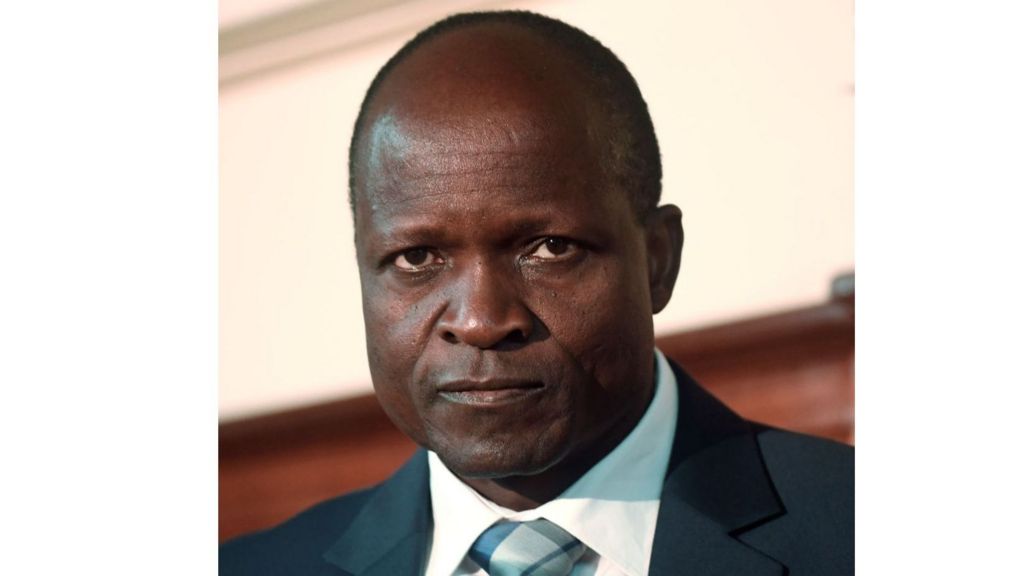
In a landmark, unusually transparent criminal ruling for Kenya’s political class, the Nairobi High Court delivered sentencing on Friday that saw two-term ex-Migori County governor Zacharia Okoth Obado handed a 25-year prison term for orchestrating the 2018 killing of 26-year-old university student Sharon Belyne Otieno, who was seven months pregnant with his biological child. Two of Obado’s former close associates received concurrent custodial sentences: his ex-personal assistant Michael Oyamo was also ordered to serve 25 years for coordinating the murder plot, while former Migori county clerk Caspal Ojwang’ Obiero was handed 18 years for providing logistical backing and helping cover up the crime. Presiding Judge Cecilia Githua explicitly rejected both the prosecution’s push for a death penalty and Obado’s legal team’s plea for a non-custodial sentence, emphasizing that Obado’s physical absence from Migori at the time of the killing did not negate his full culpability as the originator of the murder motive and the funder of the entire operation. Court documents confirmed that Obado and Otieno had maintained a private intimate relationship, and the former governor had expressed extreme displeasure when Otieno informed him of her pregnancy. The fatal incident unfolded on 3 September 2018, when Otieno met local journalist Barrack Oduor at a Rongo hotel in southwestern Kenya to discuss her complicated relationship with the then-sitting governor. The pair were abducted immediately after leaving the venue; Oduor narrowly escaped by leaping from the moving abduction vehicle, and his first-hand account of the incident became the critical breakthrough that unlocked the full investigation. Otieno’s strangled, stab-wound marked body was later recovered near Kodera Forest, and subsequent paternity testing confirmed Obado was the father of her unborn fetus. The three defendants were formally convicted of murder on 23 July 2026, after an extended trial that saw prosecutors call 42 witnesses and submit 81 pieces of physical evidence to the court. Notably, the High Court declined to award financial compensation to Otieno’s family, ruling that the submitted evidence was insufficient to verify the specific monetary losses the family had claimed. In a surprising pre-sentencing appeal, Otieno’s mother had pleaded with the judge to issue a non-custodial sentence for Obado, arguing that jailing him would amount to “another death in the family” and that he needed to remain free to provide financial support for Otieno’s three surviving children from prior relationships. Judge Githua responded that compassionate family circumstances could not override the court’s statutory duty to deliver a proportional, deterrent sentence for a brutal femicide. Both Obado’s legal team and Otieno’s family, represented by lawyer Antony Opondo, have announced they will file appeals: the former seeks to overturn the conviction and sentence entirely, while the latter will push for a higher penalty and formal financial compensation for their loss. The high-profile case has ignited nationwide public protests and reignited urgent national discourse on gender-based violence in Kenya, where 2022 national survey data shows 34% of all women have experienced physical intimate partner or societal violence. The trial has drawn additional public scrutiny due to its rarity: very few senior Kenyan political office holders have ever faced open, public criminal trials for violent offenses. Obado, who served two full terms as Migori governor, previously shifted political affiliations between regional parties and the dominant local opposition bloc before endorsing President William Ruto and joining the ruling party as a regional organizer in 2023. For more updates on African regional news, audiences can access full coverage via BBCAfrica.com, or follow the outlet’s dedicated social media accounts on X (formerly Twitter), Facebook and Instagram at @BBCAfrica.