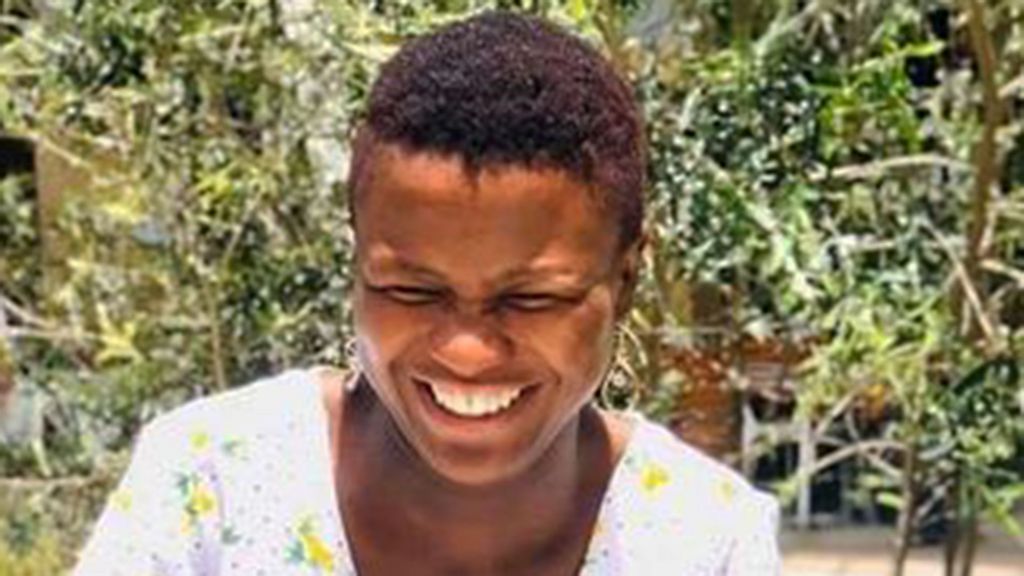
For 50-year-old Tuku Nkosiyaphantsi, the devastating news of his 27-year-old daughter Okuhle’s murder did not arrive via formal official notification, but through a disturbing photo shared on a local Facebook post in August. Okuhle, a dedicated civil engineering student and mother of two young children aged 3 and 9, had gone uncontactable for days, a temporary absence that initially did not raise alarm for her family, as occasional gaps in communication were not unusual for the young woman. When two neighbours alerted Tuku that local police had posted a missing person notice for Okuhle alongside an image of an injured, unresponsive woman, he immediately recognised the face in the photograph as his daughter. A subsequent call to a personal acquaintance in the South African Police Service confirmed Okuhle’s body had been discarded near a river on the outskirts of Kokstad, an agricultural market hub in KwaZulu-Natal province. Delayed by a closed weekend morgue, Tuku was only able to conduct a formal identification on the following Monday, where he discovered Okuhle had suffered brutal mutilation and severe facial trauma before her death. “The pain is so overwhelming I still cannot bring myself to accept it,” Tuku shared in a recent interview with the BBC. Months after Okuhle’s burial, no arrests have been made in connection with her killing, and Tuku alleges law enforcement failed to secure potentially critical CCTV footage from a nearby municipal building that could have captured who Okuhle was with on the day she disappeared — footage that is automatically erased every seven days, eliminating any chance of recovery long before investigators initiated a formal review.
Okuhle is one of 581 women recorded as murdered across South Africa between July and September of this year, according to newly released disaggregated data from the South African Police Service. While overall murder figures for the quarter dropped by 204 compared to the same period the previous year, this marks the first time national police have published gender-segregated homicide statistics, leaving no baseline to confirm whether the current femicide rate represents an increase or decline from prior years. The grim data comes in the wake of widespread national public outcry earlier this summer, when the bruised, partially unclothed bodies of 12 women were discovered dumped in public locations across Ekurhuleni, a municipality east of Johannesburg. South Africa consistently ranks among the countries with the highest documented rates of gender-based violence and femicide — the targeted, intentional killing of women and girls — in the world. In direct response to the summer wave of killings, President Cyril Ramaphosa pledged to roll out comprehensive safety audits across every national municipality to map high-risk spaces for women, and deploy additional law enforcement patrols to communities most heavily impacted by gendered violence. But for residents of communities including Kokstad and Ekurhuleni’s Kempton Park suburb, official action has been far too slow, pushing ordinary citizens to take matters of public safety into their own hands.
Tuku now spends his days independently interviewing acquaintances of his daughter and scouring local businesses for surviving security footage, conducting his own informal investigation after authorities abandoned the case. “I heard President Ramaphosa’s promises, but the government only acts when a crisis blows up publicly. Here in Kokstad, we feel completely ignored and invisible — it is clear no one in power cares about us,” he explained. As of press time, the South African Police Service had not responded to the BBC’s requests for comment on the gaps in Okuhle’s case, though the agency has previously acknowledged systemic shortcomings in its response to gender-based violence, noting it continues to allocate resources to address these persistent failures. Acting Police Minister Firoz Cachalia has previously stated that far more coordinated, aggressive efforts are required to prevent violence against women and children across the country. A 2024 research report from the South African Medical Research Council confirms that the backlog of unsolved femicide cases across the nation is steadily growing, while a recent Amnesty International assessment labelled the national police service as chronically under-resourced, inadequately equipped, and insufficiently trained to respond to gender-based violence cases with both efficiency and the required sensitivity for survivors and grieving families.
The crisis has spurred organised community action across Kokstad, where five women and three young children were found murdered between January and October this year, with suspects arrested in only two of the eight cases. Since June, local residents have launched voluntary, community-led night patrols and implemented a widely respected temporary curfew that asks all children to return home by sunset, and all women to remain indoors by 21:00. Thirty-four-year-old Kamvalethu Cetywayo, a leader in the local neighbourhood watch programme, heads a team of roughly 15 men who patrol known high-crime locations in the town between Thursday and Sunday, the periods when local alcohol consumption spikes and violent incidents are most frequently reported. While most patrollers carry sticks, whips and torches to deter potential attackers, Cetywayo holds a licensed firearm for emergency situations, and notes the group coordinates with official police for backup when encounters escalate. He emphasises the curfew is entirely voluntary and framed as a temporary protective measure until local law enforcement can track down the active perpetrators targeting women in the community. “This arrangement was agreed on collectively with all residents, and it has already helped us keep people safer — no one is forced to comply if they disagree,” he explained.
For many South African women, the threat of gendered violence does not only lurk after dark on isolated streets. Thirty-five-year-old Kgothatso Mojela survived a near-fatal kidnapping in 2018, when a local shared taxi driver locked the vehicle doors and veered off her planned commute route while she was travelling to work in Kempton Park. When she pointed out he had missed her intended turn, he began punching and slapping her repeatedly. “I knew in that instant my life was about to end,” Mojela recalled. She managed to force open the passenger door and hurl herself out of the moving vehicle, sustaining severe knee injuries and permanent nerve damage to her eyes, before nearby private security guards came to her aid. Though her attacker was ultimately convicted and jailed for a string of violent offences including her assault, he was released on parole last year, leaving Mojela in constant fear of retaliation. She now carries an imitation firearm to deter potential attackers, no longer runs alone outdoors, and requires a companion to accompany her to all first-time in-person client meetings for her work. Data from the South African Medical Research Council confirms 60% of women murdered in the country between 2020 and 2021 were killed by an intimate partner, rather than a stranger.
The 2023 murder of 38-year-old Elizabeth Moselakgomo, a mother who vanished while out for a solo run in Kempton Park, sent shockwaves through South Africa’s national recreational running community. Her bruised, partially clothed body was found dumped near a major motorway three days after her disappearance, prompting local police to issue a public advisory urging all women in the area to avoid walking or running alone, especially in secluded, low-traffic locations. The tragedy resonated deeply with sisters Zonke and Zama Mthethwa, who founded The Pack, a Johannesburg-based women’s running collective nine years prior, and who had counted Elizabeth as a regular participant in their group events. Members of the running community joined mass search efforts in the days after Elizabeth went missing, and later took part in nationwide protests demanding government action to end gender-based violence. Today, the group has implemented strict new safety protocols for all organised runs: all members carry pepper spray and high-pitched safety whistles, support vehicles follow all running groups along their routes, and the collective now offers free self-defence training for every woman in its network. “Our goal is to build community and create safe spaces where women can show up fully and do the things they love, without living in fear of harm,” 37-year-old Zama Mthethwa explained. After her attack, Kgothatso Mojela relocated to a town closer to her parents for added safety, and recently spoke publicly about her experience for the very first time at a community prayer march organised by her mother, a long-time women’s rights activist, to honour all women killed in gendered attacks. Turning to address other survivors in the crowd, she said through tears: “To every survivor listening right now: you are not broken, you are not tainted, the harm done to you is not your fault, and you are never alone.”