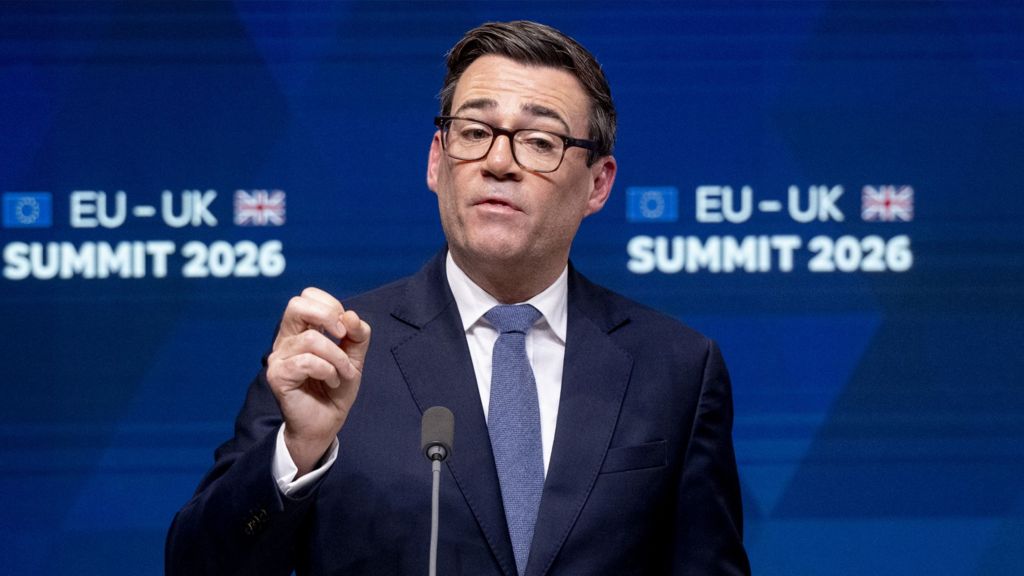
When UK Prime Minister Andy Burnham told members of Parliament he would avoid incessant public grandstanding on European Union-related issues, the remark immediately evoked a 2006 parallel for seasoned political observers: that year, newly installed Conservative leader David Cameron made an almost identical pledge to cease “banging on about Europe” — a promise that ultimately unraveled a decade later when Cameron, as prime minister, called and lost the historic 2016 Brexit referendum that split the nation and reshaped its global trade and diplomatic standing.
Burnham’s comments came in his address to the House of Commons immediately after last week’s EU-UK Summit in Brussels, marking a deliberate pivot after months of him elevating the European relationship to the top of the domestic political agenda. Two pivotal questions now hang over Westminster and Brussels alike: whether Burnham can successfully keep the EU debate from consuming all other policy priorities through the next general election, and what formal position Labour will ultimately adopt on the UK’s long-term relationship with the bloc when it goes to the polls.
When directly asked if Labour could include a mandate for a new in/out EU membership referendum in its election manifesto, Burnham pointedly refused to rule the possibility out. “If it serves Britain’s national interest, I will recommend it to this House. If it does not, then I will not,” he told MPs, emphasizing that no fixed policy or pre-determined end state had been locked in for the UK’s EU alignment. He also signaled he would avoid constant public updates on EU negotiations, framing his administration’s approach as a calm, pragmatic, long-term assessment of what best serves British public interests rather than a reactive, headline-chasing running commentary. He additionally alluded to potential political shifts across the Channel — including the possible election of Marine Le Pen as France’s next president — that could reshape the entire European political landscape in the coming years.
Burnham’s months of high-profile public discussion of EU ties have already galvanized opposing grassroots campaign groups: the anti-rejoining Stay Out campaign has formally launched to push for full permanent detachment from the bloc, while the longstanding European Movement has backed a rival Get In campaign advocating for a path back to EU membership. This dynamic serves as a stark reminder that the decades-old EU question has a persistent tendency to dominate British political discourse, often sidelining debates on domestic policy priorities from healthcare to housing for months or even years on end. The core challenge facing Burnham now is whether he can relegate the EU conversation to low-volume background discussion by 2027, rather than letting it escalate into a deafening, all-consuming partisan fight.
For its part, Brussels has framed Burnham’s proposed exploratory brainstorming sessions on future UK-EU relations as standard diplomatic practice, with senior EU officials noting there are only four clear, plausible long-term frameworks on the table for the bilateral relationship: the current status quo outside the single market and customs union, full customs union membership, full single market access, or complete rejoining of the European Union. EU sources also clarified that these exploratory discussions will not involve formal, dedicated negotiation rounds to draft bespoke new agreements, but will instead be integrated into regular scheduled diplomatic engagements between the two sides.
This Thursday, the UK government will table its landmark European Partnerships Bill, the domestic legislation required to formally ratify and implement the provisional agreements struck at last week’s Brussels summit. The full legal text of those summit deals will also be released later this week, with analysts and politicians set to scrutinize every line of the fine print. One key clause expected to be included outlines a 10-year financial liability for the UK: if a future government reverses the terms of the new food export agreement, London will be required to compensate Brussels for the cost of reinstalling border food safety checkpoints that are set to be phased out under the new deal.
Separate ongoing bilateral negotiations are also progressing on a series of targeted cooperation initiatives: the EU has prioritized securing a tuition fee parity deal within the next six months that would eliminate higher international tuition rates for EU students at UK universities, with reciprocal terms for British students studying in EU member states, a policy both sides say is well within reach. Senior Whitehall officials have also welcomed EU openness to granting the UK access to its “Made in Europe” industrial protection scheme, designed to shield European manufacturing sectors from unfair Chinese competition, as well as potential integration into the EU’s shared cross-border electricity market. Even if all these incremental cooperation agreements are finalized, Burnham has publicly acknowledged that these limited steps can only take the UK so far in its relationship with the bloc, leaving the door wide open for far more substantial alignment moves down the line.