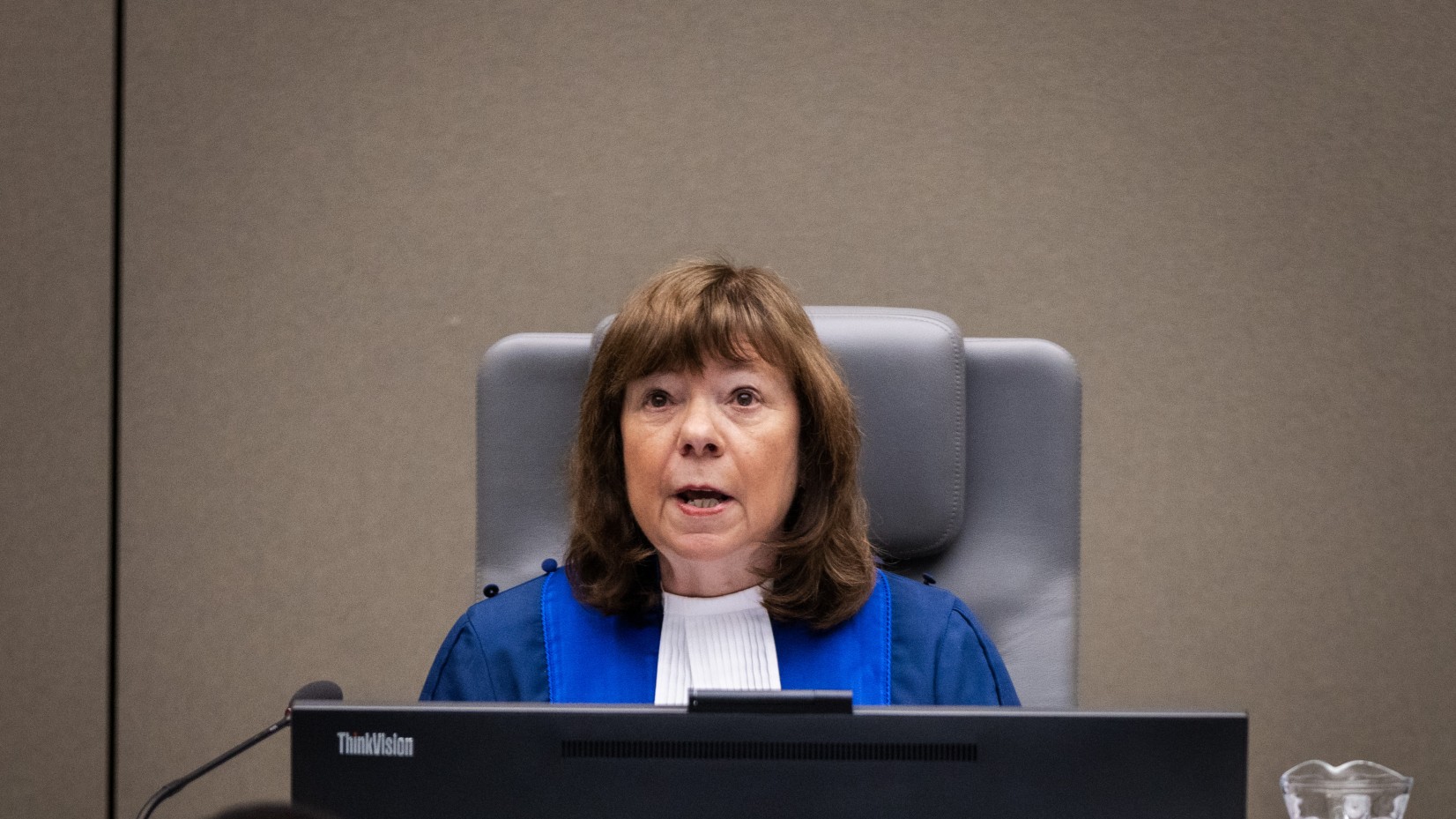
In a candid press briefing at the International Criminal Court’s (ICC) headquarters in The Hague, Canadian ICC judge Kimberly Prost has publicly called on UK authorities to intervene after two of her cross-border transfers to the United Kingdom were frozen for months due to overcompliance with sweeping unilateral US sanctions targeting ICC personnel and operations.
The two affected transactions, sent from the Netherlands in euros to be converted to British pounds, included a personal wedding gift for a young couple and a pre-paid hotel booking for UK travel. Both transfers were processed through a UK branch of a US-owned bank, which notified Prost that the funds had been blocked per a US presidential executive order, and that she would need to apply for a special licence from the US Office of Foreign Assets Control (OFAC) to reclaim her own money.
Prost, who was personally sanctioned by the Trump administration in August 2025 for her role in a 2020 Appeals Chamber ruling that authorised a formal investigation into alleged war crimes by US personnel in Afghanistan, noted that the UK government has so far declined to address her specific concerns. While a UK Foreign Office source reaffirmed that the UK “stands with the ICC” and publicly opposes the US sanctions regime, officials have framed the frozen funds as a private sector decision, a framing Prost explicitly rejects. She is now exploring recourse under the UK’s longstanding blocking statute, a legal mechanism designed to negate the effects of extraterritorial foreign sanctions on UK soil, to recover her assets.
The high-profile disclosure of Prost’s personal struggles with the sanctions comes just days ahead of the ICC’s annual Assembly of States Parties, set to open in The Hague on 30 November. The gathering was relocated from its original New York venue over widespread fears that US visa restrictions and financial sanctions would bar large numbers of ICC representatives and state delegates from participating.
The Trump administration first imposed sweeping sanctions on the entire ICC body on 9 October, following earlier targeted penalties against individual judges and senior prosecutors. The punitive measures were introduced in direct retaliation against two core ICC initiatives: the court’s issuance of an arrest warrant for Israeli Prime Minister Benjamin Netanyahu over alleged crimes in Gaza, and the Afghanistan probe that examined documented abuses by US military and intelligence personnel. Washington has issued a six-month grace period for ICC member states to push through amendments to the Rome Statute that would bar the court from prosecuting nationals of non-member states including the US, Russia and Israel; the sanctions will be fully enforced in April, threatening to cut off the ICC’s access to US dollar transaction networks and effectively cripple its day-to-day operations.
Prost detailed the far-reaching personal disruptions the sanctions have caused beyond the frozen transfers: she has been unable to use any credit card, most online shopping platforms are inaccessible to her, and she was even barred from using Google Maps for navigation during a recent trip to London. Despite these hardships, the veteran jurist who helped Canada negotiate the original Rome Statute in 1998 made clear she will not alter her judicial duties. “I would make that 2020 Afghanistan Appeals Chamber decision again today based on the evidence we had before us,” she told reporters. “These measures are futile. We are independent, we review facts and apply the law objectively, and we will not be intimidated.” She is one of three ICC judges currently suing the Trump administration to challenge the legality of the sanctions.
Prost also pushed back against recent diplomatic moves that threaten to erode the ICC’s foundational jurisdiction, including a new proposal circulated by Guatemala that would require the consent of a suspect’s home country for all ICC investigations, even if the alleged crimes were committed on the territory of an ICC member state. The proposal mirrors longstanding US and Israeli demands to curtail the court’s authority. Amnesty International Secretary General Agnes Callamard has already condemned the UK, Canada and other allied governments for failing to move beyond rhetorical support for the ICC to deliver concrete legal protections, accusing them of pursuing policies of appeasement towards Washington.
Prost noted that while constructive dialogue with the US could be pursued, the core territorial jurisdiction clause enshrined in the Rome Statute is non-negotiable, and cannot be discarded simply because powerful states find it inconvenient. She also confirmed that she has outstanding questions over the recent controversial decision to close the original Afghanistan investigation and replace it with a narrower probe focused exclusively on Taliban abuses, and will await the outcome of the prosecutor’s formal appeal against that ruling before commenting further.
Canadian ICC judge urges UK to release funds frozen under US sanctions