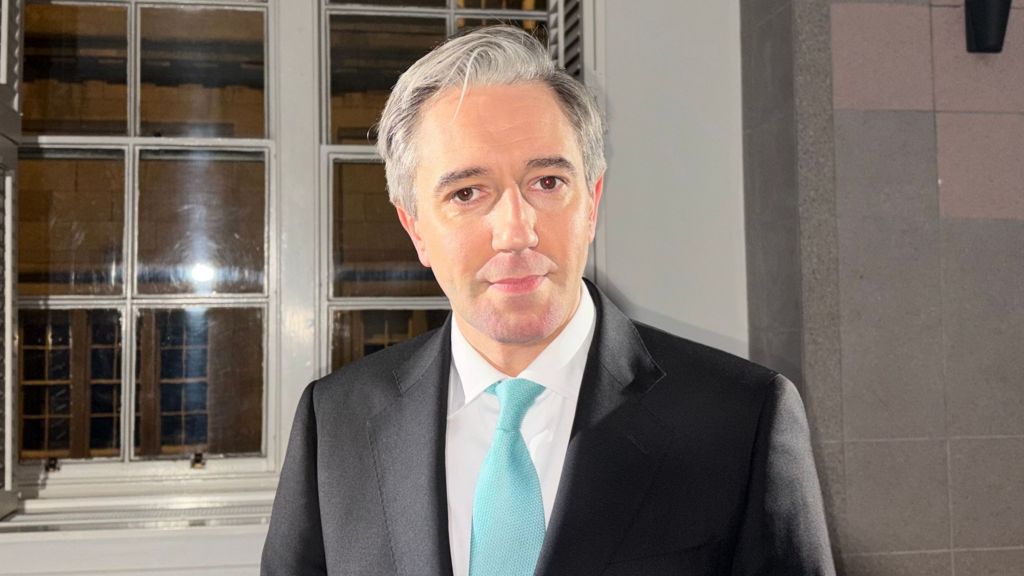
Dublin’s deputy prime minister, Tánaiste Simon Harris, who is set to assume the role of Taoiseach (Irish prime minister) in November 2027 under the current coalition government’s rotational power-sharing deal, has publicly pushed for formal, constructive dialogue between the British and Irish administrations to align on clear, mutually understood criteria for triggering a Northern Ireland border poll, as outlined under the landmark 1998 Good Friday Agreement.
Appearing on BBC News NI’s flagship current affairs programme *The View*, Harris emphasized that he and sitting Taoiseach Micheál Martin, leader of the rival Fianna Fáil party that shares power in the Dublin coalition, are fully aligned on the position that cross-government discussions on border poll thresholds represent sound, responsible governance, rather than a challenge to the terms of the historic peace accord. He noted that bilateral relations between London and Dublin are currently at an all-time high, creating a favourable window for clarifying shared expectations around the process for a potential vote on Northern Ireland’s constitutional status.
His comments come shortly after UK Northern Ireland Secretary Sir Chris Bryant stated publicly during an interview on RTÉ’s *Morning Ireland* that his office holds exclusive statutory authority under the Good Friday Agreement to decide when to call a border poll, a provision explicitly agreed upon by both the British and Irish governments as co-guarantors of the peace deal. Bryant stressed that he has not detected sufficient widespread public sentiment across Northern Ireland in favour of joining a united Ireland to justify triggering a vote at the present time, and that he will only move to schedule a poll when such public support appears clearly likely. When pressed to outline specific measurable criteria for that decision, Bryant confirmed the threshold would be a demonstrable shift in public favour for unification, a position Harris acknowledged is fully consistent with the letter of the Good Friday Agreement, while noting that collaborative discussion on how that standard is applied in practice would remove unnecessary ambiguity for all stakeholders.
The push for clearer shared frameworks follows a wave of recent policy proposals from Dublin’s governing coalition focused on long-term preparations for potential Irish unification. Fine Gael, the party Harris leads, recently published a detailed Irish unity blueprint, which was followed closely by Taoiseach Micheál Martin circulating his own internal policy document to his Fianna Fáil parliamentary party proposing the creation of a dedicated cross-party initiative focused on the island of Ireland’s long-term constitutional future. Fine Gael’s published proposals include plans to appoint a dedicated junior minister for north-south relations, and to establish an independent, state-supported cross-community consultative forum tasked with reviewing the future of Northern Ireland’s existing governing institutions, potential all-island reform of local and regional governance aligned with European subsidiarity principles, and required adjustments to public services including taxation, healthcare and education across the entire island. An economic adviser to Harris also contributed analysis estimating the first-year fiscal cost of full Irish reunification to the Irish exchequer would fall somewhere between €3 billion (£2.5 billion) and €25 billion (£20.8 billion).
Harris sent formal consultation letters outlining these proposals to all major Northern Ireland political party leaders to solicit their feedback, a move that has drawn sharply divergent reactions across the region’s fragmented political landscape. Democratic Unionist Party (DUP) leader Gavin Robinson stated his party has no interest in participating in discussions he described as efforts to dismantle the United Kingdom, dismissing the process as a form of self-harm for Northern Ireland. Ulster Unionist Party (UUP) leader Jon Burrows labelled Fine Gael’s unification plans a “constitutional pet project”, adding that his party would not take part in what he characterized as an effort to “commit political suicide” by undermining the UK’s territorial integrity. Traditional Unionist Voice (TUV) leader Jim Allister went further, urging Harris to focus solely on governing the Republic of Ireland and “butt out” of the affairs of Northern Ireland’s population that wishes to remain part of the UK.
In contrast, non-aligned centrist Alliance Party leader Naomi Long confirmed her party will engage in upcoming discussions respectfully, without pre-committing to a fixed position on the eventual constitutional vote. Social Democratic and Labour Party (SDLP) leader Claire Hanna welcomed Harris’s outreach, noting that preparations for a new united Ireland should not merely reverse the 1921 partition of the island, but must also deliver tangible improvements to Northern Ireland’s existing public services, economic opportunities and living standards for all communities in the interim period.