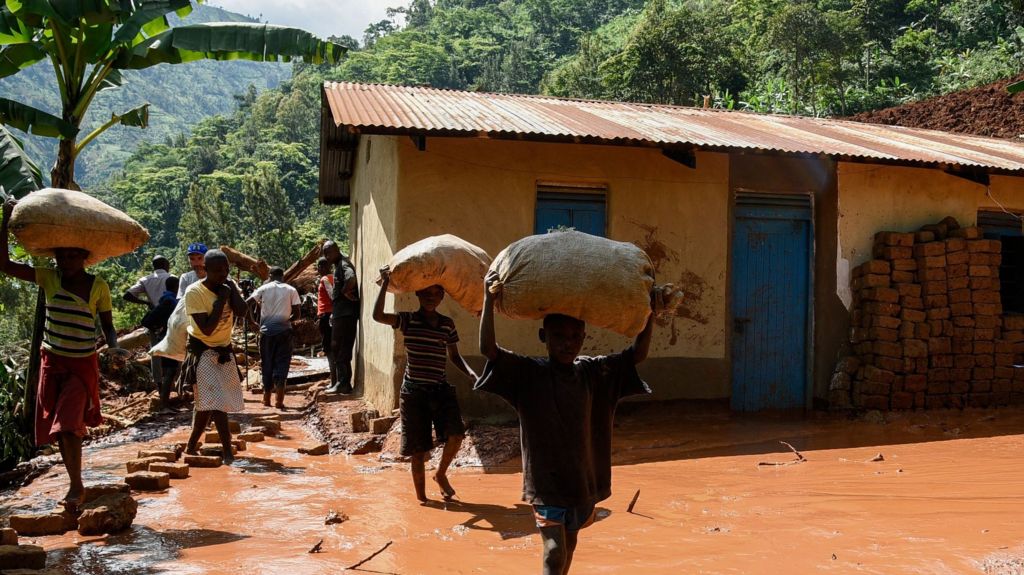
Nestled in the mountainous terrain of eastern Uganda’s Bududa district, a community long haunted by catastrophic landslides has taken a landmark legal fight to the global stage, seeking redress and systemic climate action after years of unmet safety demands from their national government. For decades, Bududa has been a flashpoint for deadly geohazards: back-to-back landslides in 2010 and 2018 claimed more than 142 lives, before a 2019 disaster killed 53 people, 33 of them children, leaving hundreds of families shattered and living in persistent fear of the next heavy rainfall event.
Now, 48 survivors of the 2019 tragedy have filed a formal complaint with the UN Human Rights Committee, in what is widely recognized as the first global legal case explicitly demanding enforceable national climate adaptation measures to protect at-risk communities. The claimants allege the Ugandan government has violated the country’s constitution by failing to roll out robust, community-centered disaster risk reduction frameworks in the landslide-prone district, arguing that existing state relocation policies disregard their fundamental land rights, livelihood security, and basic personal safety.
One of the leading claimants, William Tsama, lost four members of his immediate family in the 2019 mudslide. “My fight is meant to send a clear message to marginalized disaster survivors everywhere: when governments turn a blind eye to your safety, you have a path to legal recourse to force them to uphold their duty to protect citizens,” the elderly advocate explained. “I am fighting not for myself, but to secure a safe, stable home for my people so that even when I am gone, my children and their children will never have to flee for their lives in the middle of a rainy night.”
Beyond the immediate landslide threat, the complainants point to cascading climate harms disrupting their daily lives: erratic, unpredictable rainfall patterns and plummeting soil fertility have collapsed local smallholder farming yields, pushing dozens of households into food insecurity and extreme poverty. The group first initiated domestic legal proceedings in Uganda in 2020, before partnering with Kampala-based environmental non-profit Greenwatch in 2023 to escalate their petition to the UN human rights body. Their demands span targeted compensation for lost family members and destroyed livelihoods, plus immediate, accessible early warning systems installed across all high-risk geohazard zones in the region.
Greenwatch Executive Director Samantha Atukunda Kakuru Mwesigwa emphasized that the case’s impact stretches far beyond the borders of Bududa. “This is not just about securing justice for our 48 claimants. It is about forcing national governments worldwide to update their disaster management policies to match the accelerating pace of climate breakdown, so that ‘loss and damage’ for vulnerable communities is no longer treated as an afterthought in policy planning,” she noted.
The crisis of climate-driven geohazards is not isolated to Uganda: across East Africa, the Kenya Red Cross recorded 181 fatalities from floods and landslides between March and May 2024, while Rwanda suffered 135 flood and landslide deaths in May 2023. Further afield, a 2026 October flash flood triggered by a landslide-blocked river in Nepal’s Gorkha district killed more than 1,500 people, wiping out entire neighborhoods and critical public infrastructure. Vesselina Newman, a lawyer with global environmental advocacy group ClientEarth, highlighted the stark inequity at the heart of these disasters: low-income nations that have contributed a tiny fraction of historic global greenhouse gas emissions are bearing the brunt of climate-fueled extreme weather. “Wealthy high-emitting nations have a moral and practical obligation to deliver targeted, direct financial support to countries like Uganda, so they can roll out life-saving adaptation measures for at-risk populations before more preventable tragedies occur,” Newman stated.
The Ugandan government first introduced a national resettlement scheme for landslide-prone districts in 2011, but implementation lagged severely, with only a tiny fraction of high-risk households ever relocated. Last month, authorities launched a revised program offering 18 million Ugandan shillings ($4,300) per affected household to support relocation to safer ground: families can opt for a package of two acres of designated safe land valued at 8 million shillings ($1,900) plus a 10 million shilling ($2,400) home construction grant, or take the land allowance in cash alongside the same housing stipend. The program is projected to serve 1,410 households living in officially mapped high-risk zones, but the government has also issued a strict two-month eviction deadline running from November to December, ordering residents to leave high-risk areas voluntarily or face forced removal.
Survivors have pushed back heavily against the terms of the new scheme, arguing the allocated funds are insufficient to cover full relocation costs and rebuild sustainable livelihoods, and that the top-down relocation process ignores their unique needs. The UN Human Rights Committee has formally notified the Ugandan government that it must submit a full official response to the complaint within six months, with the final ruling expected to set a groundbreaking global legal precedent for enforceable climate adaptation obligations under international human rights law.
Survivors of Uganda’s deadly landslide seek justice at the UN