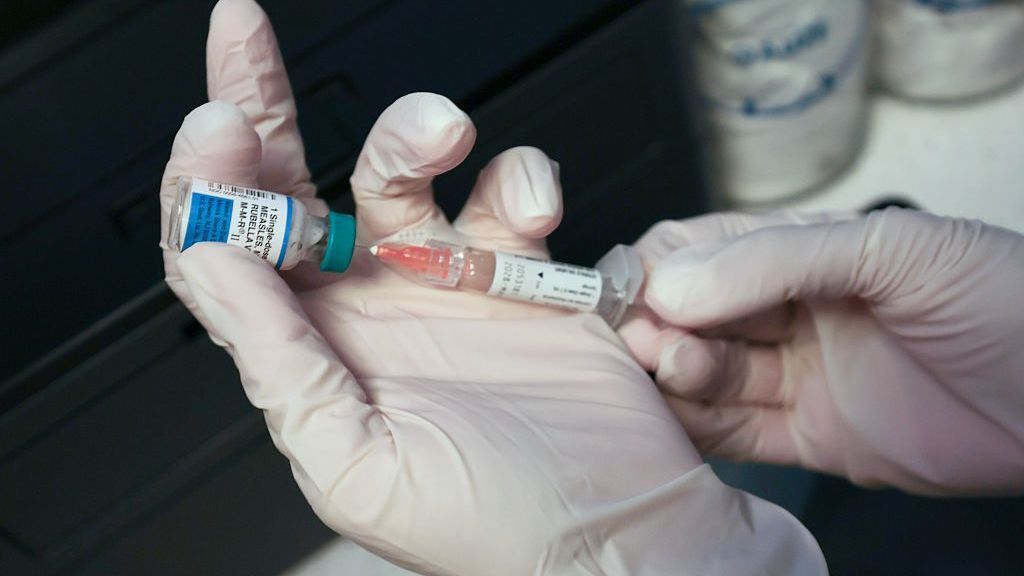
After 26 consecutive years of holding official measles elimination status, the United States has formally lost that public health milestone, confirmed by a formal ruling from the Pan American Health Organization (PAHO), a specialized United Nations public health body. The designation was revoked after health authorities documented uninterrupted circulation of a single measles viral strain across U.S. territories for more than 12 months, paired with two consecutive years of surging case counts and rising fatalities. The U.S. is not alone in this regional setback: PAHO director Dr Jarbas Barbosa announced this week that Mexico and Bolivia have also forfeited their measles-free designations, framing the broader regional resurgence as a direct consequence of persistent, systemic gaps in childhood vaccination coverage. “These figures are a serious warning for our region,” Barbosa stated during a Tuesday press briefing, noting that global measles transmission has rebounded sharply as immunization rates have stagnated or declined in multiple high-income nations. Canada, which lost its own measles elimination status in 2023 following a string of large multi-province outbreaks, has made notable progress in recent months to break ongoing chains of transmission, Barbosa added. A wave of high-income nations across multiple continents have also lost their measles-free status in 2024, including European members the UK, Spain and Austria, alongside Central Asian states Russia, Azerbaijan and Uzbekistan. Columbia University Irving Medical Center assistant professor of medicine Nuwan Gunawardhana described the U.S. losing its elimination status as “a huge leap backwards” for a country that once led the Americas in measles eradication efforts. The highly contagious measles virus, recognizable by its signature blotchy full-body red rash, once infected millions of U.S. children annually before the measles vaccine was widely rolled out. Beyond acute illness, the pathogen can trigger life-altering long-term complications including brain-swelling encephalitis and so-called immune amnesia, a condition that effectively resets a patient’s immune system and drastically reduces its ability to fend off other future infections. The U.S. Centers for Disease Control and Prevention’s longstanding public health guidelines recommend two doses of the combined measles, mumps and rubella (MMR) vaccine for all children between the ages of 1 and 6, a regimen that is 97% effective at preventing symptomatic measles infection. William Moss, a leading pediatric infectious disease specialist at the Johns Hopkins Bloomberg School of Public Health, noted that the U.S. was the very first nation in the Americas to formally eliminate endemic measles, a milestone won after decades of coordinated, community-focused vaccination campaigns. As Gunawardhana explained, those decades of low measles case counts and minimal fatalities were only possible after years of painstaking work by public health officials and frontline clinicians to build trust with skeptical patient populations and drive MMR uptake to the 95% threshold required for herd immunity. That hard-won trust began to rapidly erode in the wake of the COVID-19 pandemic, as widespread online misinformation about general vaccine safety spread widely, and large segments of the public lost confidence in core public health institutions. Today, national U.S. MMR vaccination rates for school-aged children have slipped to just 92.4%, falling well below the 95% herd immunity threshold that prevents sustained measles spread and protects vulnerable groups who cannot receive the vaccine, including newborn infants and immunocompromised patients. So far in 2024 alone, the U.S. has recorded more than 5,400 confirmed measles cases, the highest annual total since 1991, with 10 confirmed measles-related deaths – the highest national fatality count since the 1990s. A sprawling ongoing outbreak in Pennsylvania has infected more than 1,400 people, a figure state health officials acknowledge is almost certainly a significant undercount, and has been linked to seven fatalities. The response to that outbreak has sparked unprecedented public friction between state health authorities and top federal health leadership. U.S. Health and Human Services Secretary Robert F. Kennedy Jr., a longstanding public figure with a history of public vaccine skepticism, has openly clashed with Pennsylvania officials over their methodology for counting measles-linked deaths, prompting the U.S. CDC to temporarily hold off on adding some of those Pennsylvania fatalities to its official national surveillance database. Since taking office, Kennedy has pursued a series of sweeping overhauls to longstanding federal vaccine recommendations and policies. Last year, he dismissed all sitting members of HHS’s top independent vaccine advisory panel and replaced them with handpicked appointees, several of whom have a documented history of opposing routine childhood vaccination. That restructured panel later issued controversial recommendations including a proposal to end universal mandatory Hepatitis B vaccination for all newborns, a ruling that was ultimately blocked by a federal judge. Kennedy has publicly pushed back against criticism that his policies have driven falling MMR uptake, arguing that measles case counts began rising before he assumed leadership of HHS, and that neighboring countries have also recorded rising infection numbers. The erosion of public confidence in the MMR vaccine has also been amplified at the highest levels of U.S. political leadership: President Donald Trump publicly questioned the safety of the combined MMR vaccine earlier this year, and issued an executive order mandating that the three components of the shot be split into three separate standalone immunizations. Leading public health experts have widely condemned the order, noting that the move will drive up unnecessary healthcare costs and sow public confusion about the safety of a vaccine that has been used safely for decades. Frontline clinicians say repeated public misinformation from top federal officials is directly driving declining vaccination rates. “It’s confusing patients. It’s confusing families,” Gunawardhana emphasized. “We need a clear message from the top.” With federal public health agencies sending mixed and often conflicting guidance, state-level public health departments and local officials have been forced to step into the gap, issuing their own independent public health guidance that upholds decades of evidence-based childhood vaccination best practices. At the time of publication, the U.S. Department of Health and Human Services had not responded to the BBC’s formal request for comment on the loss of measles elimination status.
US loses measles elimination status after 26 years amid record case numbers