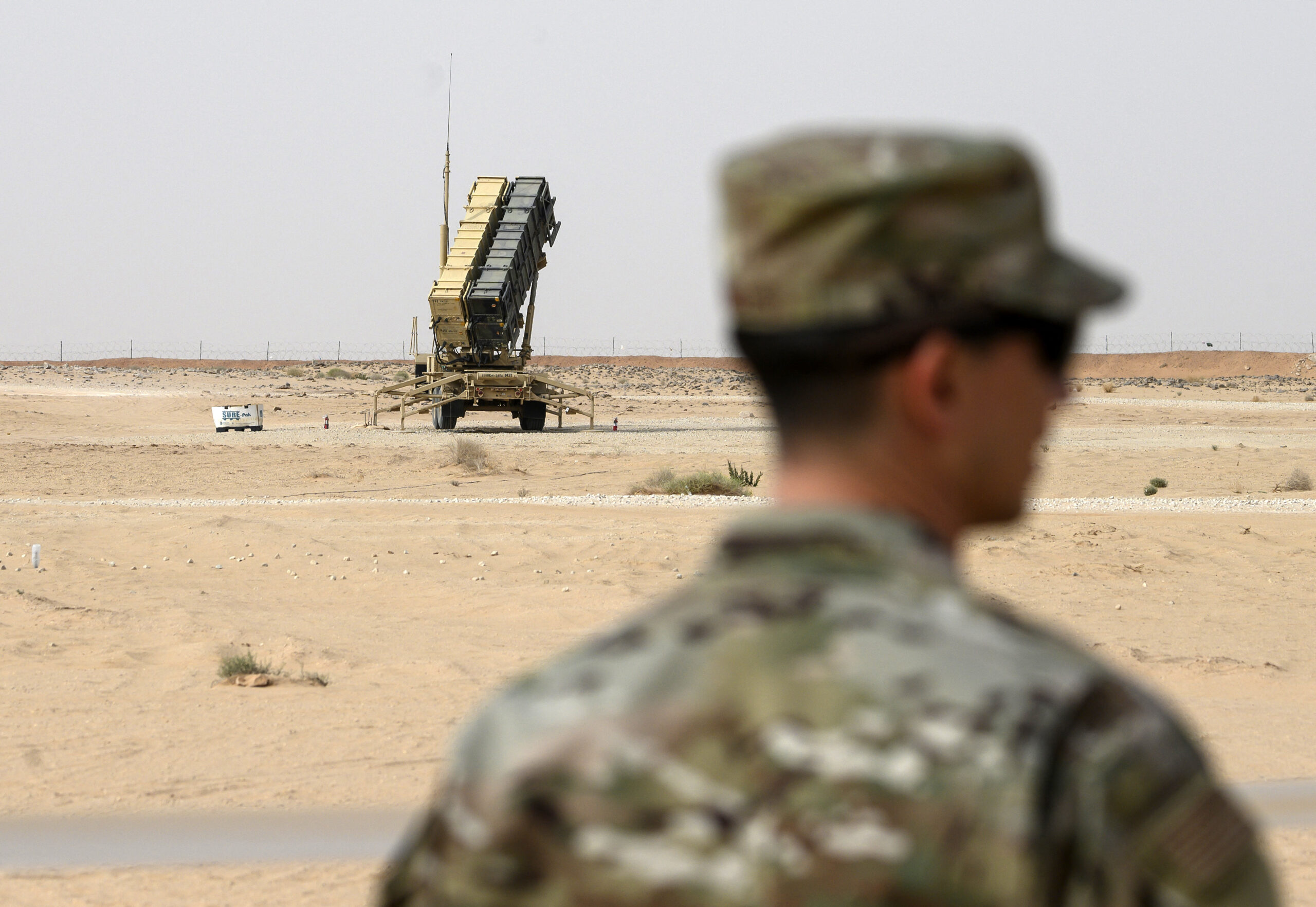
Admiral Brad Cooper, the head of U.S. Central Command and top commander for all American military forces deployed across the Middle East, is set to lead a delegation of senior military advisors to Saudi Arabia in the coming days to conduct a full, on-the-ground assessment of the kingdom’s existing air defense infrastructure, multiple Western diplomatic and defense officials with direct knowledge of the plans confirmed exclusively to Middle East Eye. The officials, who requested anonymity to discuss sensitive unannounced military travel, revealed that more than 36 U.S. military air defense specialists are being deployed to the kingdom in total to provide targeted operational support to Saudi forces, with a portion of the team already arriving in Riyadh ahead of Admiral Cooper’s official visit. This high-stakes trip unfolds against a turbulent backdrop of escalating Houthi aerial assaults on Saudi territory, paired with a period of unprecedented tension in decades-long U.S.-Saudi strategic relations. Middle East Eye reached out to the U.S. Pentagon for an official statement on the planned deployment and visit prior to publication, but received no formal response by press time. The U.S. and Saudi Arabia have maintained a formal security alliance spanning back to the final years of World War II, but the bilateral relationship has faced new strains after former U.S. President Donald Trump made incendiary public remarks last week claiming the Gulf kingdom was “disintegrating.” Trump also stated publicly that Saudi Arabia and other Gulf Cooperation Council member states had personally appealed to him not to restart open hostilities against Iran, citing their severe unaddressed military vulnerabilities. Saudi Arabia has been mired in a costly, years-long military quagmire in neighboring Yemen, where Iran-aligned Houthi fighters have notched sweeping territorial and tactical gains in recent months. The militant group has carried out repeated drone and missile strikes targeting core Saudi civilian and economic assets, including major international airports, critical energy production facilities, and high-profile corporate offices, directly undermining Riyadh’s multi-billion-dollar campaign to position itself as a stable, secure global hub for foreign direct investment and international tourism. A separate exclusive Middle East Eye investigation earlier confirmed that Houthi units have also launched repeated cross-border ground incursions into Saudi sovereign territory, rather than limiting attacks to long-range aerial strikes. Adding to the security pressures, forces aligned with the internationally recognized Yemeni government announced a full troop withdrawal this week from strategic swathes of land surrounding the Bab al-Mandab strait, a critical global maritime chokepoint, as part of a redeployment focused on shoring up defenses around Yemen’s provisional capital of Aden and its surrounding governorates. The pullback cedes hard-won territory that Saudi-backed coalition forces seized from Houthi fighters just last autumn. One senior Western defense official with intimate knowledge of on-the-ground battlefield dynamics noted that while a full Houthi takeover of Aden was not considered imminent due to widespread local popular opposition to the militant group, the overall military situation for Saudi Arabia and its regional allies was “very bad.” In an apparent public signal of Riyadh’s deep frustration over its mounting military setbacks, Saudi King Salman issued a royal decree on Monday removing the top commander overseeing the entire Saudi-led military coalition operating in Yemen. U.S. defense officials confirmed to Middle East Eye that Saudi Arabia maintains one of the largest stockpiles of U.S.-made Patriot missile interceptors across the entire Gulf region, but the kingdom’s vast, sprawling geographic territory presents a uniquely challenging defensive perimeter to protect against the low-cost, abundant, small drone swarms deployed by Houthi forces. Independent military analysts have also raised persistent questions about the operational efficiency and deployment strategy Saudi forces use for their existing air defense systems. Last month, Riyadh’s main international airport was targeted by four separate Houthi aerial strikes in a single seven-day window, with one catastrophic attack killing at least 13 people and injuring more than 300 others, the vast majority of whom were civilian Hajj pilgrims in transit. The deployment of U.S. military air defense advisors also coincides with a period of widespread regional anxiety over the risk of a sudden, major escalation of open conflict between the United States and Iran. During a recent radio interview with host Hugh Hewitt last week, Trump stated explicitly that he would consider it a total personal “defeat” if the Islamic Republic of Iran remained in power by the end of his current term in office. Middle East Eye produces award-winning, independent, unrivaled on-the-ground coverage and analysis of the Middle East, North Africa, and adjacent global regions. For inquiries regarding republishing rights for this content and associated licensing fees, interested parties may submit a request via the official MEE republishing form. Full background information on the Middle East Eye editorial team and organizational mission is available on the outlet’s official website.
US Centcom commander expected in Saudi Arabia with dozens of air defence experts, sources say