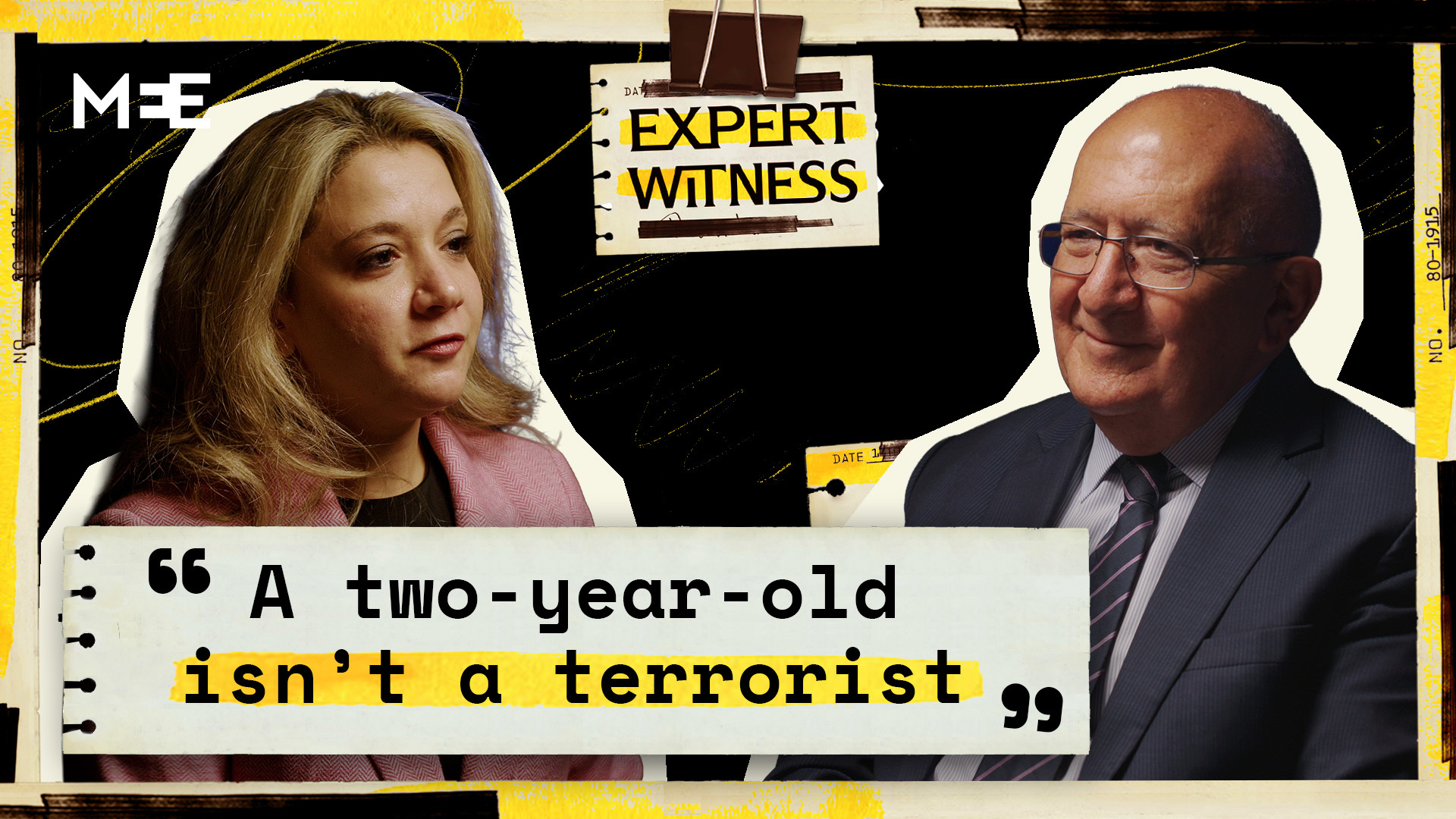
Over 12 months after the formal signing of a ceasefire arrangement for the Gaza Strip, a senior member of the United Nations Commission of Inquiry on the Occupied Palestinian Territory has publicly denounced that genocidal actions by Israeli authorities persist, with Palestinian children in Gaza and the occupied West Bank facing deliberate, targeted violence on a daily basis. Chris Sidoti, a veteran international human rights law expert and former Australian Human Rights Commissioner who previously served on the UN fact-finding mission for Myanmar, shared these damning findings during a recent appearance on the Expert Witness Podcast hosted by Middle East Eye.
Sidoti emphasized that the widely referenced ceasefire has never translated to a full halt of hostilities on the ground. “There is no ceasefire in Gaza. People talk about a ceasefire but at best it’s a reduced fire,” he stated. “The killing continues on a daily basis, including the killing of children.” He further stressed that the core contextual factors that led the commission to formally conclude Israel had committed genocide in Gaza remain fully operational, and no fundamental shift in those conditions would allow genocidal activities by Israeli civilian and military authorities to cease.
These remarks follow two landmark public reports published by the UN Commission of Inquiry on the Occupied Palestinian Territory in 2026. The first, released in June, formally documented that Israeli forces had deliberately targeted Palestinian children across Gaza, confirming Israel had perpetrated genocide, crimes against humanity, and extensive war crimes in the coastal enclave, with additional separate war crimes documented across the occupied West Bank. The commission submitted its fifth official report to the UN General Assembly in October 2026, reaffirming that Israel continued to carry out genocidal acts in Gaza even after the October 2025 ceasefire was formally enacted. Both of these 2026 reports build on the commission’s initial September 2025 formal finding that Israeli authorities bore full responsibility for the crime of genocide in Gaza, a conclusion Sidoti notes is rooted in 18 cumulative investigative reports produced by the team over five consecutive years of on-the-ground and documentary research.
Sidoti laid out extensive, verified case evidence confirming Palestinian children were actively singled out for harm, with boys between the ages of 11 and 14 at particularly high risk of targeted attacks. One extensively documented incident involved two brothers, aged 9 and 10, who were collecting firewood outside Bani Suheila to support their wheelchair-bound father when they were killed by an Israeli drone strike. Israeli authorities claimed the boys were suspicious figures crossing a so-called “yellow line” security perimeter, but the commission’s full investigation found the pair were over 300 meters away from any Israeli military personnel, were clearly identifiable as young children to the drone operator, and posed no conceivable threat. Sidoti highlighted that modern military drone systems are fully capable of distinguishing between adult combatants and pre-teen children, meaning the decision to launch the strike was a deliberate, human-led choice to kill the two minors, rather than an accidental error of identification.
Cumulative data collected by the commission between October 7, 2023, and October 7, 2025, shows at least 20,179 children were killed in Gaza, making up 30% of all fatalities in that period, while 44,143 children suffered injuries accounting for 26% of all recorded wounded persons. Seventeen independent medical professionals interviewed by the commission confirmed that a large share of child casualties presented with precision single gunshot wounds to the head and upper torso, consistent with targeted attacks by Israeli snipers and small surveillance quadcopters. When asked to respond to repeated Israeli government claims that targeted child casualties were in fact suspected violent offenders, Sidoti stated plainly: “No, is the simple answer. Many of them are very young children. I mean, a one-year-old child is not a terrorist. A two-year-old child is not a terrorist. And yet these kids are being killed.”
In the occupied West Bank, Sidoti described Israeli military operations as operating with unbridled impunity, noting that armored personnel carriers and tanks move through Palestinian communities “like imperial stormtroopers from Star Wars.” He pushed back against Israeli justifications for using lethal force against child stone-throwers, pointing out that no Israeli soldier has ever been killed by a stone thrown by a minor in the West Bank, even as heavily armed and armored forces use deadly force against these children. He cited the case of a 14-year-old boy in Tubas’ al-Faraa camp who was shot outside his family home in November 2025, then left to bleed on the ground for 45 minutes. When the boy’s mother attempted to reach him to provide aid, Israeli soldiers opened fire on her, and military checkpoints blocked incoming ambulances from accessing the scene. The teenager eventually died from his wounds, and Israeli forces withheld his body for an extended period; Sidoti noted that during this time, a soldier dropped a stone next to the dying boy while other troops took photos, in a clear premeditated attempt to frame the child as a violent stone-thrower after the fact. Sidoti also documented a separate April 2025 incident where two Israeli settlers abducted two siblings under the age of five from their family home’s yard at knifepoint, tied the young children to a tree in a local olive grove, and subjected them to violent threats, with nearby Israeli military personnel fully aware of the attack but taking no action to intervene or arrest the perpetrators.
Sidoti confirmed that all four legally defined categories of genocidal acts identified by the commission in Gaza are directly inflicted on Palestinian children: systematic killing, the deliberate infliction of severe bodily and mental harm, the imposition of living conditions calculated to destroy the Palestinian group in Gaza, and the implementation of policies designed to prevent future births among the population. He noted that no child in Gaza has escaped unharmed after three years of sustained conflict, with the territory now hosting the highest rate of child amputations anywhere in the world. The commission’s June 2026 report found that Israeli forces had directly damaged or destroyed 459 of Gaza’s total 564 school buildings, cutting formal educational access for more than 668,000 school-age children. The number of functional neonatal incubators across Gaza’s remaining health facilities plummeted from 178 in 2023 to just 54 by November 2024, and by March 2026, 70% of all newborns in the territory were classified as premature or severely underweight. Since October 2023, more than 1,655 Palestinian children have been detained by Israeli authorities in the West Bank, including a 17-year-old who died in Megiddo Prison in March 2025 from prolonged, untreated malnutrition, even though prison medical staff were fully aware of his deteriorating health condition.
Sidoti also noted that humanitarian aid entering Gaza remains well below the thresholds outlined under US President Donald Trump’s 20-point ceasefire framework, and even falls short of pre-war aid delivery levels. He emphasized that the ceasefire was never designed as a lasting peace solution, but only as a mechanism to reduce daily killing and ease civilian hardship, a goal it has failed to meet even on its own limited terms. The commission’s October 2026 report recorded that in the period following the October 2025 ceasefire announcement, Israeli attacks killed an additional 1,431 people including at least 300 children, and wounded 5,026 more. Between October 10, 2025, and early April 2026, at least 196 Palestinians were killed near the so-called “yellow line” security perimeter, which Sidoti noted has expanded Israeli-controlled territory across Gaza from 53% to a minimum of 60% of the enclave’s total land area, effectively operating as a new de facto border. Subsequent data from UN agencies confirms these ongoing casualty trends: UNICEF reported on October 20 that 351 children had been confirmed killed since the ceasefire was announced, including 14-year-old Mohamed who was struck and killed by a drone strike while walking home from a UNICEF-supported learning center in Deir al-Balah. The agency estimates 800,000 children remain internally displaced across Gaza, and roughly 60,000 children have lost one or both parents to the violence. A July 2026 statement from the UN Human Rights Office reaffirmed that nine months after the ceasefire took effect, “still, nowhere is safe for Palestinians in Gaza,” and Gaza’s civil defense agency recorded the fatal shooting of a 12-year-old boy east of Bureij refugee camp on November 5, 2026.
Sidoti went on to criticize Western governments including the United Kingdom that have refused to formally label events in Gaza as genocide pending a final ruling from the International Court of Justice (ICJ), despite having previously recognized ongoing genocides in Darfur, Sudan, and against the Rohingya population in Myanmar without waiting for a formal judicial ruling. He described this double standard as deeply frustrating, and noted it erodes the credibility of those states in the eyes of survivors of grave human rights violations, pointing out that international law does not require states to wait for a court verdict to make their own independent factual determination that a genocide is underway. He added that the legal obligation for all UN member states to take active steps to prevent genocide was formally triggered when the ICJ issued binding provisional measures orders in South Africa’s 2024 genocide case against Israel in January 2024, but most states have taken no meaningful action to uphold that obligation. Sidoti noted that the ICJ’s upcoming November 19 ruling in the Gambia v. Myanmar genocide case will set a critical precedent for how the court weighs evidence from independent UN human rights investigative reports, a factor that will directly shape the outcome of the pending Gaza genocide case.
Since its founding in 2021, Israel has refused all cooperation with the UN Commission of Inquiry, repeatedly accusing the body of antisemitism and claiming its members operate as “Hamas proxies.” Israeli authorities have rejected all formal information requests from the commission, and have denied all commission members entry to both Israel and the occupied Palestinian territories. Sidoti noted that this non-cooperation has not only hindered the commission’s ability to investigate crimes against Palestinian civilians, but also limited its capacity to fully investigate alleged crimes committed against Israeli civilians during the conflict. He dismissed Israeli government criticism of the commission as irrelevant, stating: “The Israeli government’s comments are totally irrelevant. People are interested in facts, they’re interested in law, they’re not interested in propaganda.”