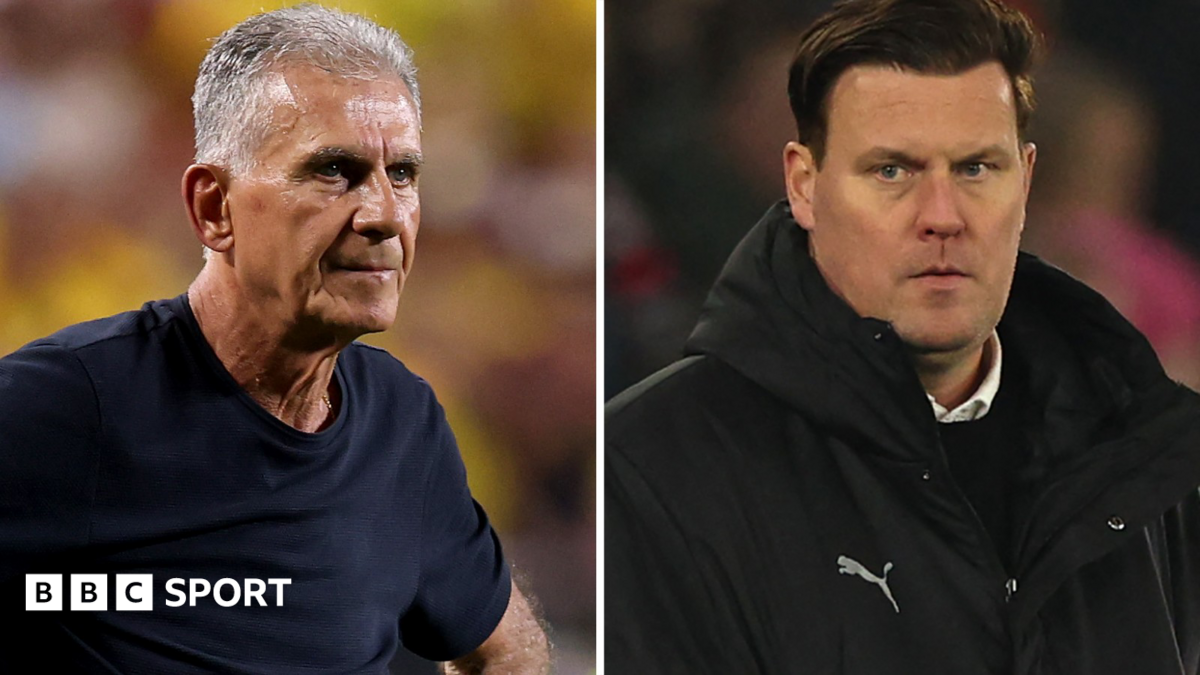
As Ghana’s men’s national football team, the Black Stars, heads into two high-stakes back-to-back 2027 Africa Cup of Nations (Afcon) qualifiers against Somalia, the squad is operating under the temporary leadership of Kim Bjorkegren – the Swedish coach who previously led Ghana’s women’s national side, the Black Queens, since January 2025. The interim appointment follows the shock mutual departure of Portuguese manager Carlos Queiroz, whose second, very short-lived tenure at the helm ended after just a handful of matches that yielded two consecutive opening Group C defeats: a 2-0 loss to Ivory Coast in Bouake, and a chastening 4-2 home defeat to The Gambia in Accra last month.
Veteran former Black Stars head coach Chris Hughton has now called for sweeping changes to end the crippling cycle of short-term managerial churn that has plagued the West African football powerhouse for nearly six years. Speaking to BBC Sport Africa on the sidelines of the Best of Africa Awards, Hughton emphasized that consistent, long-term coaching tenures are non-negotiable for sustained team performance. “When you have inconsistency in the amount of time a manager stays, it’s never good,” Hughton noted. “You want that consistency in the players, and the players want that consistency in what they see in the manager.” He added that frequent coaching sackings breed a corrosive culture in squads, where players adopt a dismissive attitude knowing a poor run of results will lead to the manager being removed rather than the group taking collective accountability for performance.
Queiroz’s chaotic recent tenure underscores the GFA’s ongoing managerial missteps. The 73-year-old, a former long-time assistant to Manchester United legend Sir Alex Ferguson, was first appointed by the Ghana Football Association (GFA) in April, where he led the Black Stars to the last 32 of the recent FIFA World Cup, earning a creditable goalless draw against England in the group stage before exiting the tournament after a narrow 1-0 loss to Colombia. He announced his departure shortly after that World Cup exit, only to be unexpectedly reappointed by the GFA in early September, with the federation hailing his decades of high-level international experience leading national sides including Portugal, Iran, South Africa, Egypt, Colombia, Qatar and Oman. His second spell lasted less than a month, cut short after the two disastrous opening Afcon qualifiers that left Ghana at the bottom of their group.
Hughton, whose own time leading the Black Stars was also truncated, knows firsthand the challenges of short tenures. The former Tottenham Hotspur defender, who won two FA Cups and a UEFA Cup during his playing career and managed top-flight English sides including Newcastle United, Norwich City and Brighton & Hove Albion, was first named the GFA’s technical director in February 2022, promoted to head coach a year later, and sacked in January 2024 after the team failed to escape their group at the 2023 Ivory Coast Afcon. He is just one of five different full-time managers to lead the Black Stars over the past six years, alongside Charles Akonnor, Milovan Rajevac, Otto Addo and Queiroz – with Addo even taking on two separate spells in charge during that window. The last manager to hold the Black Stars post for a sustained period was Kwesi Appiah, now head coach of Sudan, who spent 33 months in the role between April 2017 and January 2020. No Ghana manager has come close to that length of tenure since legendary Afcon-winning coach Fred Osam-Duodu in the late 1970s and early 1980s.
Hughton warned that Ghana now faces a very real risk of missing a second consecutive Afcon finals, after failing to qualify for the 2025 edition entirely, a stark fall from grace for a side that was long considered one of Africa’s continental heavyweights. He noted that the country’s decline has been accelerated by underinvestment in domestic football infrastructure and a surge in competitiveness across the entire African football landscape. “Many years ago Ghana were at a level that was, if not the best team in Africa, certainly right up there,” Hughton explained. “You’ve seen the emergence of so many other good African nations that have made the competition levels that much higher.” He called for direct government investment to revitalize the struggling local domestic league, which once produced a steady pipeline of elite homegrown talent. Today, Hughton points out, local pitches are poorly maintained, fan attendance at domestic matches has collapsed, and local supporters prioritize the English Premier League over their own national league, even as they remain deeply loyal to the Black Stars.
Ghana’s recent World Cup record remains a bright spot amid the broader turbulence: the side has qualified for five of the last six World Cup tournaments dating back to their 2006 debut in Germany, advancing to the knockout stage three times including a historic quarter-final run in 2010 in South Africa. The Black Stars also qualified smoothly for the upcoming 2026 World Cup co-hosted by Canada, Mexico and the United States, losing only one of 10 group matches under former manager Otto Addo to top their qualifying pool. Queiroz’s early Afcon qualifying woes were compounded by a spate of high-profile player withdrawals, with first-choice stars including Mohammed Kudus, Antoine Semenyo, Jordan Ayew and Baba Rahman pulling out of the initial squad, followed by multiple replacement call-ups. Hughton noted that mass player unavailability is a major setback for any side, and that the GFA must work to avoid such disruptions going forward.
With the team’s 2027 Afcon qualifying hopes hanging by a thread, interim coach Bjorkegren faces immense pressure to deliver maximum points from the two upcoming fixtures against Somalia. As Ghana’s 43-year wait for a first Afcon title since 1982 drags on, Hughton argues that locking in a stable, long-term coaching structure is the critical first step to rebuilding the once-dominant Black Stars program.