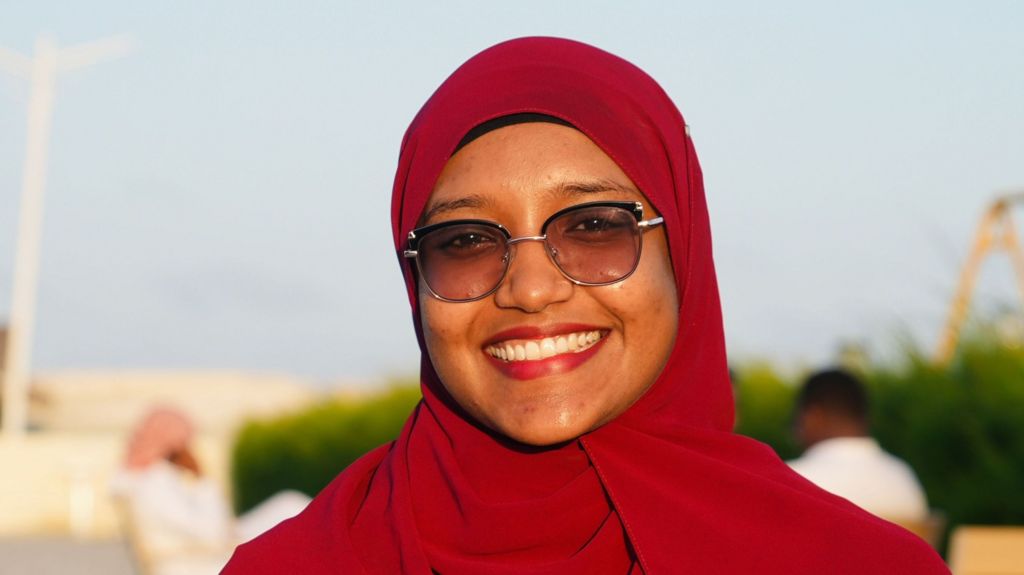
As golden dawn spills across the Indian Ocean, gentle waves curl onto powdery shorelines and palm fronds sway in salt-kissed breezes — this is the Mogadishu that 23-year-old local tour guide Sucdi Abdul Fattah Abdul Khader is determined to show the world, a stark counterpoint to the widespread international image of the Somali capital defined by suicide bombings and armed insurgency. Part of a small but fast-growing cohort of local tourism pioneers, Sucdi curates immersive itineraries that bypass stereotypical conflict-focused narratives to showcase the coastal city’s hidden natural treasures, layered historical heritage, and vibrant living culture. Her signature route leads visitors first to Jazeera Beach, a sun-dappled coastal escape where guests swim in turquoise waters before venturing to nearby wind-sculpted sand dunes that many travelers compare to the Sahara Desert. The tours extend far beyond scenic views, however: Sucdi also escorts groups through bustling waterfront fish markets brimming with diverse marine species harvested from Somalia’s 3,000-kilometre mainland Indian Ocean coastline — the longest of any country on continental Africa — and through historic neighbourhoods that bear the distinct marks of Mogadishu’s centuries-long legacy as a thriving Indian Ocean trade hub, with layered cultural influences from its former Ottoman and Italian administrations. Visitors are also invited to savour authentic Somali cuisine, from spiced samosas and tender camel meat to fragrant traditional spiced tea. For most first-time guests, who arrive carrying decades of media narratives framing Somalia as a zone of unrelenting insecurity, the experience is revelatory. “Nearly every guest is stunned by how lush the landscape is, and how genuinely warm and welcoming local communities are,” Sucdi explains, noting that the vibrant, unrivalled diversity of fresh seafood at the city’s fish markets consistently ranks as one of the most memorable stops for international visitors. Guiding runs deep in Sucdi’s family: her father spent more than 30 years leading foreign journalists, photographers, and cross-border visitors across Somalia, and he introduced her to the trade nearly three years ago. What began as a casual hobby quickly evolved into a passionate life calling, and today she collaborates alongside her father and a small team of fellow local guides, building on his decades of on-ground expertise while leveraging social media to reach a global audience that has long written Somalia off as unvisitable. She regularly shares short, vivid tour clips on TikTok to offer viewers around the world a window into corners of Mogadishu they never imagined they could see, and is currently developing English-language content to expand her reach to non-Somali speaking international audiences. Tourism remains a nascent, underdeveloped sector in Somalia, with only a tiny handful of registered tour guides operating in Mogadishu, and the industry follows a distinctly seasonal pattern. Even so, 2024 has brought unprecedented encouraging growth: according to official data from Somalia’s national tourism department, roughly 10,000 international tourists visited the country in 2024, marking a 50% year-on-year increase from 2023. While five guests per week is still considered a major milestone for local operators, Sucdi remains optimistic that visitor numbers will continue to climb steadily. Significant barriers remain, however. Decades of civil war followed the 1991 collapse of Somalia’s central government, leaving swathes of Mogadishu’s city centre reduced to rubble, public infrastructure in tatters, and millions of residents displaced. Even after Islamist militant group al-Shabab withdrew from most of the capital in 2011 and a new federal government was established in 2012, the legacy of conflict lingers, and sporadic security incidents persist alongside ubiquitous city checkpoints. Still, the post-2012 era has spurred a dramatic, ongoing transformation: returning members of the global Somali diaspora, local entrepreneurs, and domestic investors have fuelled a widespread construction boom, with new hotels, restaurants, commercial spaces, and residential complexes rapidly reshaping the capital into a fast-growing regional commercial hub. For international visitors who arrive with preconceived fears rooted in decades of negative media coverage, the on-ground reality defies nearly all their expectations. American travel content creator Chris Reese, who documents his journeys under the brand Authentic Travelling, first visited Mogadishu alone a year ago and enjoyed the experience so thoroughly that he returned shortly after with a group of friends who had seen clips from his first trip on social media. “If you only consumed mainstream news coverage about Somalia, you would never dare step foot here — that’s all I saw before my first visit, endless headlines about violence,” he says. “But the moment I arrived, I realized there is an entire, beautiful side of this country that never makes the news. The tropical coastal scenery, the laid-back local vibe, the incredible food — it’s unlike anywhere else I’ve travelled. The stark, photogenic desert dunes are barely a 30-minute drive from the city centre, which feels almost surreal.” Romanian long-haul traveller Mihaela Patap, who crossed into Somalia from neighbouring Ethiopia, was equally enchanted by her first few hours in Mogadishu, having already explored the iconic sand dunes and stretched out on the Indian Ocean shoreline. “The desert is breathtaking, the beaches are pristine, and I have not felt the slightest hint of danger — everyone I meet is incredibly kind and warm,” she explains. A seasoned global explorer who intentionally avoids pre-conceived judgments about new destinations, Patap says she plans to share her photos and positive experiences widely on social media to encourage other travellers to consider visiting Somalia. For Sucdi, every new guest represents a chance to rewrite the global narrative of her home. As a young woman working in a local tourism sector that has almost no female operators, she is breaking long-standing social norms while carrying forward her family’s multi-generational legacy. “Somalia still has a very long path ahead before tourism becomes a major economic pillar,” she acknowledges. “But every tour I lead gives one more person the chance to see our stunning landscapes, our rich culture, and our generous people — far beyond the narrow, one-dimensional headlines about explosions and conflict that the rest of the world has seen for so long.”