Even as final ballot tabulations for the 2026 U.S. midterm elections remain ongoing, the nation’s political ecosystem has already pivoted sharply toward laying the groundwork for the 2028 White House race, following historic Democratic gains across congressional and statewide offices that have handed the party significant momentum ahead of the contest to succeed sitting Republican President Donald Trump. Political history demonstrates that strong midterm performance does not guarantee a subsequent presidential victory: in 2010, the Republican Party secured massive congressional wins during former Democratic President Barack Obama’s first term, yet Obama went on to win a comfortable re-election two years later. No formal 2028 presidential candidacies have been announced to date, but a wide field of high-profile potential contenders from both major parties are already positioning themselves behind the scenes to vie for their respective parties’ nominations.
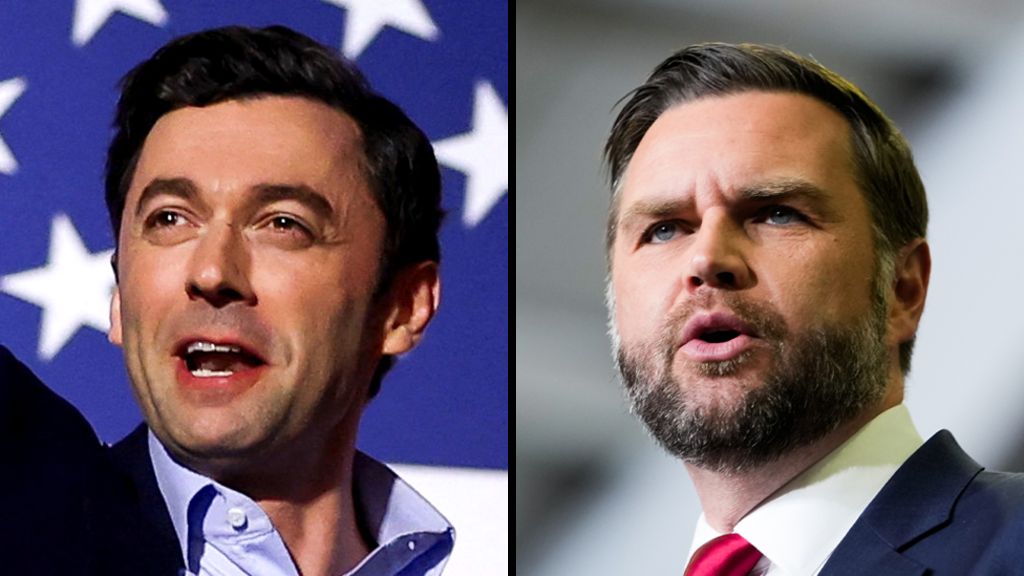
On the Democratic side, several rising stars posted decisive midterm wins that have supercharged their national profiles, even as many publicly downplay presidential ambitions. Georgia Senator Jon Ossoff secured a resounding re-election victory in the traditionally competitive battleground state that Trump carried in 2024, with a series of viral campaign moments elevating his name recognition far beyond state lines, despite his prior public statements ruling out a White House run. Pennsylvania Governor Josh Shapiro routed his Republican challenger to win re-election, cementing his reputation as a candidate with broad cross-partisan appeal in a critical swing state that all but guarantees him top-tier consideration for a national ticket. Illinois Governor JB Pritzker also claimed a clear re-election win, in a race that local political analysts widely described as a low-stakes warm-up for a potential presidential bid. While California Governor Gavin Newsom was not up for re-election this cycle, he spent significant political capital campaigning against a state ballot initiative that would impose new taxes on high-income California residents, a high-profile policy fight that has kept him at the forefront of national Democratic discourse.
For the Republican Party, the midterms delivered a series of underwhelming results that have sparked fierce internal debates over the party’s future direction, particularly for officials aligned with the Trump administration. Vice President JD Vance, whose public post-election analysis of Republican losses has been widely interpreted as the opening move of a prospective 2028 presidential run, has sought to distance himself from the party’s poor showing by blaming the defeat on the administration’s widely unpopular foreign policy intervention in Iran, writing on social media platform X that “the reason we lost is the war.” Leading political science professor Karen Beckwith of Ohio’s Case Western Reserve University noted that Vance has emerged as one of the biggest political casualties of the underperforming midterm cycle. Secretary of State Marco Rubio, another rumored 2028 hopeful, has publicly denied unconfirmed reports that he plans to step down from his cabinet post early to launch a presidential campaign. Other non-administration Republican figures have also stepped forward to critique the party’s missteps: Texas Senator Ted Cruz, who was not on the 2026 ballot, posted a lengthy statement on X arguing that Republican candidates failed to prioritize voters’ day-to-day economic struggles, writing that “it is dark right now, but it is always darkest before the dawn, and morning is coming.” Former 2024 presidential contender Florida Governor Ron DeSantis echoed that criticism, pointing to unbroken Republican dominance in Florida as a blueprint for how the party can rebuild its electoral coalition. Even in deeply conservative Arkansas, high-profile Republican officeholders Senator Tom Cotton and former Trump White House press secretary turned Governor Sarah Huckabee Sanders only managed to secure narrow re-election victories, with both earning just over 50% of the vote in a state that was once considered a solid GOP stronghold.
The Democratic Party is currently navigating a growing internal rift between its progressive and moderate factions, both of which are claiming credit for the party’s historic midterm gains. Left-wing progressive Democrats celebrated a breakthrough win in Michigan, where their candidate secured a statewide victory in a key battleground, a result that Progressive Change Campaign Committee co-founder Adam Green argued has shattered long-standing “electability” myths that previously warned left-wing populist candidates could not win in swing states. Green went so far as to suggest that the favorable electoral climate now makes a presidential primary run by high-profile progressive New York Representative Alexandria Ocasio-Cortez a viable prospect. Meanwhile, the party’s centrist Blue Dog Caucus of moderate and conservative-leaning Democrats gained at least 14 new congressional seats, nearly doubling its previous size, leading centrist Democrats to argue that pragmatic, cross-partisan candidates who run on collaborative governance platforms are the most effective way to peel off disaffected Republican voters in general elections.
The midterm results have upended decades of established U.S. political assumptions about safe partisan strongholds, most notably in Texas, where Democrats secured a historic gubernatorial victory that left only one remaining statewide Republican officeholder in the state. With Texas controlling 40 Electoral College votes, the once reliably red state is now widely viewed as a true battleground that will be fiercely contested in the 2028 presidential race. Political commentator Christina Pascucci, CEO of global advisory firm Atlas Global, noted that the results prove neither party can take its traditional base or long-held strongholds for granted, as both parties face a rapidly shifting electoral landscape where no group of swing voters can be claimed as a guaranteed partisan asset. Exit poll data shows that Trump’s 2024 electoral coalition of working-class and Latino voters eroded significantly in the midterms, reversing many of the inroads the Republican Party made with those demographic groups two years prior. Conservative political commentator Driena Sixto, a former spokesperson for Turning Point USA, argued that the Republican Party will need to overhaul its messaging to Latino voters ahead of 2028, noting that the administration’s heavy focus on deportation policies after taking office alienated many of the Latino voters who responded positively to the party’s 2024 campaign promises of safe communities and anti-human trafficking action. Across the board, analysts agree that Democratic candidates’ focus on cost-of-living issues drove much of their 2026 success, setting a clear precedent that economic policy will be the central pillar of most 2028 presidential campaigns for both parties, as candidates seek to appeal to the increasingly volatile and unpredictable electorate.
Four midterms takeaways for 2028 White House race