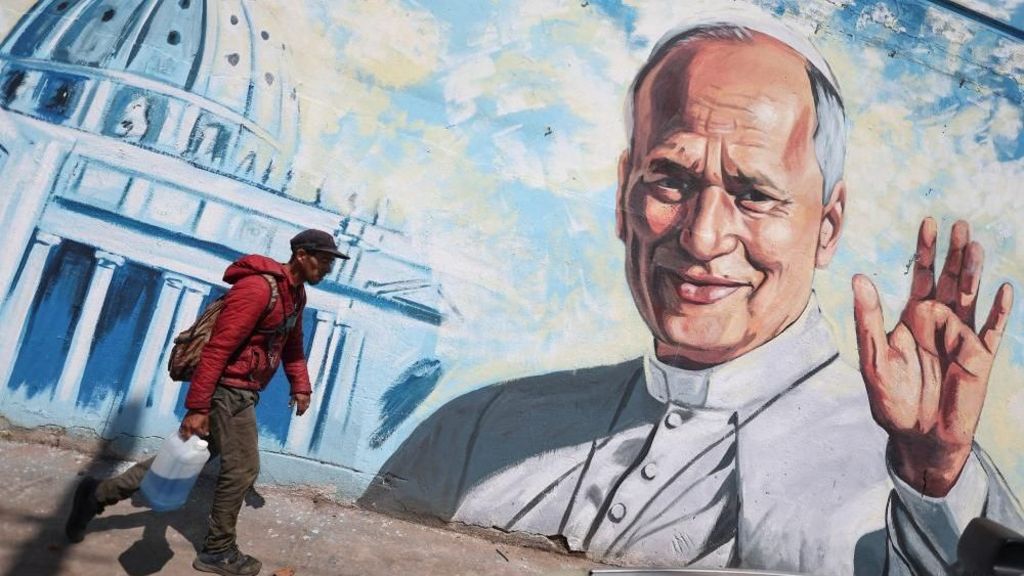
Just 21 days after completing surgery to remove a cancerous lower lobe of his right lung, Pope Leo XIV has embarked on a rigorous 12-day pastoral tour across three Latin American nations: Uruguay, Argentina, and Peru, marking a landmark pastoral journey that doubles as a long-awaited personal homecoming to the Andean nation where he served as a priest and bishop for nearly two decades. The Vatican has moved to dispel public concerns over the 71-year-old pontiff’s recovery, explicitly stating no special health accommodations have been added to the pre-planned itinerary, framing him as a fully recovering post-operative patient rather than someone living with a permanent chronic medical condition. Leo himself first disclosed the unexpected tumour discovery last month, noting the growth was identified during a routine medical scan, and his care team confirmed no cancer cells had spread to other organs following the successful procedure. Ahead of his departure from Rome, a Vatican spokesperson emphasized the pontiff possessed exceptional stamina, remained deeply enthusiastic about the full travel agenda, and had personally signed off on every scheduled event with zero amendments to the packed calendar. Villanova University religious studies professor Massimo Faggioli noted the Vatican’s deliberate messaging through the high-profile trip is to signal the brief health scare is fully behind the papacy, and that regular official and pastoral duties have resumed without interruption, pointing to the pontiff’s recent string of public audiences, formal addresses, and his presiding over the annual memorial Mass for deceased cardinals and bishops as proof of his strong physical condition. The cross-continental itinerary covers thousands of miles, spanning remote Amazonian communities, high-altitude Andean settlements over 3,000 meters above sea level, and multiple domestic and international flights across the three nations, a grueling schedule that would test the endurance of even a fully healthy individual. The tour opens in Uruguay, which will welcome its first papal visitor in 40 years at a time when the country’s Catholic population has experienced a steep, sustained decline in recent decades. The second leg brings Leo to Argentina, the native homeland of his predecessor Pope Francis, a visit framed by local religious leaders as a long-overdue tribute to Francis, who never returned to his home country during his papacy. At Rome’s Santa Maria Addolorata, Argentina’s national church, rector Father Fernando Laguna shared that news of the visit sparked widespread joy among Argentine parishioners based in the Italian capital, and the church has already decorated its halls with welcome posters and installed a large public screen to broadcast every key moment of Leo’s Argentine stop for local worshippers. This segment of the tour carries notable political sensitivity, as Argentina’s far-right President Javier Milei previously made incendiary public remarks labelling Pope Francis “evil on earth” and a communist for his advocacy of social justice policies supporting low-income communities, while the Argentine national episcopal conference has publicly criticized Milei’s sweeping austerity cuts to social welfare programs. Despite the past tensions, Milei has publicly extended a warm welcome to Leo via a post on X, noting the entire nation awaits his arrival with immense excitement, with local organizers projecting millions of attendees for public events across the country. The most anticipated stop of the tour is the final leg in Peru, which the Vatican has framed as a deeply personal return to the pontiff’s spiritual roots. Born in the United States under his given name Robert Prevost, Leo spent nearly 20 years living and ministering across Peru, holds official Peruvian citizenship, and has repeatedly cited his decades of pastoral work in the country as the foundational experience that shaped the values of his papacy. His Peruvian agenda includes a return visit to the Chiclayo diocese, where he was consecrated as bishop in 2014 and served until Pope Francis transferred him to a senior administrative role at the Vatican almost a decade later, a high-altitude public Mass in Cusco, the historic capital of the Inca Empire, and a pastoral visit to the remote Amazonian city of Pucallpa. Across all three nations, the pontiff has scheduled closed-door meetings with survivors of clerical sexual abuse, addressing a longstanding crisis that marred Pope Francis’ 2018 pastoral tour of Chile and Peru. Faggioli observed that the carefully structured tour serves as a critical step for the modern papacy to rebuild and strengthen ties with Latin America following Francis’ often complicated, uneven engagements with the region, and reflects Leo’s stated commitment to advancing a vision of pan-American continental unity. He added that the high-stakes tour also sets the stage for future potential papal travels, with Vatican leadership already internally deliberating over the timing of a possible visit to the United States during the remaining tenure of President Donald Trump.