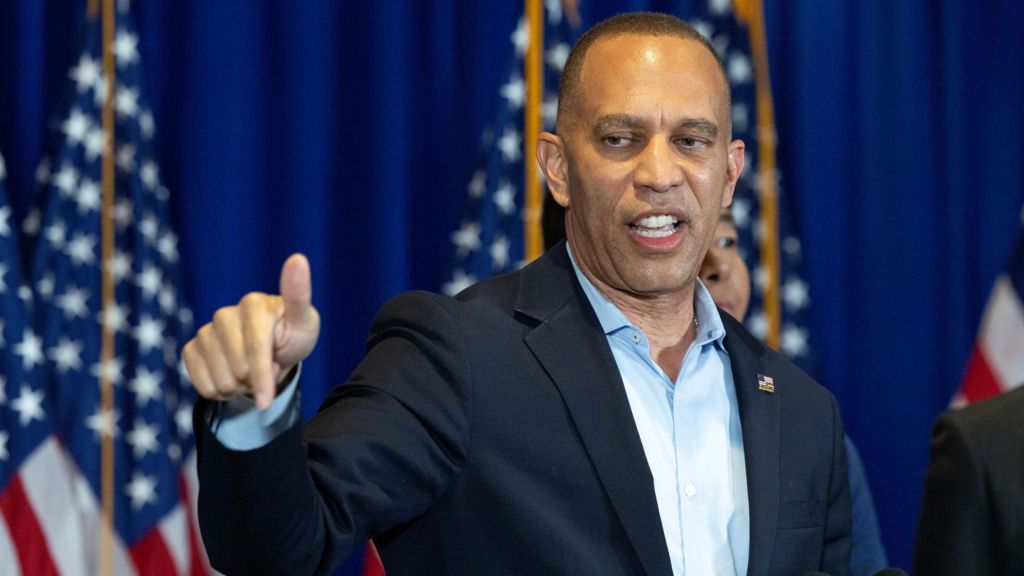
Fresh off a midterm election victory that flipped at least seven previously Republican-held Senate seats, House Democratic leader Hakeem Jeffries laid out his caucus’s core governing priority in no uncertain terms during an appearance on MSNBC’s Morning Joe: “We ran on affordability, we won on affordability, and now it’s our job to govern on affordability.” The historic electoral upset, far exceeding most pre-election forecasters’ projections, was driven not by a sweeping ideological blue wave, but by widespread voter frustration over skyrocketing daily living costs that have left 79% of Americans dissatisfied with the country’s direction, even as top-line macroeconomic indicators paint a deceptively healthy national economic picture. Across the country, small business owners from disparate backgrounds are echoing that affordability anxiety. Near Austin, Texas, Kim Hanks, operator of Tillies, a multi-site hospitality enterprise with 300 employees, notes that relentless spikes in grocery and fuel costs have forced her to repeatedly raise staff wages, describing operating budgets as “such a moving target for us on affordability.” Halfway across the country in Elkhart, Indiana, Danny Reynolds, who runs a longstanding family bridal and clothing store, says his only demand from Washington is basic stability and cross-party collaboration. Even deep in traditionally Republican rural Texas, the cost-of-living crunch has eroded GOP support. Outgoing Texas Republican Agriculture Commissioner Sid Miller told local reporters that local ranchers are now earning $300 to $500 less per head of cattle while grappling with record-high fertilizer expenses, leaving many in the deeply conservative agricultural base feeling “betrayed.” To deliver on voter demands, the new Democratic congressional majority has laid out an ambitious multi-pronged policy agenda branded “Fighting for an Affordable America.” Top of the list is restoring the enhanced Affordable Care Act health insurance subsidies that were rolled back, alongside reversing Medicaid cuts signed by President Donald Trump in 2025. The caucus also aims to eliminate the administration’s sweeping import tariffs, which they argue add thousands of dollars annually to household costs for groceries, fertilizer, and construction materials, and move to end ongoing US military engagement in Iran, a conflict they directly link to the current $4.18 per gallon national average gasoline price, a nearly 40% increase from pre-conflict levels. Additional priorities include a 10-year national initiative to build 4 million new affordable housing units, raising tax rates on billionaires, and expanding child tax credits for working families. Yet the path to passing any of these policies is fraught with structural barriers. As prominent investor and Fisher Investments founder Ken Fisher bluntly observes, the divided government dynamic means “Congress can’t get anything past a presidential veto. President Trump can’t get anything he wants.” Overriding a presidential veto requires a two-thirds supermajority in both the House and Senate, a threshold Democrats cannot reach on their own, leaving the country facing a likely two-year stretch of legislative and regulatory stagnation that will disappoint millions of voters who cast their ballots explicitly against political deadlock. Many of the Democrats’ core policy priorities face steep uphill battles. President Trump has repeatedly framed his tariff regime as a cornerstone of his economic agenda, and Oxford Economics Deputy Chief US Economist Bernard Yaros projects average import tariff rates will hold steady at around 10% for the remainder of his term. Complicating efforts to roll back the tariffs is their surging contribution to federal revenue: the levies generated just over 1% of total federal revenue in 2024, but now make up more than 5% of government income, a fiscal anchor that makes full tariff dismantlement extremely difficult for any future administration. Limited bipartisan compromise remains a narrow possibility, however. President Trump told CNBC that he believes his administration can collaborate with congressional Democrats on “many more things than people understand.” Yaros points to a potential high-stakes trade-off, where Democrats agree to extend the GOP’s existing tax cuts in exchange for the restoration of health insurance subsidies, though he does not expect such a deal to materialize until late 2027, with tangible economic benefits for households not arriving until 2028. Beyond formal legislation, Democrats are exploring alternative pathways to advance their affordability agenda. Henrietta Treyz, an analyst at policy consultancy Veda Partners, notes that Democratic leadership plans to launch rigorous oversight hearings targeting corporations that passed 100% of tariff-related cost increases directly onto consumers, particularly in the wake of a February Supreme Court ruling that allows congressional scrutiny of whether firms used tariff rebates to lower consumer prices. Oregon Democrat Ron Wyden, incoming chair of the powerful Senate Finance Committee, has summed up this oversight strategy in six words: “affordability for us, accountability for them,” vowing to use his committee’s subpoena power to reassert congressional authority over trade policy and call insurers, pharmaceutical manufacturers, and large financial institutions to testify about their pricing practices. At the state and local level, newly elected Democratic governors in traditionally red states including Texas, Ohio, and Georgia hold direct regulatory authority over two major household cost drivers: electricity rates, which have spiked amid surging data center energy demand, and local zoning rules that currently restrict new housing construction. Even with all these strategies in place, many critical cost-of-living factors remain entirely outside of Democratic lawmakers’ control. Gasoline, diesel, and fertilizer prices are inextricably tied to the trajectory of the Iran conflict, and Oxford Economics analysts warn that now that the election has concluded, the Trump administration may be far more willing to escalate military action in the region, as high fuel prices no longer pose a major electoral risk. That dynamic creates a politically precarious position for Democrats: if global energy prices fall, they will struggle to claim credit for the relief, but if prices rise further, they will almost certainly share the blame from frustrated voters. The first immediate test of the new congress’s ability to avoid dysfunction comes on December 11, when current federal government funding expires, with analysts warning the risk of a full government shutdown is significantly elevated. Having won the national argument that affordability is the nation’s top priority, Democrats now face the unenviable task of delivering tangible cost relief to voters, even with levers of power stacked against their agenda.
Food, fuel and taxes – can the Democrats do anything to ease cost of living pressures?