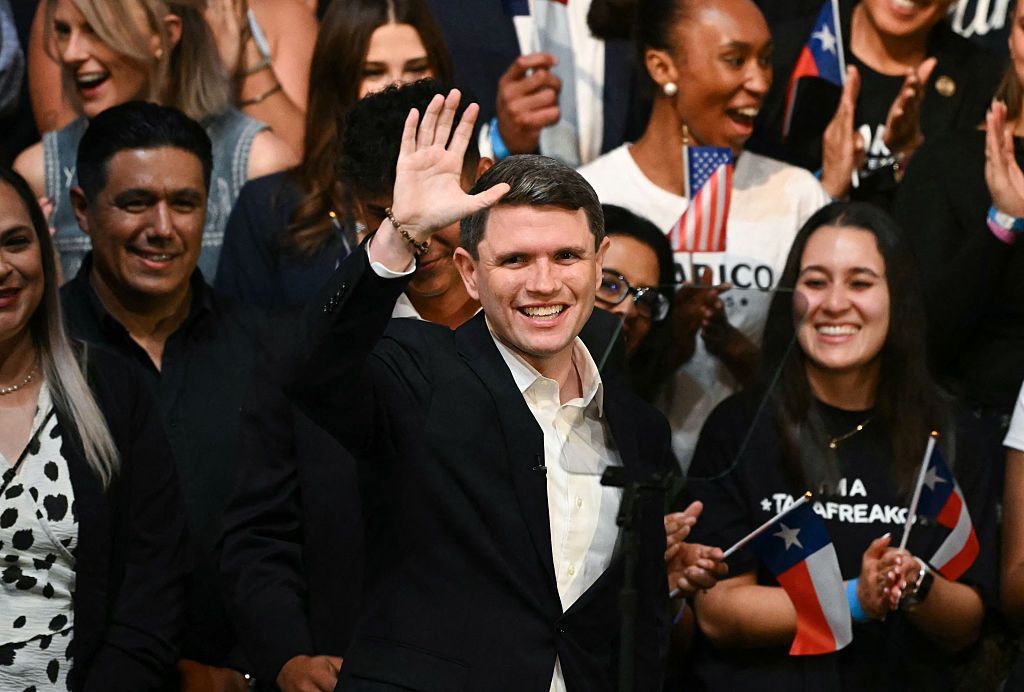
The 2026 US midterm elections delivered a historic upset for the Democratic Party, as Texas state legislator James Talarico flipped a long-held Republican US Senate seat to blue, handing the party full control of both the Senate and House of Representatives for the upcoming congressional term. The decisive electoral landslide sparked jubilant scenes across Democratic headquarters on election night, with presumptive incoming House Speaker Hakeem Jeffries proclaiming, “Today begins the great American comeback” to cheering party supporters.
Yet behind the celebratory fervor, Democratic lawmakers are already confronting the steep challenges of translating months of ambitious campaign promises into tangible policy action, as they enter a divided power dynamic with sitting Republican President Donald Trump still occupying the White House. For months on the campaign trail, Democratic candidates pledged to root out government and corporate corruption, slash sky-high costs for healthcare, groceries and gasoline, and curb the administration’s ongoing military engagement with Iran. But party leaders openly acknowledge that holding congressional majorities does not guarantee smooth delivery on these commitments, given Trump’s sweeping executive authority to veto any legislation he opposes.
Delaware Democratic Senator Chris Coons emphasized the party’s precarious political position in an interview with the BBC, noting, “We need to prove we can get stuff done, actually deliver answers to their concerns and questions about low wages and rising costs in particular. The Democratic Party is still deeply unpopular — we are less unpopular than the Republican Party, much less unpopular than Donald Trump.”
A top priority for House Democrats, led by incoming Oversight Committee Chairman Robert Garcia of California, will be sweeping oversight investigations into the Trump administration. Garcia famously told allies to “Lawyer up” on election night, outlining a sprawling oversight agenda that will probe alleged conflicts of interest involving Trump and his family, corporate corruption, reported abuses within the Department of Homeland Security and Immigration and Customs Enforcement, and the long-classified files related to convicted sex offender Jeffrey Epstein.
The new Democratic Senate majority will also wield significant institutional powers, including full authority to confirm or reject all of Trump’s cabinet and federal judicial nominees. If a vacancy opens on the US Supreme Court during the remainder of Trump’s term, Senate Democrats will be able to block hardline conservative nominees and force the White House to advance more moderate candidates that can win bipartisan support. While the House holds the constitutional power to launch impeachment proceedings against the president, Democratic leaders have signaled deep reluctance to pursue that path: the two prior impeachments of Trump during his first term resulted in full Senate acquittals, and a two-thirds 67-vote supermajority required to convict the president remains far out of Democratic reach. Jeffries has repeatedly refused to rule out or confirm any impeachment plans, telling CNN in August, “We haven’t ruled anything in. And we haven’t ruled anything out.”
Legislative analysts warn that the era of divided government could bring unprecedented levels of Washington gridlock, at a time when public approval of Congress already hovers at a dismal 14% according to an October Gallup poll of registered voters. George Washington University legislative affairs professor Casey Burgat noted, “If you thought legislating was hard in the last Congress with unified Republican control, that will get much more complicated.” While Democrats can easily pass their priority bills through both chambers with their comfortable majorities, they lack the two-thirds supermajority required to override any Trump veto.
The president has sent conflicting signals about his willingness to collaborate with the new Democratic Congress: in comments to the New York Times on election night, he struck a conciliatory tone claiming “We’ll work with the Democrats, and we’ll, you know, look forward to working with them. We’ll probably work something out,” only to post a photo on his Truth Social platform minutes later of his signature red campaign hat emblazoned with the single word “VETO.”
Key policy priorities for House Democrats include reversing steep Republican-backed cuts to Medicaid and expanding Affordable Care Act tax credits to lower healthcare costs for millions of low-income Americans. But even areas with traditional bipartisan overlap, including consumer affordability policies, AI industry regulation, reform of military aid to Israel, and efforts to rein in the Iran war, face significant risk of collapse as congressional Republicans, already positioning for the 2028 presidential election, have little incentive to hand Democratic lawmakers legislative wins.
Deep internal rifts also threaten to derail Democratic unity, most notably over US military funding for Israel. Progressive incoming senators including Michigan’s Abdul El-Sayed and a cohort of newly elected House Democrats have pledged to push for strict cuts to Israeli military aid, a position that puts them on a direct collision course with more centrist Democratic leadership. Efforts to constrain Trump’s unilateral war-making powers in Iran also face major legal hurdles: a bipartisan resolution passed by both chambers in June to halt hostilities with Iran was simply ignored by the Trump White House, which claims broad executive authority to conduct foreign military operations. Brookings Institution senior governance studies fellow Scott Anderson noted that Congress’s ability to force the president to comply remains an untested legal gray area, requiring potential litigation to resolve through the courts. As Coons warned his party colleagues in the wake of their historic midterm victory: “It is overwhelmingly a rejection of Donald Trump, and his agenda and policies. But if we overreach, or if we fight too much internally, we could miss this moment.”
Democrats won Congress in a blue wave. Now comes the hard part.