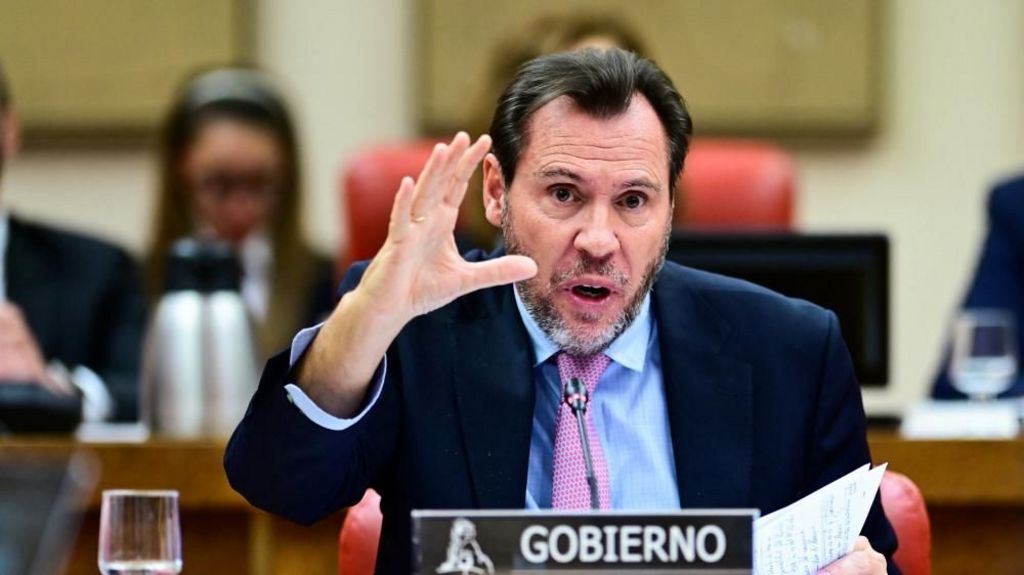
Six days after a catastrophic high-speed rail crash near the central Spanish town of Urda that claimed at least 69 lives and left dozens more severely injured, Spain’s Transport Minister Óscar Puente formally tendered his resignation during a congressional public hearing on Tuesday evening. The announcement capped weeks of intensifying scrutiny, as opposition political groups and even some members of the ruling Socialist Party’s allied coalition had repeatedly called for his ouster over repeated deadly rail incidents in the span of a single year. In his address to lawmakers, Puente explicitly referenced a separate fatal rail crash that occurred in the southern Andalusia region in January, noting that a transport minister serving a nation of Spain’s size and transit network scale cannot reasonably remain in post after two disasters of such catastrophic magnitude within 12 months. He also confirmed he would remove his name entirely from the candidate lists for the snap general election scheduled for November 29, a move that delivers an unanticipated political setback to Prime Minister Pedro Sánchez’s Socialist-led administration just weeks before voters head to the polls. The Urda tragedy unfolded on October 28, when a state-owned Renfe high-speed train carrying 397 passengers collided at full speed into the rear of a stationary private Iryo train holding 147 travellers, requiring emergency responders to deploy heavy lifting machinery to access trapped passengers inside derailed carriages. Leaked audio recordings published by major Spanish outlets including El Pais and public broadcaster RTVE shortly after the crash exposed critical failures in rail traffic control protocols. The recordings document communications between the Madrid regional rail control centre and the two train operators in the minutes leading up to the collision: after a widespread computer fault disabled the automatic signalling system across the affected stretch of track, controllers directed both trains to operate under the Lateral Signalling Block backup system, but cleared the Renfe train to travel at full normal speed even after being explicitly notified that the Iryo train remained immobilized on the tracks 25 kilometres ahead. Puente described the decision to allow unrestricted speed on the affected section as “inexplicable” during his testimony, where he had first laid out a slate of proposed new rail safety reforms before announcing his resignation. He revealed that he had reached the decision to step down immediately after the October 28 disaster, but had delayed making it public until he could present the planned safety measures to parliament. The Urda crash ranks as one of the deadliest rail disasters in modern European history, and the worst Spain has experienced since a 2013 high-speed derailment near Santiago de Compostela. The Spanish government declared three official national days of public mourning in the wake of the tragedy. Prime Minister Sánchez has pledged that a full, independent investigation will “uncover every last detail of this tragedy” to assign accountability and prevent future similar incidents.