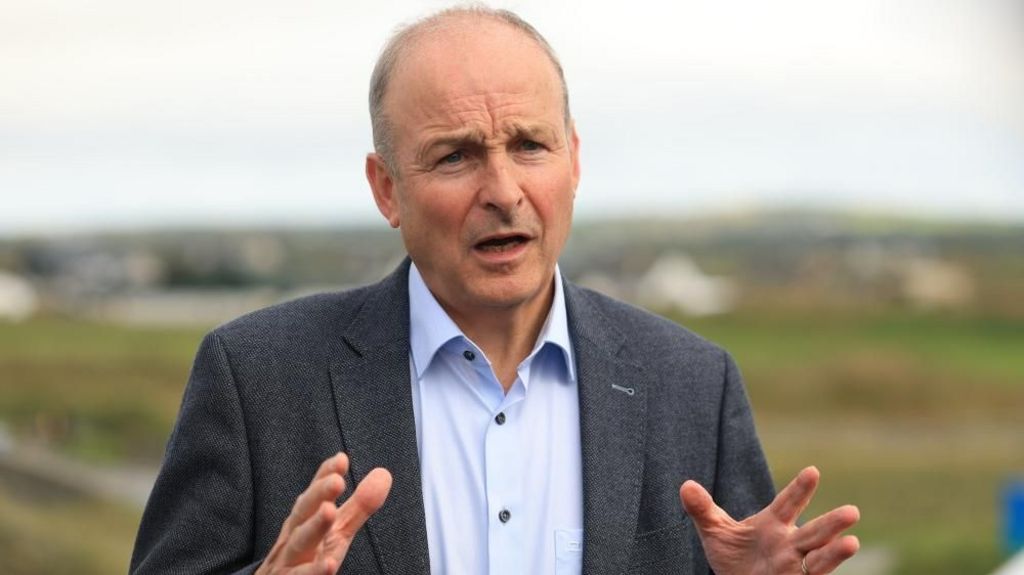
In a closed-door Tuesday gathering with his Fianna Fáil parliamentary colleagues in Dublin, Taoiseach Micheál Martin formally laid out plans to launch a dedicated, evidence-focused initiative examining all plausible constitutional futures for the island of Ireland, a move timed in parallel with coalition partner Fine Gael’s scheduled unveiling of its own Irish unity blueprint at the party’s annual ard fheis in Cork this weekend.
Dubbed the Futures Study Initiative, the framework is designed explicitly to build an impartial, independent evidence repository that will ground all future policy proposals related to the island’s constitutional status, rather than advocating for a single predetermined outcome. Stakeholders across the entire political spectrum, from registered political parties and grassroots activist groups to unionist, loyalist and nationalist communities alike, will be extended formal invitations to submit feedback, research and perspectives to the process. A core stated goal of the initiative, as outlined in the policy document circulated to attendees and reviewed by BBC News NI, is to create a good-faith platform for voices outside the nationalist tradition to contribute meaningfully, pushing all ideological camps to move beyond broad, unsubstantiated claims about the island’s future and engage rigorously with empirical data.
The process will conduct deep, granular analysis of three distinct core scenarios for Ireland’s constitutional trajectory: a fully unitary all-island republic administered exclusively through Dublin-based governing institutions, with no devolved Northern Ireland administration, that would be fully implemented within five years of a successful unification referendum; a unified all-island state that retains a Northern Ireland devolved governance structure modelled closely on the current Stormont framework; and the full retention of the existing constitutional status quo as enshrined in the Good Friday Agreement, with no formal constitutional adjustments. No single scenario will be endorsed by the initiative’s leadership; instead, the team will map out the concrete practical impacts, resource requirements, legal hurdles and societal implications of each option across six high-priority domains: constitutional and legal reform, cross-island economic integration, health service alignment, education system coordination, public security arrangements, and cultural and symbolic governance frameworks.
The initiative will be steered by a lead chair supported by a minimum of five panel members, whose work will be subject to oversight from a panel of subject-matter experts across the six focus areas. A dedicated administrative secretariat, staffed by a mix of senior civil servants from the Department of the Taoiseach and independent external specialists, will be established to support the panel’s operations. The policy document explicitly clarifies that the entire process will not override, interfere with or supersede existing binding commitments to North-South cooperation and Ireland-UK bilateral partnerships laid out in the Good Friday Agreement. Fianna Fáil has confirmed it will convene a special dedicated parliamentary session in the coming weeks to deliberate further on the parameters and implementation timeline for the new initiative.
Taoiseach to set up initiative on constitutional future of the island