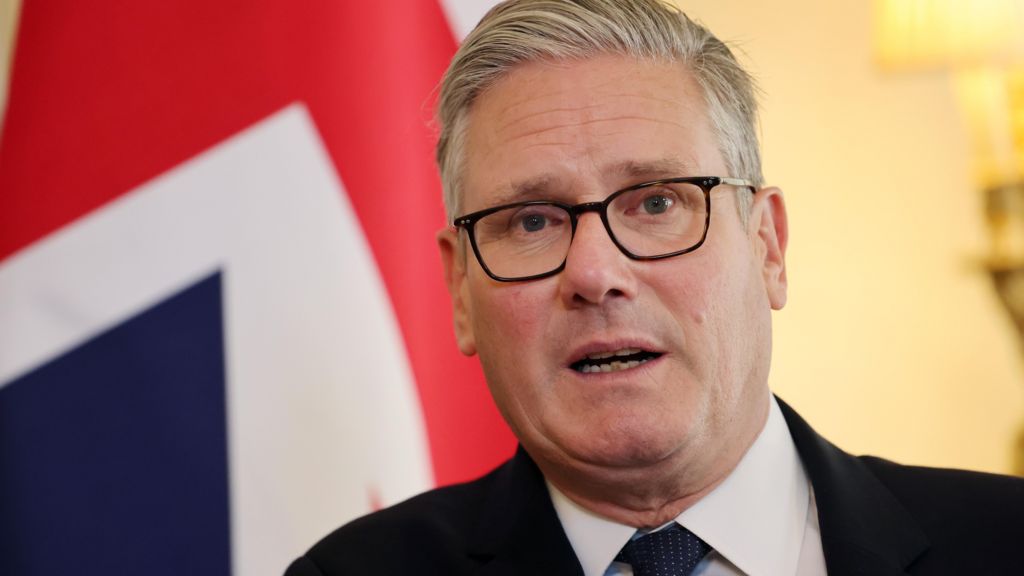
Former British Prime Minister Sir Keir Starmer delivered a landmark address Friday evening at Dublin’s City Hall, where he received honorary life membership from the British Irish Chamber of Commerce (BICC), laying out a stark new vision for European collective security amid shifting transatlantic alliances.
Starmer framed his core argument around a hard reality: the historic shift in the U.S.-Europe defence relationship is a permanent structural change, not a temporary quirk of former President Donald Trump’s administration. He cautioned European leaders against clinging to nostalgia for pre-existing security arrangements, emphasizing that Washington has explicitly signalled it will no longer underwrite the bulk of its allies’ defence costs. “Things will not go back to the way they were,” he told the assembled business and diplomatic audience in attendance at the BICC gala dinner.
Rejecting framing that the proposal for a unified pan-European security architecture would weaken longstanding transatlantic ties, Starmer stressed that the UK-U.S. “special relationship” on military operations, intelligence sharing and counterterrorism remains far too robust to be diminished by greater European self-reliance. Instead, he argued that Europe has twice been caught unprepared for predictable security shocks: first, when Russia’s full-scale invasion of Ukraine exposed deep, long-unaddressed gaps in European defence capabilities and strategic readiness, and second, when Trump’s public statements eliminated all ambiguity about Washington’s intent to end decades of disproportionate financial support for European security. “We have to catch up after twice being caught asleep at the wheel,” he noted.
The former prime minister positioned the UK as a natural central pillar of this new common security framework, drawing a direct parallel between the deep integration of the EU’s single economic market and the urgent need for equivalent cross-border coordination on defence procurement, joint military training, shared intelligence pooling and rapid deployment protocols. He also pushed back against framing the initiative as an exclusively EU project, noting that Europe’s broader geographic periphery is inextricably tied to the continent’s collective defence, requiring buy-in from non-EU states including the UK. While he acknowledged that meeting NATO’s 5% of GDP defence spending target is a critical baseline step, Starmer emphasized that the required transformation extends far beyond national budget increases alone.
The address follows Starmer’s public comments back in July, shortly after his premiership concluded, that he planned to maintain regular communication with Trump. The two leaders initially built a productive working relationship in the early months of Trump’s second term, a dynamic Starmer’s former administration hailed as one of its signature diplomatic wins. That rapport later fractured publicly, however, after Starmer declined to authorize U.S. use of British military bases for initial retaliatory strikes against Iran, prompting Trump to publicly mock him as “no Winston Churchill” and repeatedly criticize the UK’s approach to Middle East security. Starmer confirmed to reporters in Dublin that Trump had extended well wishes as he prepared to depart 10 Downing Street, and that lines of communication between the two remained open.