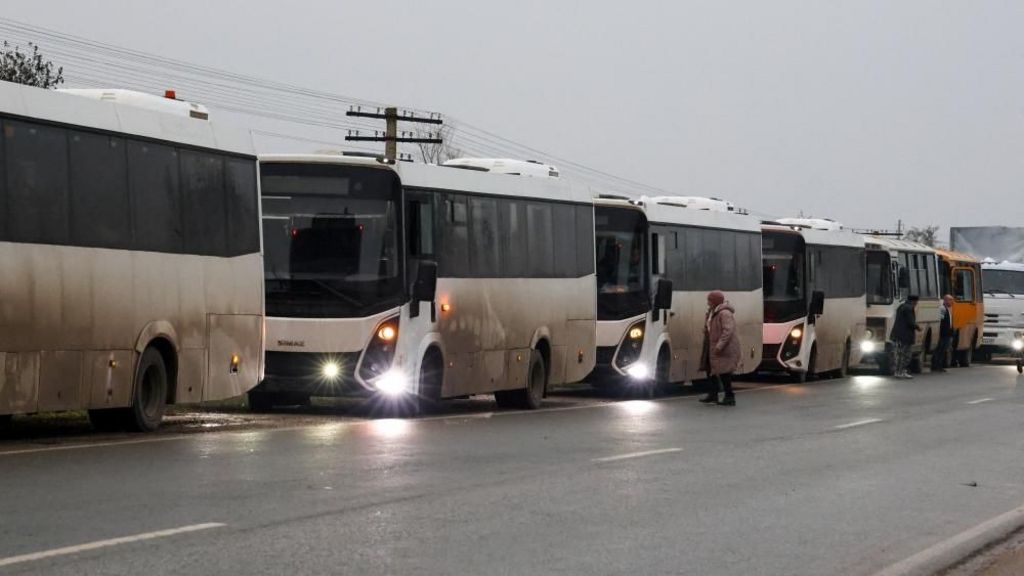
Hundreds of civilians trapped for months in the war-ravaged Russian-occupied southern Ukrainian city of Oleshky have successfully completed the first leg of their long-awaited evacuation, landing in the Belarusian city of Gomel on Saturday morning ahead of their scheduled return to Ukrainian territory later the same day, confirmed senior Ukrainian officials and Belarusian state media. The high-stakes evacuation operation unfolded under a localized humanitarian ceasefire that went into effect across the broader Kherson frontline region on Tuesday, marking the first sustained multi-day period of calm in the area since Russia launched its full-scale invasion of Ukraine in February 2022, with the truce set to hold through the end of Sunday, November 1. For months, residents of Oleshky have faced catastrophic living conditions: cut off from consistent supplies of food, potable water, and electricity, many were forced to forage for and cook garden weeds to avoid starvation. Escape routes out of the city had been heavily mined and targeted by regular drone attacks, making any attempt to flee a near-suicidal risk; one resident who escaped three weeks prior recounted trekking 24 kilometers directly through active minefields to reach safety. The temporary ceasefire allowed demining teams to clear a safe exit path from the city, and local authorities granted residents a four-hour window to register for departure before a 25-bus convoy — fitted with dedicated ambulances to accommodate people with limited mobility, with total capacity for 750 people — departed Oleshky on Friday. The complex evacuation route required evacuees to first travel through Russian-held territory, onward to the southern Russian city of Anapa for charter flights to Gomel, as all bridges spanning the nearby Dnipro River have been destroyed and the surrounding riverbanks remain heavily mined and impassable. Notably, Ukrainian Human Rights Ombudsman Dmytro Lubinets traveled directly into Russian-occupied Ukrainian territory alongside his Russian counterpart Yana Lantratova, departing from the Russian-controlled Crimean city of Armiansk to oversee the operation, marking the first visit by a senior Ukrainian official to occupied Ukrainian land since the full-scale war began. Lubinets clarified that his unprecedented cooperation with the Russian official was undertaken exclusively to save civilian lives, though the move has drawn criticism from segments of the Ukrainian public who view engagement with representatives of the occupying force as inappropriate given the massive civilian casualties and widespread destruction inflicted by Russian forces across the country. While several hundred residents have opted to remain in Oleshky despite the total collapse of local utilities and widespread structural damage, both Ukrainian and Russian authorities have pledged to deliver full humanitarian support to those who stay: Kyiv has committed to delivering all required aid, while Moscow announced it has stockpiled dozens of tonnes of supplies including food, medicine, hygiene kits, and generator fuel for remaining residents. Prior to the 2022 invasion, Oleshky was home to 24,000 people, and Ukrainian military positions are currently stationed just 5 kilometers outside the city limits. As of Saturday morning, the final of four charter flights carrying evacuees touched down at Gomel airport, and local Belarusian state news agency Belta confirmed that the convoy of evacuated Ukrainian citizens had departed the airport and was heading directly for the Ukrainian border, where they are set to be reunited with family members and receive post-evacuation support from Ukrainian authorities.