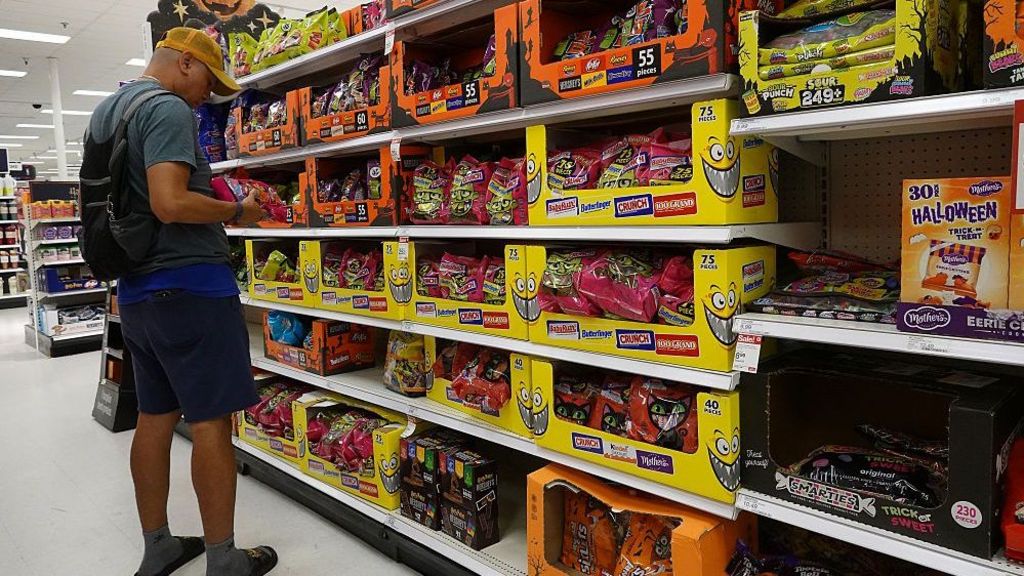
What was supposed to be a lighthearted, festive hunt for Halloween candy ahead of the spooky season has turned into an unexpected financial fright for millions of US consumers, as decades-high confectionery price hikes collide with lingering household budget strains. Demetrio Beltres, a 33-year-old financial advisor browsing Manhattan’s Target location to stock up on goodies for local trick-or-treaters, shared that he had already adjusted his usual seasonal budget far beyond pre-inflation norms. Where he once allocated $15 to $20 annually for Halloween treats, he now finds himself needing to set aside $20 to $30 just to secure a comparable stash of sweets for visiting children. He is far from alone in that budget squeeze, with surveys and retail data confirming a nationwide trend of cost-conscious shoppers scaling back their seasonal candy spending. Stephen Zagor, an adjunct associate professor at Columbia Business School specializing in the food and retail sectors, notes that household discretionary spending has been severely constrained by rising baseline costs for rent, groceries, and utilities, leaving little room for extravagant seasonal splurges. “This year, Halloween feels far scarier from an economic perspective than any spooky costume or haunted house display could ever be,” he observed. Independent analysis from progressive non-profit organizations Groundwork Collaborative and the Century Foundation found that popular Halloween chocolates and confectionery carry a 15.3% year-over-year price premium in 2025 compared to the previous year, while separate research from personal finance platform Finance Buzz quantifies a staggering 71% cumulative jump in Halloween treat prices over the past five years – a growth rate vastly outpacing general consumer inflation across the same period. A core driver of this confectionery price surge is the historic spike in global cocoa costs: data from the International Monetary Fund, tracked via the Federal Reserve Bank of St. Louis, shows that the price of a tonne of cocoa peaked at over $10,700 in January 2025, after extreme climate-fueled weather events decimated key cocoa harvests in major producing regions. Zagor explains that the full impact of those record cocoa costs is only now filtering down to retail shelves, as manufacturers work through inventory sourced during the peak price window. Broader macroeconomic headwinds are amplifying that candy-specific price pressure: US headline inflation remains anchored at 3.7%, and diesel prices are hovering at $6.32 a gallon, a mere 20 cents below the all-time high recorded the previous September, pushing up transportation and distribution costs for all consumer goods. New York shopper Mallory, who declined to share her full last name, summed up the widespread consumer sentiment, noting, “Every single category of goods has gotten more expensive, so it’s no surprise at all that Halloween candy is following suit.” Market analytics from Nielsen IQ confirm that these cost strains have already shifted seasonal purchasing patterns: by mid-September, total Halloween treat sales were down 11.7% year-over-year, and while sales recovered to narrow the gap to a 6.7% decline by mid-October, the data reveals a clear shift in shopper behavior. Chris Costagli, NielsenIQ’s vice-president of US food thought leadership, explained that consumers are not abandoning the Halloween tradition entirely, but are prioritizing smaller, more affordable pack sizes while large, bulk candy bags sit unsold on retail shelves. “Shoppers still want to celebrate the occasion, but they are scrutinizing every item they add to their cart far more closely than in previous years,” he said. Zagor, a self-proclaimed Halloween enthusiast, also offered a creative, low-cost workaround for budget-strapped households, arguing that families do not need to splurge on expensive premium candy to deliver a memorable experience for trick-or-treaters. Simple, playful touches such as distributing treats from a decorative spooky skeleton hand instead of a plain bowl, dressing up in homemade costumes to greet visitors, or hosting a small group activity to make homemade treats can turn the seasonal ritual into something far more memorable than a standard handful of store-bought sweets. “This year, the ‘trick’ side of Halloween can easily become just as special and meaningful as the treat,” he noted.