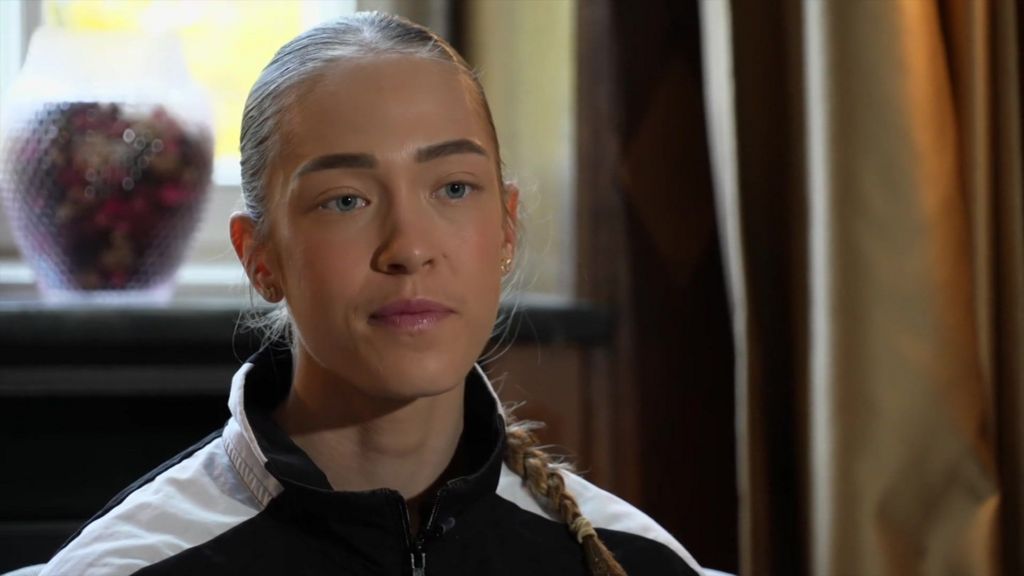
In an exclusive sit-down interview with the BBC ahead of her highly anticipated return to competitive racing in Hamburg this Friday, record-holding Australian Hyrox athlete Joanna Wietrzyk has formally acknowledged that she made a reckless, ill-judged call to continue competing mid-event during the September Hyrox stop in Beijing, putting fellow participants at unnecessary health risk. The 24-year-old endurance sports star, who holds a world record in the fast-growing fitness competition series, revealed she had entered the Beijing race in peak condition, unaware that a sudden bacterial food poisoning infection would trigger an unexpected bout of diarrhoea roughly halfway through the contest. At the time, consumed by the laser-sharp, win-at-all-costs focus that defines elite competitive athletes, Wietrzyk said she failed to consider how her continued participation could expose other racers to contamination, especially given Hyrox’s indoor format that relies heavily on shared, frequently used equipment ranging from sleds to rowing machines and sandbags. Images showing faecal matter on parts of her body circulated virally across social media in the aftermath of the race, sparking widespread public backlash and demands from fellow competitors that Hyrox issue a formal explanation for allowing her to stay on the course. Though Wietrzyk initially posted a defiant message to her Instagram page, since deleted, that read “Go hard or go home” and “a win is a win”, she explained that she had been in a disorienting fight-or-flight state while seeking urgent hospital care immediately after the event, and had not anticipated the scale of global public scrutiny the incident would generate. She later forfeited her Beijing win, retroactively withdrew her results, and issued an initial apology, noting that she needed several days to process the traumatic fallout before she could fully grasp the harm her decision had caused. The intense online harassment that followed extended beyond Wietrzyk herself, with her family also receiving threats, prompting Hyrox leadership to announce a formal policy that would permanently ban any users sending abuse or threats to athletes from all future Hyrox events. Wietrzyk described the months following the incident as deeply mentally and emotionally draining, to the point that she seriously considered walking away from the sport she had dedicated years to mastering entirely. She also pushed back against suggestions her delayed apology was a cynical damage control tactic, saying the unprecedented global attention had caught her completely off guard as a 24-year-old athlete who had only ever focused on training and competing. Hyrox co-founder Moritz Fürste also issued a public apology over the event, admitting that race officials had made a critical error by failing to intervene immediately to remove Wietrzyk from the course once the health risk became apparent. In response to the controversy, the global competition series has rolled out sweeping new safety rules that grant race directors explicit authority to pull any athlete from the event if bodily fluids including vomit, urine or faeces create a contamination risk that endangers the competitor themselves or other participants. Hyrox, which was founded in Hamburg, Germany in 2017, has exploded in global popularity in recent years, with events held across dozens of countries worldwide that task participants with alternating 1-kilometre running loops with high-intensity functional fitness challenges. Ahead of her comeback race in the city where the series was first launched, Wietrzyk acknowledged she felt nervous to return to competition, and expressed hope that the high-profile incident would not become the defining feature of her athletic legacy. “I don’t want it to become my identity,” she told the BBC, adding that the traumatic experience had reshaped her perspective on elite sports culture, where top competitors are often hyper-singularly focused on victory at the cost of all other considerations. “There is more to life than just racing and just winning,” she reflected. While she unreservedly accepts full responsibility for her wrong decision that put others at risk, Wietrzyk also noted that the scale of online vitriol targeted at her was disproportionate, and that she hoped to use her experience of navigating the intense public backlash to build mental resilience and inspire other athletes to make safer, more thoughtful choices during competition.
Hyrox athlete who soiled herself in race tells BBC she put others at risk but says backlash was traumatic