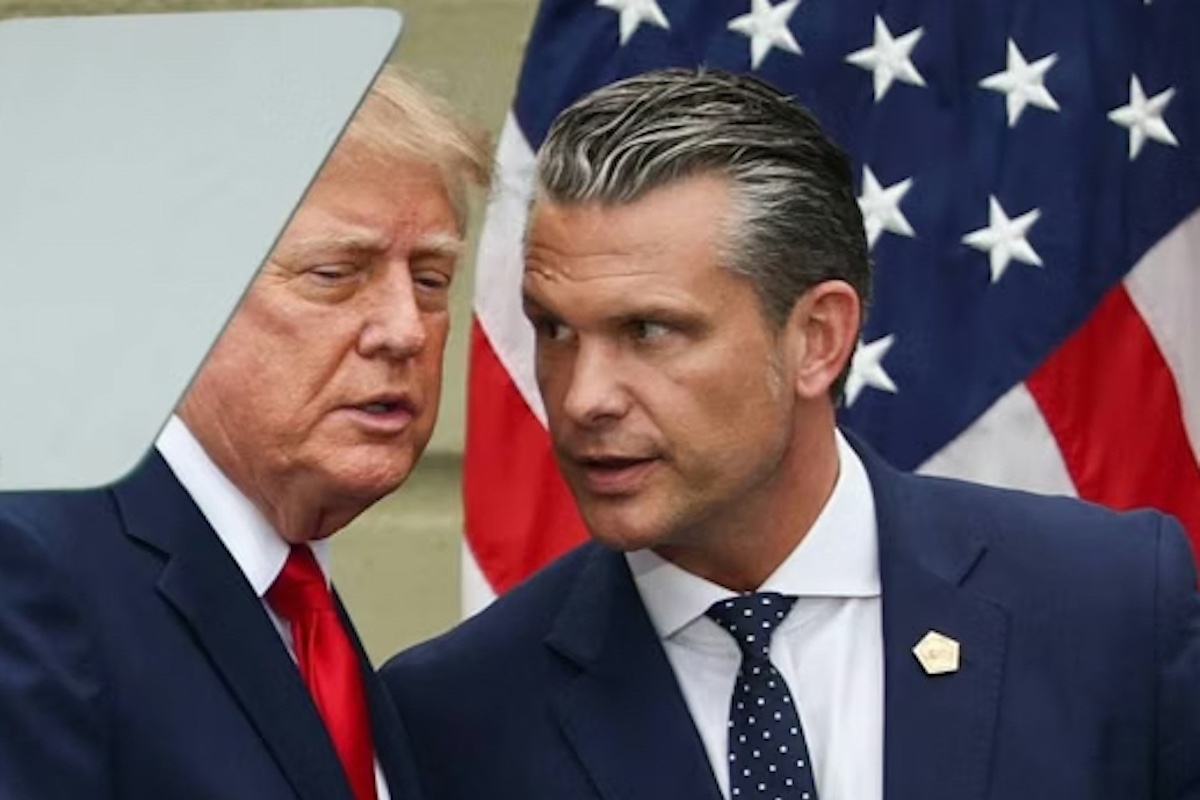
On October 28, prominent Democratic U.S. Senator Chris Murphy of Connecticut publicly revealed he was among a select group of lawmakers who attended a closed, classified congressional briefing regarding the Trump administration’s internal deliberations over a potential new large-scale military offensive against Iran, scheduled to take place shortly after the upcoming U.S. midterm elections. Murphy, who recently completed a fact-finding trip to Gulf Arab states to assess the widespread damage Iran has inflicted on U.S. military installations in retaliation for what he called Donald Trump’s illegal initial war against Iran, shared his scathing assessment of the administration’s planned operation during a public event hosted by the Middle East Institute. He stated bluntly that the proposed war blueprint is fundamentally reckless and deranged. While declining to divulge classified specifics from the closed-door session, Murphy confirmed that administration officials presented the planned new assault as a “short-duration” campaign — a familiar talking point from the Trump White House that mirrored its early, unfulfilled pledge that the original Iran war would conclude in a matter of weeks. The senator warned that launching this new offensive would trigger catastrophic, cascading escalation and completely shatter U.S. commitments to global rule of law, noting that open public reporting has already outlined civilian infrastructure sites that could be targeted in the strike. He further emphasized that the plan developed at President Trump’s direct request would not end the conflict, but instead prolong and expand the fighting in ways that gravely harm core U.S. national security interests. Multiple major independent media outlets including The Associated Press, CNN and The Wall Street Journal have corroborated Murphy’s disclosures, reporting that the Trump administration has already notified its Middle East allies to prepare for a short, intense military campaign targeting Iran in the immediate aftermath of the midterms. Citing anonymous U.S. defense and administration officials, CNN noted that while Trump has not issued a final formal order for the strike, he has leaned heavily toward authorizing major military action, with U.S. Central Command and the Pentagon having already finalized a sweeping target list that includes Iranian energy facilities, military bases and nuclear sites. The unfolding situation has drawn sharp criticism and analysis from foreign policy experts and advocacy groups. Ryan Costello, Policy Director at the National Iranian American Council (NIAC), described Murphy’s public remarks as a deeply alarming warning that underscores the urgent need to immediately end the ongoing Iran conflict. Sina Toossi, a senior non-resident fellow at the Center for International Policy, shared his assessment that a large-scale, unprecedented infrastructure-focused conflict waged by the U.S. and Israel against Iran appears increasingly inevitable. Toossi noted that while he expects Iran’s retaliatory capabilities would likely force the U.S. to halt operations quickly to avoid full-scale catastrophe, a prolonged campaign would trigger widespread destruction of critical regional energy infrastructure, exacerbate global energy crises, push multiple national economies including the U.S. into recession, and irreparably damage the remainder of Trump’s presidential legacy. Adding to the complex, contradictory landscape, recent reports indicate Vice President JD Vance — widely viewed as the leading 2028 Republican presidential frontrunner — sent a diplomatic letter, with Trump’s reported approval, to Mohsen Rezaei, secretary of Iran’s Supreme National Security Council and former long-serving commander of the Islamic Revolutionary Guard Corps, in an exploratory bid to restart formal peace talks and persuade Trump to abandon plans for the strike. Trump has publicly denied authorizing Vance to initiate these diplomatic outreach efforts, despite the Wall Street Journal’s verified reporting on the exchange. Costello of NIAC noted that while any gesture to pursue a diplomatic off-ramp for the conflict is a positive sign, the Trump administration has not taken any tangible steps to demonstrate a genuine commitment to ending hostilities, and that the president’s continued belief that a military victory against Iran is possible represents a deeply dangerous and misguided stance. On the Iranian side, Foreign Minister Abbas Araghchi laid out his country’s position in a recent Financial Times op-ed, stating that Tehran remains fully committed to pursuing a dignified, peaceful diplomatic resolution to the conflict while maintaining full readiness to defend its territory against any aggression. Araghchi criticized the Trump administration for operating under persistent, erroneous assumptions about Iranian military resilience, noting that Tehran has no trust in the U.S. government’s stated professions of interest in peace. He added that meaningful diplomatic progress is impossible as long as the White House continues to threaten new violence while refusing to acknowledge that no viable military solution to the Iran conflict exists, even as Iranian diplomats remain obligated to pursue every possible path to peace.