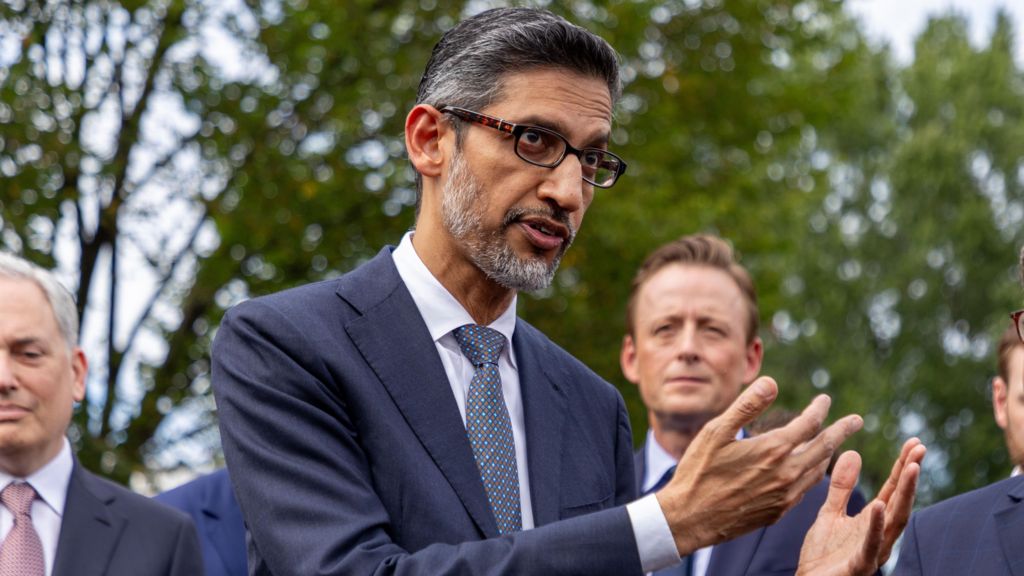
In a seismic end-of-quarter market shakeup, Google parent company Alphabet shed more than $500 billion in market capitalization on a single Thursday, marking one of the largest single-day value drops in corporate history, as Wall Street reacted with alarm to the firm’s latest operational update revealing unintended side effects from its aggressive AI integration strategy. The steep selloff pushed Alphabet’s share price to a six-month low, driven by disclosures that newly deployed AI-generated query summaries on its flagship search platform are directly eroding ad sales — the revenue stream that makes up the overwhelming majority of the conglomerate’s total earnings. The turmoil at Alphabet is not isolated: the three tech giants at the forefront of the global generative AI race, including Amazon and Microsoft, all released quarterly updates this week laying out plans for unprecedented levels of capital expenditure to scale their AI infrastructure and product lines, leaving investors deeply concerned that the massive outlays are undermining growth trajectories for their legacy, highly profitable core businesses. At first glance, Alphabet’s headline quarterly metrics appeared robust: total year-over-year revenue climbed 25% to hit $127.6 billion, boosted by a 103% surge in Google Cloud revenue that pushed the division’s top line to nearly $31 billion. But beneath the glowing top-line figures lay sharp, unforeseen headwinds: net profits plummeted 25% over the quarter, and for only the second time in Alphabet’s history as a publicly traded entity, it posted negative free cash flow, exceeding $9 billion — nearly double the negative cash position recorded just three months prior. The bulk of this accelerated cash burn is earmarked for Google’s sprawling AI investment portfolio, as the firm redirects capital away from legacy operations to compete in the fast-moving AI landscape. By market close Thursday, Alphabet’s total valuation had cratered from $3.97 trillion the previous trading day to $3.46 trillion. Google CEO Sundar Pichai has publicly defended the company’s massive AI expenditure, while Google chief business officer Phillip Schindler struck an optimistic tone during a Wednesday earnings call, noting leadership was “very good about our trajectory” for the AI-optimized search product. That confidence did little to calm skittish investors, however, as Alphabet’s stock closed down nearly 13% on the day, marking its second worst single-day performance of the year. Amazon also faced significant market backlash after releasing its own quarterly results, with its shares tumbling 6% in after-hours trading. The e-commerce and cloud giant posted 11% year-over-year sales growth to reach $201 billion for the quarter, but revealed a staggering negative free cash flow figure of $42 billion — a six-fold increase in cash burn in just three months. Amazon CEO Andy Jassy framed the historic spending spree as a calculated long-term bet, arguing that the firm was positioning itself to capture two separate trillion-dollar revenue streams in the coming years, which he did not explicitly name but tied repeatedly to the company’s custom in-house AI chip manufacturing division and Bedrock, its enterprise AI developer platform that grants customers access to leading third-party large language models and tools. Jassy pushed back against investor calls to stretch spending over a longer timeline, noting “it would be more convenient” to spread the costs across 25 years, but “that’s not the world we live in,” adding that the aggressive investment roadmap would “forever change the size, the revenue, the free cash flow of Amazon.” Microsoft, by contrast, drew a far milder market reaction, with its shares dipping less than 1% on the day. The OpenAI stakeholder posted 19% year-over-year revenue growth to hit $92.3 billion for the quarter, with its high-margin Azure cloud division growing 30% to reach $63 billion. Microsoft’s relative market stability stemmed in part from its more measured AI investment pace, with total quarterly AI-related capex roughly $5 billion lower than its peers, paired with recent announcements of targeted headcount reductions to rein in operational costs. CEO Satya Nadella highlighted strong adoption metrics for the company’s Copilot AI productivity suite, noting that automated task volume on the platform had nearly doubled since July, while daily active users had surged 500% year-over-year. Tracy Woo, principal analyst at Forrester, observed that the divergent market reactions across the three tech giants reflect Wall Street’s growing uncertainty about how AI value will eventually be distributed across the industry, and the steep tradeoffs firms face as they pour capital into new AI products that risk cannibalizing their most profitable existing lines of business.