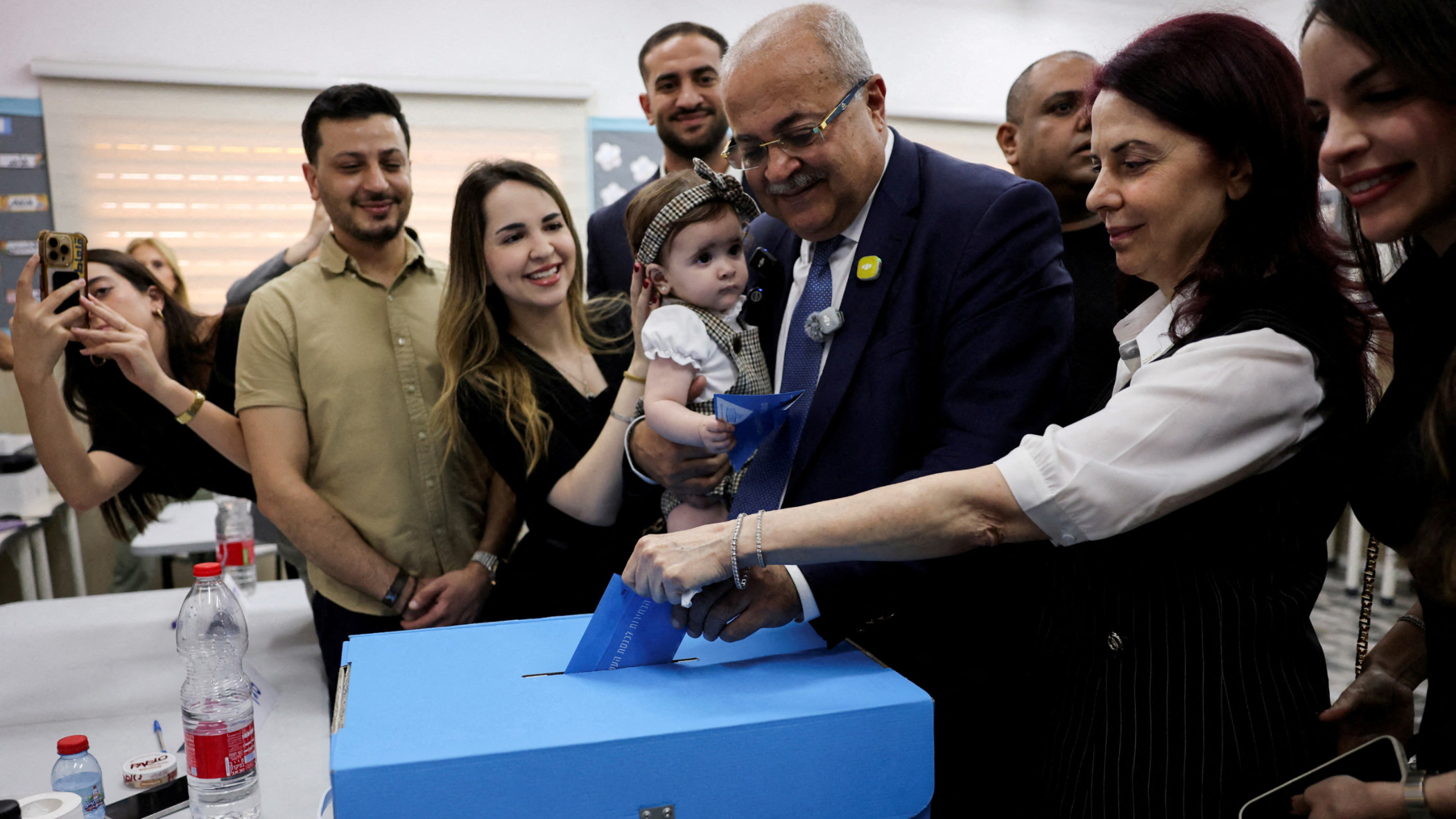
A series of investigative reports from leading Israeli media outlets have laid bare unprecedented political maneuvering in the hours and days following Israel’s Tuesday general election, as competing factions jockey for power against the backdrop of record Palestinian voter turnout that reshuffled parliamentary seat distributions. A Thursday probe by prominent Israeli newspaper Haaretz revealed that sitting Prime Minister Benjamin Netanyahu orchestrated a coordinated, election-day social media blitz explicitly designed to delegitimize Palestinian electoral participation, laying public groundwork to potentially discredit official vote tallies. Over the 15-hour window that polling stations remained open across the country, Netanyahu posted a total of 146 items across all his official social media profiles, with fully 72 of those posts targeting Palestinian voter turnout – nearly half of his total election-day output. This targeted messaging was not confined to Netanyahu’s personal accounts: his eldest son Yair posted or shared 103 anti-Palestinian voter items on the X platform, while the prime minister’s staunchly aligned partisan outlet Channel 14 News circulated 40 similar delegitimizing posts. The coordinated right-wing campaign extended to 90 separate far-right social media accounts, which collectively distributed roughly 2,300 anti-Palestinian voter messages between Tuesday and Wednesday. Offline mobilization efforts targeting Likud party supporters also ran in parallel, including targeted phone calls, mass text messages, and shared video content amplifying the anti-Palestinian voter narrative. Two days after polls closed, multiple diplomatic and domestic advocacy efforts emerged to shape the next Israeli government’s composition. Citing unnamed U.S. administration sources, right-wing Israeli daily Israel Hayom reported that sitting U.S. President Donald Trump had sent parallel diplomatic communications to both Netanyahu and leaders of the Zionist opposition, expressing a clear preference for the formation of a broad unity government. Trump’s stated priority is assembling a cross-partisan coalition that unites Netanyahu’s Likud party and Gadi Eisenkot’s Yashar faction, the two largest parties per preliminary election results, to advance his long-stated Middle East policy agenda. That agenda includes brokering normalized diplomatic agreements between Israel and several Arab states – most notably Saudi Arabia – as well as advancing a formal framework to address longstanding Palestinian political grievances. A U.S. source close to the deliberations told the newspaper that Trump plans to wait for final, certified election results before holding formal discussions with Israeli leaders about coalition formation, but is signaling his preferred policy direction now to capitalize on what he described as a narrow, time-sensitive strategic window. The source warned that if Israeli political actors fail to move quickly to form the desired broad government, the strategic opportunity would expire at the end of Trump’s presidential term in two years, leaving Israel facing far greater existential security challenges. A separate report from Israeli public broadcaster Kan 11 added that the Trump administration is explicitly pushing for far-right National Security Minister Itamar Ben Gvir to be excluded from any future governing coalition, as U.S. officials view his hardline positions as a major barrier to advancing policy priorities in the occupied Gaza Strip. Parallel to international diplomatic pressure, a prominent cross-societal domestic advocacy effort gained steam, as roughly 400 leading Israeli artists, actors, writers, and poets released an open letter urging the Zionist Change opposition bloc to form a historic inclusive governing partnership with the two Palestinian-led political parties that posted historic electoral gains. The Joint List and Ra’am parties saw unprecedented turnout among Palestinian citizens of Israel, catapulting them to a kingmaker position that makes their support indispensable to any effort to unseat Netanyahu’s long-running administration. The open letter, published by Israeli Channel 12 News, called on all Change bloc leaders – including Gadi Eisenkot, Naftali Bennett, Yair Lapid, Avigdor Lieberman, and Yair Golan – to set aside longstanding communal prejudices, systemic racism, and decades of political incitement to unite Jewish and Arab political factions under a single governing alliance. The letter framed the moment as a fight to preserve Israeli democracy from imminent collapse, noting that Palestinian citizens are full, integral members of Israeli society who deserve a formal seat at the governing table during this unprecedented political moment. As coalition negotiations move forward, Israeli Channel 13 News reported that President Isaac Herzog is poised to grant Gadi Eisenkot the first official mandate to form a new government, a procedural step that follows Israel’s proportional electoral rules that task the president with selecting the candidate who receives the most formal recommendations from elected Knesset factions. As of Thursday, Eisenkot’s Change bloc held 48 parliamentary seats, while the two Palestinian-led parties that have pledged to support his bid hold 19 seats, combining for a solid 67-seat majority in the 120-seat Knesset. The pro-change factions have already signaled their first legislative priority will be ousting current Knesset Speaker Amir Ohana, a senior Likud ally, to seize control of the parliamentary agenda and set the terms for ongoing coalition negotiations. Both Joint List leader Yousef Jabareen and Ra’am head Mansour Abbas have publicly confirmed their parties will support the motion to replace Ohana, reaffirming their shared commitment to voting out Netanyahu’s longstanding far-right administration.
Israeli press review: Netanyahu moved to undermine Palestinian vote on election day