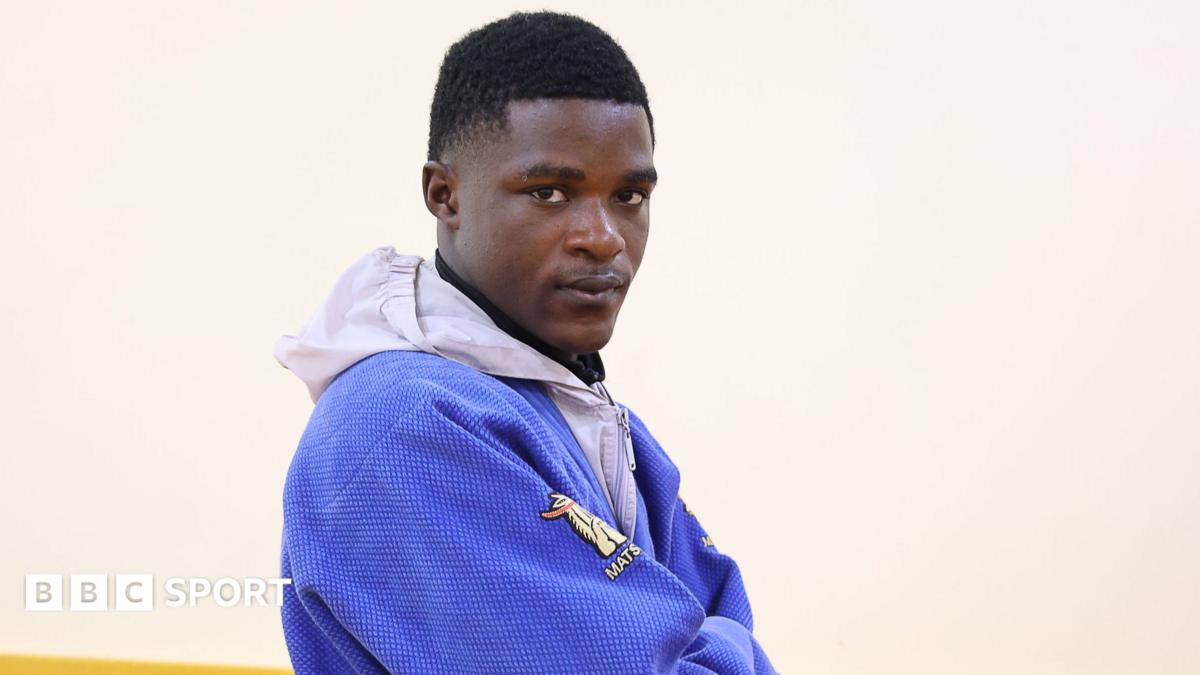
Fifteen-year-old judo prodigy Arno Yafunga Botay’s journey to the 2026 Dakar Youth Olympic Games is rooted in unthinkable loss, relentless resilience, and the transformative power of sport. When he was just six years old, his family fled violence in the Democratic Republic of Congo in 2017, after targeted threats against his father Arnold culminated in a home attack that killed the family’s seven-month-old infant child. The displaced household first sought shelter in Kenya’s remote Kakuma refugee camp before eventually resettling in Nairobi, where Arno first fell in love with judo while watching his father practice the martial art during rare free moments between long shifts as a casual laborer.
Starting formal training at age seven, Arno faced seemingly insurmountable barriers in his pursuit of competitive sport: he lacked a proper judogi uniform, could not afford transportation fees to local tournaments, and his family regularly struggled to cover school tuition costs, compounded by the bureaucratic hurdles of securing official residency documentation as refugees in Kenya. His fortunes shifted after he passed rigorous East African regional selection trials, earning a coveted spot on the six-member Refugee Olympic Team that will make history as the first refugee contingent ever to compete at a Youth Olympic Games. The 2026 Dakar edition itself marks another landmark milestone as the very first Olympic event hosted on the African continent.
“I never expected to get selected. I was so overwhelmed with joy that I cried happy tears,” Arno shared in an exclusive interview with BBC Sport Africa’s Nairobi bureau. “Representing the Refugee Olympic Team means everything to me, because I get to stand for every other displaced person and our entire community.”
The Refugee Olympic Team programme was first launched at the 2016 Rio Summer Olympics, and made global headlines at the 2024 Paris Games when Cameroonian-born boxer Cindy Ngamba claimed the team’s first ever Olympic medal, a bronze in the women’s 75kg weight class. For the 2026 Dakar Youth Games, the six young refugee athletes are receiving mentorship from Eliud Kipchoge, the legendary two-time Olympic marathon gold medalist and global icon of endurance sport. Arno says Kipchoge’s guidance, focused on respect for coaching staff and unwavering singular focus, has pushed him to set an ambitious goal: he has promised the marathon champion he will return from Dakar with a gold medal in the men’s under 55kg judo division.
Judo has become a unifying pillar for the Yafunga Botay family, with Arnold still serving as Arno’s primary coach, and 17-year-old older brother Christian regularly stepping in as his sparring partner. Arnold’s strict, discipline-focused training regimen emphasizes that every fall on the judo mat builds the strength to keep pushing forward through life’s hardships. Local Nairobi dojo owner Lawrence Karisa Nyundo, who has hosted Arno for training sessions since 2020, notes that the teen’s historic selection has shifted widespread community misconceptions that judo is merely a violent fighting sport: local parents have flooded the club with new enrollment inquiries, recognizing the martial art’s capacity to build character, resilience and community connection.
Arnold, who survived targeted political violence in their home country, says his son’s journey sends a universal message of hope to all 100 million plus forcibly displaced people across the globe. “Being a refugee does not mean your life is over. Displaced people can still achieve extraordinary things that surprise the whole world,” he said. “My message to every fellow refugee is simple: never give up, keep pushing until you reach your goal.”
Looking ahead to the competition, which kicks off with the opening ceremony in Dakar on 31 October 2026, with judo events scheduled to run from 1 to 3 November, Arno has already laid out plans to pay his success forward. He hopes to travel back to the Kakuma refugee camp after the Games to train and mentor the dozens of talented young judokas living in the camp, passing on the life-changing lessons he learned through the support of the International Olympic Committee’s refugee athlete programme.