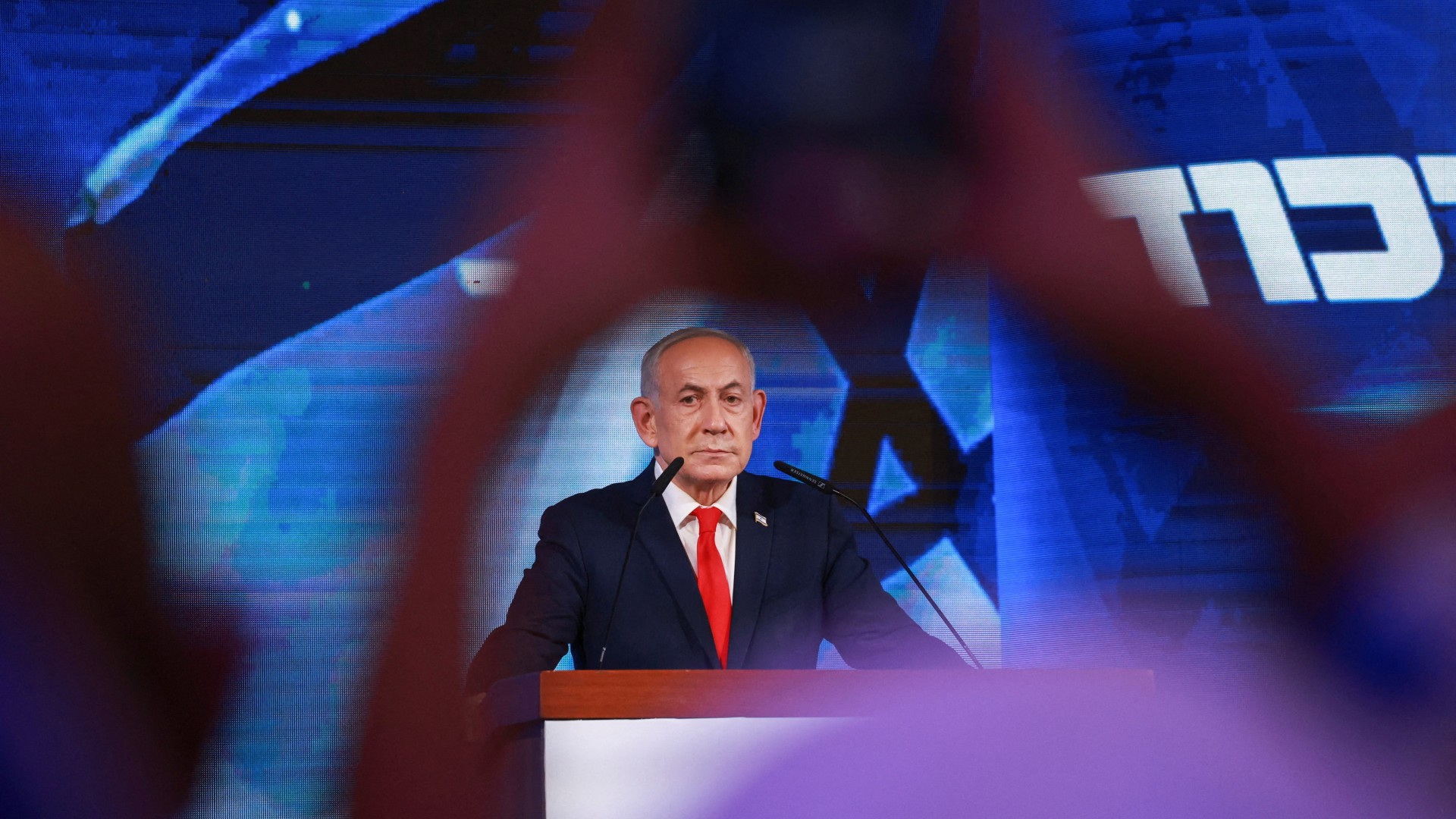
The latest outcome of Israel’s parliamentary elections paints a nuanced portrait of former prime minister Benjamin Netanyahu’s political standing: while he did not secure a clear path to a ruling majority, he is far from being fully ousted from power. Netanyahu framed his campaign narrative around two core pillars for Jewish voters: sustaining ongoing military operations and retaining the national state of emergency that took root after the devastating 7 October 2023 Hamas-led attacks. He actively shifted blame for the unprecedented security failure that day away from his own administration, laying full responsibility on Israeli military leadership, while positioning himself as the decisive leader who stepped in to restore safety and elevate national security to levels higher than pre-October 7, a messaging strategy that resonated widely with his base.
Compared to the 2022 Israeli election, Netanyahu and his far-right allies lost significant ground, with their projected bloc falling 8 to 10 seats short of the 61-seat majority required to form a stable government. Critically, however, the so-called “change campaign” opposition bloc also failed to lock in a majority, leaving both major Jewish political camps deadlocked and no side able to form a ruling coalition on its own.
The most transformative, positive development of this election cycle lies in the historic breakthrough of Israel’s Palestinian political factions. The Joint List alliance of Palestinian parties, alongside Mansour Abbas’ more moderate Raam party, are on track to win a combined 19 seats in the 120-seat Knesset, a record high for Palestinian political representation in Israel’s parliament. Palestinian citizens, who make up 20% of Israel’s total population but have long been systematically sidelined and excluded from formal governing coalitions, turned out to vote in unprecedented numbers, deliberately mobilizing to block the inclusion of notoriously racist far-right figures Itamar Ben Gvir and Bezalel Smotrich from any future ruling coalition. Even if Netanyahu manages to strike a unity government deal with opposition centrist leader Gadi Eisenkot, the resulting coalition will almost certainly have to exclude the two ultra-nationalist hardliners, marking a clear win for Palestinian voter mobilization.
This election outcome has delivered a stark reality check to Israel’s secular liberal Zionist camp, which previously operated under the false assumption that it could secure a parliamentary majority by leaning into nationalist rhetoric, targeting the ultra-Orthodox community, and aligning closely with military leadership. The results have proven that this camp cannot form a government without the support of Palestinian political parties, forcing it to confront a long-avoided choice: remain trapped in perpetual cycles of Netanyahu-aligned right-wing rule, or abandon long-held anti-Arab hostility to build pragmatic partnerships with Palestinian voters and factions. Analysts note that this shift is unlikely to stem from sudden ideological reckoning over Zionism’s settler-colonial foundations, but rather from cold political necessity, as pragmatic interest-driven realignments have historically triggered major political shifts in Israeli politics.
The election has also laid bare a clear ideological split within Israel’s Palestinian political community. Mansour Abbas and his Raam party have long advocated for a strategy of incremental, pragmatic engagement with Israeli state institutions and Zionist parties to secure tangible material gains for Palestinian citizens, including expanded housing access, improved public services, reduced systemic discrimination, and reduced rampant organized crime that has plagued Palestinian communities for decades. This approach, critics note, requires a degree of deliberate decoupling from the struggles of Palestinians living under occupation in Gaza and the West Bank. By a two-to-one margin, however, Palestinian voters in this election rejected this framework to back the Joint List’s platform, which refuses to abandon its moral and political commitment to the rights of Palestinians in occupied territories and the diaspora. Joint List leader Yousef Jabareen has publicly outlined four non-negotiable conditions for any potential support of a non-Netanyahu government: targeted action to end rampant crime in Palestinian communities, expanded development and legal recognition of underserved Palestinian residential areas, full equal civil rights for Arab citizens of Israel, and a formal, binding process to advance the establishment of an independent Palestinian state.
For the first time in Israeli political history, Palestinian parties hold the decisive kingmaker power that will determine who forms the next government, forcing them to navigate the delicate challenge of advancing their core demands for equality and Palestinian statehood without compromising their national identity or alienating potential centrist Zionist partners. The path ahead remains deeply uncertain: far-right factions aligned with Netanyahu could move aggressively to implement new legal and procedural barriers to suppress Palestinian voting power and prevent this level of Arab political influence from ever being repeated. Alternatively, the secular centrist camp could choose to embrace pragmatic cooperation with Palestinian parties to break the decades-long cycle of right-wing political dominance in Israel.