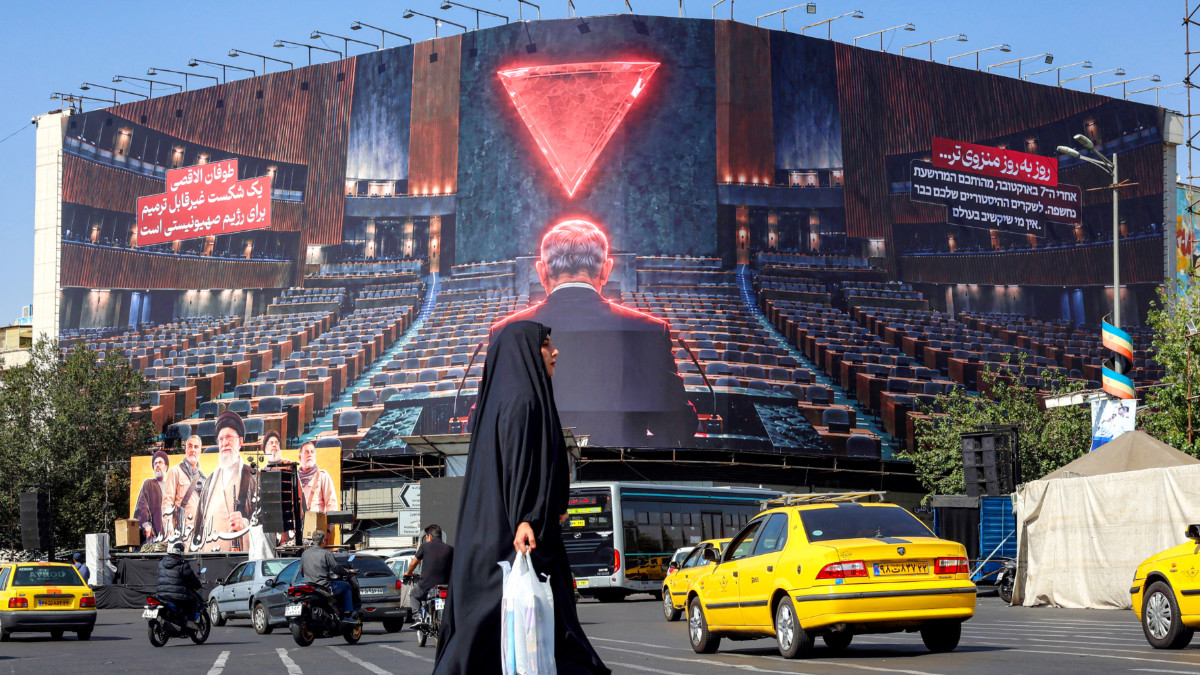
Across the Middle East, US diplomatic personnel are actively making contingency arrangements to evacuate embassy staff, while Israeli fighter jets have ramped up regular patrols along Iran’s border. Multiple Arab and US officials operating in the region, speaking on condition of anonymity to Middle East Eye, uniformly convey that a resumption of joint US and Israeli military strikes against Iran is no longer a matter of if, but when. The tense calculus comes as Iranian authorities have explicitly warned of retaliatory strikes targeting trillions of dollars in US-linked data centers, artificial intelligence facilities, critical energy installations and major airports across the Gulf, laying the groundwork for a widely anticipated second phase of the ongoing regional conflict.
Aaron David Miller, a seasoned former Middle East negotiator who served under both Republican and Democratic US administrations, confirmed the trajectory of escalation in comments to MEE. “An escalation is coming. Whether it’s before the US midterms or after is not relevant. The purpose of the escalation is clear,” he stated. Direct, large-scale hostilities between US and Iranian forces were temporarily halted after a fragile ceasefire agreed in April, but a 14-point Memorandum of Understanding signed by both sides in June to pave the way for a long-term settlement was never implemented. The landmark deal was widely perceived to include extensive concessions to Iran that the Trump administration finds politically unacceptable, creating an uncrossable impasse.
“There is a foundational gap, galactic in scope, that can’t be bridged. The Iranians are not going to change their position on the Strait of Hormuz, the nuclear issue or the Houthis to the extent that Trump needs in order to spin a win,” Miller explained. Senior envoys representing the Trump administration are now actively laying the operational groundwork for a return to full-scale military conflict. “We are going to have to keep working at this to make sure there’s a regime change eventually,” noted prominent Republican Senator Rick Scott, a close Trump ally, during a Thursday interview with Fox News.
Mike Waltz, the US ambassador to the United Nations, told the Financial Times that the White House has fully prepared for a prolonged, drawn-out conflict in the region. “The president and the US Navy can maintain this blockade [on Iranian ports] for the foreseeable future,” he remarked in a Friday-released interview. What began in February as a US-led military campaign framed as an operation to neutralize Iran’s nuclear program has gradually evolved into a sweeping, zero-sum battle for geopolitical dominance across the Middle East. Current flashpoints include Iran’s push to impose transit fees on all commercial vessels passing through the strategic Strait of Hormuz, with months of tit-for-tat strikes between US and Iranian forces in the waterway. The sweeping US naval blockade on Iranian ports has crippled Iran’s domestic economy, while Iranian retaliatory attacks on commercial shipping have sent global maritime freight rates skyrocketing: at least 27 separate vessel attacks were recorded in the current month alone, marking the highest monthly total since March.
The deepening bilateral tensions have also shattered a separate ceasefire in Yemen, where fierce fighting has reignited between Iran-aligned Houthi militants and the Saudi-backed internationally recognized Yemeni government. Geopolitical and regional affairs analysts largely agree that a return to full-scale war appears all but inevitable, as the current unstable status quo satisfies neither the Trump administration nor Tehran, while neither side perceives itself as militarily or politically weak enough to make the concessions required to reach a negotiated settlement.
Gregory Brew, a leading energy and Iran specialist at global geopolitical consultancy Eurasia Group, noted that both the Trump administration and Iranian leadership are closely monitoring fluctuations in the global oil market, drawing vastly different strategic conclusions from recent trends. Data published this week by energy analytics firm Kpler shows that total Middle East oil and petroleum product exports rebounded to pre-February war levels last week, though experts caution the figures are skewed by a short-term surge in shipments. The increased export volumes stem almost entirely from US-aligned Gulf nations, while Iran’s own oil exports remain severely constrained by the enforced US naval blockade. Saudi Arabia has expanded exports via a newly operational Red Sea pipeline that circumvents the Houthi-controlled Bab el-Mandeb strait, routing crude directly to Mediterranean markets. Other Gulf states with coastlines on the Strait of Hormuz now rely on a shuttle transfer system, in which small state-owned vessels ferry crude out to much larger tankers waiting safely in the Gulf of Oman, with the US Navy providing armed escort at significant operational cost.
Despite the rise in regional export volumes, global energy prices have not fallen. Brent crude, the international benchmark for oil prices, has surged 43% since the June MoU was signed, while global diesel prices have climbed roughly 35%, and gasoline prices have risen by just under 10%. Iran’s domestic economy is clearly under severe strain, with official September inflation figures hitting a staggering 90%, but Brew points out that Iranian leadership remains convinced it can outlast the Trump administration through another round of intensified hostilities. “If the US is watching export volumes in Hormuz, the Iranians are watching price. And they are pretty confident they can withstand pressure over a longer period of time than Trump can,” Brew told MEE. “In a context where the US and Israel are bombing Iran again directly, we are certain to see more aggressive Iranian strikes on energy infrastructure. The US will also have fewer resources to manage this escort system,” he added, predicting global energy prices will remain elevated for the foreseeable future.
In the lead-up to the original US-Israeli strike on Iran in February, multiple Gulf states launched an intense last-minute lobbying campaign to prevent the military operation from moving forward. During the initial phase of the war, Saudi Arabia and the UAE joined US forces in launching strikes against Iranian targets, but Riyadh later pivoted to support diplomatic mediation efforts, and Reuters reported the UAE paid Tehran significant sums to secure a pledge that Iran would halt attacks on Emirati territory. For the anticipated second round of conflict, analysts note that Gulf states will struggle to maintain any meaningful strategic relevance, even as they find themselves on the front line of anticipated Iranian retaliatory strikes. Following the February 2024 attacks on Iran, Gulf states endured thousands of drone and missile assaults originating from Iranian territory.
“From the Gulf perspective, this is going to be devastating,” said Abdullah Baabood, a prominent Omani academic and international relations expert. “Already we see serious economic problems in the Gulf.” Recent reporting from Asharq Bloomberg indicates Bahrain is poised to receive a UAE-led financial bailout to prop up its rapidly depleting foreign currency reserves. Qatar’s economy contracted 15% year-on-year in the most recent quarter, the IMF projects the UAE’s economy will shrink by 4% this year, and Saudi Arabia was forced to cancel its flagship annual international investment conference due to persistent Houthi security threats. “The Gulf is hostage to a crisis that has no end,” Baabood observed. “Qatar is trying to mediate. Oman has been pushed aside by Trump. The UAE, Kuwait and Saudi Arabia are very quiet. They just don’t know what to do. They can’t read Trump.”
“Other than Israel, no one has real interest in a serious continuation of the war,” noted Marwan Muasher, a former Jordanian foreign minister and current vice president for studies at the Carnegie Endowment for International Peace. The growing expectations of renewed major hostilities coincide with the upcoming Israeli general elections scheduled for next week. In his recent public endorsement of Israeli Prime Minister Benjamin Netanyahu, Trump dramatically raised the stakes for fresh military action against Iran, stating he intended to assist Israel to “finish the job” against Iran “unless they change their ways rapidly.” Analysts note that the military campaign against Iran remains broadly popular among the Israeli public, meaning a resumption of large-scale fighting could deliver significant political benefits to Netanyahu ahead of the vote, or help him retain his position as prime minister even if election results are inconclusive.
Baabood acknowledged that there is no question the US and Israeli militaries possess the capability to inflict catastrophic damage on Iran’s civilian and military infrastructure, but emphasized that the Islamic Republic retains the capacity to inflict significant, painful harm on Gulf state targets. In an interview with Dropsite News earlier this week, Major General Mohsen Rezaei, secretary of Iran’s Supreme National Security Council, left no ambiguity about Tehran’s intent to target Gulf energy facilities the moment US forces resume hostilities. “If the US strategy is to prolong the war while using neighbouring countries’ energy infrastructure to offset the pressure arising from Hormuz and maintain the blockade of Iran, those governments should not assume they can participate in economic warfare against Iran without putting themselves at risk,” he warned.
One of the most critical unresolved variables ahead of a second round of conflict is the ability of Gulf state defense systems to fend off Iranian drone and missile attacks that could send global energy prices spiraling even higher. A September report from the US Department of State Inspector General confirmed that the US military is facing “strategic inventory shortfalls” of key precision munitions, and MEE previously reported in March that US stockpiles of critical interceptor missiles were already depleted, a situation that has only worsened following months of high-intensity military operations across the region. The Trump administration has repeatedly and publicly denied that it is facing any munitions shortages. The Gulf states’ acute vulnerability to Iranian drone capabilities has been laid bare by a recent wave of Houthi attacks on Saudi territory: the kingdom has been reeling from repeated strikes targeting major airports and high-profile energy sites, with Saudi authorities confirming at least 21 people, including religious pilgrims, have been killed in Houthi attacks on Saudi airports since the start of October. A September attack attributed to Iran-aligned Iraqi militias also targeted the kingdom’s critical East-West Pipeline.
“Continuing the war will only bring more difficulties to countries in the Gulf, and it’s clear it will not result in regime change in Iran. Meanwhile, Trump is suffering domestically because of rising fuel and food prices” across the US, Muasher noted. But Miller, now a senior fellow at the Carnegie Endowment for International Peace, argues that Trump may face far fewer constraints on military action than most observers assume, particularly given his lingering frustration that Iran derailed his original plans for a quick, decisive military victory earlier this year. “There is no cost-benefit analysis because Donald Trump is going to be OK. He may lose the House and maybe the Senate in midterms, but he will be OK. His family will be OK. He will build his presidential library,” Miller said. “Trump’s urgency to end this thing is not evident. There is no accountability. Where is the pain for Donald Trump?”