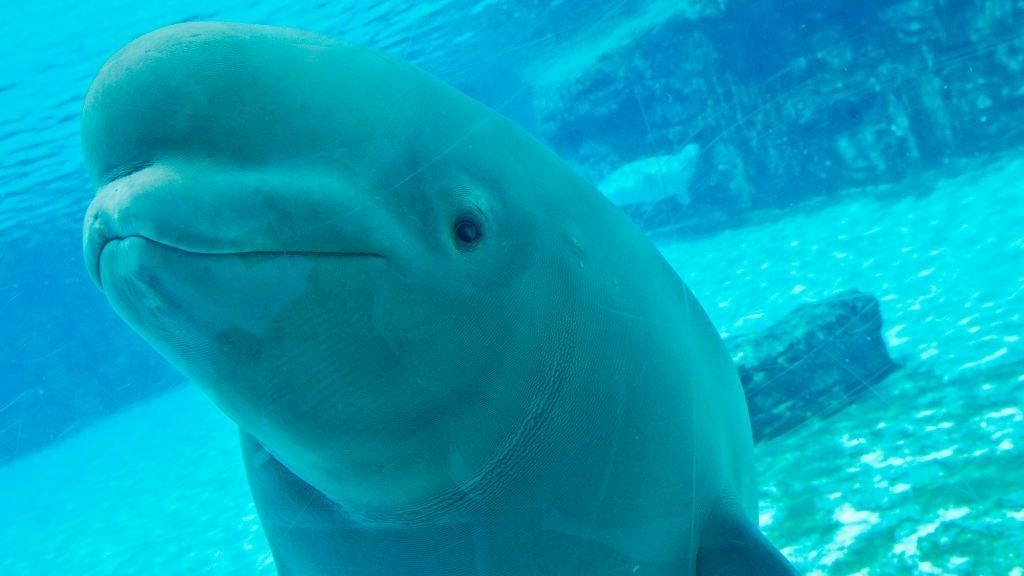
For more than six decades, Marineland, the Niagara Falls-based marine amusement park, stood as one of Canada’s most recognizable tourist landmarks, its catchy “Everyone loves Marineland” jingle ingrained in the memories of generations of visitors. By 2024, however, years of mounting animal welfare scandals, crippling financial instability, and the passing of its long-time owner forced the iconic park to close its gates permanently, bringing a close to a chapter of Canadian entertainment that had long fallen out of step with shifting public values.
Seven years before Marineland’s closure, Canada had already enacted landmark legislation banning the captivity and breeding of cetaceans — the group of marine mammals that includes belugas, dolphins, and porpoises — leaving the park with 30 belugas and four dolphins that needed new permanent homes. When the Canadian government rejected a proposed sale of the animals to facilities in China over widespread animal welfare concerns, park officials warned the entire group would need to be euthanized. The announcement sparked an unprecedented international rescue effort, coordinating aquariums and marine parks across North America and Europe to accept the animals, in what became the largest single transfer of captive whales in recorded history.
Photojournalist Carlos Osorio, who documented the months-long relocation process, captured the final departure of Tofino, the last remaining captive whale to leave Canadian soil, in a moment that carried historic weight. As Osorio recalled, the 1,500-kilogram beluga swam to each of his long-time handlers kneeling in shallow water, brushing against their hands in what looked like a quiet goodbye before a crane lifted the whale into a transport truck bound for SeaWorld San Antonio. “This is the last one to happen, and it’s never going to happen again,” Osorio said of the historic moment.
While the rescue operation saved the majority of the animals from certain death, the effort has been overshadowed by tragedy: five belugas and one dolphin transferred from Marineland have died since the move this summer. Chicago’s Shedd Aquarium, which accepted eight of the Marineland belugas, has recorded four deaths: 23-year-old Peekachu, 20-year-old Rain, 26-year-old Orisis, and 27-year-old Caspian. A long-time resident beluga at Shedd, 34-year-old Beethoven, also died shortly after the new animals arrived. Necropsies revealed that Peekachu and Rain suffered from chronic gastrointestinal inflammatory disease, and foreign objects including feathers, large rocks, and flecks of paint were found in their stomachs — a discovery Shedd attributes to poor conditions at Marineland before the transfer. Preliminary examinations found Orisis had long-standing chronic liver disease.
Tragedy also struck at Oceanogràfic València, Europe’s largest aquarium located in Spain, where one beluga named Jelly Bean and one dolphin named Echo died after transfer. Oceanogràfic officials reported Echo arrived with pre-existing severe vision problems and developed life-threatening swallowing and respiratory complications within hours of her arrival.
Many animal welfare experts have cautioned against drawing hasty conclusions about the transfer’s success, noting the animals were already facing euthanasia after decades of living in an aging, poorly maintained facility. Between 2019 and September 2025 alone, roughly 20 whales died at Marineland while the park waited for a resolution to its future, according to a tally by Canadian Press.
The closure of Marineland and the relocation of its animals have thrown a spotlight on a growing, unresolved global crisis for captive cetaceans: as more countries like Canada, France, and Mexico move to ban cetacean captivity, thousands of captive cetaceans raised in captivity cannot be released into the wild, and few safe, humane long-term alternatives exist. Worldwide, an estimated 3,600 cetaceans remain in captivity, according to World Animal Protection Canada.
Animal welfare advocates have raised critical questions about the transfer process, arguing that unhealthy animals that could not survive the stress of relocation should never have been moved. In a statement, Melissa Matlow, a spokeswoman for World Animal Protection Canada, noted the organization had proposed two alternative solutions for the Marineland animals: converting the shuttered park into a permanent hospice facility for ageing and unhealthy cetaceans, or accelerating construction of the proposed Whale Sanctuary Project, a seaside sanctuary off the coast of Nova Scotia.
Lori Marino, a neuroscientist and founder of the Whale Sanctuary Project, explained that for cetaceans that cannot be released into the open ocean, a seaside sanctuary offers the next best alternative, allowing animals to live in natural ocean waters while retaining their autonomy. “I look at it as an exit ramp,” Marino said of the project, which was first launched a decade ago and only broke ground two months ago. The project still needs an additional C$6m ($4.2m) to complete construction, and once finished, it plans to house between 12 and 15 retired captive cetaceans.
Offshore whale sanctuaries remain an unproven model for long-term care of captive whales, however. A similar beluga sanctuary project in Iceland was forced to delay the arrival of its first two whales until next summer to complete additional construction work. Michael Weiss, research director at the Center for Whale Research in Washington state, noted that while seaside sanctuaries are still largely theoretical, they would still offer dramatic improvements to animal welfare compared to the small concrete tanks used in traditional marine parks. Net pens similar to those proposed for the projects have long been used to rehabilitate injured wild whales, Weiss added.
Critics of the transfer plan also point out a major gap in Canada’s ban on cetacean captivity: while Canada prohibits breeding, the aquariums that accepted the Marineland belugas are under no such restrictions, raising concerns that breeding will continue, perpetuating the cycle of cetacean captivity. Jason Jones, senior curator of animal well-being at Georgia Aquarium, which recently accepted two young male belugas from Marineland — 10-year-old Balor and 7-year-old Zephyr — defended the practice, arguing that breeding is a natural part of cetacean life and contributes to good welfare. Jones reported the two new arrivals have adapted well to their new home, arriving bright and alert, quickly integrating with the four female belugas already at the aquarium, and showing all the positive signs of healthy adjustment.
For Phil Demers, a former Marineland animal trainer who has become a prominent animal welfare advocate, the closure of the park is an inherently bittersweet moment. He is grateful to see the controversial facility shut down, and hopes Canada’s ban on cetacean captivity will inspire similar policy changes across the globe. Still, he acknowledges that the end of Marineland does not mean the end of captivity for its former animals, only a change of address. For people interested in experiencing whales, Demers says the best option is to observe them in their natural habitat: “I’d rather see a whale fart in the wild than do a triple backflip in a tank.”
As public attitudes toward animal captivity continue to shift, the fate of the Marineland belugas underscores the hard work and difficult trade-offs that come with phasing out a practice that was once mainstream, leaving policymakers, advocates, and conservationists searching for lasting solutions that prioritize the welfare of the thousands of cetaceans still living in captivity around the world.