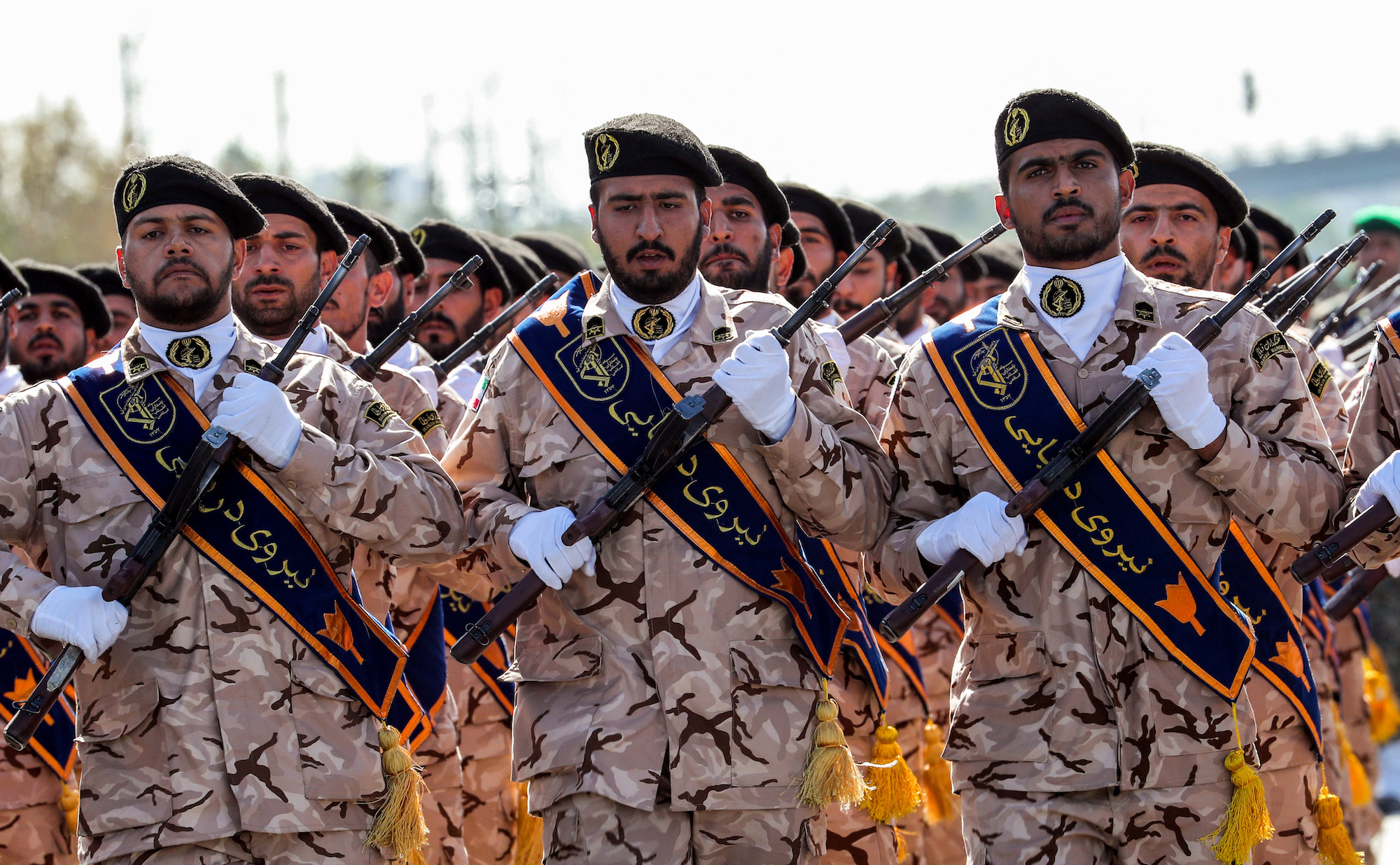
A senior Iranian military commander has claimed that advanced defense capabilities of the country’s Islamic Revolutionary Guard Corps (IRGC) have successfully compelled foreign naval deployments to retreat hundreds of kilometers from Iranian territorial waters, state-run news agency IRNA has reported.
Brigadier-General Yadollah Javani, deputy head of the IRGC’s political bureau, attributed this shift in military presence across the Gulf and Sea of Oman to the IRGC’s expanded arsenal of precision missiles, unmanned aerial vehicles, and growing naval power. “Foreign warships used to cruise freely through Gulf waters in large numbers just years ago,” Javani stated in his remarks. “Now, hostile fleets have pulled back more than 1,000 kilometers from our borders and lack the courage to approach our territorial waters.”
The commander added that long-term stability and peace in the region will depend on two core outcomes: collective security frameworks led by regional Islamic nations, and the full withdrawal of what he described as foreign aggressor forces from the area.
The strategic Strait of Hormuz, the narrow waterway connecting the Gulf to the Arabian Sea, has emerged as the central flashpoint in this standoff. Since the outbreak of regional conflict in February, Iran has consolidated de facto military dominance over the chokehold, which is the backbone of global energy trade. The waterway has been a source of naming dispute for decades: Iran refers to it as part of the historically named Persian Gulf, while Arab League states have adopted the term “Arabian Gulf” in recent decades.
Before the February conflict, roughly 20 million barrels of crude oil passed through the strait every day, equal to one-fifth of all global daily oil consumption. Six months into the conflict, an estimated 10 to 14 percent of global oil supply remained cut off from global markets as shipping disruptions rattled energy markets.
In recent weeks, however, transit volumes have rebounded almost to pre-conflict levels, a shift driven by behind-the-scenes negotiations between Iran and other Gulf states, paired with a recovery in Tehran’s own crude export volumes. U.S. Energy Secretary Chris Wright confirmed on Monday that 17 million barrels of crude transited the strait that day, marking the highest daily volume recorded since the conflict first disrupted shipping through the waterway.
Despite the rebound in energy flows, the strategic contest over the strait remains intense. Countering Iran’s regional influence and retaining control over energy supply chokepoints remains a top national security priority for the United States.
On Sunday, Associated Press reported that U.S. Defense Secretary Pete Hegseth reiterated Washington’s commitment to controlling the waterway, describing the U.S. naval blockade posture around the strait as “ironclad.” Hegseth added that U.S. President Donald Trump retains all possible policy and military options to respond if Iran continues what he called “provocative action” in the area. “Iran tries to manipulate security around the Strait of Hormuz, but the fact is they do not control this waterway — we do,” Hegseth told reporters.