On a sun-dappled afternoon last August, a former Ukrainian Special Forces soldier checked into a glamping resort along Italy’s Adriatic coast, appearing entirely at ease alongside his wife and young children. Dressed casually in shorts, sandals, and a dark baseball cap, Serhii Kuznetsov — identified in German court documents only as Serhii K under the country’s privacy rules — chatted with front desk staff and helped himself to complimentary snacks, unaware that a years-long international manhunt had finally closed the net around him.
Next week, nearly three years after a string of coordinated underwater explosions ripped through three of the four Nord Stream gas pipelines linking Russia to Germany, Kuznetsov will go on trial in Hamburg. Charged with causing intentional explosion and committing a war crime through the deliberate attack on civilian energy infrastructure, German prosecutors allege he acted on direct orders from Ukrainian state intelligence to carry out the largest act of coordinated sabotage on European soil in modern history. Both Kuznetsov and the Ukrainian government have repeatedly denied any involvement in the 2022 blasts.
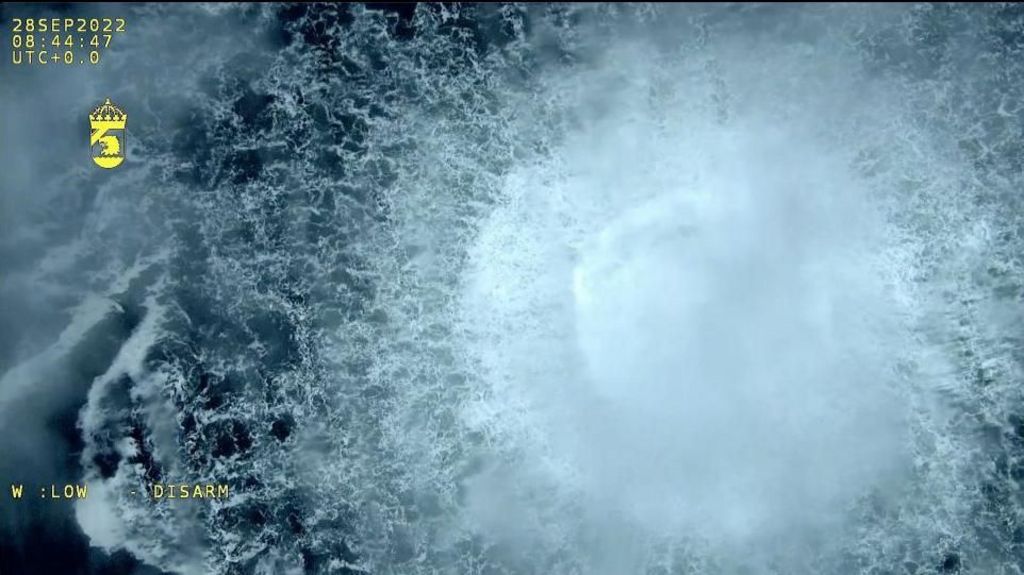
The attack unfolded in the early hours of 26 September 2022, when the first timed explosive detonated 80 meters beneath the Baltic Sea’s surface. Two subsequent blasts damaged sections of both the fully operational Nord Stream 1 — which for years supplied roughly half of Germany’s annual natural gas demand — and the completed but never-activated Nord Stream 2. The damage left both pipelines permanently inoperable, releasing massive plumes of methane into the atmosphere and cutting off a critical energy artery that had shaped European energy policy for more than a decade.
Prosecutors allege the attack was carried out using four high-performance explosive devices weighing up to 27 kilograms each, planted by a team of deep-sea divers led by Kuznetsov. The group allegedly chartered a private yacht, the *Andromeda*, to stage the operation before slipping back across the border into Ukraine, leaving behind critical DNA evidence on the vessel that would ultimately unravel their plot. In the immediate aftermath of the blasts, most Western commentators and some governments quickly pinned blame on Moscow, pointing to the Kremlin’s long history of hybrid attacks and weaponizing energy supplies for political leverage. German investigators, however, set aside the public noise and followed forensic evidence that ultimately led them to Ukraine.
The case file shows Kuznetsov entered Germany using a forged passport, which German investigators believe was issued by Ukraine’s national security services. For more than a year after the attack, he traveled freely across Europe and North America; a copy of his actual passport reviewed by the BBC shows more than two dozen entry stamps from France, Spain, Canada and other nations, all dated after the 2022 bombings. That freedom ended in August 2025, when German authorities formally identified Kuznetsov as their prime suspect and flagged his passport to border agencies. When he checked into the Italian glamping resort, an automated alert triggered an immediate response from local Carabinieri, who arrested him late that night as he stayed with his family.
The trial marks an unprecedented moment that strains diplomatic ties between two close wartime allies, and exposes deep divides over what constitutes a legitimate military act amid Russia’s full-scale invasion of Ukraine. Many in Ukraine view the Nord Stream pipelines as a strategic asset that strengthened Russia’s hand in the war by allowing the Kremlin to export gas to Western Europe without transiting through Ukrainian territory, eliminating Kyiv’s leverage over energy flows. Sources close to the case told the BBC that many Ukrainians see the attack as a legitimate strategic action against Russian interests, and express frustration that Germany, a top military backer of Kyiv, is pursuing prosecution of a Ukrainian citizen.
A close associate of Kuznetsov complained that the Ukrainian government has remained entirely silent on the case, leaving the former soldier to face justice alone. Ahead of his extradition from Italy, his legal team said Kuznetsov felt abandoned by his own government. “At the very minimum, he’s a military man, so if there are any questions, they should be addressed to the state, not to him,” the associate said. Germany’s public prosecutor’s office has insisted the prosecution is a matter of independent justice, not politics, noting that sabotage of German infrastructure violates the country’s constitution regardless of motive.
Kuznetsov is the first suspect to go on trial, but German authorities have named a second person of interest: Volodymyr Zhuravlyov, a civilian deep-sea diver who has lived in Warsaw with his family since shortly before Russia’s 2022 full-scale invasion. Zhuravlyov was arrested in August in Croatia while working as a consultant on a thriller film about the Nord Stream blasts, and is currently fighting extradition to Germany. He denies any role in the attack. A Polish judge previously refused to extradite Zhuravlyov when he was arrested in Warsaw, ruling that if a Ukrainian did carry out the attack, it would be a “just” act amid Russia’s “bloody and genocidal war.”
Those who know Kuznetsov describe him as a Ukrainian patriot who volunteered to defend his country after the 2022 full-scale invasion, even though he was exempt from service due to having multiple young children. He remained on active duty until December 2023, and his military ID confirms he was still in service at the time of the Nord Stream blasts — a detail that suggests senior Ukrainian military command was aware of his whereabouts and activities at the time of the attack, though no senior officials have been linked to the plot publicly. Kuznetsov’s legal team plans to argue that he is not authorized to reveal details of any activities he carried out as an active-duty soldier, and will submit sworn statements from two of his former military superiors to back that claim. One of those superiors, the BBC has learned, is the individual widely identified by investigators as the mastermind of the entire operation.
The case has already had ripple effects across European politics. Germany’s far-right Alternative for Germany (AfD), which currently leads in national opinion polls, has seized on the allegations to argue that Berlin should end all military aid to Ukraine. For both the German and Ukrainian governments, the trial creates an awkward diplomatic balancing act, while raising broader unresolved questions about what actions qualify as legitimate military targets outside the formal boundaries of an active war zone. Ukrainian officials have repeatedly denied any involvement in the blasts. “I find it very unfortunate that this entire discussion has come to focus on who blew [the pipelines] up, rather than who built them,” Ukrainian foreign ministry spokesman Heorhii Tykhyi told the BBC. Tykhyi noted that Kyiv had long warned that Nord Stream gave Russia greater geopolitical freedom to wage war, adding: “Did we warn about this? We did. Did anyone listen to us? No, no-one did.”